

You stretch every morning, but you still feel stiff. Why? It is frustrating to put in the work and not feel the relief. Here is the hard truth: Your body has changed.
After age 50, physiological shifts like natural muscle loss and reduced tissue elasticity change the rules of the game. The routine that worked in your 30s can now cause injury or joint irritation.
If you are fighting stiffness or recovering from a setback, you don’t need to try harder. You need to try smarter.
Mobility Wheel
1. Stop Static Stretching Before You Warm Up
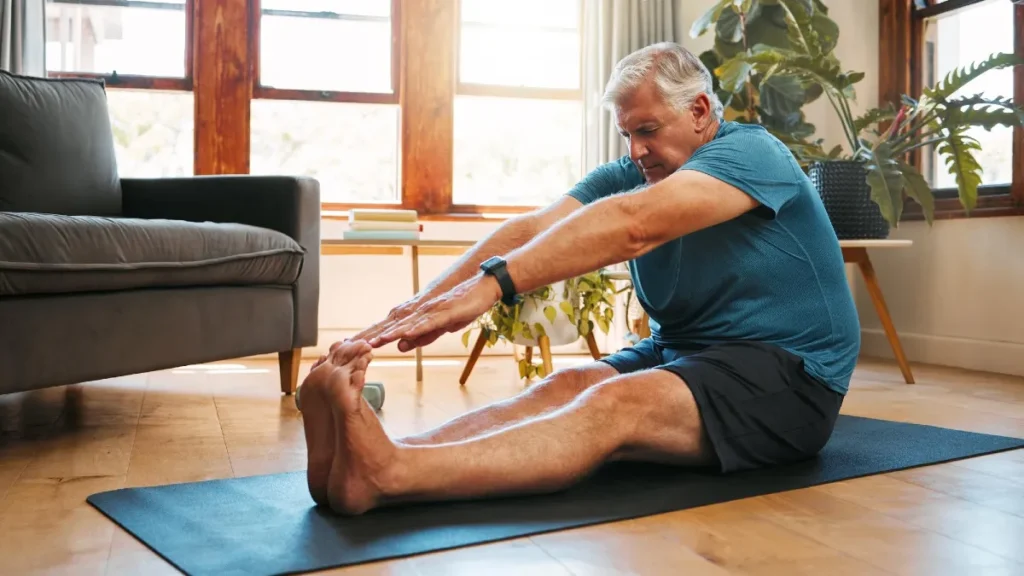
We have all done it where we feel tight so we immediately bend over to touch our toes. But stretching cold muscles is one of the fastest ways to injure yourself after 50 because your tissues lose water content and become more brittle as you age.
If you put a rubber band in the freezer and try to snap it, it breaks, and your muscles act the same way. Research indicates that static stretching on cold muscles can actually reduce your power and stability rather than helping it.
- Never hold a static stretch without moving first because movement lubricates the joints.
- Spend 5 minutes walking, marching in place, or doing gentle arm circles.
- Wait until you feel warmth in your body and your heart rate is slightly up before deep stretching.
2. The Dangers of Bouncing (Ballistic Stretching)
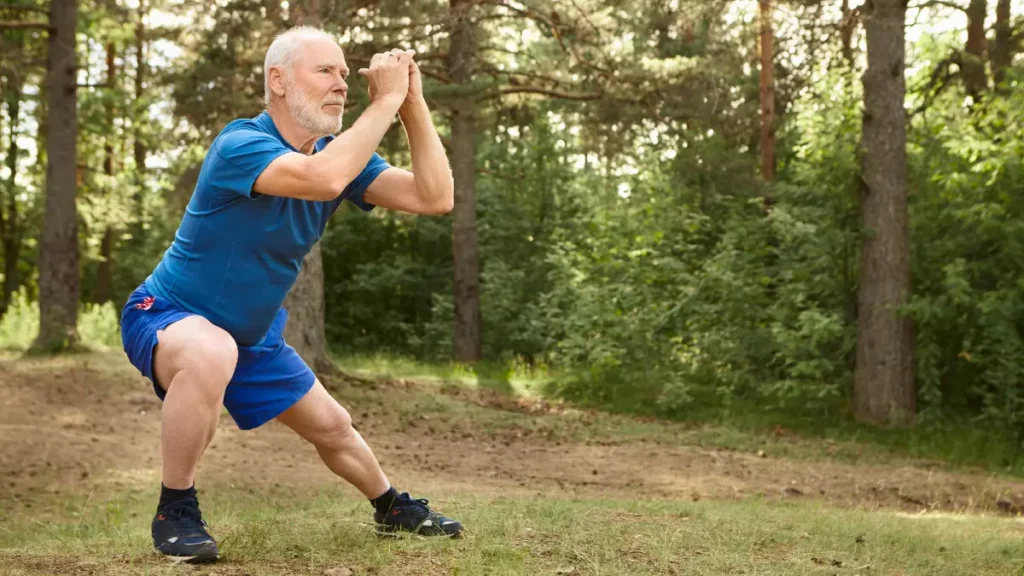
Do you bob up and down when you stretch to try and go a little deeper into the movement? This is called ballistic stretching, and it triggers a protective mechanism in your body called the stretch reflex.
When you bounce, your muscles sense a sudden and aggressive change in length so they tighten up immediately to protect the joint. You end up fighting your own body, and for older tendons that are less elastic, this bouncing can cause significant strain and micro-tears.
- Ease into a stretch slowly until you feel gentle tension and then stop there.
- Hold the position still like a statue without any bobbing motion.
- Wait until the muscle relaxes before moving a millimeter further.
3. Flexibility vs. Mobility: Why You Need Strength

Many people think flexibility and mobility are the same thing, but there is a major difference. Flexibility is how far a joint can move when you pull on it passively, while mobility is how far you can move a joint using your own strength.
After 50, we lose muscle mass due to natural aging, and being flexible without strength leads to unstable joints. You don’t just want to be loose; you want to be strong and functional to prevent wear and tear.
Flexibility vs. Mobility
| Feature | Flexibility (Passive Range) | Mobility (Active Range) |
| Definition | How far a joint can move when an external force pulls it (e.g., gravity, strap, partner). | How far a joint can move using your own muscle strength to control the movement. |
| Primary Goal | Increasing the length of muscles and connective tissues. | Increasing usable range of motion and joint stability. |
| Safety Risk | High; if external range exceeds active strength, it leads to instability and injury. | Low; builds control and protection within the accessible range. |
| Action After 50 | Necessary, but insufficient alone. | Essential for joint health, fall prevention, and functional strength. |
| Example | Lying on your back and having someone push your leg higher. | Lifting and holding your leg up as high as possible without help. |
4. Not Holding Stretches Long Enough

Patience is a virtue, especially for your joints, because a quick 10 second count is not enough for older tissues. As we age, our collagen structures become denser and it takes longer for the nervous system to send the signal that allows the muscle to relax.
If you let go after 15 seconds, you haven’t actually changed the tissue structure, you just pulled on it briefly without getting any lasting benefit.
- Follow the ACSM guidelines for older adults which recommend holding for 30 to 60 seconds.
- Use a timer or a slow breath count instead of guessing the duration.
- Understand that this longer hold time is the sweet spot for older tissue to lengthen safely.
5. Holding Your Breath Creates Tension

When you stretch a tight area, it can feel intense, and the natural reaction is to hold your breath and brace yourself. Unfortunately, holding your breath signals danger to your nervous system and puts you in a Fight or Flight state.
When your brain thinks you are in danger, it will not let your muscles relax and instead tightens them up to protect you. This is the exact opposite of what you want to achieve during a mobility session.
- Focus on your exhale to activate the system that helps you rest and relax.
- Try the 4-7-8 technique where you inhale for 4, hold for 7, and exhale for 8.
- Ensure you can breathe easily during every stretch to tell your body it is safe.
6. Ignoring Pain Signals (Discomfort vs. Damage)

The old saying of no pain no gain is a dangerous myth when it comes to joint health and longevity. There is a massive difference between the discomfort of a good stretch and the sharp pain of an injury.
If you feel a sharp, stabbing, or pinching sensation deep inside a joint like the shoulder or hip, that is not a stretch. That sensation is often bone hitting bone or a pinched nerve, and pushing through it will only cause inflammation.
- Visualize a discomfort scale where a 6 out of 10 is the sweet spot.
- Stop immediately if you feel sharp pain, shaking, or the need to hold your breath.
- Aim for a feeling of mild to moderate tension where you can still smile.
The Smart Stretch Scale
-
➤
Aim for a 6/10
Visualize a discomfort scale where a 6 out of 10 is the sweet spot.
-
Stop Signs
Stop immediately if you feel
sharp pain,
shaking, or hold
your breath. -
The Smile Test
Aim for mild tension where you can still smile comfortably.
7. Focusing on Limbs but Ignoring the Spine

We tend to focus on tight hamstrings or stiff shoulders, but we often ignore the root of the problem which is the Thoracic Spine or mid-back. Due to gravity and modern habits like sitting and driving, many people over 50 develop a rounded upper back.
When your mid-back becomes stiff, your lower back has to twist more than it should and your neck has to crane forward to compensate. You can stretch your legs all day, but if your spine is locked up, your movement will remain restricted.
- Prioritize spinal mobility exercises like Thoracic Rotations.
- Try the Open Book stretch by lying on your side and rotating your arm open.
- Focus on unlocking the mid-back to take pressure off your neck and lower back.
8. Ignoring Your Imbalances
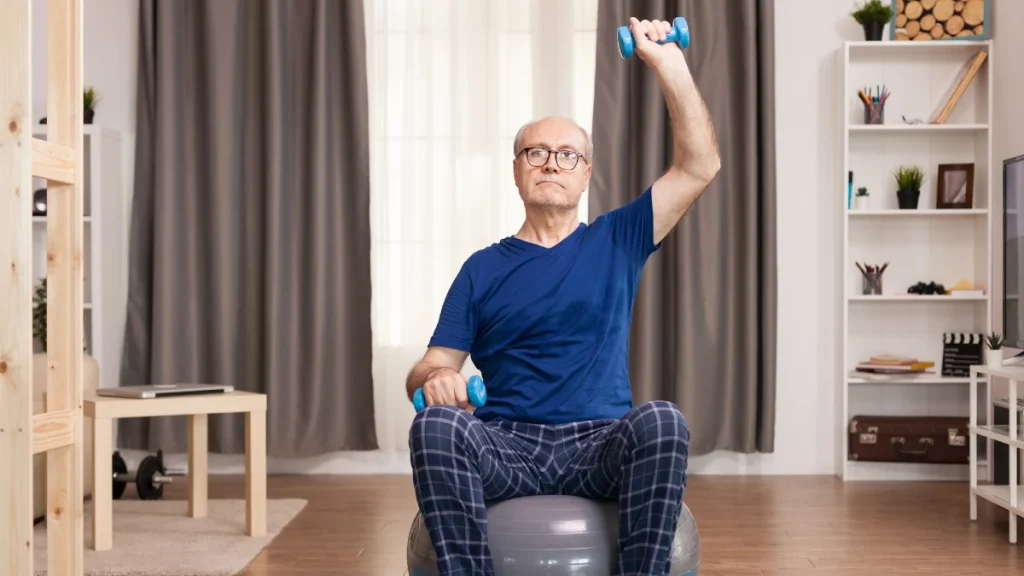
Most of us have a good side and a bad side, usually due to how we sit, drive, or favor an old injury. The mistake is spending equal time stretching both sides because this simply maintains the imbalance.
If you stretch your loose side for 60 seconds and your tight side for 60 seconds, the loose side stays loose and the tight side stays tight relative to the other. You need to change your ratio to fix the asymmetry.
- Identify which side of your body feels tighter or more restricted.
- Use the 2 to 1 Rule where you stretch the tight side twice as long.
- Stretch the tight side, then the loose side, then return to the tight side again.
The Balance Fix
-
Find the Tight Side
Identify which side of your
body feels tighter
or more
restricted. -
The 2 to 1 Rule
Stretch the tight side twice as long as the loose side.
-
The Sequence
Stretch Tight -> Loose -> Tight to restore balance.
9. Neglecting Foot and Ankle Mobility
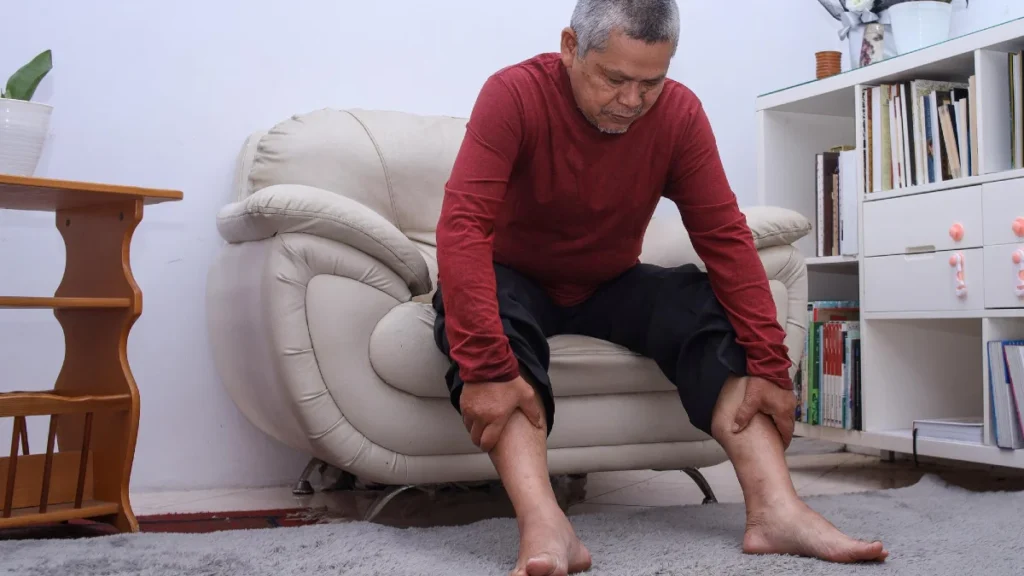
Your feet are your foundation, and if they do not move well, nothing above them will move correctly. Stiff ankles are a leading cause of falls in older adults because they force you to shuffle rather than step through your stride.
Furthermore, tightness in the bottom of the foot pulls on the Achilles tendon, which pulls on the calf, which eventually tightens the hamstring. It is all connected in a kinetic chain.
- Take your shoes off and practice spreading your toes as wide as possible.
- Perform slow ankle circles daily to improve range of motion.
- Address foot tightness to help reduce tension all the way up the leg.
10. The Use It or Lose It Reality

Many people fall into the trap of sitting for six days a week and then trying to do a massive hour long session on the weekend. Biology does not work that way because tissue stiffens rapidly after 50 without daily input.
A heavy session once a week cannot counteract 50 hours of sitting in a chair. Consistency is far more important than intensity when it comes to maintaining your mobility as you age.
- Adopt the concept of Movement Snacking instead of long workouts.
- Do micro doses of mobility such as a chest stretch in a doorway.
- Aim for daily input to keep your tissues hydrated and pliable.
11. Stretching Through Acute Injury

If you pull a muscle, your instinct might be to stretch it out immediately to make it feel better, but you must stop. When you have a fresh strain, the muscle fibers are torn and your body is trying to knit them back together with scar tissue.
If you aggressively stretch an acute injury, you are ripping that healing tissue apart again and effectively picking the scab.
- Prioritize rest and very gentle motion for the first few days after a strain.
- Focus on blood flow rather than stretching to aid healing.
- Wait until the acute pain has subsided before resuming deep stretching.
12. Competing with Your Younger Self

This is the mental mistake that causes the most physical damage because you compare your current range of motion to what you had at age 25.
Your joint structure changes over time, and you may have bone spurs or less cartilage space than you used to. Forcing a range of motion that your skeletal structure no longer allows creates bone on bone compression and pain.
- Work with the body you have today rather than the one you used to have.
- Focus on functional goals like tying your shoes rather than gymnastic feats.
- Listen to your body’s current limits and respect them to stay injury free
How to Fix Your Stretching Routine?

The solution to better mobility is not about forcing your body into positions it cannot handle but rather working with your current physiology. You must shift your mindset from pulling on your muscles to communicating with your nervous system.
By following a strict protocol of safety and timing, you can reverse stiffness and regain lost range of motion without the risk of injury.
- Always perform a 5 minute dynamic warm up like walking or marching to heat up your tissues before you start.
- Hold every static stretch for 30 to 60 seconds because older collagen needs more time to relax.
- Breathe deeply and slowly to activate your parasympathetic nervous system and prevent your muscles from guarding.
- Engage your muscles while stretching to build strength at the end of your range of motion.
- Prioritize your thoracic spine and ankles as these are the two most common areas that cause problems elsewhere.
- Practice movement snacking by doing short stretches throughout the day instead of one long, infrequent session.
The Mobility Manual
-
Dynamic Warm-Up
Perform a 5 min warm-up
(walking/marching) to heat up
tissues. -
The 60s Rule
Hold static stretches for 30-60 seconds to relax older collagen.
-
Breathe Deep
Breathe slowly to activate the parasympathetic system and stop guarding.
-
Movement Snacks
Do short stretches
throughout the day instead
of one long session.