

If you thought inflation was fleeting back in 2024, the forecasts for 2026 might make you rethink your entire portfolio strategy. We all feel it at the grocery store and when paying insurance premiums because sticky inflation is still eating away at our wallets.
The IMF October 2025 outlook predicts global growth will slow to 3.1% while inflation remains above target due to new tariffs and protectionist trade policies.
To survive this new regime, you need to look beyond standard stocks and bonds. We have identified six unexpected assets that profit directly from the economic forces driving prices higher in 2026.
1. Copper The Electrification Deficit Play

Copper is no longer just an industrial metal because it has become the absolute currency of the AI and Green Energy transition.
You simply cannot build a data center, an electric vehicle, or a wind turbine without massive amounts of this material. The supply chain is currently broken due to disruptions at major mines and a severe lack of raw concentrate availability.
This creates a unique investment opportunity where demand is inelastic and buyers must pay the market price to keep their operations running.
- The International Copper Study Group forecasts a massive 150,000 ton deficit in 2026 that will likely drive prices higher.
- This acts as a scarcity trade rather than a fear trade because companies must buy copper to operate regardless of the cost.
- You can invest through Copper Miners ETFs to avoid the specific risks associated with single mine operations.
- AI data centers require significantly more copper cabling than traditional infrastructure which creates a long term price floor.
Pressure Warning
Forecasts predict a massive 150,000 ton deficit in 2026 that will likely drive prices higher.
Scarcity Trade
Companies must buy copper to operate regardless of cost, creating a scarcity trade not a fear trade.
Miner ETFs
Invest through Copper Miners ETFs to avoid risks associated with single mine operations.
AI Wiring
AI data centers need massive cabling, creating a long-term price floor for copper.
2. Farmland The Tangible Food Security Hedge

Land values hit record highs in 2025 with top quality farmland trading around $14,800 per acre according to recent university surveys.
Farmland acts as a boring but powerful hedge because historically its value moves up alongside the Consumer Price Index. Even in a bad economy or a recession, people still need to eat and food production remains essential.
This asset class offers a rare combination of intrinsic value from the dirt itself plus annual income from the crops produced.
- Cash rents for productive land are up approximately 1.7% in late 2025 while vacancy rates are effectively zero.
- You gain dual income streams through land appreciation over time and annual yield from rent payments.
- Fractional investment platforms now allow you to buy shares of a farm without needing millions of dollars to purchase a whole property.
- This sector provides true diversification because it does not correlate tightly with the stock market volatility.
Cash Rents Up
Rents are up 1.7% in 2025 with vacancy rates effectively at zero.
Dual Income
Gain from land appreciation plus annual yield from rent payments.
Fractional Shares
Buy shares of a farm without needing millions for a whole property.
True Safety
This sector provides true diversification away from stock market volatility.
3. Nuclear Energy Powering the AI Boom

The rapid expansion of AI data centers is causing an energy crisis because they run around the clock and consume massive amounts of power.
The EIA predicts US electricity prices will rise 8.5% in 2026 largely due to this surging demand from tech giants and crypto mining.
Solar and wind power cannot provide the steady baseload power these facilities need, leaving nuclear as the only carbon free option capable of meeting the 24/7 demand.
- Uranium prices are starting to decouple from the stock market and are instead tracking global energy scarcity.
- Nuclear is the only scalable clean energy source that works reliably when the sun is not shining and the wind is not blowing.
- Investors can use Uranium Trusts that hold physical uranium or Nuclear Energy ETFs that track utility companies.
- Tech giants are increasingly signing direct power deals with nuclear plants to guarantee their energy security.
Decoupling
Prices are decoupling from stocks and tracking global energy scarcity.
Reliability
The only scalable clean energy that works when sun and wind fail.
Investment
Use Uranium Trusts (Physical) or Nuclear Energy ETFs (Utilities).
Tech Deals
Tech giants are increasingly signing direct power deals for security.
4. Private Credit The Floating Rate Shield

If inflation remains sticky, the Federal Reserve may keep interest rates higher for longer than most investors expect. We could see rates stay above 3.5% or 4% for quite some time, which typically crushes the value of standard fixed rate bonds.
Private credit offers a solution because these loans often use floating rates that adjust automatically. This means if the Fed keeps rates high to fight inflation, your yield stays high or even increases.
- Private market assets have nearly tripled since 2015 and liquidity is much better for 2026 than it was a decade ago.
- Floating rate structures protect your principal from the interest rate risk that hurts traditional bond portfolios.
- Retail investors can now access this asset class through Interval Funds or Business Development Companies on public exchanges.
- These funds often pay higher dividends than traditional savings accounts or government treasuries.
Growth & Liquidity
Assets have tripled since 2015. Liquidity in 2026 is far superior to a decade ago.
Principal Shield
Floating rate structures protect principal from the interest rate risks of bonds.
Public Access
Retail investors can now invest via Interval Funds or BDCs on public exchanges.
High Yields
Often pay higher dividends than savings accounts or treasuries.
5. Lithium 2.0 The Grid Storage Contrarian Play
Lithium prices crashed in 2024 because people worried that electric vehicle sales were slowing down too much. However, 2026 marks the start of the Grid Storage Boom where batteries are needed to stabilize power networks.
Utility scale battery demand is soaring to help manage the energy needs of AI and renewable sources. Experts forecast a major repricing cycle in 2026 as the market realizes the lithium shortage is actually structural rather than temporary.
- Buying a critical asset like lithium at a cyclical low is historically one of the best ways to beat inflation.
- The power grid needs massive commercial batteries to store energy, which consumes huge amounts of lithium beyond just cars.
- Smart investors should focus on producers with established mines rather than speculative explorers that produce nothing.
- This is a long term play on the infrastructure required to keep the lights on in a digital economy.
Buy the Low
Buying this critical asset at a cyclical low is a historic way to beat inflation.
Grid Storage
Massive commercial batteries for the grid need lithium far beyond just EV cars.
Real Producers
Focus on established mines rather than speculative explorers producing nothing.
Long Term Play
This is infrastructure required to keep the lights on in a digital economy.
6. Data Center REITs The Physical AI Estate

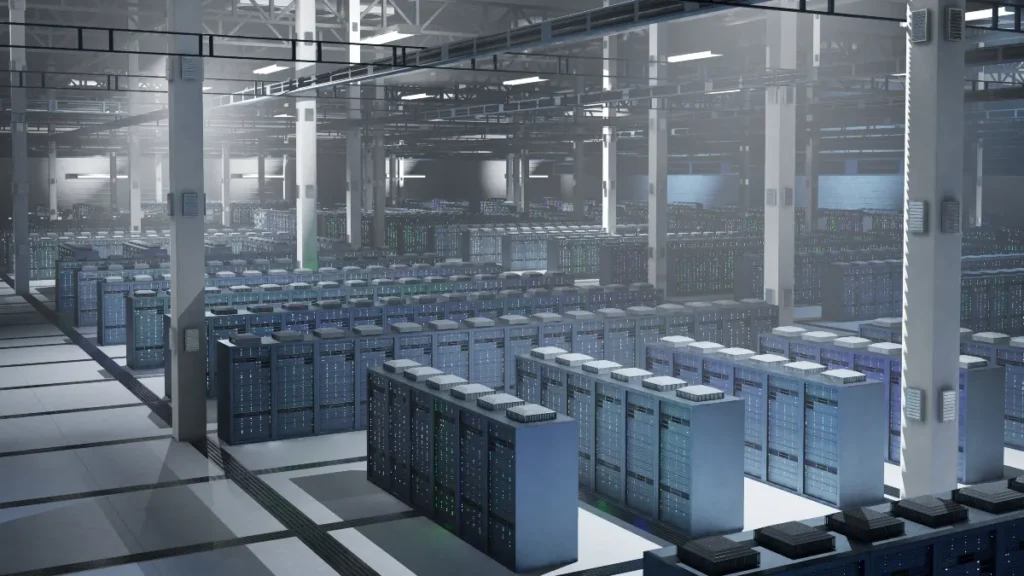
You should avoid buying generic office buildings or mall real estate because those sectors are still struggling with high vacancies. The smart money is moving into the physical cloud where the internet actually lives.
JPMorgan predicts $1.8 Trillion in bond sales by 2026 just to fund the massive expansion of data centers required for modern tech.
Rents in these facilities are rising faster than inflation because there are not enough power hookups to build new ones fast enough.
- These properties usually have strong tenants like Amazon and Microsoft who sign long term leases.
- Commercial leases in this sector often have inflation linked rent increases built directly into the contracts.
- You can invest via Data Center REITs or Digital Infrastructure ETFs that pay dividends funded by server rents.
- The barrier to entry for new data centers is high due to power constraints, which protects the value of existing buildings.
Big Tenants
Strong leases with giants like Amazon & Microsoft.
Inflation Link
Rents rise automatically with inflation contracts.
Invest Via
Data Center REITs or Digital Infra ETFs.
Power Wall
High power needs block new rivals, protecting value.
Conclusion
The era of easy money is over and 2026 is all about owning tangible value and scarcity. To protect your savings, you must shift your strategy from growth at all costs to assets that have real pricing power.
These six inflation proof investments offer a robust shield against the rising costs of the future. Review your portfolio today and check if you have exposure to these commodities or real assets.
If you have zero exposure, start by researching one of these sectors this week to secure your financial future.