

Your brain relies on 20% of all the oxygen you breathe, which makes your breath the anchor for your emotional balance. In stressful moments, we tend to take short, panic-inducing breaths, but we can calm our minds simply by changing that rhythm.
The 4-7-8 technique is a proven path to instant peace because it physically regulates your heart rate using long exhales to slow your pulse naturally.
The evidence is powerful: Dr. Emma Seppälä has found that deep breathing can be more effective than other treatments, even providing relief for veterans suffering from severe PTSD.
We’re here to guide you through the 4-7-8 method, helping you understand why it works and how to use it every day.
The Anxiety Brake
Your parasympathetic nervous system is now active.
What Is the 4-7-8 Breathing Technique?
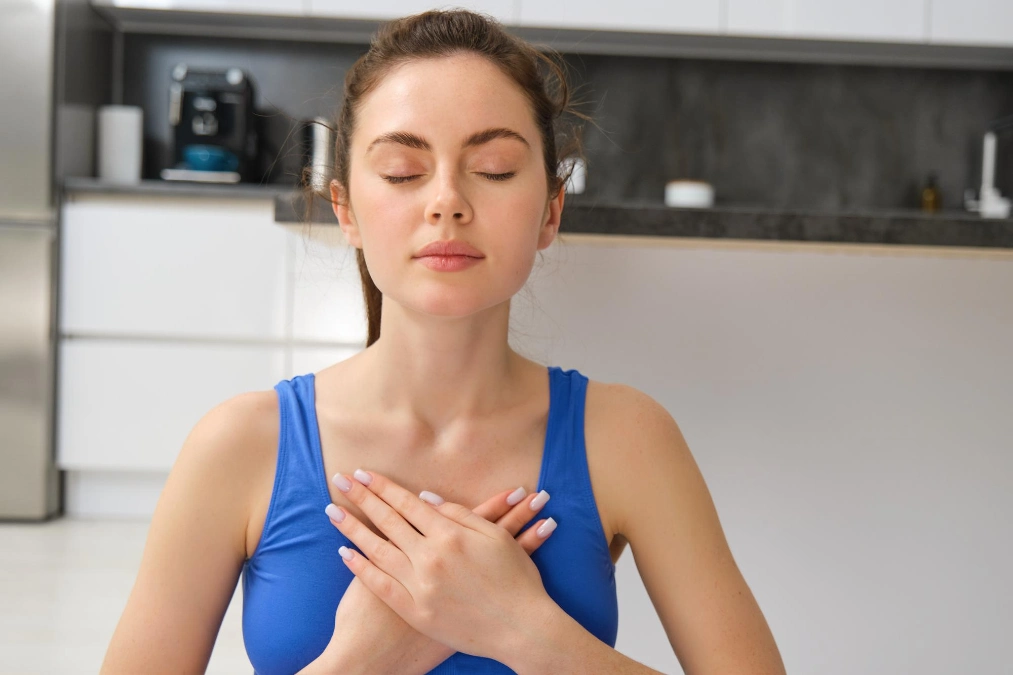
The 4-7-8 method is a rhythmic breathing pattern that acts as a natural tranquilizer for your entire nervous system. It was popularized by Dr. Andrew Weil who adapted it from ancient Pranayama yoga traditions for modern clinical use.
The technique relies on a specific mathematical ratio of breathing that forces your body to shift from a state of alertness to a state of deep relaxation.
You do not need any special equipment or gym clothes because it only requires your lungs and about ninety seconds of your time.
- The ratio requires you to inhale for 4 counts then hold for 7 counts and exhale for 8 counts
- A single cycle takes approximately 19 seconds so four cycles takes just over one minute
- This practice serves as an ideal entry point for beginners looking for immediate stress relief
The Calm Cycle
-
The 4-7-8 Ratio
Inhale for 4 counts, hold for 7 counts, and exhale for 8 counts.
-
19 Seconds
One cycle is approx 19 seconds; four cycles take just over one minute.
-
Beginner Friendly
This practice is an ideal entry point for beginners seeking immediate relief.
The Science Behind How It Hacks the Vagus Nerve
To understand why this works you have to look at the Vagus Nerve which functions as the brake pedal for your body’s stress response.
Your autonomic nervous system has two main modes which are the sympathetic fight or flight mode and the parasympathetic rest and digest mode.
When you feel anxious your body is slamming on the gas pedal and you need a physical way to force the brake down to slow everything.
- The Vagus Nerve connects your brain to your heart and lungs to control your relaxation response
- Holding your breath for 7 counts allows oxygen and carbon dioxide to balance in your bloodstream
- Recent studies show that controlled slow breathing directly improves Heart Rate Variability and lowers blood pressure
The Body Connection
-
The Brain Bridge
The Vagus Nerve connects your brain to your heart and lungs to control relaxation.
-
Gas Balance
Holding breath for 7 counts helps balance oxygen and CO2 in your bloodstream.
-
Heart Health
Controlled slow breathing improves Heart Rate Variability and lowers blood pressure.
How to Perform 4-7-8 Breathing Step by Step
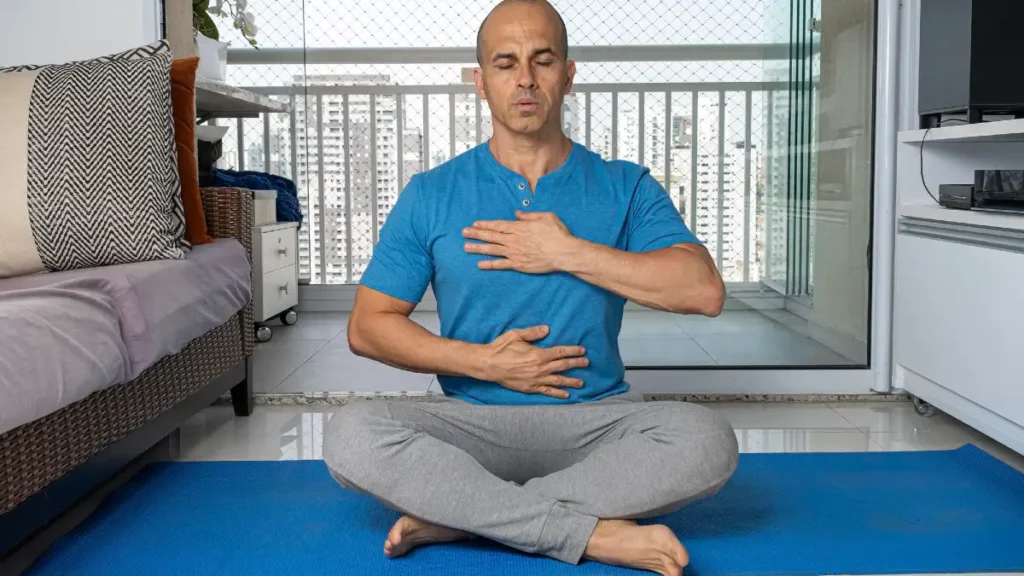
You can perform this exercise anywhere but it is best to learn it while sitting with your back straight and your feet flat on the floor.
The most critical detail that people often miss involves the position of the tongue which must stay in place throughout the entire exercise.
You place the tip of your tongue against the ridge of tissue just behind your upper front teeth and keep it there even while you exhale. The air should move around your tongue and create a soft whooshing sound as it leaves your mouth.
- Exhale completely through your mouth to empty your lungs before you begin
- Close your mouth and inhale quietly through your nose for a mental count of 4
- Hold your breath for a count of 7 and then exhale forcefully through your mouth for a count of 8
- Repeat this cycle three more times for a total of four breaths
Common Mistakes and Safety Tips
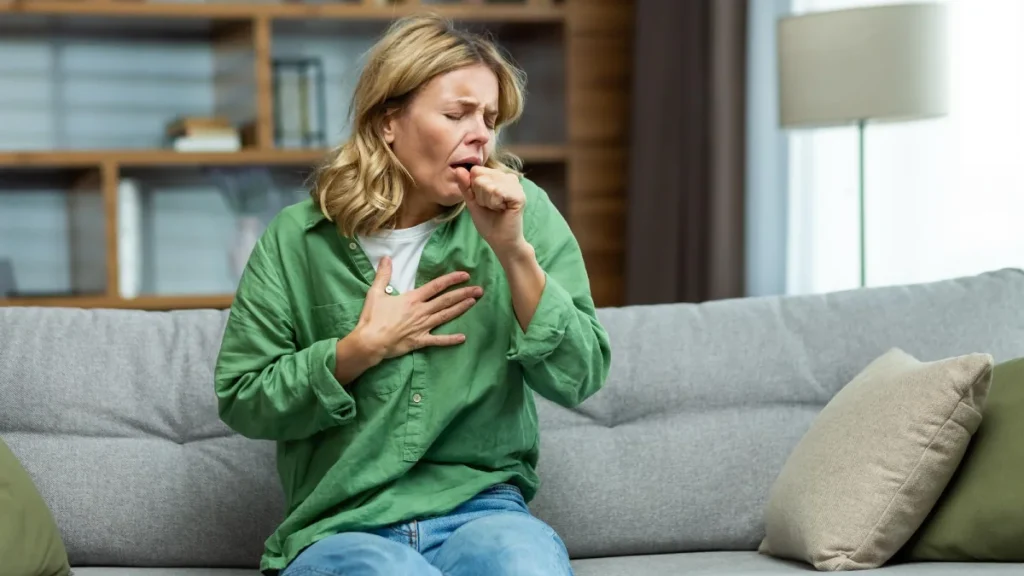
Safety is important because changing your oxygen levels quickly can have powerful physical effects on your body.
It is very common for beginners to feel slightly lightheaded or dizzy when they first try this technique because of the rapid shift in carbon dioxide levels.
This sensation is actually a sign that the method is working but it means you should be sitting down to prevent any risk of falling.
You should never force the breath or strain your lungs because the goal is relaxation rather than exertion.
- Do not practice more than four cycles at one time during your first month of practice
- Speed up the counting if you cannot hold your breath but keep the 4 to 7 to 8 ratio intact
- Stop immediately and breathe normally if you feel faint or uncomfortable
Breathing Safety First
-
4 Cycle Limit
Do not practice more than four cycles at one time during your first month.
-
Adjust Speed
Speed up counting if you can’t hold your breath, but keep the 4-7-8 ratio intact.
-
Listen to Body
Stop immediately and breathe normally if you feel faint or uncomfortable.
When to Use It for Real World Results

Consistency is the key to making this technique work effectively as a reliable tool for anxiety management. While it works wonders during a panic attack it is even more powerful when used as a daily maintenance tool to keep your stress baseline low.
Many people find it helpful to practice this twice a day to train their nervous system to respond faster to the relaxation signals.
It serves as an excellent way to transition between high stress activities like work and rest periods.
- Use it reactively during stressful moments like road rage or before public speaking
- Use it proactively to help you fall asleep faster if you suffer from insomnia
- Practice it when you feel cravings for food or smoking to help ride out the urge
The Zen Toolkit
-
Reactive Use
Use it during stressful moments like road rage or before public speaking.
-
Zz
Proactive Use
Use it proactively to help you fall asleep faster if you suffer from insomnia.
-
Ride the Urge
Practice it when you feel cravings for food or smoking to help ride out the urge.