

You have been told that to stay fit you need to pound the pavement. For many people over 55 running presents a difficult trade-off because it creates high impact forces that degrade older cartilage.
This often leads to joint pain that stops your fitness routine cold. Power walking offers most of the cardiovascular benefits of running with less than half the joint stress.
In this guide you will learn why power walking is safer and how to start protecting your joints today.
Posture Perfect
The Science of Impact Forces and Joint Aging

Imagine jumping off a step stool a thousand times every mile because that is essentially what running does to your knees. Running creates a ground reaction force that hits your body with massive weight on every single step you take.
This force can wear down the cartilage in your hips and knees over time which often leads to chronic pain.
Power walking changes this math completely by keeping one foot on the ground at all times to drastically reduce that heavy impact.
- Walking generates impact forces of only about 1.2 times your body weight compared to 3 times for running
- Aging cartilage handles simple compression much better than the tearing shear force of running
- You eliminate the flight phase so there is never a jarring landing phase for your knees
Power Walking vs Brisk Walking Differences
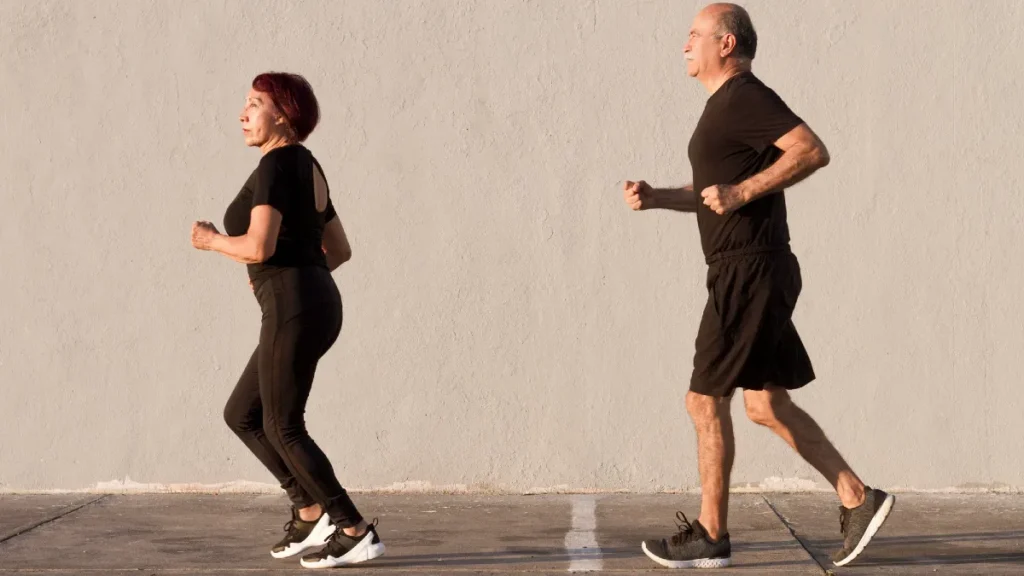
Power walking is an athletic movement that is very different from a casual stroll to the grocery store. It requires a specific speed and technique to get your heart rate up into the aerobic training zone.
You need to move faster than a normal walk while using your upper body to drive your momentum forward. This engages more muscles than you might expect and burns serious calories without the heavy pounding on your body.
- True power walking speed usually sits between 4 and 5.5 mph
- Your arms must stay bent at 90 degrees to act as the engine for your stride
- The movement engages your glutes and core significantly more than casual walking
Stride Analyzer
The Perfect Technique Step by Step Guide
You need to focus on your form because poor technique will limit your results and might actually hurt your lower back. The goal is to move smoothly across the ground rather than bouncing up and down or reaching too far with your feet.
Many beginners make the mistake of taking huge steps to go faster but this actually slows you down and hurts your shins. You must master the basics of body position and foot placement before you try to increase your speed.
- Keep your posture tall with your ears over your shoulders and eyes on the horizon
- Swing your arms to your breastbone but never let them cross the center of your body
- Land on your heel and roll smoothly to your toe for a strong push off
- Take faster and shorter steps instead of longer strides to increase your speed
The Perfect Walk
-
Tall Posture
Keep ears over shoulders and eyes on the horizon.
-
Arm Swing
Swing to your breastbone but never cross the center of your body.
-
Heel to Toe
Land on your heel and roll smoothly to your toe for a push off.
-
👣👣👣
Short & Fast
Take faster, shorter steps instead of long strides to increase speed.
Essential Gear for 2025 Rocker Soles and Cushioning

Your old sneakers might be the reason your joints hurt so you should look for newer technology to support your frame. Shoe companies now make footwear specifically designed to protect aging feet from the hard concrete and asphalt.
The trend for 2025 focuses on thick foam and curved soles that do the work of the stride for you. These features help absorb shock before it travels up your leg bones to your knees and hips.
- Max cushioning shoes use thick foam stacks to absorb shock before it hits your joints
- Rocker bottom soles have a curve that helps roll your foot forward to reduce ankle strain
- Reflective vests are essential safety gear for early morning or evening walks
Your 4 Week Joint Saver Action Plan

You cannot jump straight into five miles of power walking or your shin muscles will get very sore and tight. It is important to start slowly and let your body adapt to the new speed and movement patterns over time.
This plan builds up your endurance gradually over a month so you stay consistent and injury free. Consistency is far more important than intensity when you are just getting started with this new routine.
- Week 1 focuses on posture for 20 minutes just 3 times a week
- Week 2 increases to 30 minutes with a focus on maintaining your arm swing
- Week 3 adds one minute speed intervals to your 35 minute walks
- Week 4 brings it all together for 45 minutes of full form walking
| Week | Schedule | Duration | Key Focus |
| Week 1 | 3 Days per Week | 20 Minutes | Posture Keep head up and shoulders back |
| Week 2 | 3 Days per Week | 30 Minutes | Arms Maintain the 90 degree arm swing |
| Week 3 | 4 Days per Week | 35 Minutes | Speed Add 1 minute fast intervals every 5 minutes |
| Week 4 | 4 Days per Week | 45 Minutes | Full Form Combine posture arms and speed |
Common Power Walking Mistakes to Avoid
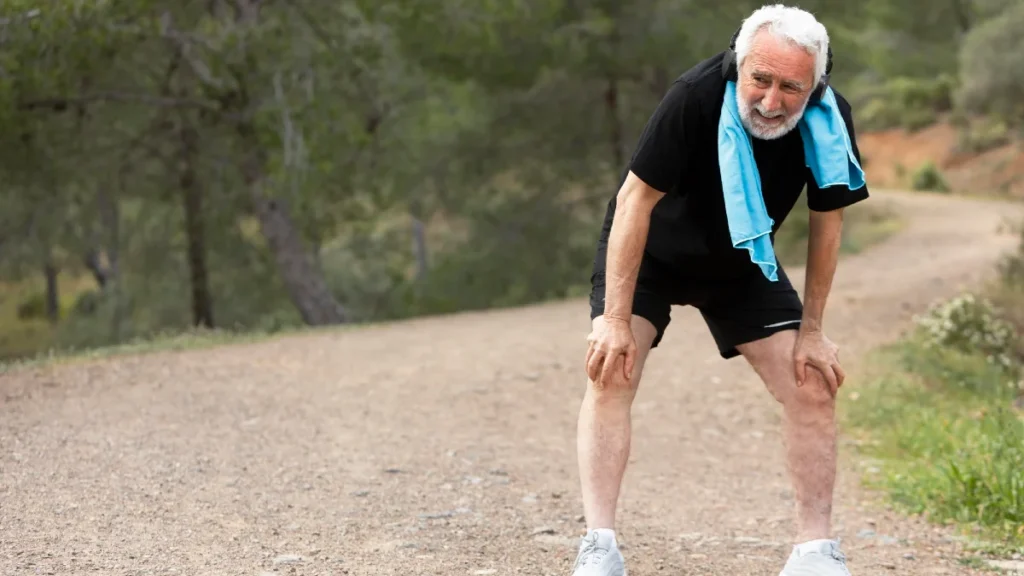
Even with good intentions it is easy to fall into bad habits that can cause injury instead of preventing it. You might think holding weights or taking giant steps helps you burn more fat but these tactics often lead to strain.
Paying attention to these errors early on will keep you walking pain free for years to come. Focus on fluidity and control rather than force to get the best results from your workout.
- Carrying hand weights causes unnecessary stress on your shoulders and alters your natural gait
- Looking down at your feet puts strain on your neck and rounds your upper back
- Overstriding causes a braking effect that sends shockwaves up your shins and knees
Conclusion
You do not have to sacrifice your joints to save your heart. Power walking provides a safe and sustainable path to fitness that respects the changes your body goes through after 55.
By fixing your form and wearing the right gear you can maintain high level cardiovascular health well into your 70s. Swap one run for a power walk this week and feel the difference in your knees.