

The mistake is pricing the move off a retirement list instead of a lease, so the shortlist shows $1,900 a month and a $650 two-bedroom and the budget looks solved before anyone checks what a furnished annual address actually costs.
$2,850 a month in year one, $2,600 once setup is behind them. The gap between that and the $1,900 list figure is $950 a month.
A low rent is not a retirement budget until health coverage, flights home, residency paperwork, setup and the everyday buying pattern are annualized and added to the same page. Then you can hold your portable pension and a 12-month reserve against the full-year total and see whether it fits.
That total decides whether you book the scouting trip or stay.
Quick Tips Before You Start
Build the 12-month column
A visit budget has no renewal, no airfare rhythm and no medical plan. Add those three lines before you compare countries.
Get the health quote first
Ask a local private insurer for a couple's premium plus a US medical evacuation add-on, and read the exclusions, not just the monthly figure.
Price two trips home
Set aside $1,300 round trip per person, twice a year, before you count any rent saving as real.
Separate setup from monthly
Deposit, furniture, appliances and shipping land in year one. Keep them in their own column so the settled year stays visible.
Hold a $10,000 reserve
Keep an emergency fund outside the monthly budget. A budget that uses every dollar has no line to absorb the event.
The Budget Lines The Lists Skip
Every list you have read was built from short stays and vacation spending. A two-week rental includes furniture and utilities; a 12-month lease may not. The difference between those two arrangements is the whole article.
These four lines attach to an address, not a visit. Add them before you trust any rent figure.
1. The Lists Price A Visit, Not A Life
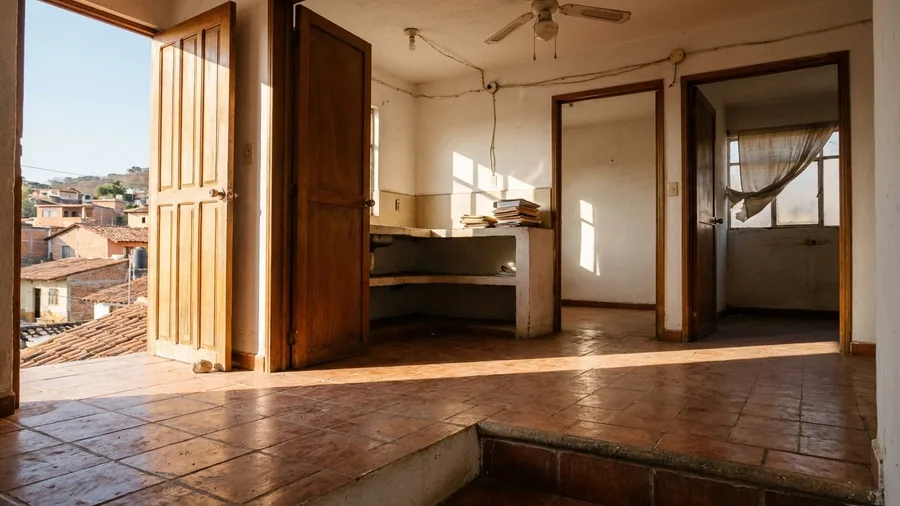
A two-week rental prices higher per night than an annual lease and still costs you less per month, because the nightly rate already carries the sofa, the dishes and the electric bill. Sign a twelve-month lease and those line items detach. The $650 two-bedroom on the list, outside the center, is the unit you toured in February: unfurnished, no cooling unit in the second bedroom, and a landlord who quotes the annual figure once you say you are staying past March. The furnished annual lease with air conditioning runs $850.
What the list never puts on the page is everything that only exists because you have an address: a private health plan at roughly $520 a month, two round-trip flights home, the residency file with its renewals and translations, and the one-time setup of deposit, furniture and shipping. None of them appear in a two-week budget, because a visitor has no renewal date, no return-flight rhythm and no doctor. That is the annual-address test: if the cost would follow you through twelve months of mail, it belongs in the budget, and the list stops at the door.
💡 Tip: Ask a landlord for the annual furnished rate with A/C in writing before you compare it to any list figure.
| Monthly line | List-style budget | Realistic example |
|---|---|---|
| Rent (two-bedroom, furnished, A/C) | $650 | $850 |
| Health coverage (local private + evacuation) | not listed | $520 |
| Flights home (2 people, twice a year) | not listed | $433 |
| Residency paperwork and agent fees | not listed | $150 |
| Utilities, internet and phone | often bundled | $210 |
| Groceries and eating out | $400 | $650 |
| Local transport | $0 | $120 |
| Setup costs (year one only) | not listed | $6,500 total |
| Emergency reserve (separate) | not listed | $10,000 |
| Monthly total | $1,900 | $2,850 year one / $2,600 after |
2. Health Coverage Is The Line That Decides The Budget
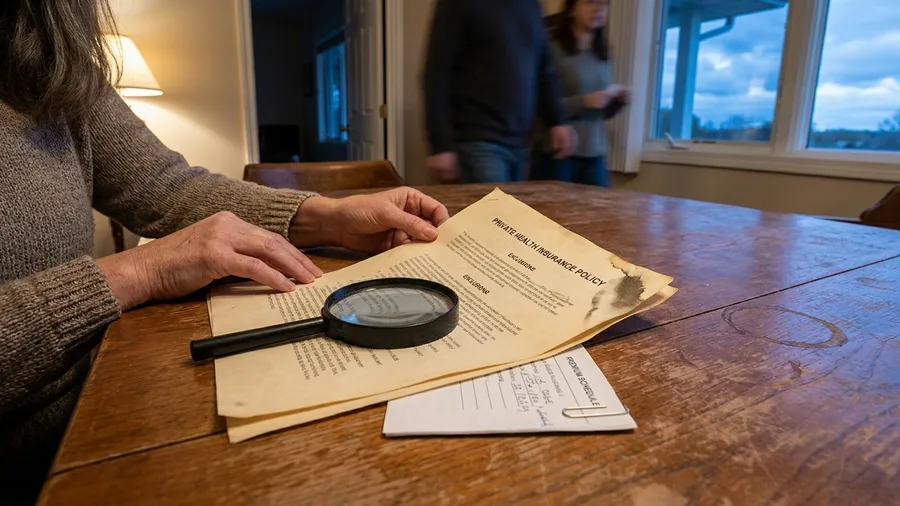
The premium is not the number to trust. A local private plan plus a US medical evacuation add-on covers a couple for around $520 a month, but what that buys depends entirely on the exclusions, and exclusions are where a cheap plan stops being cheap.
Once rent is set, $520 a month is usually the largest recurring line in the whole budget: $6,240 a year that the list budgets leave out completely. Priced on a short stay, coverage looks optional. It is not optional for twelve months of care.
So the question to ask an insurer is not what the plan covers but what it refuses. Does it exclude a pre-existing condition, a specialist referral, a hospital outside the network, a prescription you already take? Those answers, not the monthly figure, decide what the year actually costs.
Residency rules around health coverage vary by country, and they change; confirm the requirements with the destination's embassy or its official immigration site rather than a forum thread.
Then run the year. A $520 premium that excludes the care you are most likely to need is a $520 premium plus the bill it leaves behind. The monthly number is where the budgeting starts, not where it ends.
3. Flights Home Turn Monthly Savings Into An Annual Hit
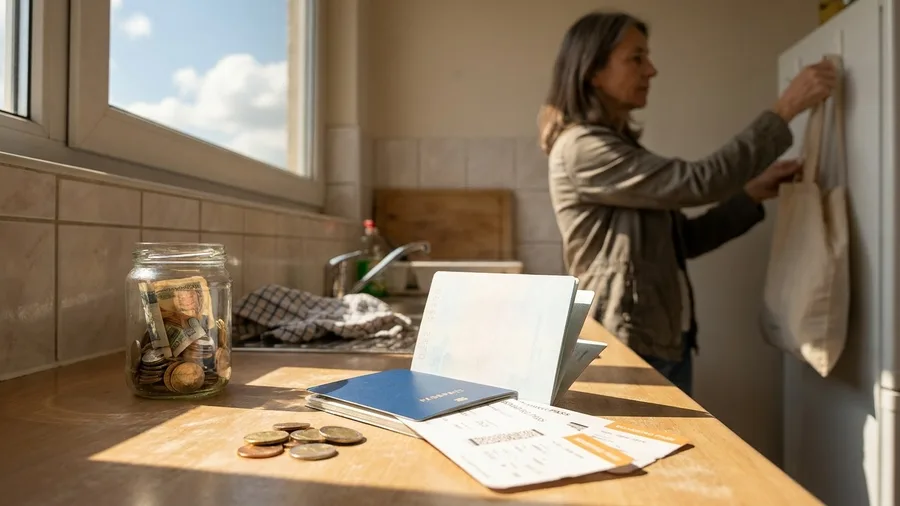
$1,300 buys one round-trip seat home. Two people flying twice a year spend $5,200, which works out to about $433 you should be setting aside every month whether or not a flight is booked that month. Health premiums arrive predictably, the same figure on the same date; airfare does not.
Set that $433 against the rent correction. Going from the $650 the list quoted to the $850 annual lease costs $200 more a month, or $2,400 across the year. The two-trip airfare is $5,200, more than double the rent gap: a couple who move for the cheaper apartment and fly home twice a year put themselves behind, not ahead.
The frequency is the whole question, and it is decided by people, not by prices. Two trips a year is the plan for a couple whose children and grandchildren are a plane ride from the new address, and it is not a luxury line you trim later. Then add one unplanned trip, the call that comes at an awkward hour, and a couple is out another $2,600 in a single booking window.
💡 Tip: Set up a separate savings account and move $433 into it on the first of every month.
The rent gap from $650 to $850 saves $2,400 a year. Two trips home cost $5,200. The cheap rent does not cover the flights.
— What the budget math keeps saying
4. Residency Paperwork Has A Recurring Cost

Answer: less than the move-in year, but never zero. Year one runs around $1,800 for residency filing and the helper who walks it through, and after that figure on roughly $900 a year – renewals, certified translations, courier envelopes, and the agent who keeps the file moving.
The money is only half of it. The rest is time you will not get back: the immigration office that opens at eight and has you queuing by seven-thirty, the photocopy shop across the street charging by the page for a stack of documents, the afternoon lost to a clerk who wants one form signed twice. Multiply that by however many people are on the application and it becomes a regular appointment on your calendar, not a one-time errand.
None of this settles the rules themselves, and it should not try to. Residency requirements and visa categories live at the embassy or official immigration website of the country you are considering, and tax questions are a job for a qualified adviser, not a blog. What matters here is simpler: the cheap first move still leaves renewal paper on the table long after the lease has settled, and that paper has a yearly price tag whether or not the list ever mentioned it.
⚠️ COMMON MISTAKE
Do not budget the first year like the second
Year one carries $1,800 in residency paperwork and $6,500 in setup. The settled year carries $900. Build a first-year column and a settled-year column before you compare the total to your income.
The Costs Inside The Address
The next four lines hide inside the lease, the neighborhood and the first month. They are the costs that make two apartments with the same rent feel like different budgets.
Read each one as a question about the specific address, not the country.
5. Cheap Rent Often Buys A Smaller, Hotter, Farther Home
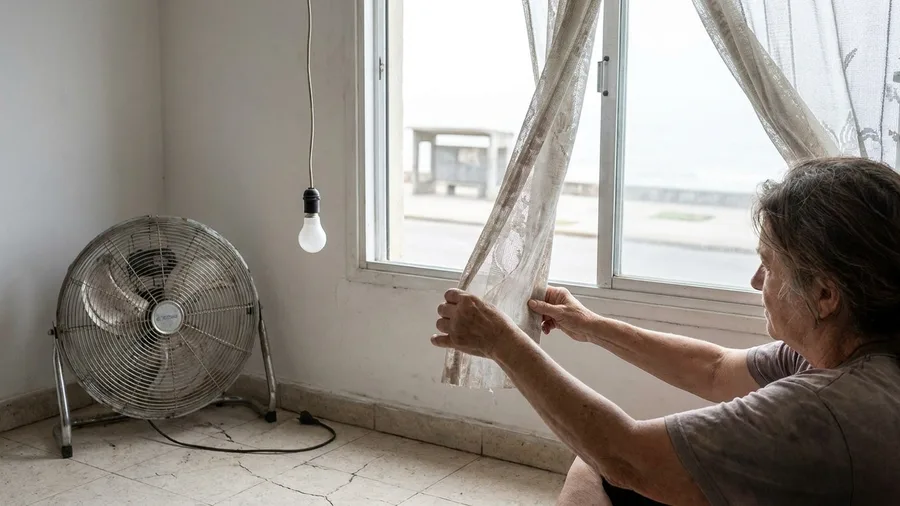
You walk into a place listed at $650 and the heat hits you first – the front room stuffy, one tired fan turning, no furniture to speak of, and like single-story homes that draw retirees, the layout matters as much as the price. The rent itself still needs the same annual scrutiny the health premium and the airfare already got, because the cheap unit and the $850 one are often not the same apartment at all.
The $850 typically gets you a furnished annual lease with air conditioning running; the $650 listing may be bare, hot, and on a short term. A place farther from a clinic, a market or a bus line quietly adds about $120 a month in transport, and cooling a hot unit can tack on $60 in utilities – so furnishings, cooling and transport all move with the rent line, together, not separately.
The Rent Bundle At A Glance
🏠 Hidden gap on $650
$200/month less than the real lease
❄️ First-year true rent
$1,230/month incl. $2,800 furnishing
🚌 Walk vs bus line
20+ min walk to market adds $120
💡 Break-even on A/C
8 months before $850 wins
🛋️ Lease trap to refuse
Anything under 12 months
Bundle rule
Add $270/month and $2,800 up front to any $650 listing before comparing it to $850.
6. The Lists Compare Countries, Not Neighborhoods

The country average is not a neighborhood, and the neighborhood is where you will live. A two-bedroom in the expat area runs $850. The same two bedrooms in a local neighborhood run $550. That is a $300 gap per month, and it buys something specific: walkability, a safer feel at night, and services in English when you need to sort out a bill or a repair.
A national average hides both numbers at once. It tells you nothing about which address you would actually take, so two couples reading the same ranking can land $300 apart and neither is wrong. The average is a starting point for a shortlist, not a budget.
This one costs nothing to check. Pull up the listings yourself and sort by neighborhood, not by country. The $850 and the $550 sit a few streets apart, and only you know which one you would sign. A ranking is not an address-level cost.
7. The First Year Costs More Than The Lists Show
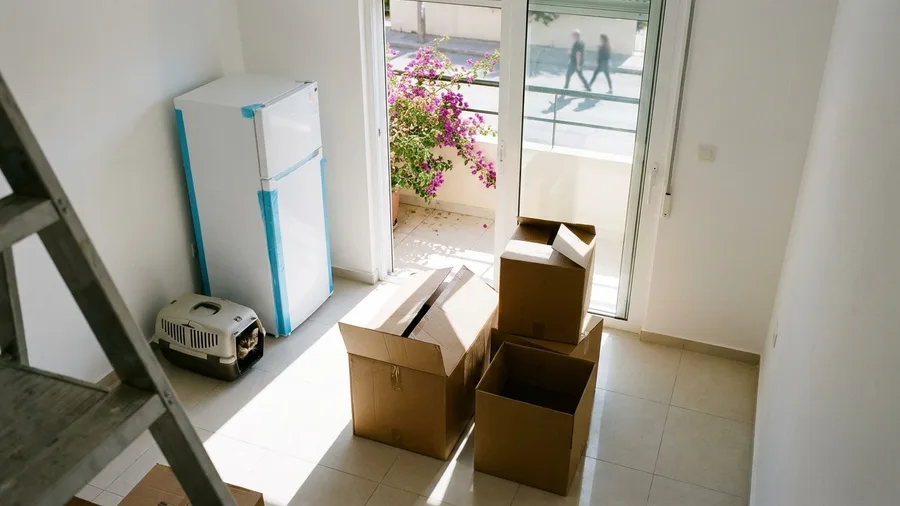
Budget the first year separately. A neighborhood rent that looks settled still leaves one-time setup before the monthly total steadies, and that one-time hit runs about $6,500: a deposit equal to one month's rent, furniture and appliances around $2,800, and $1,200 for shipping and pet paperwork. It lands in the first months, before any rhythm of ordinary living exists.
So the first year prices out at roughly $2,850 a month, about $250 above the $2,600 the settled year settles to. That gap is the setup cost spread thin, and it is why a first-year column belongs in the annual-address test: a budget with twelve identical months is not the same budget as the year you actually move. Most list math assumes the second year and never charges you for the first.
The months that hurt are the early ones. The deposit leaves before the furniture arrives, the shipping container bills on its own schedule, and the pet paperwork clears when it clears, so several of these land in the same four to six weeks. Ask any long-term resident what the first quarter cost against the steady state and the answer is the same: more, and sooner than planned.
💡 Tip: Ship books and winter clothes, not furniture. Replacements bought locally cost less than the freight.
The Vacation Budget vs. The Annual-Address Budget
Vacation math
- Two-week rental, furniture and utilities included
- No renewal date, no agent fee, no translator
- No routine health premium, no evacuation add-on
- One flight down and one flight home
- No setup column: you brought a suitcase
Annual-address math
- Furnished annual lease at $850 with A/C
- $900 a year in renewals, translations and couriers
- $520 a month for a couple plus evacuation cover
- $433 a month set aside for two trips home
- $6,500 setup in year one, then $2,600 a month
8. Low Everyday Prices Depend On Buying Like A Local

The market at seven in the morning smells of wet concrete and cut pineapple, and the vendors are still hosing down the tiles as the first buses pull through. That is the everyday economy you are moving into, and it is genuinely cheap: a bag of tomatoes, a kilo of beans, a whole chicken from the stall at the back, and you have not spent what a single supermarket run at home costs.
But the price you pay depends on which aisle you shop in, and the annual-address test applies here more sharply than anywhere else. The same basket bought at the market and bought at the imported-goods counter produces two completely different monthly totals, and both are real. Your settled year runs near $2,600 only if the everyday basket is the local one, most weeks.
The example budget puts groceries and eating out at $650, utilities, internet and phone at $210, local transport at $120, and it works because it assumes local buying. The imported cheese at $14, the bag of coffee beans flown in, the Western restaurant where a burger costs what three market lunches cost, the medicine with the familiar brand name on the box: that is the expat tax, and it is the line that quietly turns $650 into $900 without any single purchase feeling extravagant.
Watch how it accumulates. One imported-cheese habit adds maybe $40 a month, a daily Western coffee another $60, the imported medicine an unpredictable amount on top, and by spring the everyday column has moved $200 and nobody made a decision. The bus at a dollar a ride versus a taxi at six is the same arithmetic at smaller scale: it is not the one trip that matters, it is the twelve months of trips.
The good news is that this is the one line in the entire budget you control. Learn the market, learn which brands the neighbors buy, find where the local pharmacy keeps the generic version of what you take, and the everyday column holds near its number. Buy familiar, and the cheap place stops being cheap by autumn.
Who Can Carry The Real Cost
The last two questions are not about the place at all. They are about you: your reserve and your income.
A cheap place is only affordable when its full annual total fits a fixed income with slack left over.
9. One Emergency Can Erase A Year Of Savings

Holding the everyday column near its number costs nothing but attention. Building the reserve that absorbs the bad month costs $10,000, and that is the harder ask of the two.
The $10,000 sits outside the monthly budget and is never spent on rent, groceries or a flight. It exists for the night someone is hospitalized, for the evacuation the $520-a-month coverage is designed to cover but whose add-on may not pay every cent, for the call about a parent that turns one planned trip into two and adds $2,600 to a couple's airfare. A budget that spends all its income every month has no line for that event, and the whole point of the cheap place was supposed to be the slack.
10. It Works With A Cushion, Not A Stretched Check

The first year here runs $2,850 a month against a list budget of $1,900; that $950 gap is the whole debate in one number. A couple with a portable pension, a healthy savings balance and a 12-month reserve sitting untouched back home is standing on solid ground in that same apartment, even at the higher annual total. A couple stretching a fixed monthly check with no slack is not, and the trouble will show up long before anyone notices a crisis. Keep the reserve separate and stay honest about what a first year really demands.
💡 Tip: Rent for six months furnished and keep your shipping crate in storage until you have renewed a local visa once.
🧮 Build The Annual Budget In Six Steps
Price the real lease
Get the annual furnished rate with A/C, not the short-stay quote.
Quote health cover
Ask for a couple's premium plus US medical evacuation and read the exclusions.
Set aside the flights
Budget $433 a month for two round trips home for two people.
Add the paperwork
Put $1,800 in year one and $900 in every renewal year.
Open a setup column
List deposit, furniture, appliances, shipping and pet paperwork at $6,500.
Hold the reserve
Keep $10,000 untouched, outside the monthly total.
The Two Totals That Decide The Move
The list price is not the retirement budget. The full-year example is $2,850 a month in year one and $2,600 after setup, and the $650 rent only looked safe because it priced a visit, not an address with health coverage, flights home, paperwork and a setup bill attached.
Build the 12-month budget with health, flights and paperwork first, and book the scouting trip only if that annual total clears. With a portable pension, a 12-month reserve and a plan for two flights home a year, the cheap place can work. Stretching a fixed check with no slack, stay where the math already holds.
Then go back to the $650 listing and read it as $2,600 a month, because that is the number you would actually live on.