
Most of my students over 60 tell me the same thing in their first class: they don’t know where to start. This routine is where I start them. It takes 25 minutes, needs only a sturdy chair and a counter, and covers everything that keeps you independent.
The short version
- Warm up for 5 minutes, do strength moves for 12, balance for 4 and stretching for 4.
- Do it two or three times a week, alongside walking or other activity.
- Move slowly, breathe, and stop if anything hurts.
Warm-up (5 minutes)
- March in place for 2 minutes, holding a counter if you need to.
- Arm circles, forward and back, for 1 minute.
- Gentle side steps for 2 minutes.
Strength (12 minutes)
Do each move for about 45 seconds, rest for 15, and go through the circuit three times.
- Sit-to-stand: stand up from a sturdy chair and sit back down slowly, using your hands only if needed.
- Wall push-ups: hands on the wall at shoulder height, lower your chest toward the wall and push back.
- Heel raises: hold the counter and rise onto your toes, then lower slowly.
- Standing hip extension: hold the counter and gently move one leg straight back, then switch.
Balance (4 minutes)
Stand at the counter and lift one foot slightly off the floor. Hold for up to 30 seconds, then switch. As it gets easier, hold on with one finger instead of your whole hand.
Stretch (4 minutes)
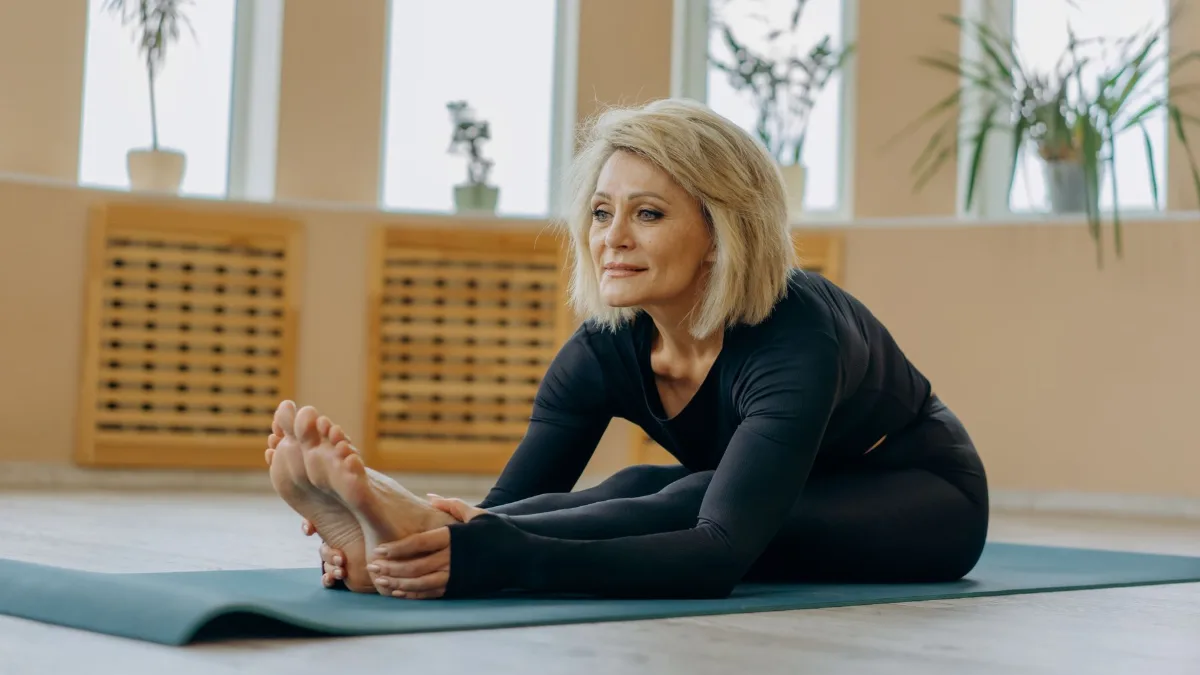
Seated hamstring stretch, gentle neck turns, a chest opener with hands clasped behind you, and a calf stretch against the wall. Hold each for 20 to 30 seconds and keep breathing.
How this fits the guidelines
The CDC recommends that adults 65 and older aim for 150 minutes of moderate activity a week, muscle-strengthening activities on at least two days, and activities that improve balance. This routine covers the strength and balance pieces. Add walking or another activity you enjoy for the rest.
Stay safe
Check with your doctor before starting a new exercise program, especially if you have heart, joint or balance problems. Stop right away if you feel chest pain, dizziness or shortness of breath.
Sources
- CDC: Physical activity guidelines for older adults
- National Institute on Aging: Exercise and physical activity
This article is for general information and is not medical advice. Talk to your doctor before starting a new exercise routine.