

Getting this wrong costs more than worry. Miss a change that needed checking and you lose the easiest treatment window; chase every ache and you lose money, sleep and trust in your own body.
So the decision sits there quietly. A lump, a cough that has outlasted the cold, a streak of blood, weight that dropped without trying – after 50, each one is either ordinary ageing or the thing you have not said out loud yet. What you are actually weighing is the appointment, not the symptom.
The better question is not whether it is cancer. It is whether the change is new, persistent for weeks rather than days, unexplained, getting worse, one-sided, or paired with weight loss, fever, night sweats, anaemia or bleeding – because that pattern, not fear, decides how fast to move.
Sixteen changes follow, and every one carries the same three tiers: common and harmless, worth a routine visit, or get seen promptly. Some of these can be early signs of cancer, and most such changes are not cancer.
By the end you should be holding one appointment, the words to describe exactly what changed and when it started, and enough clarity to know whether primary care or a specialist is the right first call.
Quick Tips Before You Start
Note the start date
Write down when you first noticed the change, even roughly. Doctors ask 'when did this start?' before anything else.
Check the whole body
Look at palms, soles, under nails, scalp and back—places people over 50 often skip.
One appointment covers many
You do not need a specialist for every item. Primary care can sort and refer.
Two changes = faster
If two or more of these appear together, or weight loss is one, move to the prompt tier.
Bring your medication list
Several of these changes are caused by prescription side effects, so bring the full list.
1. Weight loss you didn't try for

Losing weight without trying is the body-wide change doctors take most seriously, because it means the body is burning energy differently.
The pattern usually shows up sideways. Trousers that needed a belt last spring sit loose at the waist. Appetite thins out and meals get smaller without any decision behind it. Or the scale has dropped five or ten pounds over three or four months while diet and exercise stayed exactly where they were.
That is not what ordinary ageing does. Muscle mass does decline slowly after 50, but a slow drift reads differently from pounds coming off over a few months with nothing behind them. Unexplained weight loss is the flag, and it gets checked because the causes divide cleanly into ones that are easy to find and ones that need to be ruled out.
Most of them are not cancer. An overactive thyroid speeds metabolism and burns calories at rest. Uncontrolled diabetes spills sugar into the urine and takes weight with it. Depression quietly takes appetite. So do a long list of prescription medications. Gut problems that interfere with absorption do the same thing.
Cancers that can start this way include pancreas, stomach, lung and lymphoma, and they rarely announce themselves through weight alone. More often there is a second change alongside it, a cough that will not quit, a bowel pattern that has shifted, a node that stayed up. Cancer is one of several possible causes, and most unexplained weight loss turns out to be something else.
Sort it into a tier. Common and harmless applies only when a clear benign cause is already known and weight has been stable since. Worth a routine visit covers a mild drift in appetite or weight with no explanation attached. Get seen promptly covers pounds gone over months without trying, and especially that pattern with any second change riding along.
Book primary care rather than waiting for the annual visit. Before you go, write down a rough weight history, what you weighed a year ago against now, and any other change you have noticed, however small it seems. The blood work usually starts with thyroid and glucose, and that one appointment replaces months of stepping on the scale and wondering.
Tiers of urgency for weight loss
Cancer is one of several possible causes; most unexplained weight loss is not cancer.
2. Fatigue that sleep doesn't fix

Fatigue that sleep does not fix is the second whole-body check on this list, and it often shares a clue with unexplained weight change, since a low blood count or a misfiring thyroid can produce both at once.
Ordinary tiredness has a reason and a recovery. A bad night, a heavy week, a time zone, and then rest puts it right. This is different, and the difference is visible in the calendar more than in the feeling. Weeks pass, sleep does not restore energy, and what actually gets done in a day shrinks a little more each month.
That steady, unrefreshed quality is the thing to name out loud. It is not one rough Monday. It is a Monday that feels like the last six, with a nap that fixed nothing and an evening on the sofa that fixed less.
The harmless explanations are common. Anaemia from low iron or a slow bleed drops the oxygen-carrying capacity of the blood. Thyroid disease slows or speeds the whole system. Sleep apnoea wrecks the quality of the night even when the hours look sufficient. Depression, heart problems and kidney problems all present as exhaustion first. So can several prescription medications, which is why the pharmacist's printout is worth reading before the appointment.
Blood cancers such as leukaemia and lymphoma can present this way, and the tell is the company they keep. Easy bruising where there was none, fevers that return, night sweats, weight drifting down. Cancer is one of several causes, and the large majority of persistent fatigue is not cancer.
The tiers are straightforward. Common and harmless fits a clear short-term cause, an illness just passed, a stretch of broken sleep, and rest that restores energy. Worth a routine visit covers weeks of fatigue that rest does not touch. Get seen promptly if it arrives with bleeding, new bruising, night sweats or weight loss.
Primary care is the first call, and the tests are routine: a blood count and a thyroid panel. When you book, say the whole picture rather than just the tiredness. Mention any bleeding, any bruising, any weight change, because those words move the appointment from a chat to a workup.
⚠️ COMMON MISTAKE
Do not blame it all on age
Assuming every new fatigue is just getting older is the most common mistake. Age explains a slower pace, not a steady, unrefreshed tiredness that shrinks your day. Get a blood count and thyroid test before you accept it.
3. Fevers or night sweats that keep coming back

Drenching night sweats are the body's version of a fever that arrives on a schedule, and when either one keeps coming back without an infection behind it, that pattern earns a look.
This is where the whole-body picture gets sharper: unrefreshed tiredness on its own is vague, but the same tiredness paired with recurring fevers or soaked sheets points at something the body is fighting or misregulating, which is why these belong together.
You wake at two in the morning with your pajamas stuck to your back, strip the sheets, change clothes, and it happens again three nights later, then again the week after. That is not a hot flush, and it is not the flu that never quite left.
Plenty of ordinary things run fevers and sweats. Menopausal hot flushes sit at the top of the list for women in their fifties, along with a low-grade infection that never fully cleared, side effects from a new prescription, reflux, and a dip in blood sugar overnight.
The cancers most often found alongside drenching sweats are lymphoma and leukaemia, typically with fever and unexplained weight loss in the same few weeks. Cancer is one of several possible causes, and most people who sweat through their sheets do not have it.
A hot flush is a wave of heat across the upper body that passes in a few minutes. A sweat worth mentioning soaks the sheets through, forces a change of clothes in the middle of the night, and comes back over weeks rather than tapering off.
The tiers sort cleanly here. If the sweats are clearly menopausal, brief, and settling, they sit in common and harmless. Recurring low-grade fevers with no infection to explain them land in worth a routine visit, and a blood count plus a conversation about timing is a reasonable next step.
Drenching night sweats, or fevers that keep returning, move to get seen promptly. When you call primary care, say the four things that change the picture in one sentence: any swollen nodes in the neck, armpit or groin, any weight you have lost without trying, how high the fevers run, and any travel in the past months.
| Change | Usually harmless | Mention at your next visit | Get seen promptly |
|---|---|---|---|
| Weight loss you didn't try for | Stable weight with a known benign cause | Mild unexplained drift in appetite or weight | Pounds gone over months without trying |
| Fatigue that sleep doesn't fix | Short-term cause, rest restores energy | Weeks of unrefreshed fatigue | Fatigue with bleeding, bruising, night sweats or weight loss |
| Fevers or night sweats | Brief menopausal flush | Recurring unexplained low-grade fevers | Drenching night sweats or recurring fevers |
| New lump or stubborn lymph node | Soft, mobile, recent infection | Most persistent lumps | Testicular lump; hard, fixed or growing lump; node weeks later |
| Changing mole | Spot unchanged for years | Changing mole | Bleeding, ulcerating or fast-growing spot |
| Sore or scab that won't heal | Clearly healing scratch | Spot that crusts repeatedly | Unhealed sore over weeks |
| Breast change beyond a lump | Bilateral cyclic tenderness | Persistent new breast change | One-sided or bloody discharge, dimpling, new inversion |
| Cough or hoarseness outlasting a cold | Cold or allergy resolving | Cough or hoarseness lasting weeks | Blood in sputum, breathlessness, weight loss, smoker with hoarseness |
| Food that sticks or swallowing that hurts | One-off scratch that resolves | Mild reflux-related difficulty | Progressive solids-then-liquids difficulty |
| New heartburn getting worse | Clear meal-related cause settles | New or worsening reflux after 50 | Vomiting, difficulty swallowing, weight loss, anaemia, black stools |
| Lasting change in bowels | Short-lived with obvious cause | Weeks of changed bowels | Blood in stool, anaemia or weight loss |
| Blood in stool or on paper | Clear fissure or haemorrhoid after exam | Bright red blood | Darker tarry stool |
| Blood in urine, even once | Only when treated infection fully explains | Microscopic blood on test | Visible blood in urine, even once |
| Bleeding after menopause | Does not apply | Does not apply | Any postmenopausal bleeding |
| Bloating or belly pain that doesn't settle | Meal-related gas that passes | New persistent bloating after 50 | Early fullness, urinary urgency, pelvic pressure, weight loss |
| Yellowing skin or eyes | Does not apply | Does not apply | This week—primary care or urgent care |
4. A new lump or a stubborn lymph node

A lump that has appeared and stayed needs hands on it, not another month of watching.
A run of unexplained fevers or sweats tends to send fingers to the neck, armpit or groin before anything else happens, and that self-check is how most lumps get found. The places worth a deliberate pass: the hollow above the collarbone, under the jaw, the armpit, the groin, both breasts, and the testicles. Set aside two minutes after a shower once a month and you will know what your own baseline feels like, which is the only way to notice that something new has arrived.
Most of what turns up is ordinary. A cyst fills and drains on its own schedule, a lipoma is a pocket of soft fat that has probably been there for years, and a lymph node swells for a week or two after a cold or a scraped finger, then settles back. Ordinary benign breast change accounts for a great deal of what women find, especially in the week before a period.
Your fingers can answer some of the question. Soft and mobile, sliding under the skin when you push it, is reassuring.
What earns a closer look is a lump that feels hard rather than squashy, sits fixed to the tissue beneath it, causes no pain at all, or is measurably bigger when you check again in a month. Size is the number worth writing down: a pea at the start of March that is a marble by mid-April tells a doctor more in one sentence than any description of how it feels.
The node that matters most is the one that outlasts its reason. A gland still up four to six weeks after the sore throat that caused it has stopped being a normal immune response and started being a question.
Most lumps belong in the harmless tier, and most of the ones that do not belong in the routine one. Cancer sits on the list of possible causes, and most lumps are not cancer, but the sorting is a doctor's job and not a mirror's.
Book the routine visit for any lump that has settled in and stayed put, and move faster for three cases: a hard, fixed or growing lump; a node still enlarged several weeks after the illness behind it; or anything found in a testicle, which gets examined urgently rather than watched. Primary care handles most of these, a breast clinic sees any breast lump, and a testicular lump goes to the front of the queue.
Lump check — at a glance
📍 Check these spots
Neck, armpit, groin, breast, testicle, jaw
🟢 Usually harmless
Soft, mobile, recent infection
🟡 Routine visit
Most persistent lumps
🔴 Get seen promptly
Hard, fixed, growing, or node weeks later
🩺 Who to see
Primary care; breast clinic for breast lump
Key point
A testicular lump is examined urgently rather than watched.
5. A mole that changes shape, color or size
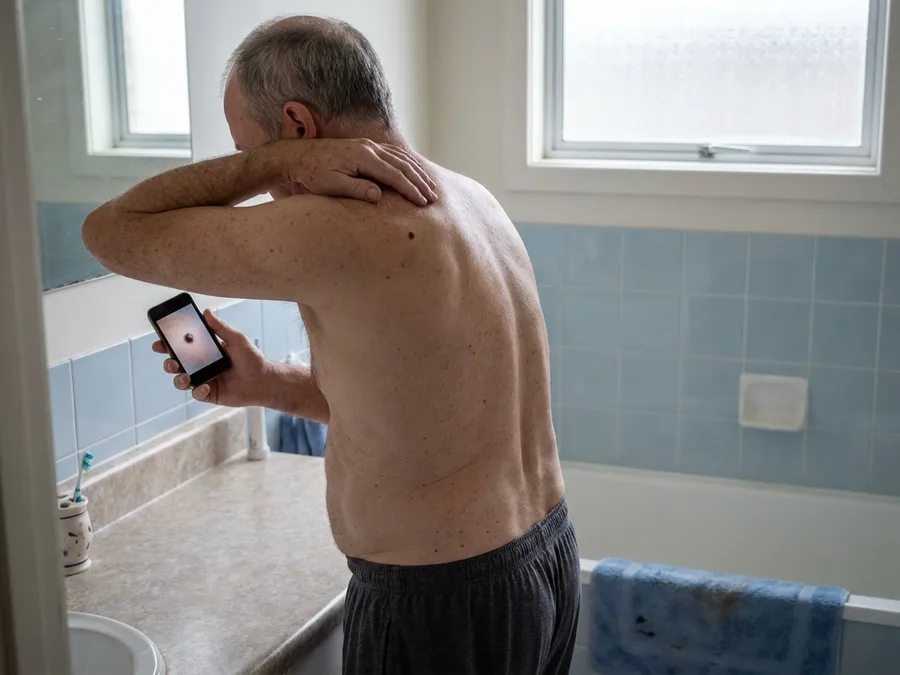
A mole needs checking when it is changing, not when it is merely present.
A lump announces itself through touch; a spot on the skin only reveals itself through sight, and the thing that makes it worth a specialist's time is the same either way, which is what it does over months rather than what it looks like on any single day. So the practical move is a dated photograph. Stand in the same light, shoot the spot close up, and put the image somewhere you will find it again in three months. Two photos taken ninety days apart will tell you more about a mole than any amount of staring at it in the bathroom mirror.
The features dermatologists run through can be done by anyone. Draw an imaginary line down the middle of the spot and check whether the halves match. Look at the edge, which should be smooth rather than ragged or notched. Look at the color, which should be one shade rather than two or three mixed together, and the width, since anything broader than the eraser end of a pencil is worth a look. The fifth letter is the one that counts most: evolving, meaning it is not the same in April as it was in January.
Melanoma is the skin cancer most often caught by the person who owns the skin, in their own bathroom, before any doctor sees it.
Plenty of spots are innocent and stay that way. Sun spots flat and pale brown, the waxy stuck-on patches called seborrhoeic keratoses that seem to appear overnight in your fifties, and freckles that have not shifted in twenty years are all ordinary. The tell is time: a spot with a decade of history behind it is very likely fine, while a new one on the back of the calf at 54 deserves a photograph and a second look.
Some places almost never get checked because the sun never seems to reach them or nobody thinks to look. The palms, the soles, under the fingernails and toenails, and the scalp, particularly along a parting, are where melanomas hide longest. Ask a hairdresser to mention anything new up top, or have someone photograph the crown with a phone.
Spots that have looked the same for years sit in the harmless tier. A mole that is changing lands in the routine-visit tier, booked in the next few weeks rather than this afternoon, and a mole that bleeds, breaks down into an ulcer, or visibly enlarges fast moves to the prompt tier. Cancer is one of several causes of a changing spot, and most changing spots are not cancer.
See a dermatologist rather than a primary care visit for this one. Say how long you have had the spot, that it has changed and roughly when you first noticed, and ask for a full-skin check, bringing any history of blistering sunburn, a childhood spent outdoors, or a previous melanoma, since all three raise the odds and change how closely you will be watched from here.
6. A sore or scab that will not heal

A sore that has not closed after a month is slow healing, and on sun-exposed skin slow healing is the pattern that gets a biopsy.
It is the same persistence test as a changing mole, only on a patch of skin that keeps breaking down instead of changing color. The typical picture is a spot on the nose, the rim of the ear, the lower lip, a bald crown, or the back of the hand, the five places that catch the most sun over a lifetime. It crusts over, seems to improve, bleeds when you dry your face, and then starts the cycle again, and it does this for six or eight weeks without ever quite closing.
Basal and squamous cell cancers are the ones this pattern usually points to if it points anywhere. Both grow slowly and are highly curable when treated, which is why a month of watching is reasonable and a year of it is not. Melanoma is the one that must not wait, and it behaves differently, changing color or growing rather than ulcerating, which is why a spot that is doing both gets seen faster.
Most stubborn sores are not cancer. A scratch that keeps getting knocked, an area rubbed raw by glasses or a hearing aid, a pressure spot on a heel or a hip, or a cold sore that returns to the same corner of the lip are all ordinary and all resolve once the cause is removed.
Sores that are clearly closing, or explained by a scratch you remember, belong in the harmless tier. A spot that crusts repeatedly, heals and breaks down again, lands in the routine-visit tier. A sore or scab still open after several weeks moves to prompt, because at that point the dermatologist is not watching it, they are sampling it.
The same rule applies inside the mouth, where the geography is different. A mouth ulcer that has lasted longer than three weeks in the same spot, or a white or red patch that does not rub off, gets seen by a dentist or an ENT rather than managed with a pharmacy gel, since a pharmacist can soothe it but cannot tell you what it is.
💡 PRO TIP
Photograph it, then compare
For any skin change, take a photo now with your phone and again in a month under the same light. A visual record is more useful to a dermatologist than a description from memory.
7. A breast change beyond a lump
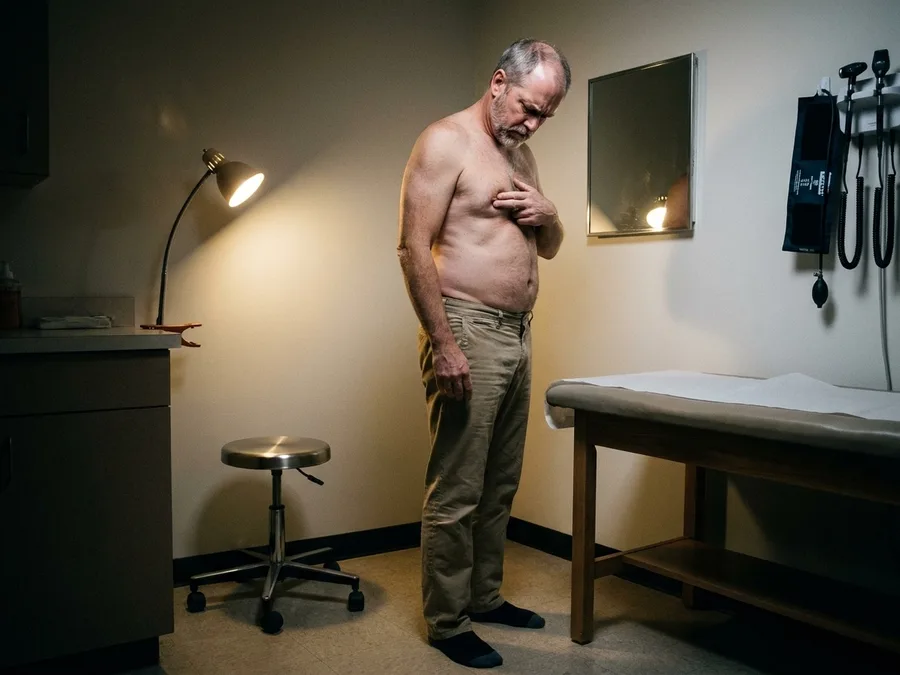
A breast can announce trouble with no lump in it at all.
The skin tells you first. Look for a patch the texture of orange peel, a nipple that has turned inward when it used to point out, or a rash on the areola that shrugs off every cream you try for a fortnight. Fluid from one nipple, especially if it is bloody or runs without a squeeze, counts too. These are the changes a breast clinic wants called about, and each one can show up while the tissue feels perfectly smooth.
Some of these are ordinary. An infection, a milk duct that has stretched and thickened, eczema on the nipple, or the lumpy fibrocystic texture many women carry for decades can all mimic them. A man who notices a firm disc under one nipple should not wait on the assumption that breast trouble is a women's problem; men get it too, and they tend to be diagnosed later because nobody, including them, thought to look.
Tenderness that arrives on both sides with your cycle, or the familiar lumpiness you have had for years, stays in the common and harmless tier. A change in one breast only, still there three or four weeks on, moves up to worth a routine visit. Discharge that is bloody or one-sided, dimpling, a newly inverted nipple, or a rash that ignores cream lands in get seen promptly. Cancer is one of several possible causes, and most breast changes turn out not to be cancer.
Call primary care or a breast clinic directly. A one-sided change is usually answered with imaging rather than another month of watching, and saying which breast and when you first noticed it gets you there faster.
8. A cough or hoarseness that outlasts a cold

A cough that lingers three or four weeks past the cold, or a voice that stays gravelly after the sore throat has gone, has become its own question.
What your doctor does with that is simple and physical. They listen to the chest, ask how long and whether anything comes up, and often order a chest X-ray. If your voice is the problem, they want the larynx looked at rather than treated blind.
The ordinary explanations cover most of it: drip running down the back of the throat, reflux washing up at night, asthma that never announced itself, COPD in a former smoker, and the ACE-inhibitor blood-pressure pills that give a dry cough to a share of the people who take them. Change the pill, and the cough can go. Lung cancer can also sit behind a cough that will not quit, sometimes with blood in what you bring up, breathlessness, or a dull ache that stays in one spot. Hoarseness lasting weeks deserves a look at the voice box, all the more if you have ever smoked. Cancer is one of several possible causes, and most persistent coughs are not cancer.
A cold or an allergy on its way out is common and harmless. A cough or a rough voice lasting weeks without settling is worth a routine visit. Blood in the sputum, breathlessness, weight going down, or weeks of hoarseness in someone with a smoking history goes into get seen promptly. Take it to primary care, and ask outright whether chest imaging makes sense given how long it has been going on.
What separates a lingering cough from one to act on
Watch and wait
- Cough producing clear or white phlegm that thins over days
- Voice recovers after a day of talking or singing
- Symptoms that track the pollen count or a late meal
- Dry cough that began after a new blood-pressure pill
Book it now
- Cough unchanged for three weeks or longer
- Hoarseness past four weeks, worse if ever a smoker
- Any blood, even a streak, in what you cough up
- Cough with breathlessness, night sweats or clothes looser
9. Food that sticks or swallowing that hurts

Food that catches on the way down is not an eat-more-slowly problem when it is getting worse. It is the same tract that carries a cough, one level lower, and the pattern that matters is progressive difficulty: solids first, then liquids, steadily worse over weeks. That direction, from steak to soup to water, is the sequence that sends you for a look.
Harmless causes exist and are common: reflux narrowing, an inflamed oesophagus, anxiety, or a piece of food that scratched on the way down. A one-off scratch that resolves within days sits in the common and harmless tier, and mild difficulty tied to reflux sits in the worth a routine visit tier. Progressive solids-then-liquids difficulty is different, and moves to get seen promptly, with prompt referral for endoscopy rather than another course of antacids.
Oesophageal and stomach cancers are what this symptom exists to catch, and smoking plus long-standing reflux raises the odds. Cancer is one of several possible causes, and most swallowing changes are not cancer, but the steady worsening over weeks is the detail that should not wait for the annual visit.
Primary care is where to start, and the ask is a prompt endoscopy referral. Describe the sequence, which foods first, when liquids began to catch, and how many weeks it has been building.
⚠️ COMMON MISTAKE
Antacids are not a diagnosis
If food is sticking or swallowing is getting harder, do not keep buying antacids because they helped once. Progressive difficulty swallowing needs a look at the oesophagus, not another box.
10. New heartburn that keeps getting worse

Heartburn that starts after 50, or that has stopped answering the tablets that used to work, is a reason to get it looked at rather than to buy another box.
This sits one step below the swallowing problem in the same stretch of gut. The reflux is not new to the human race; what is new is that it arrived at 52, or that the antacid you have relied on for years now does almost nothing, and the burning is back by 9pm most nights.
There are ordinary explanations, and they are the common ones. Reflux disease itself, a hiatal hernia letting stomach contents ride up, extra weight around the middle pressing on the stomach, or a new prescription – calcium channel blockers and some bisphosphonates are the usual suspects – can all start this.
Feeling full after a few mouthfuls, a dull gnawing ache high in the belly, or indigestion that arrived out of nowhere can also be how stomach cancer first shows itself. It is one of several possible causes, and most new heartburn turns out to be nothing of the kind.
Sorting it into tiers is straightforward. If a clear meal-related trigger settles with the usual measures, it lands in common and harmless. New reflux after 50, or reflux getting worse, is worth a routine visit. Vomiting, food that catches on the way down, weight you did not mean to lose, anaemia, or black tarry stools put you in get seen promptly.
Book primary care, or a gastroenterologist. Tell them the month it started and name the medication that stopped working – that one detail does much of the triage for you.
11. A lasting change in how your bowels work

Digestion does slow with age – but a change in your bowels that moves in and stays for weeks is not simply ageing and deserves a look.
Follow the same stretch of gut lower and the test does not change. A bowel habit that shifts and then holds – two, three, four weeks of constipation where you never had it, or looseness that will not settle, or stools that come out consistently narrow, ribbon-thin where they used to be normal – has stopped being drift and become a pattern.
So has the sensation of never quite finishing, of going back to the bathroom ten minutes later for nothing.
Diet is the usual answer. So is not drinking enough fluid, a new medicine, irritable bowel, an over- or under-active thyroid, or diverticular disease – the pouches that form in the colon wall over decades and flare up now and then.
Colorectal cancer commonly produces this kind of change in tandem with blood in the stool or anaemia picked up on a blood test. Malignancy is one of several things that can cause it, and most lasting bowel changes are not cancer.
A short-lived shift with an obvious cause – a stomach bug, a week of travel food – is common and harmless. Weeks of changed bowels is worth a routine visit. Add blood in the stool, anaemia or weight loss and it moves to get seen promptly.
Book primary care. When you do, state your age plainly and whether a parent or sibling has had colorectal cancer or polyps – that history changes what happens next.
12. Blood in your stool or on the paper

Probably – bright red blood is most often a haemorrhoid or a small fissure – but that is a call for a doctor with a gloved hand and a light, not for you standing in the bathroom.
Add blood to a bowel habit that has already changed over weeks and the case for an examination gets stronger, not weaker. The blood is the part of the picture that turns a wait-and-see into a please-check.
Blood that comes and goes is the reason self-diagnosis fails here. A clear week proves nothing, because colorectal cancer can bleed intermittently – and sometimes not visibly at all, showing up only as anaemia on routine blood work. It is one of several causes of rectal bleeding, and most of it is not cancer.
The harmless list is real and long: haemorrhoids, an anal fissure from a hard stool, diverticular bleeding.
Common and harmless applies only after a doctor has actually looked and found a clear fissure or haemorrhoid. Bright red blood on its own is worth a routine visit. Darker, tarry, black stool points further up the gut and moves you to get seen promptly.
Book primary care, or a gastroenterologist. Say whether anyone in your family has had colorectal cancer, and do not let a self-diagnosed haemorrhoid stand in for an examination.
13. Blood in your urine, even once

When you switch on the bathroom light and see the bowl turned pink, red or the flat brown of cola, the first instinct is to wait for next time. There is one answer worth keeping: if it happened, it happened, and your doctor needs to hear about it.
That single show of colour is the kidney or bladder waving a hand, and it does not stop being your body's alarm just because the next visit looks perfectly clear.
The disappearing act is the trap. In the common story, the urine looks normal by the time the bathroom mirror is wiped, and doubt replaces worry. Painless, on-and-off blood is a recognised way bladder cancer first appears, which is exactly why it slips away unmentioned.
Much of the time the cause is ordinary: an infection in the urinary tract, a kidney stone that passed with a scrape, an enlarged prostate, or a punishing workout that turned the urine a pale red.
Two details belong in the booking note. Smoking raises the odds of bladder trouble, and so does a working life around dyes, rubber, leather, paints or other industrial chemicals. Say both out loud when you call.
Most visible blood in urine is not cancer. It is, though, one of the entry points the disease uses, and the point of the appointment is to have the lower-level explanation closed off by a laboratory rather than a guess.
The tiers make this one short. Common and harmless only applies once a treated infection fully accounts for the bleed and the follow-up is clean. Blood found on a test strip with no visible colour is a routine visit. Visible blood is get seen promptly, even one time.
Start with primary care and a urine test, and the day that cup comes back positive with no infection attached, the next stop is a urologist, who has the camera and the imaging to look at the bladder lining and the kidneys directly.
The appointment costs part of an afternoon. The clear result buys back the nights of wondering.
14. Any bleeding after menopause

Any bleeding after menopause is a message from the uterus, and it is never sent to the wrong address. Even a few spots on the paper, a thin pink stain in the underwear, or a streak the morning after sex belongs in a gynaecologist's clinic.
Bleeding from the bladder gets explained rather than watched, and blood from a woman who has already had her last period gets the same rule. There is no ordinary bleed left to attribute this to, which is why a return of it says something must be looked at.
The hardest sentence to hear yourself think is that it might be one last period after all. There is no such event. If the calendar has been clear of cycles for twelve months and blood appears, the waiting is over. That twelve-month line is the line.
The usual harmless causes are worth knowing, because they are common: thinning, dryness-prone vaginal tissue, a polyp, a fibroid, oestrogen hormone therapy, or an infection doing the rounds.
The symptom is famous for one reason. Endometrial cancer often announces itself first through a little spotting, and it is one of the cancer types with the best odds when it is caught at that stage. It is one of several possible causes, and most such bleeding is not cancer.
The tiers barely flex here. Standard-age ordinary and harmless does not apply to any bleeding that returns after menopause, and a routine-appointment waiting list does not apply. Prompt is the category: a gynaecologist, and soon.
The straightforward next step is an ultrasound of the womb lining, usually followed by a small tissue sample, a quick office procedure that brings back a clear answer instead of a guess.
The appointment is one morning. That is a small price to have a question named and answered.
15. Bloating or belly pain that doesn't settle

Bloating that does not settle is different from the bloating that follows a heavy meal. It is new after 50, it is there most days rather than mealtime, and it does not pass.
A pelvic warning does not always come as bleeding. Sometimes it arrives as a waistband that fits differently by evening, a belly that stays firm for weeks, or a feeling of fullness after a few bites.
That is the pattern worth separating from ordinary gas. Persistent bloating often travels with feeling full within minutes of starting a meal, pelvic pressure, or needing to urinate with real urgency.
The benign causes are the common ones. Gas, constipation, lactose intolerance, irritable bowel, and fibroids can each hold a belly uncomfortably full for weeks at a stretch.
Ovarian cancer presents this way, which is exactly why this cluster of complaints is taken seriously. There is no simple screening test for it, so the symptoms are the early warning system.
Cancer is one of several possible causes, and most persistent bloating is not cancer.
Meal-related gas that passes and a lifelong touchy gut sit in common and harmless. New, persistent bloating after 50 sits in worth a routine visit.
Get seen promptly if the fullness comes early in a meal, if there is pelvic pressure or urinary urgency, or if weight is dropping alongside it.
Primary care or a gynaecologist is the right first call, and the usual next step is a pelvic examination and an ultrasound. Book it and describe the timeline, not just the discomfort.
16. Yellowing skin or eyes needs a prompt check
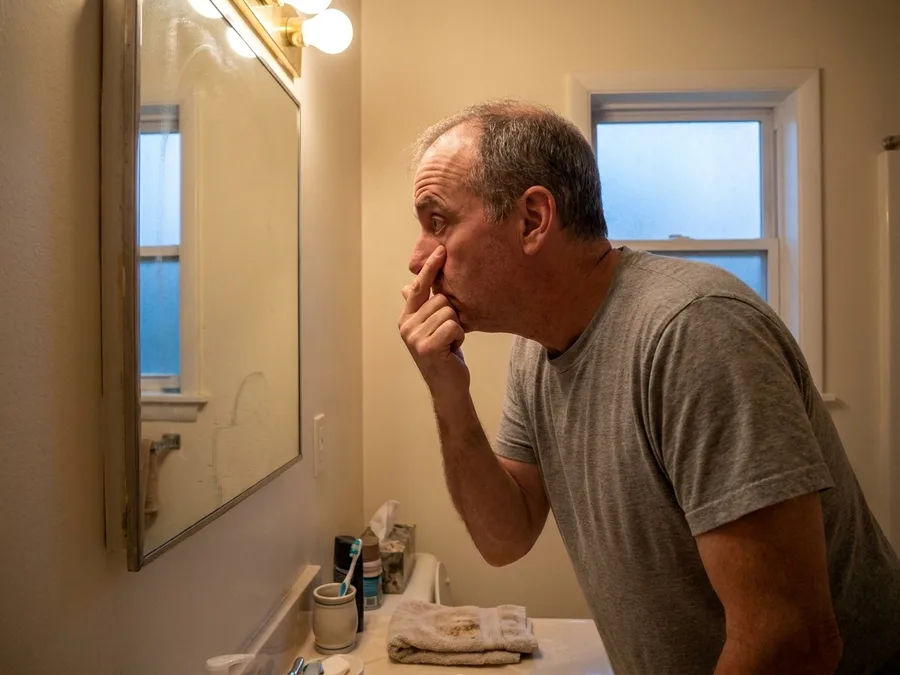
Yellow in the whites of the eyes comes first, before the skin, and it means bile is not draining the way it should. That is the one sign on this list you do not watch for a few weeks. A vague bellyache can be lived with while you think about it; yellow eyes cannot, because the clock on this one runs in days.
The order is what makes it unmistakable. The whites turn first and stay yellow, then the face and chest follow, and the urine goes dark like cola while the stools turn pale and clay-colored instead of brown. The bile that should be leaving through the gut is backing up into the blood instead, which is why the skin and eyes take on the color.
The range of causes is real, and most of them are treatable and none of them are cancer. Gallstones blocking the duct are common, so is hepatitis, so is liver disease linked to years of drinking, and so are a handful of prescription drugs, including some antibiotics and pain medicines. Pancreatic and bile-duct cancer are on the same list, which is the reason the timeline is short rather than the reason to panic.
The specific pattern that raises concern about the pancreas is jaundice that does not hurt, arriving alongside weight sliding off without trying. Painless is the part that fools people, since pain tends to get us to the phone faster than color does.
Cancer is one of several possible causes here, and not every yellow eye is cancer. The tier still does not change, because the timeline is urgent either way. Of the three tiers the rest of this list sorts into, only one applies: get seen promptly, this week.
Call primary care the same day and say the word jaundice, or go to urgent care if you cannot get through. Blood tests and imaging come next, and the person on the phone needs to hear that the whites of your eyes are yellow, not that you are a bit off-color and would take the first appointment in three weeks.
Do not accept that appointment weeks out. This is the least ambiguous sign on the whole list, and the one where a delay costs the most.
Frequently Asked Questions
How do I know if a change is just aging or something to check?
Ask whether it is new, persistent (weeks, not days), unexplained, getting worse, one-sided, or paired with weight loss, fever, night sweats, anaemia, or bleeding. If it fits any of those, it moves up a tier. Ordinary aging changes are usually gradual, bilateral, and explained by something obvious.
I have two of these changes at once. Does that matter?
Yes. Two or more of these appearing together, or weight loss as one of them, means do not wait for the annual visit. Book with primary care and state both changes and when each started.
Which doctor do I book with for a change?
Primary care first for most changes—they can order blood work and refer. A breast lump goes to a breast clinic, a changing mole to a dermatologist, postmenopausal bleeding to a gynaecologist, and blood in urine to a urologist after a urine test. Urgent care is for the sudden or severe, such as jaundice.
Can I just watch a change for a few weeks before booking?
For a mild, clearly explained change, a short watch is reasonable. For anything in the prompt tier—visible blood in urine, postmenopausal bleeding, progressive difficulty swallowing, unhealed sore, drenching night sweats—do not watch. Book now.
What should I bring to the appointment?
Bring a rough weight history, the date you first noticed each change, your full medication list, and any family history of cancer or polyps. If you have photographed a skin change, bring the photos.
The one appointment that sorts all sixteen
The decision in front of you is not whether this is cancer. It is how much of a pattern you are holding, and what that pattern asks for: most of these sixteen will land as harmless, a good number as a routine visit, and a few as get seen promptly.
So book it, and be specific on the phone: what changed, when it started, whether it is one-sided or getting worse. Primary care first for lumps, cough, fatigue, fevers or weight loss. A dermatologist for a changing mole or a sore that will not close. A gastroenterologist for swallowing, heartburn, bowel change or blood in stool. A urologist for blood in urine, a gynaecologist for postmenopausal bleeding or settled pelvic bloating, an ENT for weeks of hoarseness or a mouth sore that will not heal.
If two or more of these appear together, or weight loss is one of them, skip the wait for the annual visit and book now – and confirm current screening schedules with the USPSTF, the American Cancer Society or the CDC. One appointment, with dates and the list in hand, replaces a month of three a.m. weighing.