
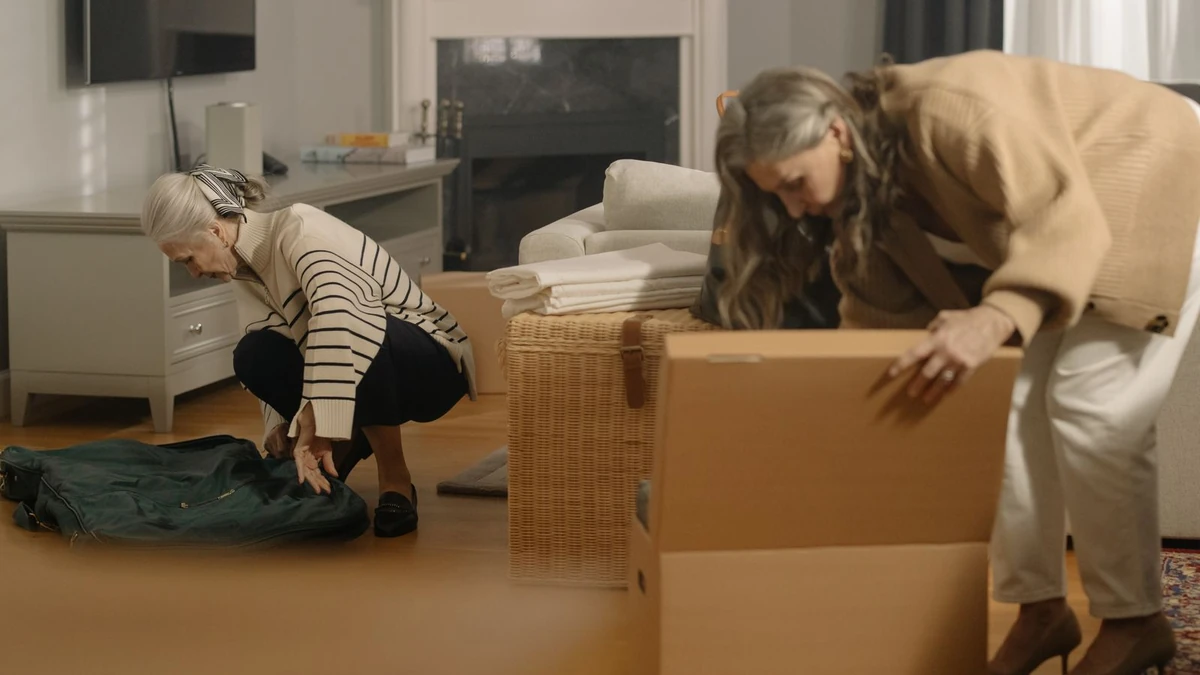
The best way to declutter before downsizing is to measure your new home first, then work room by room from the easiest space to the hardest. Leave photos and keepsakes for last. Give yourself about eight weeks.
I have sold a family house myself. Packing was the easy part. Deciding what came with us was the real work, and nobody warned me how long it would take.
You are not alone if the job feels huge. In a national study from 2010, 61% of people in their 60s said they owned more things than they needed. The nine steps below break it into small jobs you can finish in an afternoon.
At a glance
What You’ll Need
Gather these before you open a single drawer. Having them ready stops you from quitting halfway through a room.
- A floor plan of the new home, with room sizes
- A tape measure
- Four sturdy boxes or bins per room
- A thick marker and a roll of painter’s tape
- Trash bags and a few small boxes for papers
- Your phone camera
- A notebook for the list of what is going where
Step 1: Measure the New Home First

Start with the space you are moving into, not the one you are leaving. Every later decision gets easier once you know what fits.
Ask the landlord, builder or agent for a floor plan. Then measure three things yourself: the wall space in each room, the kitchen cabinets, and the hanging rod in each closet.
Next, walk through your current home with the tape. Write down the big furniture that will fit and where it will go. Anything not on that list is already decided.
Watch out
Measure doorways, hallways and elevators too. A sofa that fits the living room is no use if it cannot get through the front door.
Step 2: Set Up Four Boxes in Every Room
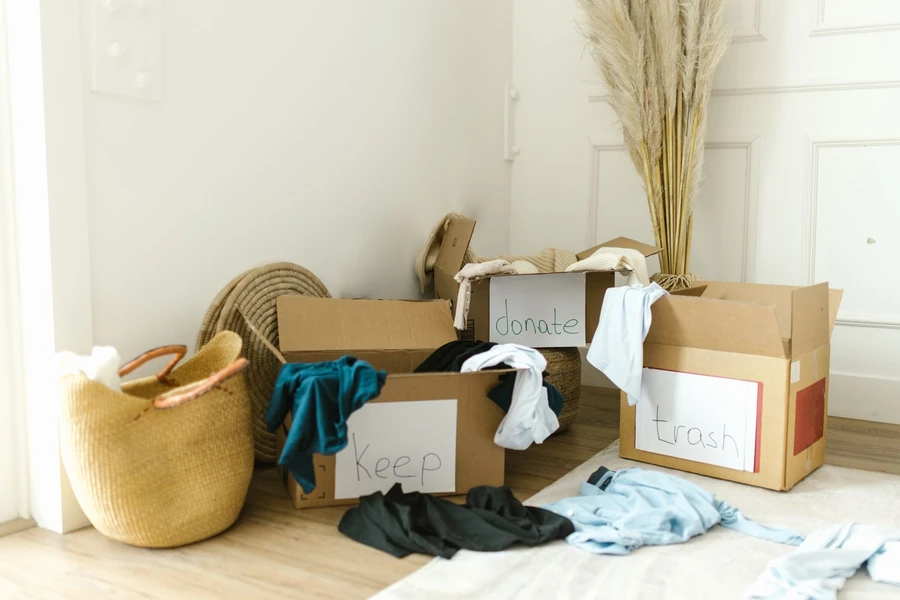
Label four boxes: Keep, Family, Donate or Sell and Trash. Carry them into each room as you go.
Pick up one item at a time and put it in a box. Do not set anything back down on the shelf. That single rule is what keeps a room moving.
You will want a fifth box for “maybe.” Allow yourself one per room, tape it shut and write the date on it. If you have not opened it in 30 days, donate it unopened.
Step 3: Begin Where the Feelings Are Weakest
Do not start with the bedroom or the photo albums. Start with rooms that hold no memories: the spare bathroom, the laundry room, the linen closet and the garage.
These rooms are quick, and quick wins teach you how to decide fast. By the time you reach the hard rooms, you will have had weeks of practice.
Two things in these rooms need special handling.
Old medicine. The FDA says the best choice is a drug take back site or a prepaid mail back envelope. The DEA lists more than 15,000 year round drop off sites.
No site nearby? Mix the pills with used coffee grounds or cat litter, seal the bag and put it in the trash. A few strong painkillers should be flushed instead, so check the FDA’s flush list first.
Paint, cleaners and batteries. The EPA says these should never go down a drain, on the ground or in the regular trash. Keep them in their original containers and take them to a local hazardous waste collection day.
Step 4: Clear the Kitchen by Counting

Kitchens fill up with doubles. Count instead of guessing.
How many people will sit at your new table? Keep that many place settings, plus four for guests. Do the same with glasses, mugs and towels.
Then sort the rest with one question: did I use this in the past year? The bread maker, the third casserole dish and the fondue set usually fail that test.
Line up what you are keeping on the counter. If it will not fit in the cabinets you measured in Step 1, cut again.
Step 5: Cut the Closet to the New Rod

Look up the closet rod length you wrote down in Step 1. That number is your limit.
Now mark the same length on your current rod with painter’s tape. Hang the clothes you wear most inside the tape. When the space is full, you are done choosing.
Everything outside the tape gets one honest look. Keep it only if it fits you today and you would buy it again. Clothes kept for a size you used to be are the first to go.
Step 6: Sort the Paperwork Into Four Piles

Paper feels urgent, so people keep all of it. Most of it can go. The table below follows guidance from the Federal Trade Commission and the IRS.
| What it is | How long to keep it |
|---|---|
| Birth certificates, Social Security cards, wills, military records | Forever, locked up |
| Tax returns and the records behind them | At least 3 years |
| Bank statements, pay stubs, paid bills | 1 year |
| ATM receipts, credit card offers, expired cards and IDs | Shred now |
The IRS says three years covers most people. A few cases need six or seven, so check its record keeping page if your taxes are complicated.
Shred anything with your name and an account number on it. No shredder? The FTC suggests looking for a community shred day.
Before you shred
Ask your tax preparer which papers to keep for the house you are selling. Closing documents and receipts for big improvements can matter at tax time.
Step 7: Give Family a Deadline
Your Family boxes are full by now. Send each person photos of what you have set aside for them, and name a pickup date two or three weeks away.
Be ready for a “no thanks.” Grown children often do not want the china or the dining set, and that is not a judgment on you. We wrote a full guide on what to do with your stuff when your kids don’t want it.
When the date passes, whatever is left moves to Donate or Sell. Do not turn your new spare room into a storage unit for other adults.
Step 8: Save Photos and Keepsakes for Last
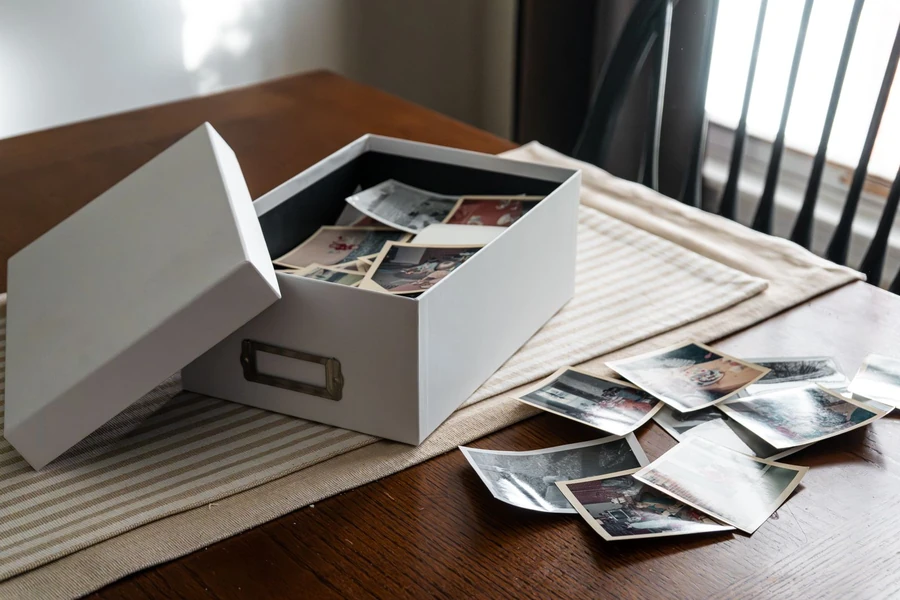
This is the slowest step, which is why it comes near the end. By now you have made hundreds of small decisions, and it shows.
Give each person in the house one memory box. Whatever fits inside comes along.
For things too big to keep, take a photo first. A picture of your father’s workbench holds the memory in a way that a garage full of his tools cannot.
Loose photos are easier than they look. Throw out blurry shots, doubles and scenery with no people in it. Most boxes shrink by half.
Step 9: Get It Out of the House Within a Week

Bags by the door have a way of creeping back in. Book the pickup the same day a room is finished.
- Salvation Army offers free furniture pickup. Book online or call 1-800-SA-TRUCK.
- Habitat for Humanity ReStore takes furniture and building materials. Many stores collect large items for free.
- Goodwill rules vary by area, so call your local store first.
Ask for a receipt every time. If you itemize, the IRS lets you deduct household goods in good used condition or better. A gift worth $250 or more needs a written note from the charity.
Tax rules for donations changed for 2026, so check with your preparer before you count on a deduction.
An 8 Week Schedule to Declutter Before Downsizing
This is one example of how to spread the work. Stretch it if you need to.
| Week | Where to work | Goal |
|---|---|---|
| 1 | New home and your big furniture | A list of what fits |
| 2 | Spare bath, laundry, linen closet | Fast, easy wins |
| 3 | Garage, shed, basement | Hazardous waste gone |
| 4 | Kitchen and dining room | One set of everything |
| 5 | Bedrooms and closets | Clothes fit the new rod |
| 6 | Office and paperwork | Shredded and filed |
| 7 | Family pickup week | Deadline passes |
| 8 | Photos, keepsakes, last donation run | One memory box each |
Common Mistakes to Avoid
- Renting a storage unit “for now.” A 10 by 10 unit averages about $119 a month, according to StorageCafe. That is more than $1,400 a year to delay a decision.
- Starting with the photo albums. You will lose a full day and clear nothing.
- Deciding for your spouse. Each person sorts their own things.
- Doing it all in one weekend. Tired people keep everything.
- Saving things for the kids without asking them. Ask first, then set the deadline in Step 7.
When to Bring In Help
Some homes are too much for two people. If you have 40 years of belongings, a health problem or a closing date four weeks away, hire help.
A senior move manager plans the sort, packs, and sets up the new home. AARP reports rates of $60 to $120 an hour. Ask for a written estimate before any work starts.
Questions People Ask About Decluttering to Downsize
How long does it take to declutter before downsizing?
Plan on two to three months. In one study of 40 older households, the job took anywhere from under three weeks to more than two years. A deadline, such as a closing date, speeds it up more than anything else.
What should I never throw away?
Keep birth certificates, Social Security cards, wills and military records for good. Hold on to at least three years of tax returns. If you are unsure about a paper, put it in a folder and ask your tax preparer.
Which room should I declutter first?
Pick the room you care about least. For most people that is a spare bathroom, the laundry room or the garage. Leave bedrooms, photos and keepsakes until you have a few weeks of practice.
Pick Up the Tape Measure Today
Step 1 takes less than an hour, and it makes every later choice simpler. Get the floor plan, measure, and write your furniture list this week.
Still choosing where to move? Read why so many retirees want a single story home before you sign anything.
This article is general information, not tax or legal advice. Tax rules on donations and record keeping depend on your situation, so check with a tax professional.