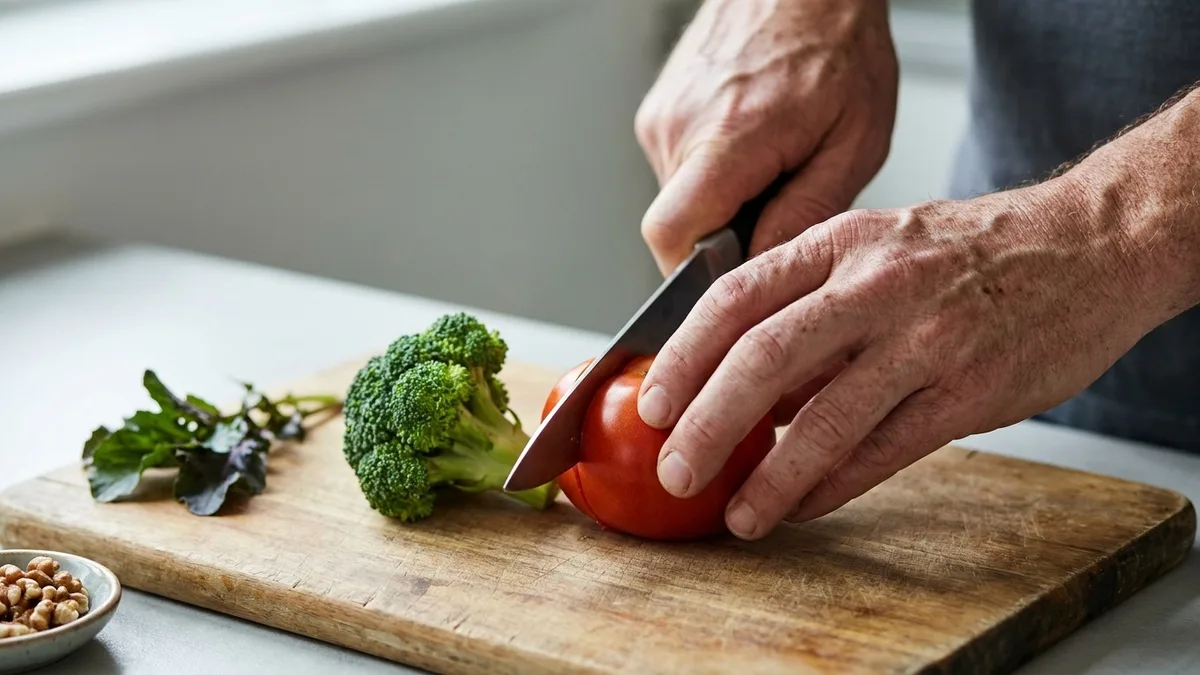
Most men over 50 assume prostate-friendly eating means hunting down the one food that matters – tomatoes, soy, pomegranate – or avoiding the wrong one. The surprise is that the evidence points at the pattern, not the item.
A concrete day looks like this: 1/2 cup cooked tomatoes, 1 cup broccoli, 4 oz salmon, 1 oz walnuts, 1/2 cup edamame, 1 cup berries, 2 cups leafy greens, 1/2 cup beans, 1/2 cup oats, 1 oz pumpkin seeds, 1 cup green tea, 1/2 cup pomegranate arils, 1 medium carrot. No single item on that plate prevents, treats, or cures prostate cancer. The value is a repeatable set of cheap, low-prep foods that push processed meat, chips, soda, or beer off the plate.
So the plate is the work, and it comes down to four checks per food: serving, cost, prep window, and what it replaces. Beyond that, three risk-associated habits – smoking, heavy drinking, and frequent processed-meat or high-saturated-fat meals – are worth cutting for two weeks and raising at your next appointment.
Pick one food to add this week and one habit to cut. Cooked tomatoes or canned beans are the cheapest starts, and the CDC, NCI, and American Cancer Society pages explain the habits without a scare number.
Quick Tips Before You Start
Shop the frozen aisle
Frozen broccoli, edamame, berries and kale are cheaper per serving than fresh and last all week.
Batch on Sunday
Cook 2 cups of oats and 2 cups of beans, wash greens, and portion nuts and seeds into 1-oz bags.
Canned fish counts
Canned salmon or sardines at $2–$3 per can is the budget swap for fresh fillets.
Rinse your beans
A quick rinse cuts sodium on canned beans without losing fiber or protein.
Keep it simple
Aim for 5–7 of the 13 foods on a typical day, not all 13 at every meal.
1. Cooked Tomatoes With Olive Oil
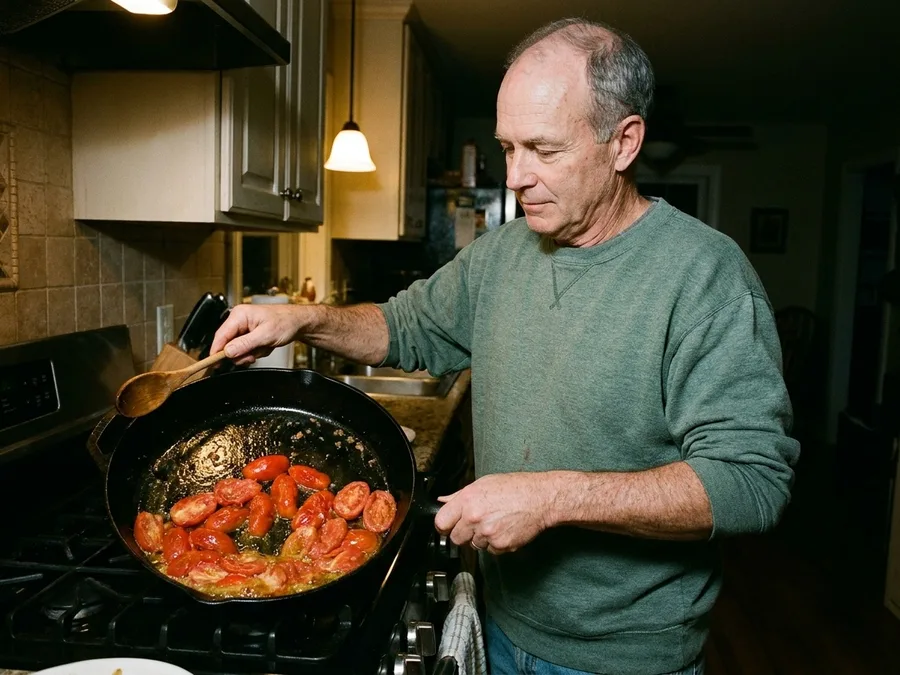
A tomato earns its place on the plate for a plainer reason than the one you have heard. It is cheap, it cooks in ten minutes, and it slides into meals a man already eats.
The serving that shows up in the research is modest: 1/2 cup cooked, which is roughly 3 to 4 plum tomatoes or 1 cup of canned. Halve them, heat 1 teaspoon of olive oil in a skillet, and let them break down for 10 to 15 minutes until they slump and the liquid tightens.
Lycopene is the nutrient behind all the tomato talk. It is real, and it is why tomatoes appear on every prostate-friendly list – but the NCI and the American Cancer Society are careful here, and so is this article: no food has been shown to prevent, treat, or cure prostate cancer. The tomato is a vegetable, not a therapy.
Canned crushed tomatoes are the year-round answer at a couple of dollars a can, and in-season plum tomatoes run about $1.50 a pound. Out of season, the canned version is often better anyway – denser, sweeter, less watery.
This one suits the man whose week already includes pasta, eggs, or chili, because the 1/2 cup disappears into a base he is cooking anyway. If tomato acidity sets off reflux, skip it; no vegetable is worth a bad night.
That is the fastest win on this list. Olive oil and a sauce, a scramble, or a pot of chili make the serving repeatable without a separate cooking project, and the cheapest start is $1.50 a pound in season.
💡 Tip: Add a pinch of salt and let the tomatoes cook down until they stick slightly to the pan. That caramelization is where the flavor comes from.
⚠️ COMMON MISTAKE
Cooking tomatoes wrong
Most men either eat them raw or drown them in sauce. The sweet spot is 1/2 cup cooked with a teaspoon of oil. Anything more and you are just adding calories without extra benefit.
2. Broccoli and Other Crucifers
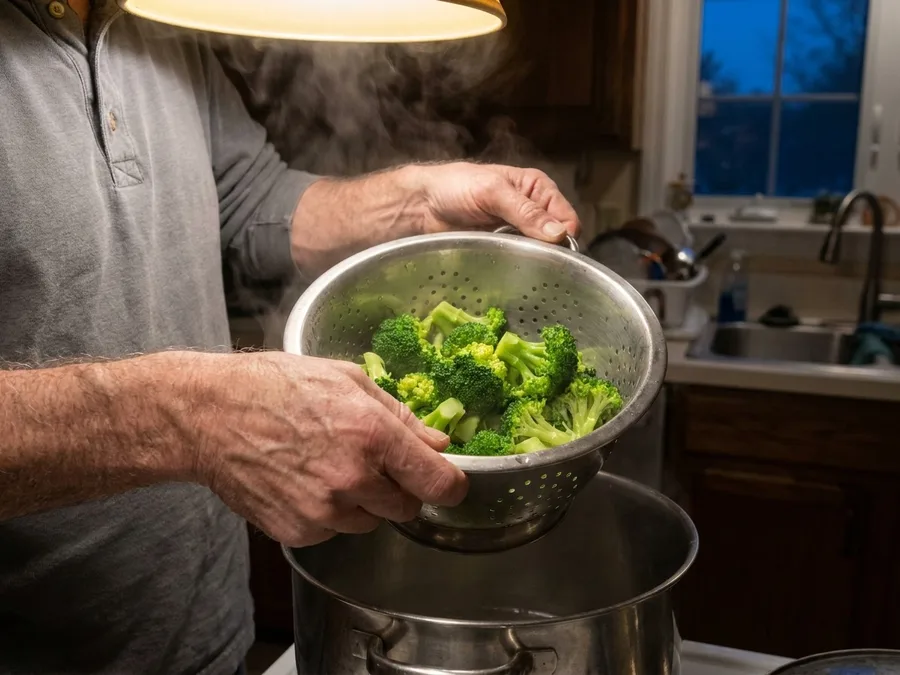
Once the tomato covers the cooked base, the other half of the plate needs volume, and frozen crucifers deliver it for about $2 a bag.
The serving is 1 cup of florets. Steam them 4 to 6 minutes, or roast at 425°F for 15 minutes until the edges darken and the stems give. Keep them bright green – overcooked broccoli turns bitter, and bitter broccoli stops getting eaten.
Frozen broccoli runs about $2 for a 12-ounce bag, a fresh bunch around $2.50, and cabbage $1.50 a pound. On a weeknight, the frozen bag is the default: no washing, no trimming, straight into the pot.
Glucosinolates are the compounds readers ask about, and they are the reason crucifers sit on prostate-friendly lists. The official sources, including NCI and the American Cancer Society, do not credit them with preventing cancer, so treat broccoli as fiber and volume, not as a shield.
This suits the man who wants a cheap filler for half his dinner plate. Fiber fills you up, and the bulk crowds out the heavier side dishes that would otherwise land there.
A $2 bag covers several dinners, and the swap takes less time than the drive to pick up something else.
💡 Tip: Roast frozen broccoli straight from frozen at 425°F for 15 minutes. It comes out crisper than you would expect.
| Food | Typical serving | Best budget buy | Prep time | Why it earns a spot |
|---|---|---|---|---|
| Cooked tomatoes | 1/2 cup | Canned crushed, $1.50/lb in season | 10–15 min skillet | Lycopene source; easy pasta/egg base |
| Broccoli | 1 cup florets | Frozen $2 per 12-oz bag | 4–6 min steam | Cheap fiber and volume |
| Salmon | 4 oz | Canned salmon $2–$3 | 12–15 min at 400°F | Omega-3s; displaces processed meat |
| Walnuts | 1 oz (12–14 halves) | $7 per 8-oz bag | None | Plant omega-3; shelf-stable snack |
| Edamame | 1/2 cup shelled | Frozen $2.50 per 12-oz bag | 5 min | Low-cost meat alternative |
| Green tea | 1 cup | $3 per 20-bag box | 2–3 min steep | Low-calorie default drink |
| Pomegranate seeds | 1/2 cup arils | $2.50 per fruit in season | 5 min to open | Optional topping; frozen $4 per 10-oz bag |
| Frozen berries | 1 cup | $4 per 16-oz bag | 30 sec thaw | Fiber and sweetness without juice |
| Leafy greens | 2 cups raw | $2.50 per bunch; frozen $2 | Wash and dry | Cheap plate-filler |
| Beans and lentils | 1/2 cup cooked | $1.50 per can | 5 min reheat | Cheapest protein; fiber |
| Oats | 1/2 cup dry | $3 per 42-oz canister | 5 min stovetop | Filling breakfast; beta-glucan fiber |
| Pumpkin seeds | 1 oz hulled | $4 per 8-oz bag | 10 min roast if raw | Zinc source; crunchy snack |
| Carrots and sweet potatoes | 1 medium carrot or 1/2 cup cubes | $1.50/lb carrots | 20–25 min roast at 425°F | Easy roasting vegetable |
3. Fatty Fish Like Salmon
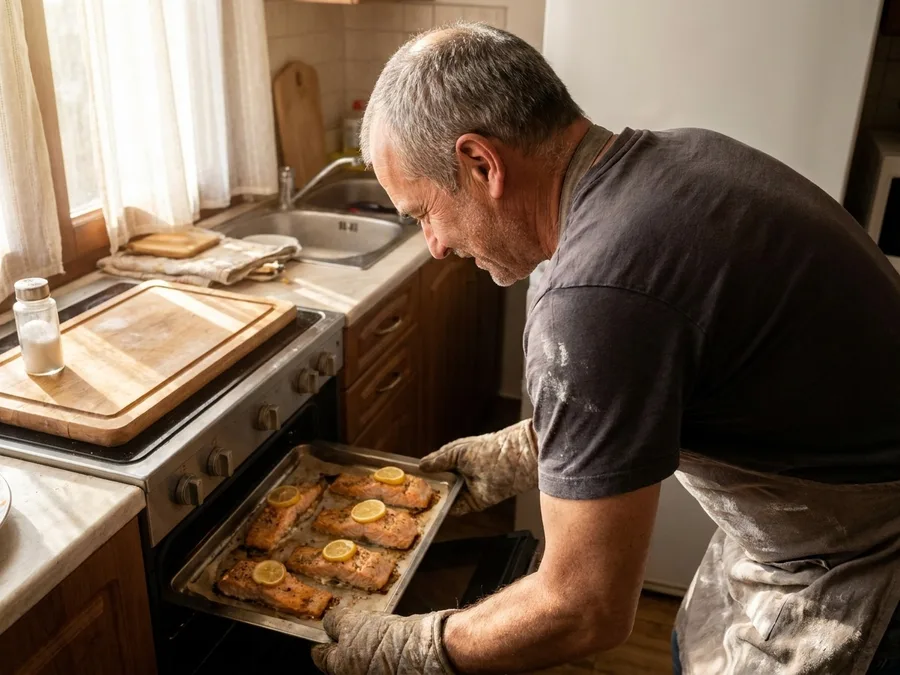
With the vegetable side settled, the dinner plate comes down to protein, and that is where cost gets real: a $9 salmon fillet competes with a $2 to $3 can of fish and with the processed meat already in the fridge.
The serving is 4 ounces cooked, which takes 12 to 15 minutes in a 400°F oven. Salt it, let it sit while the oven heats, and pull it when the thickest part flakes. A fresh fillet runs $8 to $10; $9 is typical for a 4-ounce portion.
Omega-3s are why fish shows up on prostate-friendly lists. That is a fair reason to eat it, but it is not a proven shield, and the official sources do not claim it prevents cancer. Fish is dinner, not treatment.
If the price or the taste is a problem, canned salmon or sardines at $2 to $3 a can make the same swap for a third of the money. They keep for months, need no cooking, and go on toast or into a salad.
This suits the man who is trying to replace processed meat at dinner. A 4-ounce fillet is filling enough to stand alone as the protein, which is exactly how it displaces the sausage or deli meat that would have been there. If fish is an allergy, beans or nuts cover the protein instead.
The fastest version of this swap is the can, not the fillet – under $3, and dinner is on the table before the oven would have finished preheating.
💡 Tip: Pat the fillet dry before it goes in the oven. Dry fish browns; wet fish steams.
Salmon — At a Glance
⚖️ Portion line
4 oz cooked; buy 5 oz raw
🐟 Which fish
Wild sockeye or coho; skip king at $25+/lb
📅 Weekly ceiling
2 servings; stay under 3 total fish meals
⚠️ Sardine catch
Smoked = high sodium; rinse and pick water-packed
Why it works
Omega-3s are the reason it is on the list, not a cancer shield. Taste test first: farmed and frozen cook milder than wild.
4. Walnuts and Tree Nuts
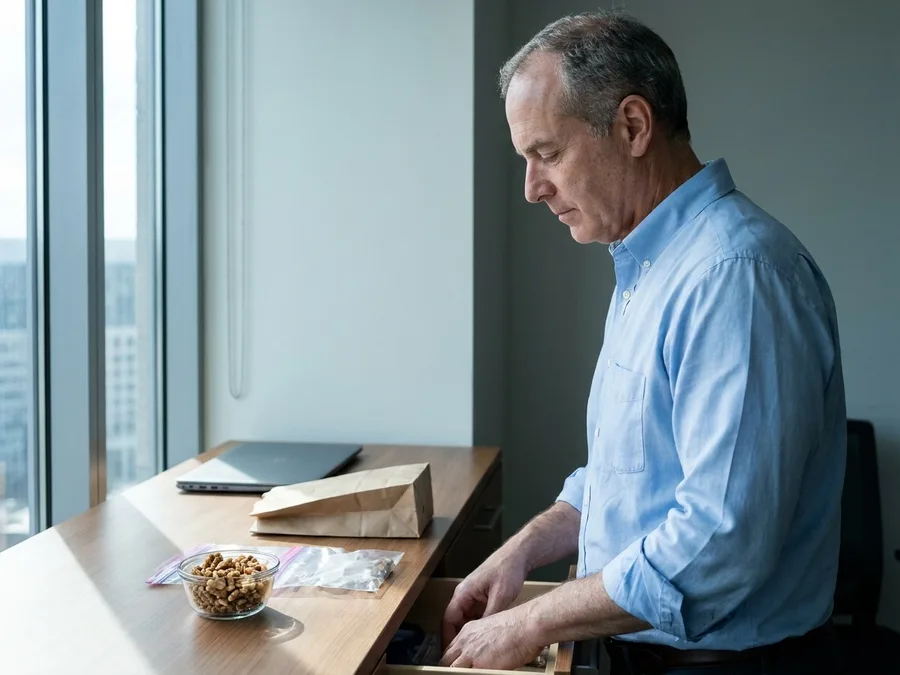
A walnut portion is smaller than it looks. One ounce is about 12 to 14 halves, which lands around 185 calories, so a cereal-bowl pour is roughly four servings and 740 calories without any signal that you crossed a line.
That single number is the whole argument for buying the bag and then breaking it down the day it comes home. Portion an 8-oz bag into eight 1-oz bags and the $7 purchase covers a full week of snacks instead of two distracted afternoons at the desk.
Walnuts earn their place on this list as a plant source of omega-3s, the same family of fat that puts fish on prostate-friendly lists. The official cancer pages mention walnuts for that nutrient content, not for any prostate effect, and the same caveat that applies to every food here applies to this one: food is not treatment.
For a man whose fish habit is fragile on cost or taste, the nut bag is the fallback that keeps the swap alive. It sits in a glove box through August, survives a gym bag, and needs no pan, no oven, and no decision at 6 p.m.
The replacement math is where it pays off. A 1-oz bag in the car or the desk drawer takes the spot chips and deli meat currently hold, and it is a swap you can make on the drive home rather than a meal you have to plan.
Two honest limits. If a nut allergy runs in the family or has shown up in you, this entry is not yours to try. And if you cannot stop at the portion, buy the smaller bag and accept that the $7 buys eight snacks, not one.
💡 Tip: Store walnuts in the freezer if you do not eat them within a month. They go rancid faster than you think.
5. Edamame and Soy Foods
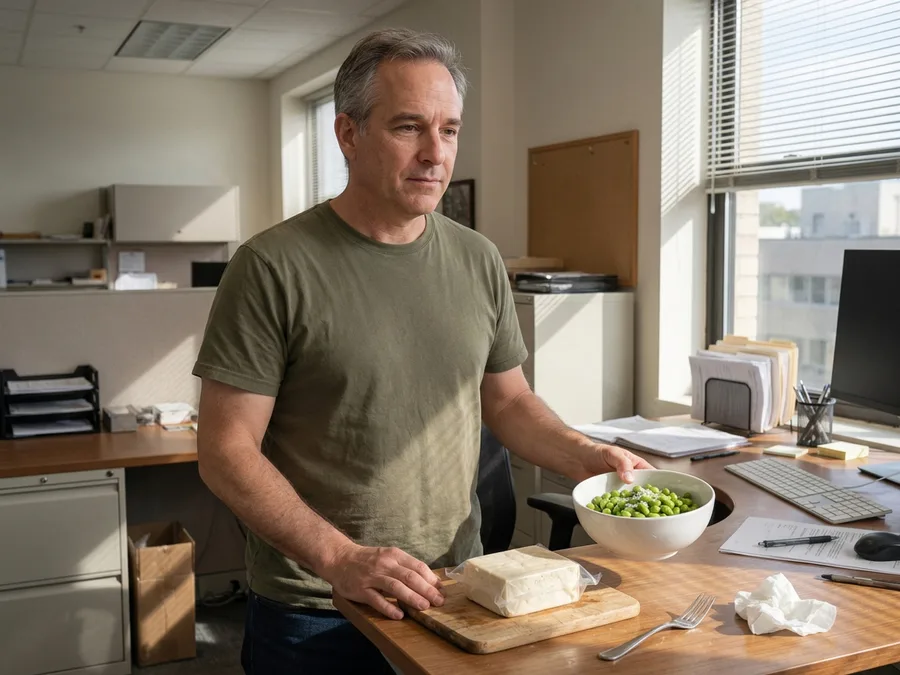
Nuts handle the desk drawer and the drive home. Dinner is a heavier lift, because a meat swap has to carry enough protein to actually fill you, and that is the gap edamame and tofu fill for about the price of a coffee.
The serving is 1/2 cup of shelled edamame or 3 oz of tofu. A 12-oz frozen bag of edamame runs about $2.50, and a 14-oz block of tofu about $2, which makes this the cheapest protein on the plate after beans.
Then there is the question men actually ask, usually quietly: does soy do something to a man's hormones? The distinction that matters is whole food versus supplement. Whole soy foods are not the concentrated isoflavone pills sold in capsules, and the official NCI and American Cancer Society pages discuss soy in that whole-food context, without any claim that it prevents or treats prostate cancer.
If you have a personal condition that makes soy a question for your own doctor, that is a conversation for your own doctor, not a paragraph on a food list.
Frozen edamame is a five-minute side: boil or microwave, salt, done. Tofu takes a little more attention but fits the same slot in a stir-fry, a soup, or a tray of roasted vegetables.
The realistic way to use either one is to let it stand in for some of the meat rather than all of it. Half a plate of edamame and half the usual portion of chicken is not a production, and the frozen bag in the freezer means the swap is always available on a night you did not plan.
6. A Cup of Green Tea
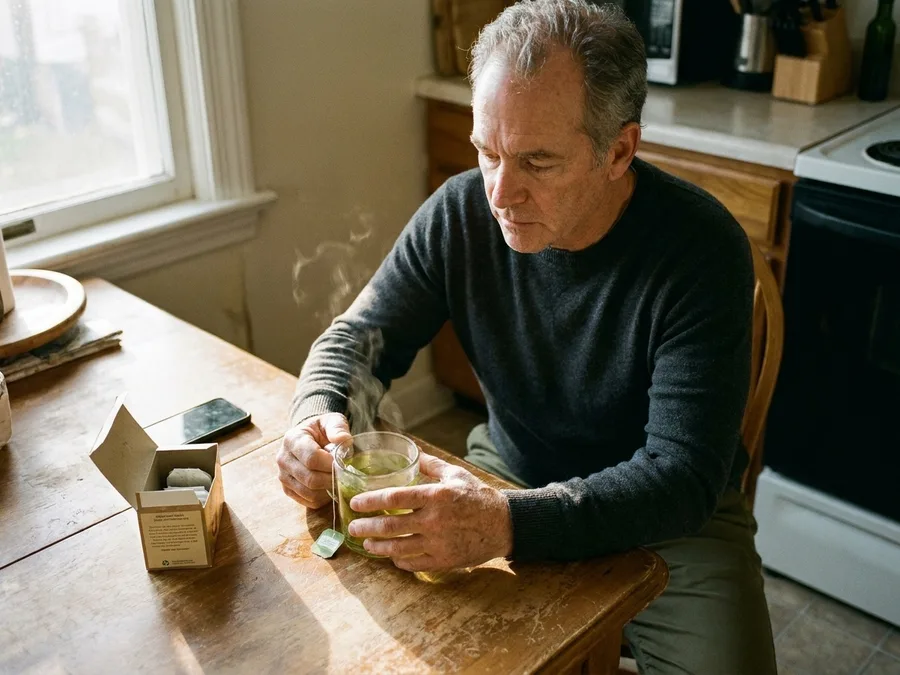
You have a cheap vegetable and a plant protein on the plate. The drink is the next gap, and it is usually where the evening goes wrong: a soda, a second beer, a glass of juice nobody measures. A cup of green tea fills that slot for pennies and without sugar.
Brew one bag in hot water for two to three minutes. That is the whole method. The two-to-three-cup-a-day figure is the example used here, not a prescription, and one cup after dinner is a reasonable place to start.
The box costs $3 for 20 bags, roughly 15 cents a cup. Compare that with a $2 soda or a $5 beer, and the money saved in a week covers a bag of frozen broccoli without a second thought.
The compound studied in green tea is catechins, and that is the reason the drink lands on prostate-friendly lists. It is not a reason to expect anything from it. National Cancer Institute and American Cancer Society pages cover tea plainly and stop short of crediting it with a prostate benefit; food is not treatment, and a drink is not either.
This suits a man who wants something warm in his hand without sugar in it, especially after a meal when the fridge is the easiest thing to open. Caffeine is the catch: if a cup at 8 p.m. has you staring at the ceiling at midnight, move it to the afternoon and keep the evening cup decaf, or stop at two.
Think about the swap, not the tea. A 15-cent cup replaces the soda or the beer that would otherwise be in that chair beside you, and that replacement is the entire practical value. Two or three cups a day cost under 50 cents, add no sugar, and leave the evening routine intact with one item changed.
Green tea is not a prostate cure in a mug. It is the inexpensive substitution that fills the drink slot, and the substitution is what moves the plate.
💡 Tip: Do not boil the water. Let it cool for a minute after the kettle clicks; boiling water makes green tea bitter.
💡 PRO TIP
The 15-cent swap
Replace your evening soda or beer with a cup of green tea. You save calories and sugar, and you are not white-knuckling it because you still have a drink in your hand.
7. Fresh Pomegranate Seeds
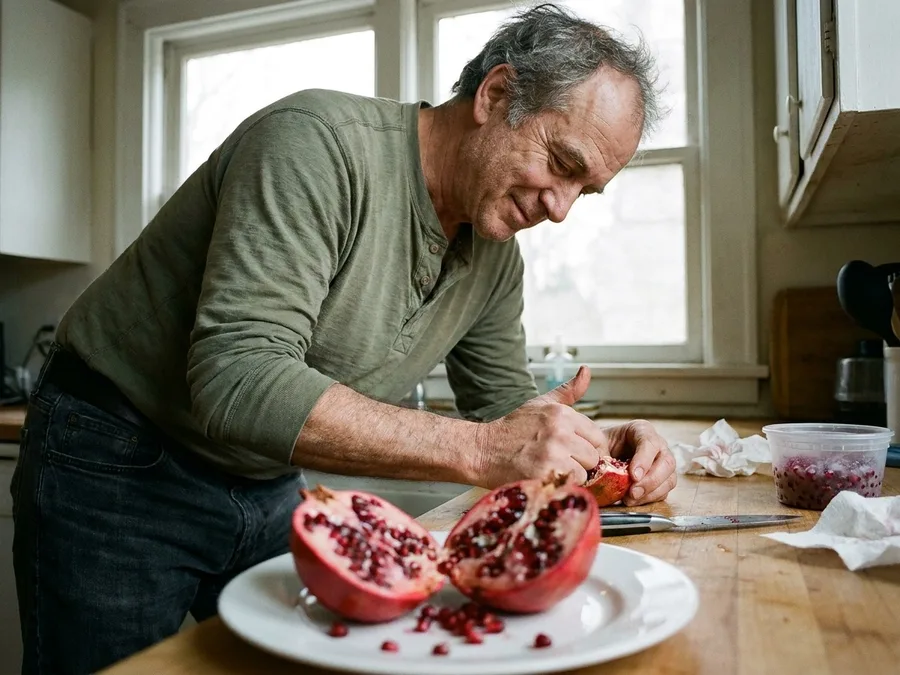
Pomegranate seeds are not medicine in a bowl, and they are not a daily obligation either.
Half a cup of arils runs about 70 calories, which is roughly the cost of a small handful of anything else you would put on top of something. Most of the reason to buy the fruit is texture and color, not nutrition.
The fruit turns up on prostate-friendly lists more than almost anything else, and you can read the actual state of the evidence yourself through the National Cancer Institute or the American Cancer Society. What those pages will not tell you is that pomegranate treats or prevents cancer. It does not, and no food on this plate does; food is not treatment.
In season the whole fruit costs about $2.50, and seeded frozen arils run $4 for a 10-oz bag that keeps for months. Buy the juice and you have bought something else entirely, because the whole seed carries fiber and chewing that the juice leaves behind in the press.
This is a topping for a man who is tired of plain produce. Half a cup over yogurt, or scattered through a spinach salad, gives you something to look at on the plate at a stage of life when eating well can start to feel like homework.
It is optional, which means skipping it costs you nothing and buying it costs you $2.50.
Frozen arils in the freezer door are the lower-waste buy for a man cooking for one; a whole fruit is the better buy when it is in season and the family will eat it. Either way, a morning of seeding on the weekend fills a container that lasts the week.
8. Frozen Berries for Breakfast
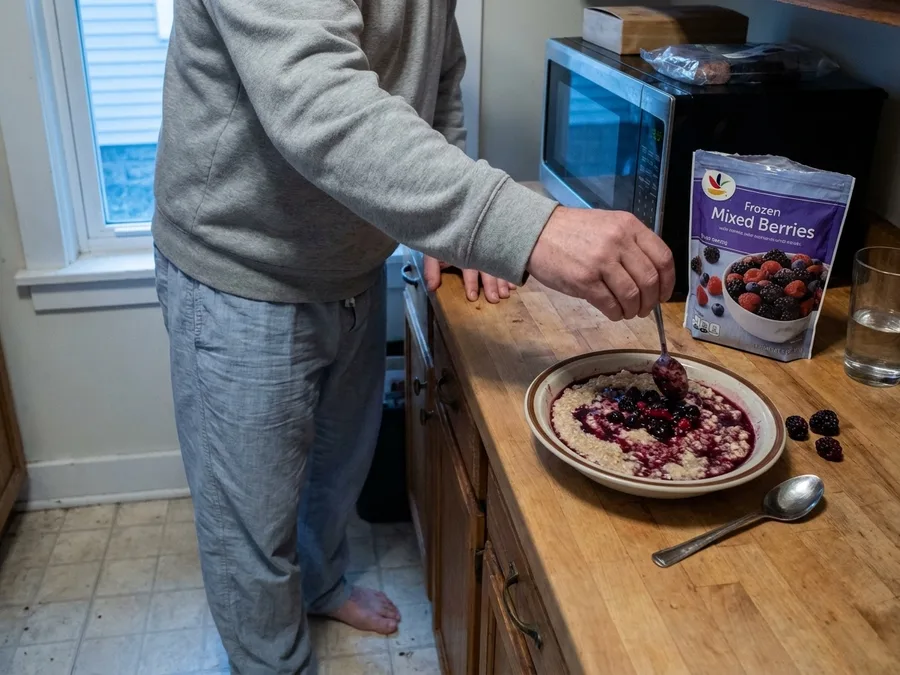
Fresh berries are a $3 habit that goes soft in the crisper by Thursday. Frozen berries are a $4 habit that keeps for months, and the anthocyanins that people ask about survive the freeze intact.
The 1-cup serving costs you somewhere between 70 and 85 calories, which is a cheap way to make oatmeal or plain yogurt less boring without pouring in sugar.
Here is the practical case for the frozen bag. A 6-oz clamshell costs about $3 and gives you a few days of fruit before the mold starts. A 16-oz frozen bag costs about $4 and gives you a week of half-cup servings with nothing to throw away. Per serving, the frozen bag is the better buy and the one that survives a busy week.
Anthocyanins are the compound that gets the attention in berries, and you can read what the research actually supports through the National Cancer Institute or the American Cancer Society. Neither will tell you that berries treat or prevent cancer. No food here does; food is not treatment.
If you eat oats in the morning or spoon yogurt into a bowl, this is a 30-second add. Pull a cup of frozen berries, microwave them for 30 seconds, and the fruit thaws into something that colors the whole bowl without added sugar or juice.
If your breakfast is already something else, this is not worth forcing.
What the frozen bag delivers to a man over 50 is fiber and sweetness in one move, at a stage when the morning routine needs to be easy or it does not happen. The bag in the freezer is the one you will still reach for by Thursday.
💡 Tip: Buy the plain frozen berries, not the ones with sugar syrup. The ingredient list should say berries and nothing else.
The breakfast plate, ranked
What to reach for first, second, and last
9. A Bag of Leafy Greens
Berries give the morning its color. Greens give the rest of the day its volume, and volume is what fills half the plate before the protein arrives.
Two cups of raw spinach or one cup of cooked kale is the serving. Each delivers fiber, folate, and a whole lot of plate coverage for very few calories, which is the point when a man is trying to feel full on less.
Cost is the part that surprises people. A bunch of spinach or kale runs about $2.50, a 5-oz washed bag about $3, and a 10-oz bag of frozen chopped kale about $2. That frozen bag lasts because it does not go bad in the drawer.
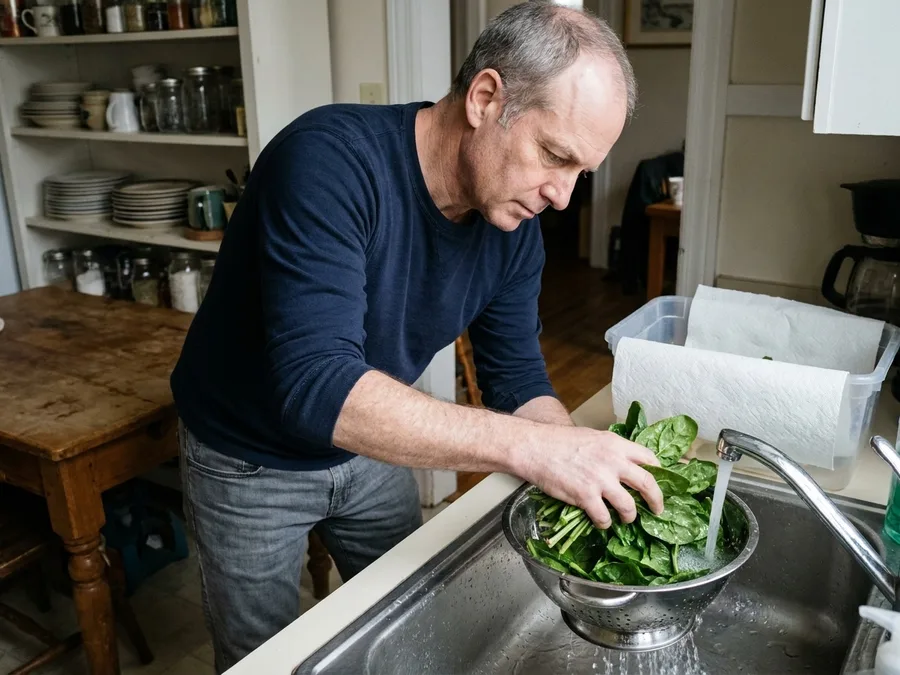
The question that actually matters is how to keep the greens from rotting. Rinse the leaves, dry them thoroughly, and store them in a container lined with a paper towel. The towel absorbs the moisture that turns spinach into a green puddle by Wednesday. For a man cooking for one, the frozen bag is the answer: scoop what you need into a soup or a pan, put the rest back, and throw nothing away.
Fiber and folate are the reasons greens appear in every prostate-friendly eating plan, and the nutrient context is available through the National Cancer Institute or the American Cancer Society. No page will tell you that spinach or kale prevents prostate cancer. It does not, and no food on this list does; food is not treatment.
This one suits a man who wants a cheap plate-filler that works with meals he already eats. A handful of spinach dropped into a pan of eggs, a soup, or a stir-fry at the end of cooking collapses into the dish and disappears into the meal.
Buy the washed bag if washing is the step that stops you; buy the frozen bag if waste is what stops you. Both get greens onto the plate at $2.50 to $3.
Fresh greens vs. frozen greens
Fresh
- Better texture for salads
- Needs washing and drying
- Spoils in 3–5 days
- $2.50–$3 per bunch
Frozen
- No prep, no waste
- Keeps for months
- Best for soups and skillets
- $2 per 10-oz bag
10. Beans and Lentils
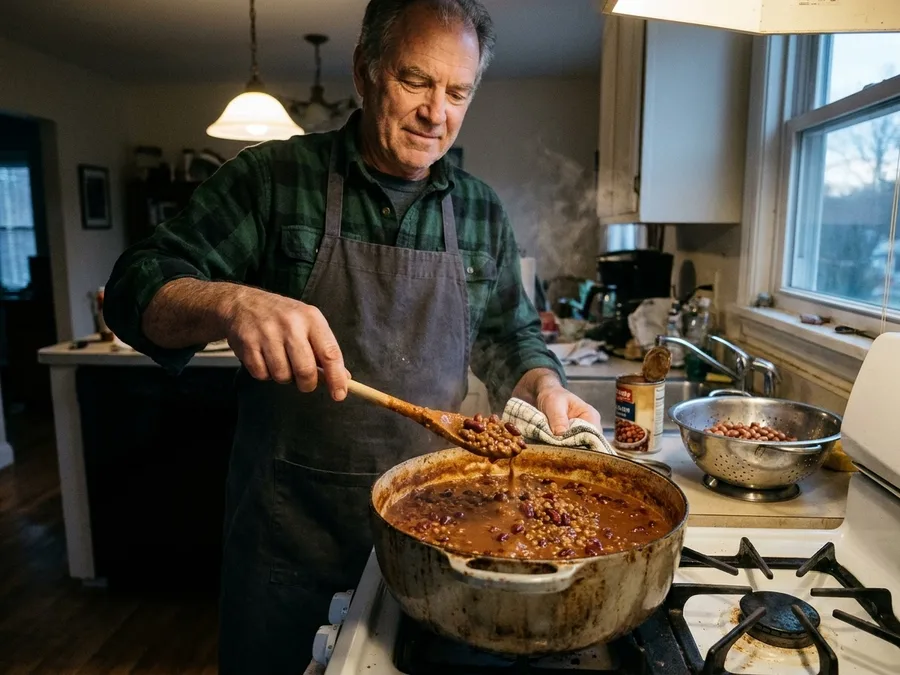
Half a cup of cooked beans or lentils does what a smaller portion of ground beef does in chili, soup, or tacos, at a fraction of the price. That is the whole case for keeping a can in the pantry.
Canned beans run about $1.50, and dry lentils about $1.20 a pound, which stretches across several meals. Rinse the canned ones in a colander for thirty seconds and you wash off a good share of the added sodium without losing the convenience.
The fiber and protein are the practical payoff here, not a prostate claim. The nutrient context sits on the National Cancer Institute and American Cancer Society pages, and no food on this list treats or prevents cancer; it fills a plate slot well and cheaply. That distinction matters when a man is deciding what to cook on a Tuesday night, not what to hope for.
If gas has kept beans off the plate, start with two or three tablespoons a day and build up over a couple of weeks. The gut adjusts, and lentils tend to be gentler than larger beans for most people making the switch.
For a man feeding a family on a budget, this is the cheapest protein in the rotation. A can of beans stretched into a pot of chili covers dinner for four at less than the cost of one salmon fillet.
💡 Tip: Add a bay leaf and a pinch of cumin to the pot. It makes the beans taste like they cooked all day.
11. Oats and Whole Grains
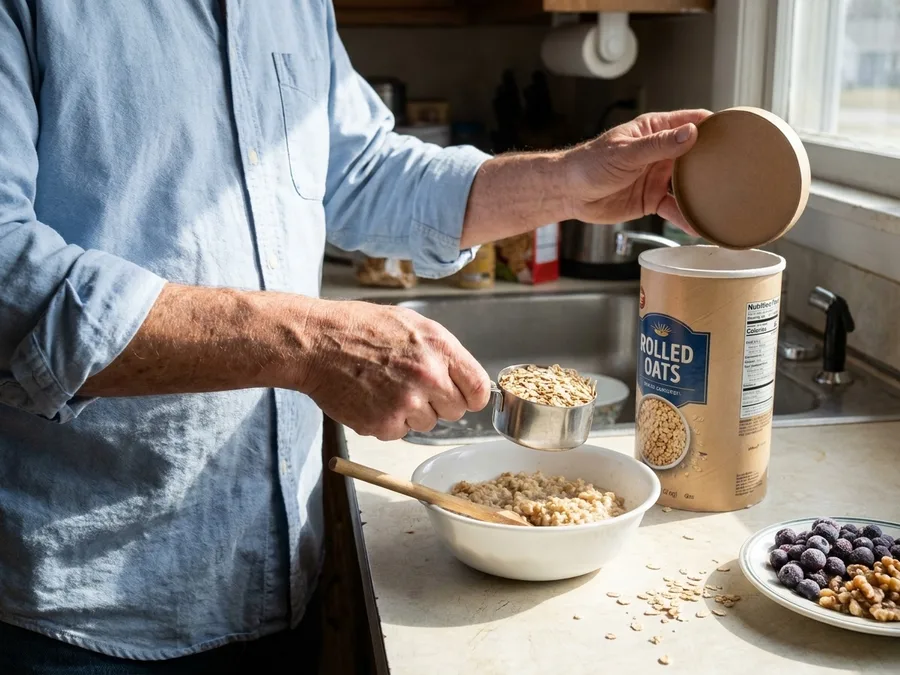
Breakfast and the side dish are where the day either fills you up or leaves you grazing by ten. Half a cup of dry oats cooked in a cup of water or milk handles both ends of that.
A 42-oz canister costs about $3 and makes roughly twenty servings, which is the kind of math that makes a cheap breakfast feel less like deprivation. Five minutes on the stovetop, or two in the microwave if the morning is tight.
The fiber in oats, beta-glucan, is the reason they show up on heart and metabolic lists; the American Cancer Society and NCI pages give the nutrient context, and oats carry no prostate claim of their own. What they do is keep you full, and a full man reaches for the chip bag less often.
Skip the flavored packets. The plain canister plus a handful of frozen berries and a spoon of nuts costs less per bowl and skips the added sugar that undercuts the point.
When you swap bread or rice, go whole-grain bread or brown rice rather than white, since the fiber is the reason either earns its place. A bowl of oats at breakfast and a whole-grain side at dinner is enough to change how the day feels by mid-afternoon.
12. A Handful of Pumpkin Seeds
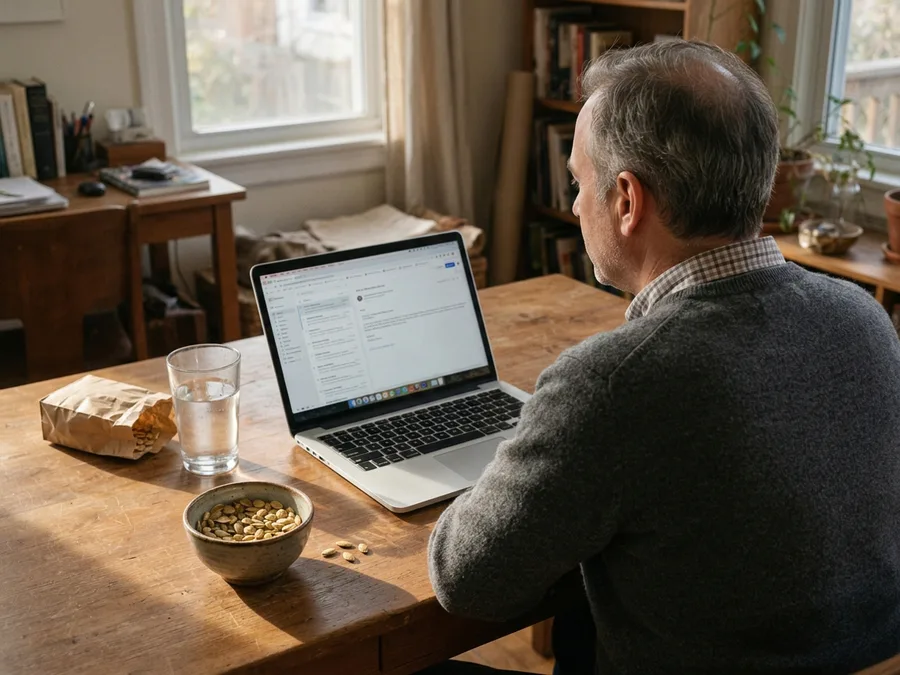
A one-ounce portion of hulled pumpkin seeds, about 150 to 160 calories, fits in a sandwich bag and lives in a desk drawer or glove box without going stale. That is the practical argument for them as a snack.
Zinc is the nutrient that shows up in popular prostate advice, and pumpkin seeds are a real source of it. The nutrient data is on the NCI and American Cancer Society pages; there is no evidence that eating them shrinks an enlarged prostate or prevents cancer, and food is not treatment.
One thing to watch: the calories add up fast if you eat from the bag. Portion them into eight 1-oz bags from a $4, 8-oz bag, and each snack costs about fifty cents.
Raw seeds roast in ten minutes at 350°F if you want more flavor, spread thin on a sheet pan and watched so they do not scorch. A pinch of salt after they come out is enough.
For a man who wants something crunchy at his desk, this replaces the chip bag without a lecture. The portion is small, the cost is low, and the habit is easy to keep.
💡 Tip: Roast a whole bag at once with a little salt, then portion it. It saves you from doing it every time.
13. Carrots and Sweet Potatoes
The crunchy snack has its own slot earlier in the day; the harder slot to fill is the one nobody plans for, which is the second vegetable at dinner, the one that turns a plate of protein and a starch into a real meal.
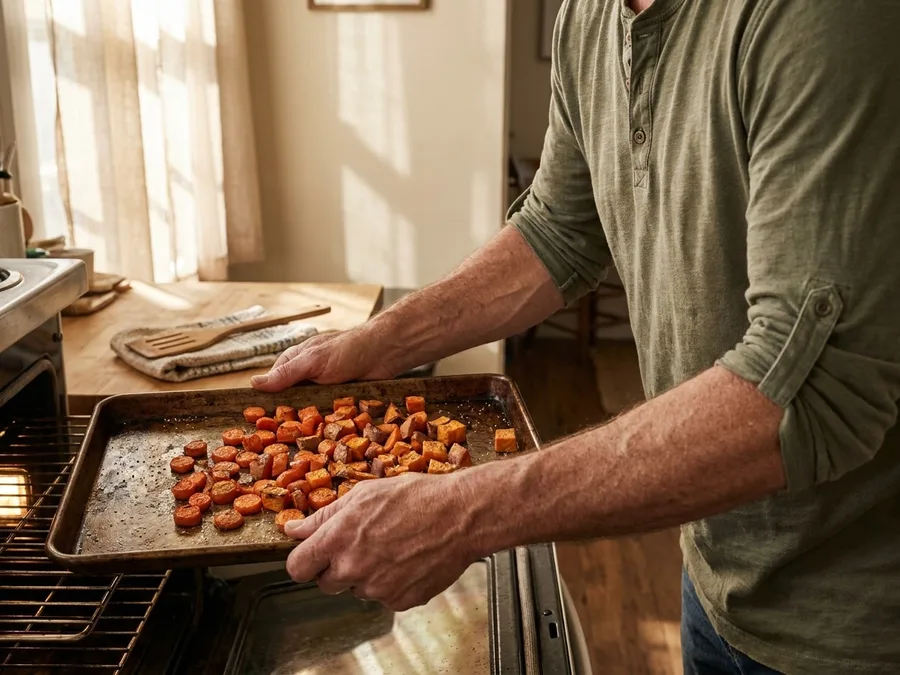
That is where carrots and sweet potatoes earn their place. A typical serving is one medium carrot or 1/2 cup sweet potato cubes, cut into chunks and roasted at 425°F for 20 to 25 minutes, which is long enough to soften and brown at the edges without needing a second pan.
Carrots run about $1.50 a pound and sweet potatoes about $1.20 a pound, which makes this the cheapest produce slot on the whole list. Both carry beta-carotene and fiber, and the nutrient context is documented on the USDA and American Cancer Society pages.
No single vegetable lowers prostate cancer risk, and none of these is a treatment. That is the honest shape of the claim here.
💡 Tip: Cut carrots and sweet potatoes into similar-sized pieces so they cook at the same rate.
Frequently Asked Questions
Do any of these foods actually prevent prostate cancer?
No. No single food has been shown to prevent prostate cancer, and the official sources do not claim any of these foods do. What a diet built around these foods does is replace processed meat and saturated fat with fiber, vegetables, fish and whole grains. That pattern is worth pursuing, but it is not a guarantee.
How long before I notice a difference?
You might feel fuller and more regular within a week or two of adding beans, oats and vegetables. Prostate health itself does not give you quick feedback, and no food will change how you feel in a week. Think of this as a six-month pattern, not a two-week fix.
Is canned food as good as fresh?
For tomatoes, beans and fish, canned is often better for your budget and just as useful. Canned tomatoes are actually higher in absorbable lycopene than fresh because they are cooked. Rinse canned beans to cut sodium. Frozen vegetables and berries are picked and frozen at peak ripeness, so they hold up well.
What if I have an enlarged prostate or BPH?
Diet can support general health but does not treat BPH. If you have urinary symptoms like frequency, urgency or a weak stream, see your clinician. Food is not treatment, and symptoms that affect your daily life deserve a conversation with a doctor, not a grocery list.
Should I take a supplement instead of eating these foods?
No. Supplements are not the same as whole foods, and some can interact with medications. The official sources recommend getting nutrients from food when possible. If you are considering a supplement for prostate health, talk to your clinician first.
Tomatoes And Beans Beat The Whole List
If nothing else happens, add one food from the list and cut one habit for two weeks. A can of crushed tomatoes and a can of beans are both about $1.50, and both replace something already on your plate. Neither demands a new skill.
On the habit side, choose whichever sits most within your control: smoking, heavy drinking, or frequent processed-meat and high-saturated-fat meals. These are risk-associated, not guarantees, and the CDC, NCI, and American Cancer Society links carry the detail. Bring the choice to your clinician and ask what cutting back would mean for you.
That 13-item day – tomatoes, broccoli, salmon, walnuts, edamame, berries, greens, beans, oats, pumpkin seeds, green tea, pomegranate, carrot – is a rotation, not a prescription. No food on it is a treatment or a guarantee; the repeatable plate and the cut habit are the practical part. Start with the tomatoes or the beans, because the pattern only counts once it is on the plate.
Start with one can
Pick up a can of crushed tomatoes or a can of beans this week and see how it fits your plate. That is the whole first step.