
Only one of the six retiree types is genuinely content, and it is not the busiest one. It is the person who can name what happens next Tuesday at 10 a.m. and who will be there waiting. Most people never find that out until the flatness sets in.
Up at 7, coffee in hand, and nothing on the calendar. The first real activity of the day does not arrive until nearly 11, the step count stays under 1,000 by noon, and bedtime drifts past 1 a.m.
You walk in believing the hard part is done: house paid off, $3,100 a month in Social Security, $380,000 in savings, $4,800 going out each month with $1,600 of it swallowed by premiums, dental and out-of-pocket care. So the hollowness of a Tuesday must be your fault. It is not.
The missing piece is assignment. Roughly 45 waking hours a week used to belong to a job, and now they belong to nobody, and nobody expects you anywhere. The six patterns below are six ways of spending that vacuum, and only one of them puts a recurring claim on your time. By the end, you should be able to name which pattern you are running and put one date on the calendar this week, same day, same hour, with someone who would notice your absence.
Quick Tips Before You Start
Count Fixed Points
Look at your next seven days. How many slots have a named person expecting you? That number, not the activity level, is the one that predicts whether the week holds.
Start With 90 Minutes
Three commitments of 90 minutes each add up to 4.5 hours a week. That is small enough to fit almost any retirement and large enough to notice when one goes missing.
Pick People, Not Projects
A standing coffee with a neighbor beats a solo garage clean-out. The point is being missed by someone if you don't show.
Healthy or Hiding?
For each pattern below, ask one question: what is on Tuesday at 10, and who is expecting you? If the answer is 'nothing' or 'no one', the pattern has become your whole week.
1. The Drifter Who Has No Calendar

Retirement without a calendar has a recognizable shape, and it shows up in the small hours of an ordinary morning. Coffee gets made around seven. The first thing that actually counts as an activity — the errand, the walk, the phone call — doesn't happen until close to eleven, and by noon the step count is still sitting under a thousand.
The evening stretches the same way. Bedtime slides past one in the morning, not because anything is keeping the reader up but because nothing is pulling the day toward an early close. In a typical week, two social contacts. Two.
Set that next to what the job used to take: about 45 waking hours a week, every week, already spoken for. Nobody has to fill them. They simply sit there, and the day gets built around nothing in particular.
The first three months are genuinely good. That is the part nobody warns you about — it feels like a holiday that finally arrived, and it should. Somewhere around month three or four, the holiday stops paying for itself. Mornings lose their edges. Tuesday starts looking exactly like Saturday, and by Friday you have to check the phone to remember which one it is.
Your knees are not the problem here.
The health side is the same story told in a quieter voice: long stretches in a chair, nights that end later and later, and a social circle narrowing to a couple of names. The CDC and the National Institute on Aging both keep plain-language pages on what that combination does over years, and they are worth an hour of a Tuesday. No scary number is needed to make the point.
What makes this pattern a problem rather than a phase is the absence of anyone expecting you. Next Tuesday at ten in the morning, the calendar has a blank line, and that blank line is the whole mechanism — the week has nothing to be late for and nothing to get up for.
It works for one kind of person, though, and it is worth saying clearly. If a standing obligation already lives outside the house — a shift at the shop, a class with a start time, a weekly commitment to another human being — the drift has a floor under it. The structure doesn't have to be grand. It only has to be somebody else's.
The first three months of retirement feel earned. Around month four, the calendar stops feeling like freedom and starts feeling like an empty room — and the answer is not a busier schedule, it is a date somebody else is counting on.
No, not every retiree needs a packed calendar. But a week with two social contacts and no fixed obligations is a week that asks nothing of you — and after four months, that gets old fast.
💡 Tip: If you already have a standing commitment outside the house — a shift, a class, a regular obligation to another person — this pattern is less likely to swallow you. Keep that obligation even when you feel like skipping it.
| Pattern | What fills the week | Where it goes wrong | Year two | Who it suits |
|---|---|---|---|---|
| Drifter | Nothing fixed; activity starts near 11 a.m. | Days lose their edges; late nights and shrinking contact | Tuesday is indistinguishable from Saturday | Anyone who already keeps a standing outside commitment |
| Caregiver | 12 hours a week for a parent in assisted living, plus a 40-minute drive each way | Your own check-ups, sleep and exercise go first | Two of your own appointments rescheduled every month | Short-term or part-time care with hospice or respite already in place |
| Relocator | A 1,400-mile move to a 55-plus community | Climate and cost improve; friends don't come with the house | Two outside commitments on the calendar | Someone who counts people, not amenities, within an hour of the new address |
| Planner | 14 projects on the list | Projects are finite; weeks are endless | One recurring commitment that involves other people | The planner whose projects sit inside an organization |
| Traveler | Four trips in the first 18 months, about $19,000 spent | The 10 weeks at home between trips have nothing fixed | Novelty fades; home weeks feel empty | The traveler who keeps one standing commitment at home |
| Happy | Three fixed weekly commitments with people, about 90 minutes each | Nothing — the structure fits an ordinary week | The same three slots stay on the calendar | Anyone willing to put one recurring date on the calendar this week |
2. The Caregiver Whose Calendar Belongs To Someone Else

Drift is what happens to a week when nobody claims the hours, but there is a second way the calendar fills up, and it fills faster than anyone plans for. One parent in assisted living, 40 minutes of highway each way, and suddenly a regular week carries 12 hours of hands-on care before the driving is even counted.
The cost shows up in quiet places. Two of the caregiver's own medical appointments get rescheduled every month — the mammogram, the dental cleaning, the follow-up that keeps getting pushed to next month. Sleep gets squeezed. The walk gets skipped. Those are the three flexible items on the list, so they are the three that go first.
That is what makes it so hard to spot from inside. It looks like responsibility. It looks like being a good daughter or a good son, which is exactly what it is, and that is why the pattern never announces itself as a pattern.
There is a calendar question worth sitting with. Next Tuesday at 10 a.m., the schedule is full — a medication run, a grocery trip, a call to the facility — and every line on it belongs to someone else's need. Nobody has penciled in the caregiver for the caregiver's own sake. The two cancelled appointments are the receipt.
The rules around paying for this are genuinely complicated, and no shortcut does them justice here. Medicare, state Medicaid, and the local Area Agency on Aging are the three places to start, because they are the official sources and they will tell you what your state actually covers, what the eligibility lines are, and what help is already funded in your county.
One caution about reading this as a warning. Caregiving that has a defined end date, or that runs a few hours a week with hospice support or respite care already in place, is a different situation entirely. What is described here is the open-ended, hours-every-week version that quietly runs for years.
There is a version of retirement where the calendar is full and every line belongs to someone else. The question is whether any line has your own name on it — and whether anyone would notice if you didn't show up.
If the calendar is already full, the first question is not how to squeeze in more. It is which one commitment can be reclaimed for you.
⚠️ COMMON MISTAKE
The Schedule That Hides The Problem
A calendar full of other people's needs can look like a well-planned retirement. Add one recurring slot for your own health and friendships — a standing date with a person who expects you for you — and make it the one appointment you do not move.
3. The Relocator Who Moved Away From The People

When the caregiving ends, or the hours simply are not there to give, the fix people reach for is often a move. New address, new climate, new view. What a move cannot change is who is on the other end of the phone — and that is the part that decides how year two goes.
The example most movers will recognize: a couple packs up, sells the house, and lands 1,400 miles away in a 55-plus community. First year, it works. The unpacking, the pool, the clubhouse happy hours, the back roads that need learning — there is enough novelty to fill a calendar for months.
Then year two arrives, and the bill comes due. Same amenities. Same weather. Same sunshine on the same patio. But the outside commitments on the calendar have shrunk to two, and neither one is the kind of thing that pulls you out of the house on a Tuesday morning.
It would be unfair to write the move off entirely. Relocation reliably fixes the things it is designed to fix: the climate that makes January miserable, the cost of living that eats a fixed income, the two-story house whose stairs have become a daily negotiation. The $1,600 a month the household spends on health costs is real money, and a cheaper state can move it.
What no move fixes is the empty slot at ten in the morning. Next Tuesday in the new house, a water aerobics class sits on the schedule and no one in particular is expecting you to be in the water. That is the gap a warmer address cannot close.
The test before signing anything is worth doing on a legal pad. Count the people, not the amenities, who live within an hour's drive of the new address. Count the ones who would notice if you missed a week. A pool does not notice whether you came.
A move fixes the climate, the cost of living and the stairs. It does not fix who is expecting you on Tuesday — and that is the part that decides whether year two feels like home or like a long holiday that never ended.
The move is not a mistake if a standing commitment crosses the state line with you. The mistake is arriving without one.
💡 Tip: Do the people-count before the house-hunt, not after. One familiar contact within an hour of the new address is worth more to your first year than the clubhouse.
🧭 Check The People Before You Move
Count your people
List the people you would call in a crisis and note how far each one lives from the new address.
Ask about visits
Ask two of them whether they would visit in the first six months, and write down the answer.
Set one weekly date
Block one recurring weekly date on the new calendar before you unpack the last box.
Re-count in year two
Give it a year, then count again: how many people expected you somewhere last week?
4. The Planner With A Perfect Spreadsheet And An Empty Week

A new address does not put anyone in a chair at a set hour, so the next instinct is to run the week the way the job was run: a list, a schedule, a system. Fourteen projects, color-coded and ranked. And exactly one recurring commitment on the whole thing that involves another person.
The projects are real, and that is what makes the pattern so persuasive from the inside. The deck gets rebuilt. The online course gets finished. The garage gets cleared out for the first time since 1998.
The trouble is the shape of the things being managed. Projects are finite — they end, they get a check mark, they pay out a genuine satisfaction — while weeks are endless and repeat every seven days. Finish project fifteen and you have six empty days sitting behind it, waiting for project sixteen.
A well-run week and a full life are not the same measurement.
The body does fine under this pattern, and that is worth saying plainly. Steps, standing, lifting, hours outdoors — a solo project moves all of it, and the movement counts the same whether or not anyone is watching. What it leaves untouched is the contact. The loneliness research on the CDC and National Institute on Aging sites is there for anyone who wants to read it; the short version is that seeing people regularly is its own health input, separate from fitness, and a finished deck does not supply it.
There is a version of this planner that works remarkably well, and it is a small edit rather than an overhaul. Move one project inside an organization — a nonprofit board, a repair cafe, a volunteer trail crew, the church committee that has needed a treasurer for two years.
The work arrives with people attached, and it comes with a fixed slot to be in. Thursday at 1 p.m., the same four faces, a room that expects you.
Here is the test for the spreadsheet. Look down the fourteen lines and ask which one has a name attached — not a vendor, not a contractor, not a company. A person who would call you if you did not show. If the answer is one, the list is fine and the week is thin. If the answer is none, no amount of finished projects will change what next Tuesday at 10 a.m. looks like.
Solo Project vs. Shared Project
Solo Project
- Runs on your own start time, often slipping past 11 a.m.
- Week holds one or two social contacts
- Each finished task leaves six empty days behind it
- Motivation rests entirely on your own mood that morning
Shared Project
- Pinned to a set hour, so the day starts with a reason
- Three fixed weekly slots, 90 minutes each, same faces
- The slot repeats, so next Tuesday is already answered
- A no-show gets noticed, and someone calls
5. The Traveler Whose Bucket List Runs Out

The planner's list has a costly cousin: the itinerary. Airline tickets are the most pleasant way anyone has ever found to fill a week, and the one that visibly empties out first.
The first eighteen months often go like this. Four trips, about $19,000 across them, and roughly 10 weeks actually spent at home in between.
The packing gets handled well. It is the stretches in between that get left blank. Each departure is mapped to the hour — the flight, the transfer, the dinner reservation — and the three weeks on either side of it get no fixed points at all.
the walking, the stairs in a hotel with a broken lift, the new city where you cover four miles without noticing.
What it cannot hand you is the dull, repeated, local kind of contact — the same faces, at the same hour, in the same room, week after week.
So the steps come home with you and the contact does not. The body keeps the gain; the social side resets to zero every time the suitcase goes back in the closet.
Picture the Tuesday of a trip: 10 a.m. finds you in an airport lounge or a museum queue, surrounded by strangers, entirely content.
Now picture the Tuesday of week two back home. Same hour, same kitchen, no one expecting you, and nothing on the calendar until the next countdown starts.
That is the part of the budget nobody writes down. The three weeks on either side of a trip cost nothing in dollars and a great deal in structure.
There is a version of this that works, and it is worth naming precisely. The retiree who thrives on travel is the one holding a standing commitment back home that survives every departure.
One fixed morning a week with people who will be there whether you are or not. Come home and that slot is still waiting, still expecting you.
With that in place, a trip stops being the load-bearing wall and becomes what it should be — a bonus sitting on top of a week that already stands up on its own.
💡 Tip: Before booking the next trip, put one recurring date on your home calendar and tell the other person you will be there every week. Book the trip around the date, not the other way around.
💡 PRO TIP
The Test Before You Sign Anything
Before you commit to a new community, a big trip, or another project, answer one question: what is on next Tuesday at 10 a.m., and who is expecting you? If the answer involves a named person, the plan has a floor under it.
6. The Happy Retiree Keeps Three Fixed Weekly Dates
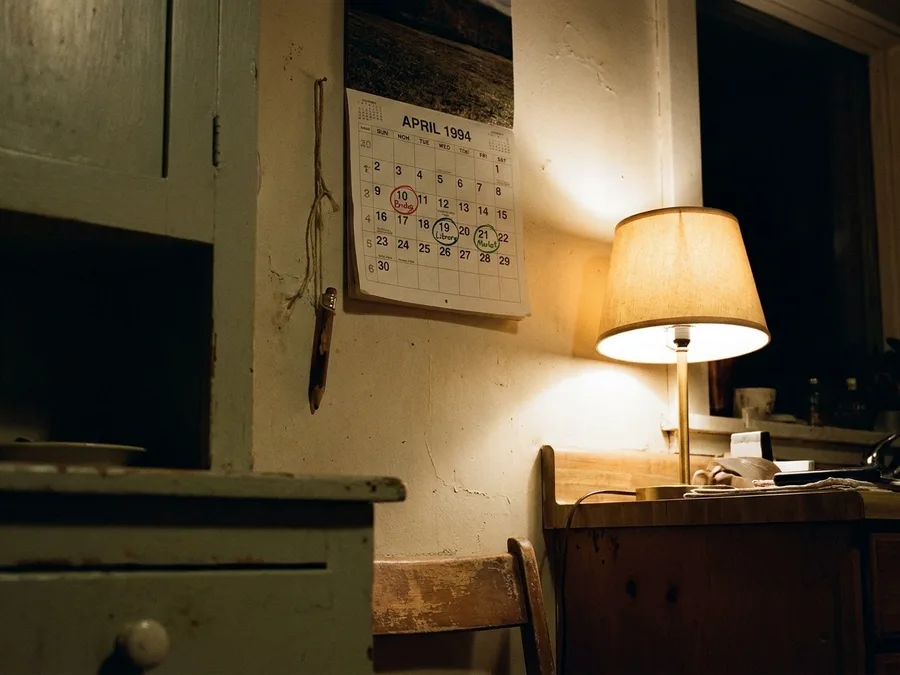
Everything above fills the week with something. This one does a different job: it hands the week to other people, on a repeating schedule, so the question of what to do with Tuesday answers itself.
The structure is exact and small. Three commitments a week, each with other people in it, each on a fixed day at a fixed hour, each running around 90 minutes.
Add them up and it comes to about 4.5 hours out of the roughly 45 waking hours the job used to own. Four and a half hours. A tenth of the space, and it changes the shape of all the rest.
Then two anchors that sit outside the week: one obligation a month and one trip a year.
Notice what the fixed slot does that the activity does not. A class and a standing foursome both move the body; only the standing date puts a particular person in a particular place expecting you at 9 a.m.
That expectation is the whole engine. You show up because someone would notice the empty chair, and the health gains ride behind the showing up rather than in front of it.
What that produces, plainly. More walking and standing than a solo morning produces, because a commitment has a place to go and a time to be there.
An earlier bedtime, pulled forward by the 9 a.m. Tuesday date rather than by willpower.
And the appointments that actually get kept — the dental check, the annual physical — because they land in a calendar that already has other fixed points in it. A calendar with nothing in it is the one where a conflict gets rescheduled.
The CDC and the National Institute on Aging both publish on physical activity and social connection for older adults; the reader who wants the underlying evidence can read it there.
One thing this is not. It is not a verdict that caregiving, moving, projects or travel are mistakes. Those work well, and the people doing them are often thriving.
They work when one commitment with other people survives alongside them, week after week, on the same day at the same hour.
So the test is the same one that runs through every pattern above. Next Tuesday at 10 a.m. — is there a name attached to that hour, and a place, and someone who would notice the empty chair?
💡 Tip: The three commitments do not have to be new. Two existing coffee dates and one weekly walk, fixed to the same day and time each week, are enough to start.
The Structure That Holds Up
Frequently Asked Questions
How do I know which of the six types I am?
Look at your next seven days and count the slots where a named person expects you. If that number is zero or one and your calendar is otherwise full of projects, travel, or tasks, you are in one of the five time-filling patterns. If it is three or more, you are probably in the sixth.
What if I don't have time for three weekly commitments?
Start with one. Ninety minutes a week is a real commitment and it is small enough to fit around almost any schedule. Add the second and third once the first one is stable and the other person is used to seeing you.
Does caregiving count as one of the three commitments?
No. It is real work and it deserves respect, but it belongs to someone else's need, not yours. The structure in the happy pattern is built around commitments where you are the one being expected for your own company, and caregiving cannot substitute for that.
Is moving to a 55-plus community a bad idea?
Not at all. It fixes climate, cost of living, and the house layout, and those are real gains. It just does not build the social side of the week for you. Count the people within an hour of the new address before you sign, and book one recurring weekly date before the last box is unpacked.
How long does it take before the structure shows up in how I feel?
Expect a few weeks before the dates feel natural and a couple of months before the week starts to hold its shape. The sleep improvement and the kept appointments tend to arrive first, because a 9 a.m. commitment pulls the whole schedule earlier.
The Tuesday At 10 Test Decides Which One You Are
The verdict is plain: five of the six patterns are merely ways of spending the hours, and only the sixth builds a standing place among other people. The whole distance between them is three fixed weekly commitments with other people at the same day and time, about 90 minutes each, plus a monthly anchor and one yearly trip to look forward to.
Place yourself by situation. The caregiver with 12 hours a week spoken for takes one 90-minute slot back and reinstates one of the two appointments rescheduled each month. The new mover puts the recurring date in before the year-two calendar gets written, not after. The planner pulls one of the 14 projects inside an organization so it arrives with people attached.
For every one of them the first move is identical: one recurring date on the calendar this week, same day every week, with a person who expects you there. The 11 a.m. start and the under-1,000 steps by noon do not change because of a plan. They change because on Tuesday at 9 a.m. someone is waiting, and you are the one who would have to call and say you cannot make it.
Put One Recurring Date On The Calendar
Open your calendar now and block one 90-minute slot, same day and time next week, with a person who expects you. The other two can wait until that one holds.