
That is the number of daily habits neurologists who study Alzheimer's keep returning to, and it means you can stop hunting for the single decisive one.
You come to this with a family history in the back of your mind and a shelf of headlines about this food and that supplement, and the quiet fear that one wrong meal or one skipped morning decides how this ends.
Decades of Alzheimer's research have not produced a guaranteed habit. They have produced repeatable daily levers, and their value sits in consistency and in what your own clinician can measure with you.
So here is what this is: fourteen habits, each with a starter version small enough for a crowded day and a limit plain enough that nobody has to overpromise to you.
Pick one, tie it to something you already do, look at it again in two weeks, and bring your own targets or symptoms to your clinician.
Quick Tips Before You Start
Start with one
Pick a single habit from the 14 and anchor it to an existing daily cue—after breakfast, before dinner.
Write the smallest version
Define your starter as a 10-minute walk, one half-plate meal, or a five-breath pause—not a perfect routine.
Review in two weeks
After 14 days, check what actually happened. Adjust the cue, not the goal.
Bring the list to a clinician
Any targets for blood pressure, alcohol, or supplements belong in a conversation with your doctor, not a blog.
1. Brisk Daily Walk

The easiest daily movement habit is not a program. It is a pair of shoes, a door, and ten minutes out and back from your own front step.
Walking asks almost nothing of you in equipment or planning, which is exactly why it survives a busy week. The pace that matters is the one where you can still hold a conversation without gasping. That single rule keeps the effort honest on a cold morning, a rushed morning, or a morning when your knees are stiff.
add a few minutes to the same route, or add one short hill, and only after the route already feels easy.
Bad weather does not have to end the walk. An indoor mall route or a treadmill keeps the loop intact. If balance problems or joint pain make a walk risky, chair exercises or a conversation with a clinician adjusts the habit rather than ending it.
Weekly totals come from current official physical-activity guidelines, and this list does not invent a number. A clinician can turn those minutes into a target that fits your knees, your heart, and your schedule.
Ten minutes out and back is the smallest repeatable version. The honest promise is general movement health and a baseline your clinician can actually discuss, not Alzheimer's protection.
💡 Tip: If balance is a concern, walk with a friend or use a cane or pole—safety first, then distance.
2. Resistance Training Routine
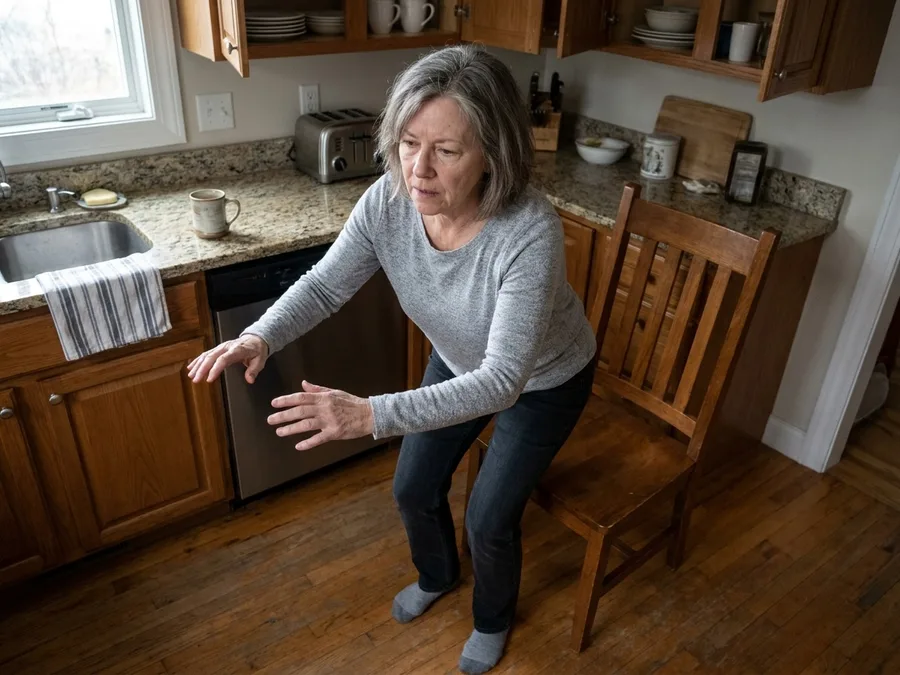
Walking covers the endurance side of movement and asks nothing of your muscles but to carry you. A short set of resistance work pulls a different lever: it loads muscle against something heavier than air, and the muscle answers by holding onto what it has.
You do not need a gym membership or a machine. Four moves done at the kitchen counter cover most of the body: standing up from a chair without using your hands, pushing against the wall like a slow push-up, pulling an exercise band toward your ribs, and carrying two loaded grocery bags from the car to the counter and back.
The movements run on form, not speed. Two or three sets of eight to twelve repetitions, with a slow rise and a slow return, and a minute of breathing between sets, does more than a rushed dozen done with momentum.
Your body has veto power here. Sharp joint pain, pressure or tightness in the chest, or a spell of dizziness is a signal to set the band down and raise it with a clinician before the next session rather than working through it.
How often to train is set by the current physical-activity guidelines, not by this page. Treat the four moves as a conversation starter you bring to a clinician who can match the frequency and load to your own body.
⚠️ COMMON MISTAKE
Don't Skip the Warm-Up
The most common mistake after 50 is going straight into strength work cold. Spend two minutes marching in place or doing arm circles first—your joints will thank you, and you will be less likely to pull something.
3. Home Blood-Pressure Log
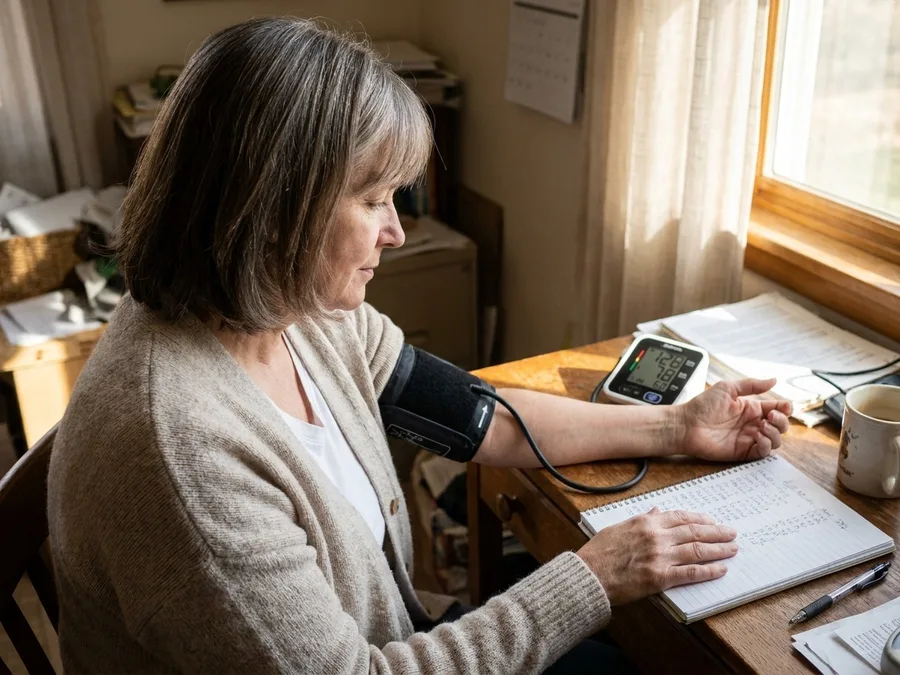
You can feel a muscle work, but you cannot feel a blood pressure climbing. The habit that makes vascular risk visible is a home blood-pressure log: dated numbers on paper or in a phone note that turn a vague worry into something a clinician can actually read.
The equipment is the part people skip. A validated upper-arm cuff, the right cuff size for your arm (an undersized one reads high), the same arm every time, and five quiet seated minutes before the first reading, feet flat and back supported.
Each entry holds four fields: date, time, both numbers, and whether any medication was missed that day. That last field is the one that earns its keep, because it shows the prescriber where doses slipped rather than where the drug failed.
Never stop or adjust a blood-pressure medicine on your own, and do not take a target number from this article. Both the dose and your personal goal come from your clinician, who is reading the same log you are.
Ten readings over two weeks, each with those four fields filled in, is the smallest version worth doing. Blood-pressure tracking catches patterns and missed doses early, but on its own it prevents nothing, Alzheimer's included. Start with one seated reading today.
Blood-Pressure Log — At a Glance
🩺 Equipment
Validated upper-arm cuff
📝 Log Fields
Date, time, reading, missed meds
⏱️ Rest Before
5 minutes seated
📅 Review
Every appointment
Why It Works
Dated readings show your doctor patterns that a single office measurement can miss.
4. Fixed Sleep-and-Wake Schedule
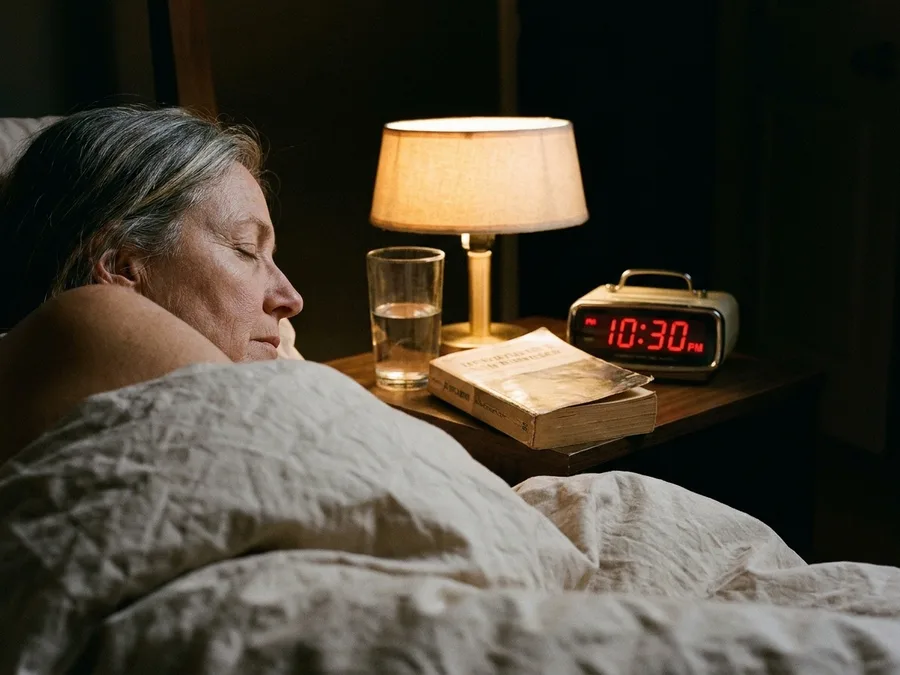
A blood pressure cuff gives you a number you can write down and argue with. Sleep gives you a schedule you can keep or break, and the part that holds it together is the one you probably ignore: the time you get up.
Most people attack the bedtime. They chase an ideal hour of lights-out, fail, and decide their sleep is broken. Sleep specialists point the other way. A fixed wake time, kept most days including Saturday and Sunday, is what steadies the whole system, because the body clock resets from the morning end. Your bedtime drifts naturally; the alarm does not have to.
Pick a wake time you can actually hit seven days out of seven. Then protect a short wind-down before bed: 30 minutes with the screens off, the heavy meal finished, the alcohol skipped, the late coffee declined. The point is not a new routine every night. It is the same cue, repeated, until your body starts to expect it. My own experiment with this at 52 showed the payoff in about three weeks, and it was modest: falling asleep faster, waking less at 3 a.m.
Some sleep problems are not habits. Loud snoring, gasping or choking in the night, restless legs that keep you moving, or falling asleep in a chair by mid-afternoon are flags for a medical evaluation, not a willpower failure. Sleep apnea in particular does real damage that no bedtime routine touches, and it is treatable once someone looks for it.
set the wake time first, keep the 30-minute wind-down, and treat better sleep as something worth raising with your clinician, not a guarantee.
5. Plant-Forward Mediterranean-Style Plate
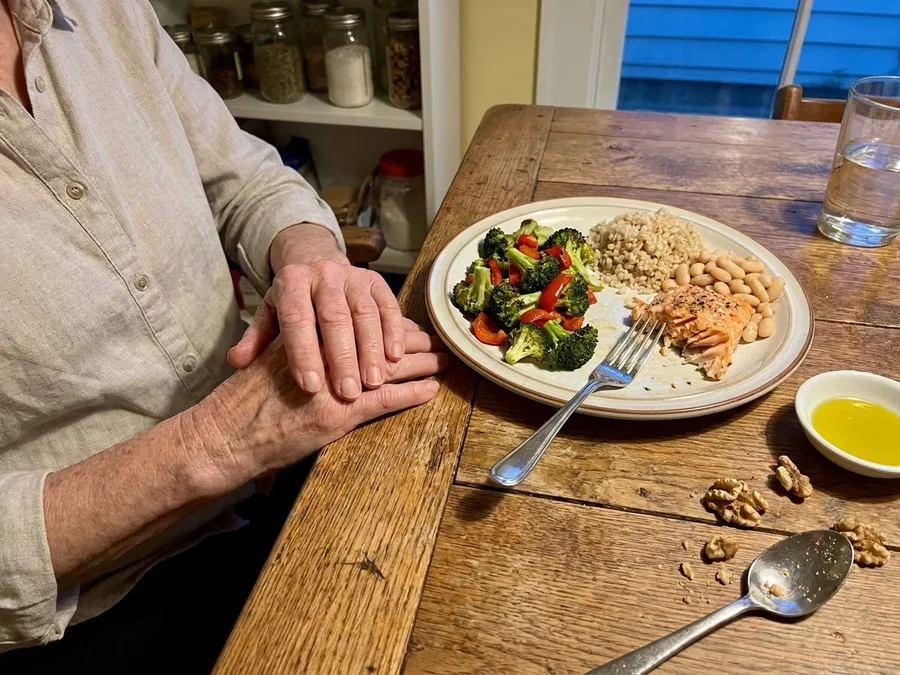
Sleep and movement are the habits you do to your day. Food is the one you do three times, at the table, with a fork in your hand, which is why it feels like the hardest to change and gets the most headlines.
You do not need a diet. You need a template you can fill at the grocery store.
Picture a dinner plate. Half of it is vegetables and fruit. The other half splits between beans, fish, or whole grains, with olive oil or nuts providing the fat. That is the whole system. It is not a strict regimen with a name and a rulebook; it is a shape your meals can take without weighing anything.
What you are crowding out matters as much as what you add: processed meats, sugary drinks, and heavily salted packaged foods that have quietly become the default. If those are your fallbacks on a tired Tuesday, the plate template never gets a chance. The shopping list is boring on purpose: vegetables and fruit, beans, fish, whole grains, olive oil, nuts. From that list, two default meals carry a busy week. A bean-and-vegetable bowl. Fish with whole grains and frozen vegetables. Frozen counts. Nobody is grading you on fresh.
Food is not a guaranteed dementia shield, and the supplement aisle is not a shortcut around the plate. If you are considering a supplement, that belongs in a conversation with your clinician, especially if you take prescriptions. Smallest version: one half-plate meal a day. Honest promise: repeatable nourishment and vascular-friendly choices, not a miracle.
💡 PRO TIP
The Half-Plate Rule Works at Restaurants Too
Order a side salad or steamed vegetables with every restaurant meal. It is the easiest way to hit the half-plate mark without measuring anything at home.
6. Daily Social Contact

A half-plate meal you eat alone is nourishment. The same meal shared with someone is also a reason to get up, get dressed, and leave the house, and that second part counts for something the food does not.
The trap is treating company as a reward that arrives when life is less busy. Friends are busy. You are tired. So contact slides, one skipped week becomes a month, and nobody schedules it back. The fix is to stop waiting for spontaneous invitations and put one recurring contact on the calendar like a dentist appointment. A standing Sunday call. A lunch walk every Tuesday. A family check-in at the same hour each week.
Low-effort routes exist because the calendar does the work: a senior center, a faith group, a library class, a volunteer shift. Each gives you a repeated time and a place, which is exactly what isolation erodes. You do not have to be outgoing. You have to show up at the same spot.
Watch for the pattern, not the mood. Weeks where you have almost no conversation, or barely leave the house, are information. That is not a personality trait, and it is not something to shrug off as getting older.
Loneliness and depression deserve clinical help rather than a pep talk, and a clinician can tell the difference between treatable depression and ordinary shyness or grief. Smallest version: one standing morning call or lunch walk. Honest limit: connection supports daily function and mood, not a proven Alzheimer's prevention.
7. Hearing Protection and Testing

A conversation you cannot follow is not a personality change. It is often a hearing problem, and it narrows social life long before anyone admits it. Protecting your ears keeps the back-and-forth possible and takes the strain out of guessing at words.
That includes your own ears whether or not anything has been diagnosed. The person who mows the lawn every Saturday and the one sitting three rows back at a concert both need the same thing: foam plugs in the pocket, or earmuffs within reach of the power tools. Situational protection, not a rule reserved for people already dealing with loss.
A hearing test is worth asking about when the TV volume keeps climbing, when a ringing settles into the background and stays, or when a restaurant conversation turns into lip-reading. Those are signals, not quirks of getting older.
Get the test, then get the fitting done properly. Hearing aids are shaped to a person's specific loss, so the appointment and the follow-ups are part of the habit rather than the errand you finish once. Skip the follow-up and the device sits in a drawer.
Smallest version: earplugs at the next loud event, in the pocket before you leave the house.
Honest limit: treating hearing loss is a health factor to raise with a clinician. It is not a proven Alzheimer's preventive, and no audiologist can promise otherwise.
What it does deliver is plainer. You keep the conversation, and the conversation keeps you in the room.
8. Daily New-Skill Practice
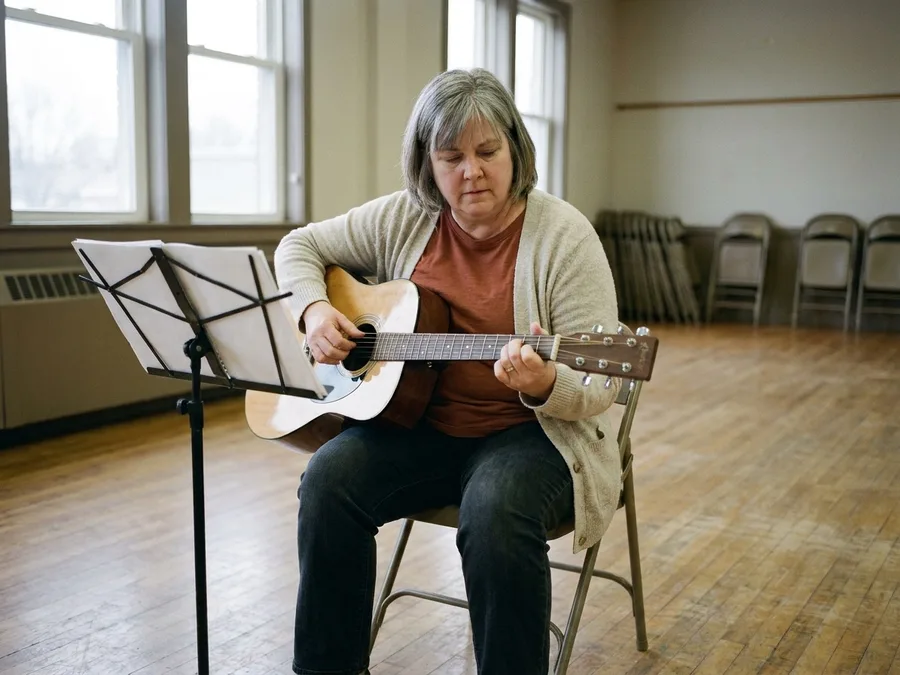
Hearing keeps you in conversation. Learning something new pushes in a different direction, because the brain has to build a route it does not already have. That is why a familiar puzzle is not the same as new learning.
Pick something deliberately unfamiliar: a language, an instrument, dance, drawing, coding, a course with homework. The test is not whether it is brainy. It is whether the difficulty can rise as you go.
Ten minutes a day beats a three-hour Saturday. Short, repeated blocks let the skill settle, and they survive a week when your calendar falls apart.
Make the progress visible. A list of new words, one song section, a dance step you could not do last month. What gets tracked gets repeated, especially past 50, when the reward is slower to arrive and easier to miss.
Brain-training games have a place, but the research does not back them as an Alzheimer's preventive. Running the same app you have already mastered is repetition, not learning.
A teacher or a practice partner adds feedback and a reason to show up. The class, the instructor, the friend learning beside you: accountability is half the habit.
Smallest version: ten minutes of a genuinely new skill, today. Honest limit: novelty supports engagement and learning. It is not guaranteed protection.
📅 Your First Week: One Habit at a Time
Day 1
Pick one habit from the list and write its smallest version on a sticky note.
Day 2
Attach it to an existing cue—after breakfast, before dinner, or when you brush your teeth.
Day 3–6
Do the smallest version daily; if you miss a day, resume the next day without guilt.
Day 7
Review what worked and what got in the way; adjust the cue, not the goal.
Week 2
If it feels automatic, add a second habit. If not, keep practicing the first.
9. Daily Stress Downshift
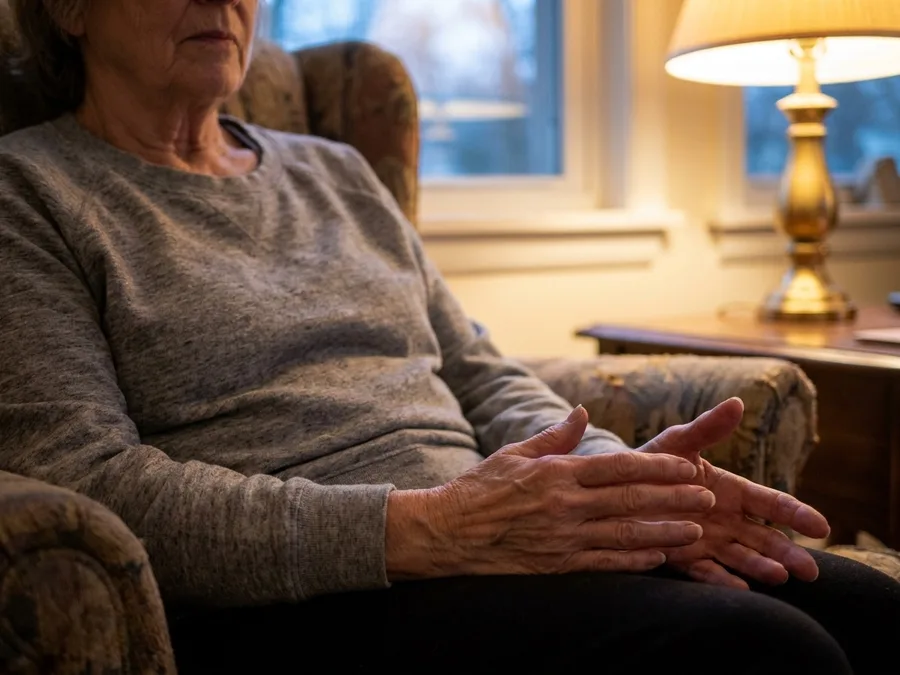
Learning anything new takes attention, and attention is the first thing chronic stress spends. That is why the downshift goes here: five minutes of deliberate calm, done before the day gets loud.
Not a retreat, not a workshop. A five-minute downshift beats waiting for a calm month that never arrives, and it fits in the gap after you set down your coffee or before you start dinner.
The menu is short: slow breathing, a short walk, meditation, prayer, or a few lines in a notebook. Pick the one you will actually do at 7 a.m. on a Tuesday when the week is already sideways.
Breathing is the simplest to start: in through the nose for a count of four, out for six, five rounds. The long exhale is what slows the heart rate, and you can do it at a red light.
The routine lives or dies on its cue. Anchor it to something you already do, and it happens before stress becomes the excuse to skip it.
One caution worth stating plainly. Ongoing anxiety, depression, or trauma is a clinical matter, and five minutes of breathing is not a treatment for it. Those deserve therapy or medical care from someone qualified to give it.
What stress reduction can honestly promise is a steadier day. Less reactivity at the desk, better sleep at night, and an easier time keeping the walk, the plate, and the wake time you set for yourself.
What it cannot promise is Alzheimer's prevention. The evidence does not support that claim, and this habit should not be sold that way.
Smallest version: five slow breaths at one fixed daily cue. If that sticks for two weeks, you have a habit.
The limit stays the same as every other item on this list: managing stress is health support, not a guarantee. It is a lever worth pulling, held with open hands.
10. Clear Alcohol Limits

A hard day and a glass at 6 p.m. tend to arrive together, which is why the limit has to be decided before the day starts, not poured at the counter.
For one week, write down every drink as it happens: the day, the time, what it was, where you were. Most people are surprised by what the page shows. The Tuesday pour after a tense call, the second glass while dinner finishes, the Wednesday that turns out to be the fifth night in a row. That page is the habit, made visible.
Then set the numbers in daylight, when nothing is nagging.
The tactics are small on purpose. A smaller glass. No bottles kept in the house, so a drink means a decision and a walk to the store. A non-alcoholic beer in the same glass at the same hour. Skipping the round at the table instead of announcing a whole new identity to your friends. None of these requires a speech; each lowers the default by a notch.
Alcohol-free days belong in the plan as well, two or three marked on the calendar the way you'd mark a doctor's visit. They give your body a stretch of predictable nights and, just as usefully, show you what the habit is made of. If a sober Tuesday feels impossible rather than merely dull, that is worth knowing.
How much is okay is not a question this list can answer for you. Official guidance gives broad ranges, your clinician adjusts them for your blood pressure, your liver, your sleep, and the prescriptions in your cabinet; alcohol and sedatives, in particular, do not mix well. That conversation, not a magazine number, is where your personal limit lives.
If you suspect the drinking has moved past choice, tell a clinician plainly. Help for dependence is medical, and it works better than resolve alone. The honest ceiling on all of this: sensible limits lower risk and show you your own patterns. They are not a guarantee against dementia, and they were never going to be.
Alcohol: Set Limits vs. Negotiate
Set limits in advance
- Decide alcohol-free days before the week starts
- Keep no home stock or only a small amount
- Use smaller glasses and non-alcoholic alternatives
- Track drinks for one week to see patterns
Negotiate at the end of the day
- Decide based on how you feel after work
- Keep a full bottle within reach
- Pour generously without measuring
- Skip tracking and rely on memory
11. A Smoke-Free Home
Alcohol is one substance a household negotiates; tobacco is the other, and it changes the air everyone in the house breathes rather than only the habits of the person holding it.
The single clearest daily lever in this whole list may be this one: getting smoke out of the indoor air and out of the car. That means two separate jobs. If you smoke, quitting is the lever. If someone else smokes, the rule about where is yours to set.
For quitting, go at it with backup rather than gritted teeth. A clinician, a state quitline, counseling, nicotine replacement, or a prescribed medication are all real routes, and the evidence consistently favors combining them over a solo willpower attempt. Pick a quit date, tell one person, and expect the first week to be unpleasant. That is the effort, named honestly.
The household rule is its own thing, and it holds whether or not anyone manages to quit: no smoking indoors, no smoking in the car, windows down or not. Secondhand smoke does not respect a cracked window. Nonsmokers and children in that car cannot choose the air, so the choice falls to the person who can.
Vaping is not a safe harbor to switch into on your own. Whether it helps you step down from cigarettes is a question for a clinician or a quit service, not a decision made in the vape shop aisle.
Relapse is common enough to plan for rather than be ashamed of. Write down what you will do on the night you slip, keep the quitline number where the cigarettes used to be, and treat the next morning as a restart rather than a verdict. Once the rule exists, a bad night becomes a setback instead of a collapse.
If a whole smoke-free house is too steep today, take one room or one car ride. A single smoke-free space is the smallest version of this habit that still counts, and it is a start you can build on next week.
What to Expect Over Time
12. Fall-Proofing and Head Protection
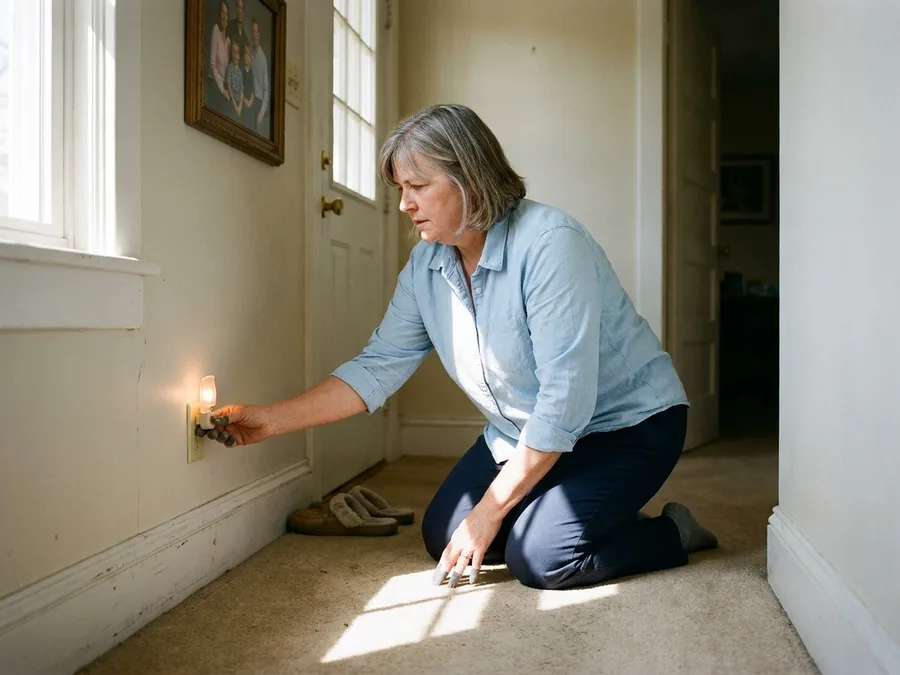
A house can be made safer than the person living in it expects, and the changes are cheaper and faster than most people assume.
Start with the path you walk at 2 a.m. A nightlight in the hallway between bedroom and bathroom. A grab bar bolted into the studs beside the shower and the toilet, not a suction cup that lets go under a wet hand. Stairs cleared of the box that has been sitting on the third step since spring, a non-slip mat in the tub, and the throw rugs lifted and stored. Each one shortens the distance between an ordinary misstep and a fall.
The danger does not stop at the door.
Head protection travels with you: a helmet on the bike, on skates, on the ski slope, and the seatbelt clicked even for the four-minute drive to the pharmacy. Short trips are still trips. A low-speed knock to the head can do more damage at 60 than it would have at 25, which is why the helmet stays on for the whole ride, not just the fast part.
For anyone who feels unsteady, the furniture is only half the fix. Balance and strength work, ideally with a physical therapist's input if falling has already happened, retrains the body that does the catching. One approach works on the room; the other works on the person crossing it.
If someone does hit their head and afterward seems confused, vomits, or loses consciousness even briefly, that is an urgent-care call, not a wait-and-see. The same goes for any fall in an older adult that was not witnessed; the injury can be worse than the story suggests.
The smallest version takes ten minutes: one nightlight and one cleared stair path, tonight. The honest limit is that fewer falls mean fewer injuries, and that is worth doing on its own terms. It is not a guarantee against dementia, and you should not expect it to be.
13. Medication and Supplement Review

You can see a loose rug and fix it. You cannot see what two prescriptions do to each other inside one body, and that is where this next habit earns its place on the list.
No single prescription can flag its own duplicate sitting one shelf over, or the over-the-counter sleep aid quietly stacking with a blood-pressure pill. A review looks across all of it at once, which is the one thing no individual bottle label can do.
The trigger is a calendar slot, not a scare: once a year, and again any time a new prescription arrives. Gather every bottle into one bag, including the supplements, and bring the whole bag to the pharmacy counter or your clinician rather than trying to summarize it from memory.
Four questions do the work. Ask whether anything on the list is a sedative, whether anything is anticholinergic, whether two items duplicate each other, and whether any combination could fog memory or throw off balance. Those are the interactions worth naming out loud, because they are the ones that show up as a stumble or a blank moment rather than a rash.
Do not stop a medicine on your own in the meantime, even one you suspect. Tapering and switching are prescribing decisions, and they run through the person who wrote the prescription, not the person taking it.
Supplements sit in the same bag as the pills for a reason: they interact like drugs do, and they do not come with a free pass simply because the label says brain support.
The smallest version is a shopping bag by the door and one question at the next pharmacy visit. It lowers avoidable medication risk, and it will not by itself shield your thinking, so treat the review as clarity you can act on, not a promise.
14. Daily Dental Care
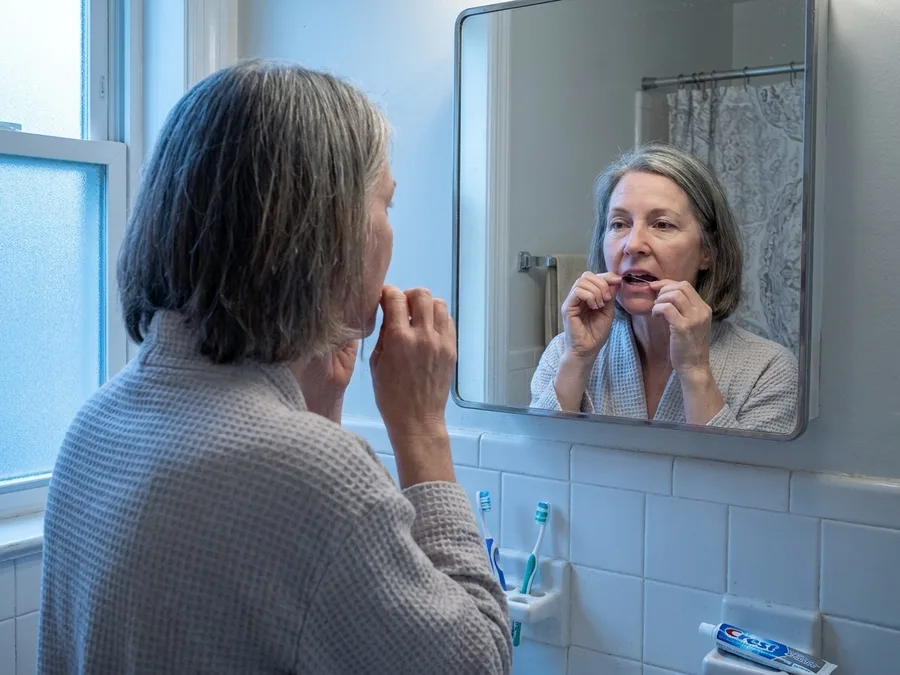
The medicine cabinet gets its yearly audit; the mouth deserves the same daily attention, because bleeding gums and a nagging tooth are chronic health signals, not cosmetic ones.
Dental care here is simple hygiene: brush twice a day, clean between the teeth, and book a dentist when gums bleed or a tooth hurts. The between-teeth part is the one most people skip, and it is the one that reaches the gum line where inflammation starts.
Is that really brain health? Treat gum disease on its own general-health terms, and the answer settles. The dementia link is not proven; chronic gum inflammation is a real burden on the body regardless, and one less ongoing source of it is worth something on its own.
Cost is where people quietly stop. Dental schools, community clinics, and a call to check what insurance actually covers are the low-cost routes — a planning problem, not a reason to leave bleeding gums alone for a year.
Smallest version: one extra pass between the teeth, attached to the brushing that already happens. Honest limit: a healthier mouth and less chronic inflammation, not a guarantee.
Frequently Asked Questions
Are these 14 habits guaranteed to prevent Alzheimer's?
No. No single habit or combination is a guaranteed shield. What these habits do is support general brain and body health, and give you a practical checklist to discuss with your clinician. Think of them as risk-reduction steps, not a vaccine.
How do I choose which habit to start with?
Pick the one that feels easiest to attach to your existing routine. If you already walk to the mailbox, extend it to 10 minutes. If you take medication daily, add a blood-pressure log next to it. The best habit is the one you will actually repeat.
Do I need to do all 14 every day?
No. Start with one, do its smallest version daily for two weeks, then consider adding a second. The goal is consistency over time, not a perfect day. Even a few of these habits done regularly can make a difference.
Should I talk to my doctor before starting?
Yes, especially for anything involving blood pressure, alcohol limits, supplements, or a new exercise routine if you have health conditions. Bring this list to your next appointment and ask which habits are appropriate for you.
What if I miss a day or a week?
Resume the next day without guilt. Habits survive on resuming, not on perfection. If you miss more than a week, review your cue—maybe it needs to be tied to a different daily anchor.
Your First Week Starts With One Habit, Not Fourteen
The verdict is plain: this is a discussion checklist, not a guarantee. No single habit on the list, and no combination of all fourteen, promises to prevent Alzheimer's.
So start with one. Choose the habit that fits your day, attach it to a cue you already have, after coffee or before dinner or during the morning call, review it in two weeks, and carry any personal targets or symptoms to your clinician.
If you came with a family history and a shelf of headlines that did not hold up, the honest answer was never a perfect protocol. It was one repeatable action and a real conversation, and the value of that action is what it can plainly deliver: movement, tracked numbers, connection, safety, routine care.
Fourteen is the count, not the assignment. The next walk is one.
Pick One Habit and Start Today
Choose the smallest version of one habit from this list, attach it to your existing routine, and check back in two weeks. Your brain and body will thank you.