

You probably married the wrong person. That's the flat statement a 97-year-old widow makes before she explains anything, and she doesn't soften it. She was married to Robert for 64 years before he died at 88. She has been widowed eight years now. She is not telling you to leave, and she is not telling you everything is fine.
She is telling you that the doubt you carry — the one that shows up at 2 a.m. after a stupid fight about dishes — is not proof you failed. It is the ordinary weather of a long marriage. She knows because she lived it, starting at 24 and ending at 88, and because she once sat at a neighbor's kitchen table at 27 convinced she had made a terrible mistake.
What she wants every couple under 50 to understand is this: the question you keep asking is the wrong one, and the right one is far more useful and much harder to answer honestly. It will make you uncomfortable. That's the point. Comfort has never fixed a marriage; clear-eyed choosing has.
By the end, you'll know what to do with the doubt in your chest right now, and you'll have one small move to make on the next bad day. Not a verdict. A direction.
You Probably Married Wrong, And That's Survivable
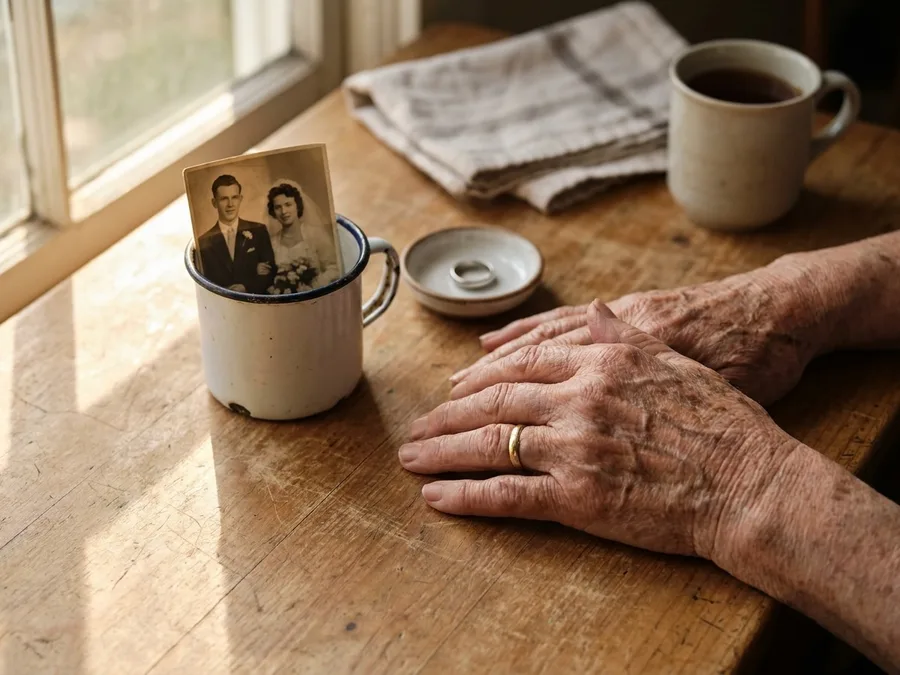
You probably married the wrong person. Sit with that for a second before you flinch away from it, because the woman saying it is not trying to scare you. She is 97 years old. She was married for 64 years. She has been widowed for eight, missing a man who died at 88, and she will tell you straight that he was not her soulmate, because there is no such thing. She married wrong. So did you. So did everyone at your wedding.
That is a description, not a diagnosis. It means your habits, moods and history don't line up perfectly with your partner's, and they never will, because two people are two people. Here is why she leads with the uncomfortable line instead of a hug. Agree with someone's worst fear and they stop defending against it. Reassurance bounces off. Honesty gets in, and once it's in, the panic has somewhere to go.
One thing needs saying clearly, though. Marrying wrong is not the same as marrying badly. Wrong is dishes left in the sink, mismatched timing for talking and quiet, money spent two different ways. Bad is contempt, control, or fear in the house. If you're living with the second kind, no reframing will fix it, and she would be the first to say get help or get out.
So the doubt you feel is not the problem. You've just been told what it means, and what you were told is wrong.
The Perfect-On-Paper Marriage Felt Wrong By Year Three
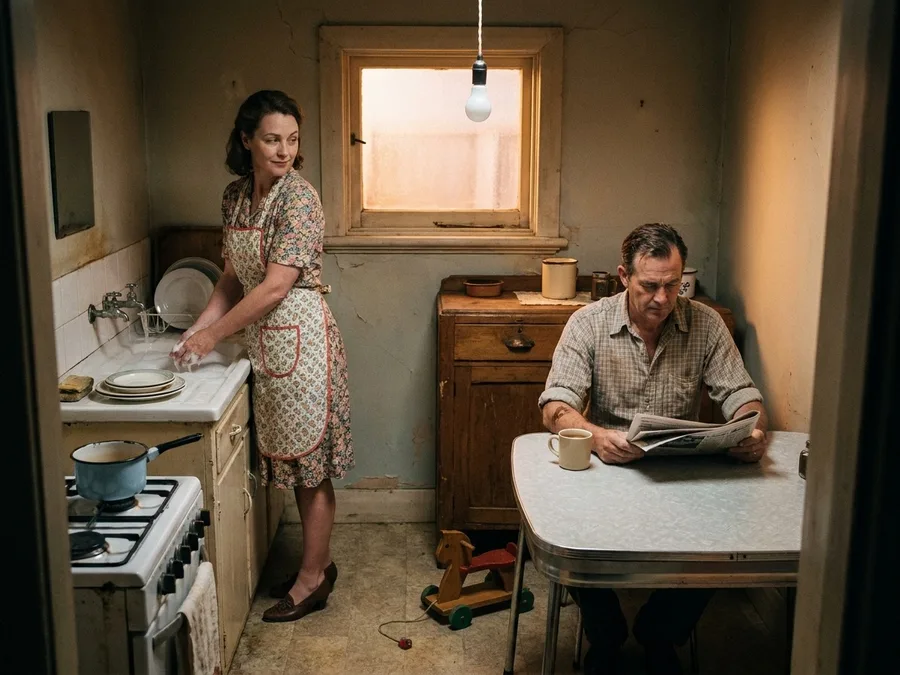
She married Robert at 24, and by every measure available that day it was the right choice. He was handsome and kind, he had a good job at the factory, and he made her laugh. Her friends told her she was lucky. Her mother cried happy tears at the wedding. If you had handed her a checklist of what a good husband looks like, Robert would have scored high on every line.
By year three it did not feel right. He left dishes in the sink. He went quiet when she wanted to talk and chatty when she wanted quiet. They spent money differently, argued about how to discipline their two-year-old daughter, and fought about his mother and about her friends. She looked across the table at this man and thought the sentence so many people think and almost nobody says out loud. This does not resemble the marriage I imagined. Surely I chose badly.
Here is the sting in it. When she tries to remember what those fights were actually about, she can't. They were so small they have dissolved from memory. They felt enormous at 27, with a toddler on her hip and a lifetime of expectation pressing down on her shoulders.
Notice what happened there. The feeling was the size of a mountain and the issue was the size of a sink. If you have been told marriage should feel easy, a dirty plate stops being a dirty plate and starts being evidence.
Everyone Marries Wrong; The Trick Is Making Them Right
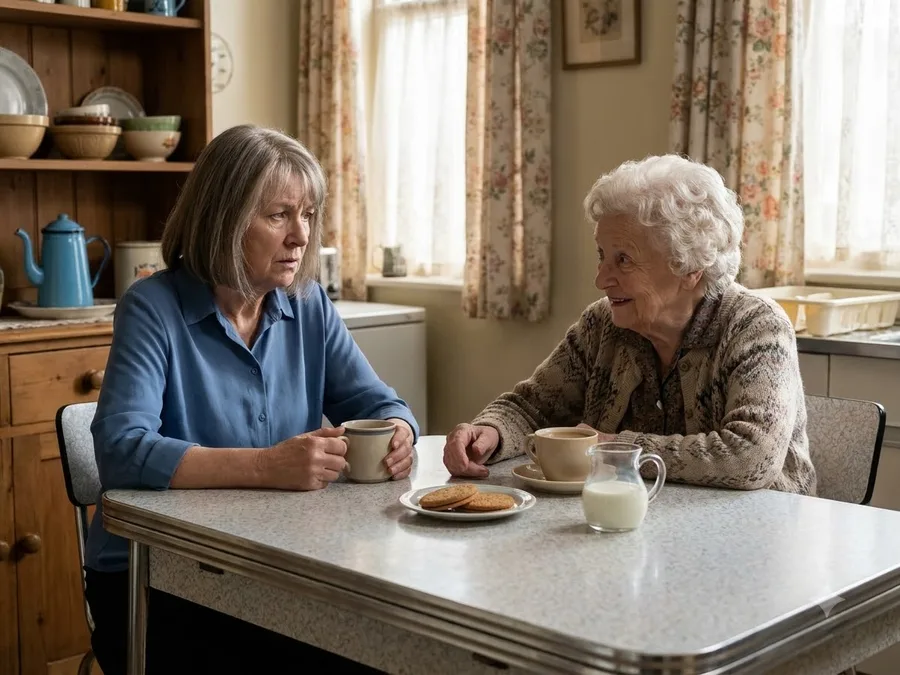
At 27, she sat at a neighbour's kitchen table with a coffee and told Margaret, a woman who had been married 30 years, that she wasn't happy and maybe Robert was the wrong man. She wanted comfort. She wanted to hear that she deserved better. She got a laugh instead. Not a cruel one, a real one, the kind that comes from recognition. Honey, Margaret said, every one of us picked the wrong partner. What matters is deciding, afterward, to turn that person into the right one.
It sounds glib at 27. It sounds like a pat answer from someone who has forgotten what it's like to be young and uncertain and holding a toddler while your marriage feels like a bad decision. But at 70, after decades of watching how this actually works, it reads as something else entirely. A decision. Not a feeling you wait for. Something you do, repeatedly, on ordinary Tuesdays.
Because here is the difference. One version of marriage is a search for a perfect fit, and that search is passive and always disappoints. The other is a commitment to build a fit that works, which is active and, in her experience, the only kind that lasts.
So the next time you catch yourself asking whether you chose correctly, swap the question. Ask what you're going to do this week to make the person you chose the right one. It's a smaller question. It's also the one with an answer.
💡 PRO TIP
The Neighbor's Rule
When you catch yourself cataloguing your partner's flaws, stop and ask: am I listing reasons to leave, or just noticing that they're not me? The first is a decision. The second is Tuesday.
The Person You Marry Isn't Who You Stay With
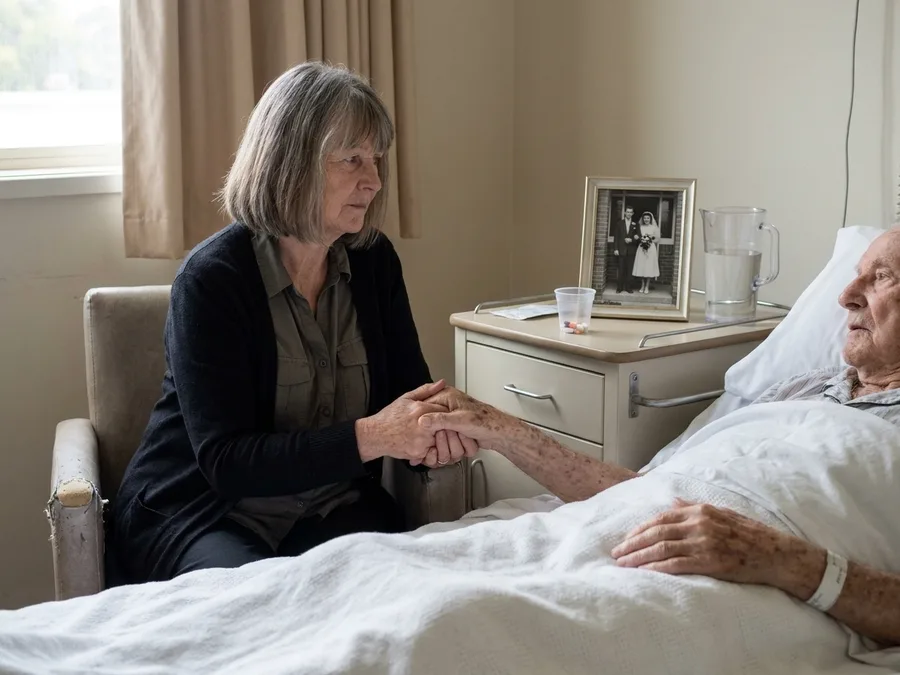
Because both of you keep turning into new people, the person you married is not the person you stay with. Robert at 30 was ambitious, energetic and impatient. At 50 he was tired, worried about money and distant. At 70 he was soft and silly, holding her hand at the movies like a teenager. At 85 he needed her to cut his food and remember his pills for him. Which one did she marry? All of them, and none of them.
She changed just as much. Timid in her twenties. Outspoken by forty. At fifty-two, after her mother died, sunk in a depression that made her hard to live with. Sure of herself at sixty. Panicked at seventy-three during her first cancer scare. Calm at eighty, in a way her younger self never could have pictured.
The 24-year-old Robert would not have recognised the 52-year-old wife. They might not even have liked each other much. That is not a tragedy, it is what 28 years does to two people, and growing in different directions is evidence of growth rather than proof of a mistake.
So the question shifts. Not who am I married to, which breaks the moment someone changes, but who are we becoming, and are we willing to keep becoming it together. That one has room in it for both of you to move.
Nobody Completes You, And That Myth Ruins Marriages
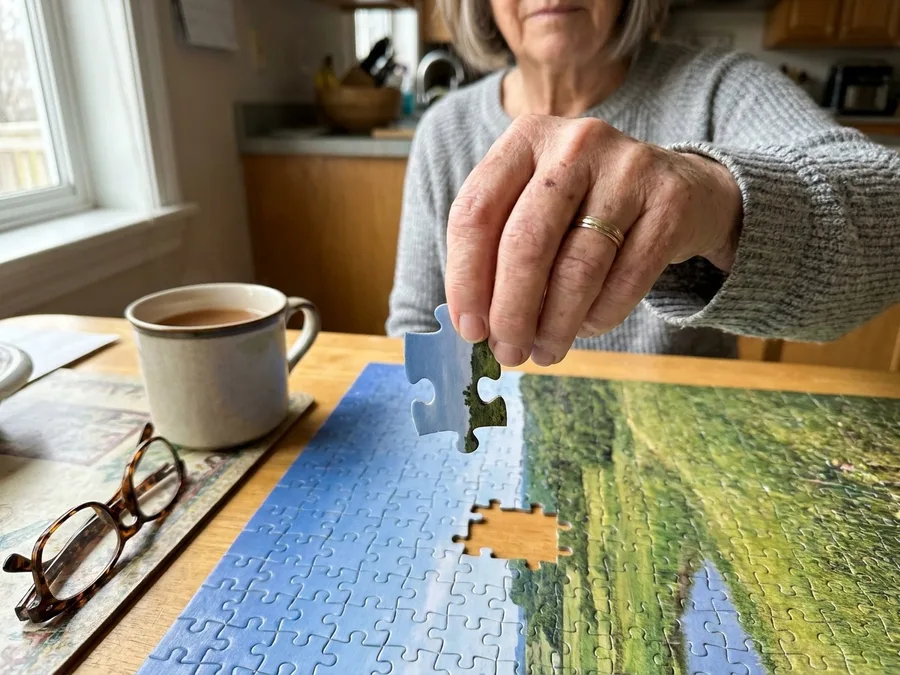
There isn't one person who completes you, and believing there is does more damage to marriages than almost anything else. The myth says somewhere out there is your other half, and your job is to find them. Lovely idea. Also a trap, because if your partner is meant to complete you, then every moment of incompleteness becomes proof. A disagreement. A dull evening. A habit that grates. All of it gets filed as evidence you picked wrong.
Watch how that works in a real house. He leaves the dishes. Under the completion test, that's not a dirty plate, it's a sign the universe made an error. Under the plainer test, it's a dirty plate, and you can say so and get on with the evening.
What replaces the myth is duller and far sturdier. Someone you are willing to keep choosing even when they are not easy to choose. That is not a lower standard, it is a different one, and it accounts for the fact that both of you will change, fail, and need things neither of you can predict today.
One caution, though. This is not a reason to drop every standard. If your partner is cruel, dismissive or dishonest, that isn't an incompleteness problem, it's a character problem. Retire the completion test. Keep the rest.
Keep Choosing Them, Even When You Don't Like Them
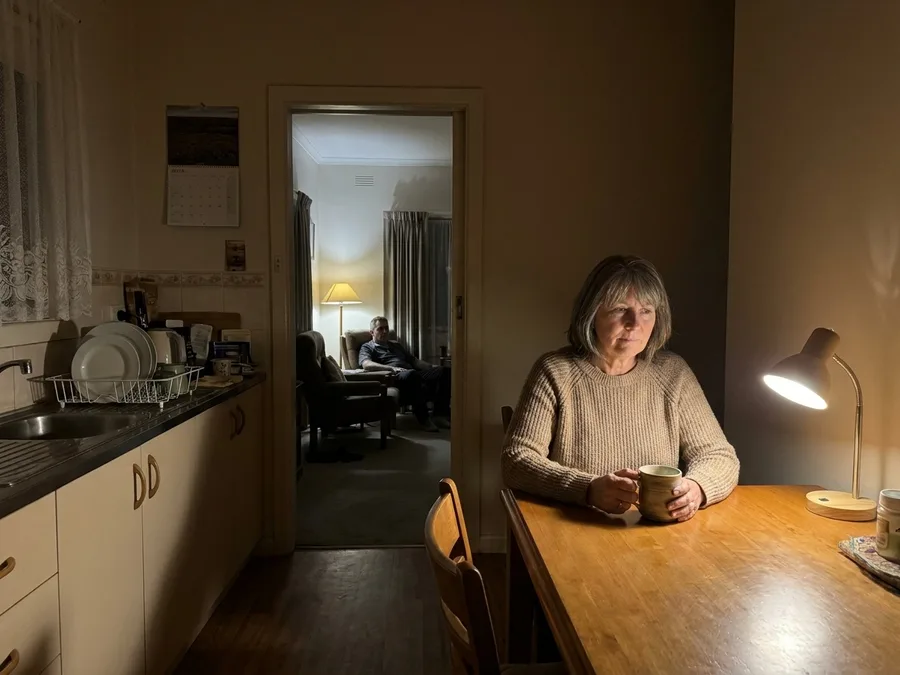
You keep choosing by treating it as a decision you make on purpose, not a feeling you wait around for. That's the whole trick, and it's not romantic at all.
She is honest about the years she didn't like Robert much. There were months she counted down the days until his fishing trips just so she could have the house to herself. There were arguments where she slept on the couch and lay there imagining her life alone, and she doesn't pretend otherwise.
But she never stopped choosing him. Not because she's a saint and not because it was easy, but because she decided her marriage was worth more than her temporary unhappiness.
Here's the line that matters: choosing the person is not the same as approving of every behavior they bring. You can hate the dishes in the sink and still choose the man who left them there. Two separate things, and people collapse them all the time.
So what does choosing look like on an ordinary bad day? It looks like staying in the conversation instead of walking out of the room. It looks like doing the next ordinary thing. Making the coffee, paying the bill, picking up the kids, without attaching a verdict to it. And it looks like not settling the question of whether you married wrong on a Thursday night when you're tired, hungry, and the kitchen is a mess.
You don't need to feel loving to choose. You just need to keep showing up until the feeling catches up, which it usually does.
🔄 How to Reframe an Annoyance in 4 Steps
Notice the irritation
Name the specific behavior that's bothering you, without generalizing.
Pause the reaction
Ask what this behavior is doing for them, or where it was learned.
Look for the history
Connect the habit to a story — upbringing, fear, or a way of coping.
Choose understanding over winning
Respond with that context in mind instead of scoring a point.
Understanding Where An Annoyance Comes From Disarms It
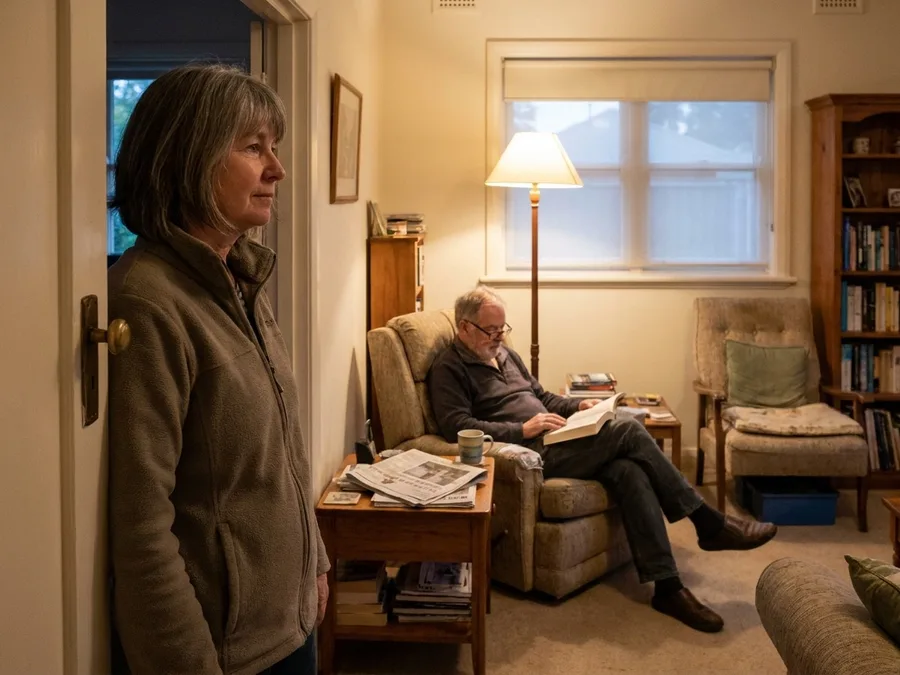
Stop trying to kill the irritation and start asking what the habit is for. That one question does more than twenty years of gritting your teeth ever did.
Take Robert's quietness. For years she read it as indifference, a man who didn't care enough to talk. Then it landed: he was thinking, not ignoring her. The same silence that felt like a wall turned into a kind of presence, and nothing about him had changed.
His spending told the same story in a different key. It drove her crazy, right up until she understood where it came from. He grew up poor. He wasn't being careless with money; he was proving to himself that he'd made it. Once she saw that, she stopped fighting him and started understanding him.
The traits that annoyed her at 30 were endearing by 60. Not because they changed. Because she did.
So before you react to the thing that's been bugging you for two decades, ask what it's doing for them. Where did they learn it? What need is it meeting? That question doesn't excuse the behavior, but it changes the fight. You're no longer arguing about dishes. You're arguing about two different childhoods, and that's actually a conversation you can have.
The Ledger vs. The Long View
Keeping score
- You tally who did what last week.
- Every imbalance feels like proof of unfairness.
- You bring up old debts in new arguments.
- You wait for the other person to earn your effort.
- You measure the marriage by the worst month.
Choosing the partner
- You give what you can today, knowing it may swing tomorrow.
- You accept that some years you carry more.
- You let go of the tally without pretending it's fair.
- You choose the person even when the effort isn't returned yet.
- You measure the marriage by the long arc.
Marriage Isn't 50/50; It Swings 80/20 And 10/90
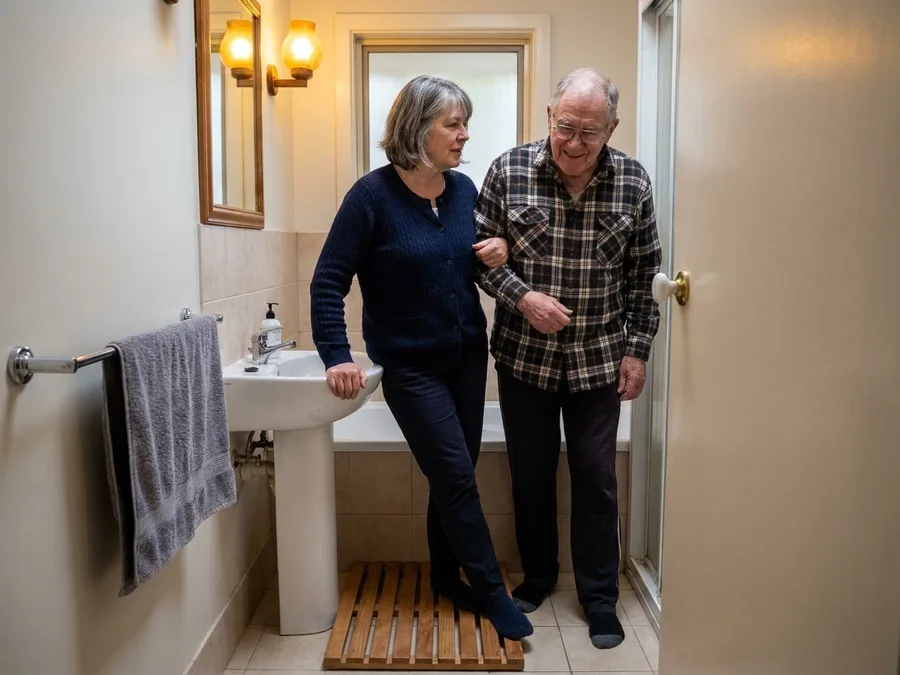
You stop keeping score the day you accept that the split was never even to begin with. Some years it's 80/20. Some years it's 10/90. The people who last are the ones who quit expecting it to stay balanced.
Robert's turn came after her surgery. He did all the cooking, the cleaning, and helped her to the bathroom. She couldn't give him anything except her presence, and he didn't complain once.
Her turn came when he lost his job at 54 and sank into a dark place. It came again when his brother died and grief kept him in bed. She held the household together, not because she was tallying anything, but because she had decided this was the person she was choosing.
The ledger always flatters whoever is holding it. You remember your sleepless nights; you forget theirs. That's not a character flaw, it's just how memory works. Which makes the ledger useless as a measure of fairness and a machine for resentment.
And if the imbalance has lasted years rather than months? Then it isn't a season. That's a conversation, and possibly a counselor. The swinging works for rough patches, not for a decade of one person carrying everything while the other coasts.
One Partner Cannot Be Best Friend And Therapist Too

It's only a problem if you've handed one person a job description no human could fill. Read the list out loud and you'll hear how absurd it is.
Best friend. Therapist. Adventure buddy. Co-parent. Financial equal. Intellectual match. Ideal lover. Every role, every hour, without end. No one can fill all of those, and if that's the standard you're holding your partner to, you'll spend the marriage disappointed.
Her best friend was Linda, not her husband. She read books Robert would never touch; he understood engines she never could. Half the time they wanted different things out of life. And he was still her partner, and that was enough.
That's a lower bar than the culture sets, and a far more survivable one. It lets you get support beyond family from friends, books or colleagues, and adventure from a sibling or a hiking group. It lets your partner be one person instead of seven, and it spares them the punishment of not being the rest.
⚠️ COMMON MISTAKE
When Choosing Isn't Enough
If there's contempt, control, or fear in your marriage, that's not reframing material. Choosing harder doesn't fix abuse. Get help, set boundaries, or leave — and don't let anyone tell you that's the same as giving up too soon.
The Only Question Is Whether You'll Keep Choosing
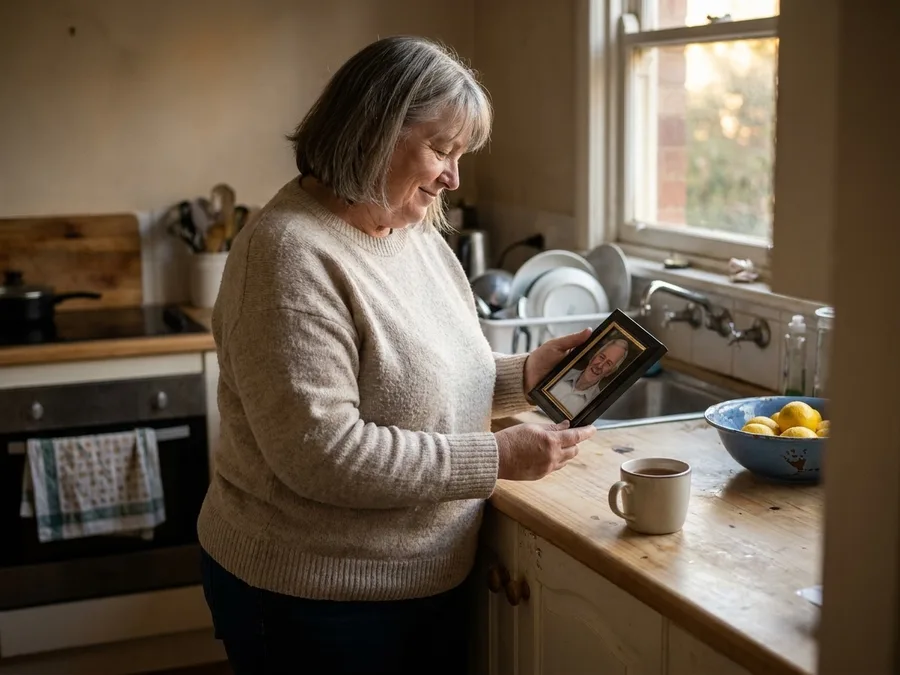
You swap the question. Instead of asking whether you picked right, ask whether you're willing to keep choosing this person, especially when it's hard. That one you can actually answer.
Because the right-person question never really worked. When she's asked point blank, she says she married a person, and the two of them decided over and over to make it right. That's the whole story, no destiny in it anywhere.
Her summary is plain and tough: wedding vows are a blunder you commit deliberately, and then you labour relentlessly so that it becomes the finest blunder of your life. She chose Robert for 64 years, and she says she'd choose him for 64 more. She misses him every day, not because he was perfect, but because they were each other's.
So take the doubt you're carrying and put the replacement question in its place this week, when the annoyance flares and the kitchen is a mess. Do I want to go on choosing this person, even when it's hard? Ask it honestly. The answering is what changes things.
No Ring, Long-Term, Or Single And Spooked
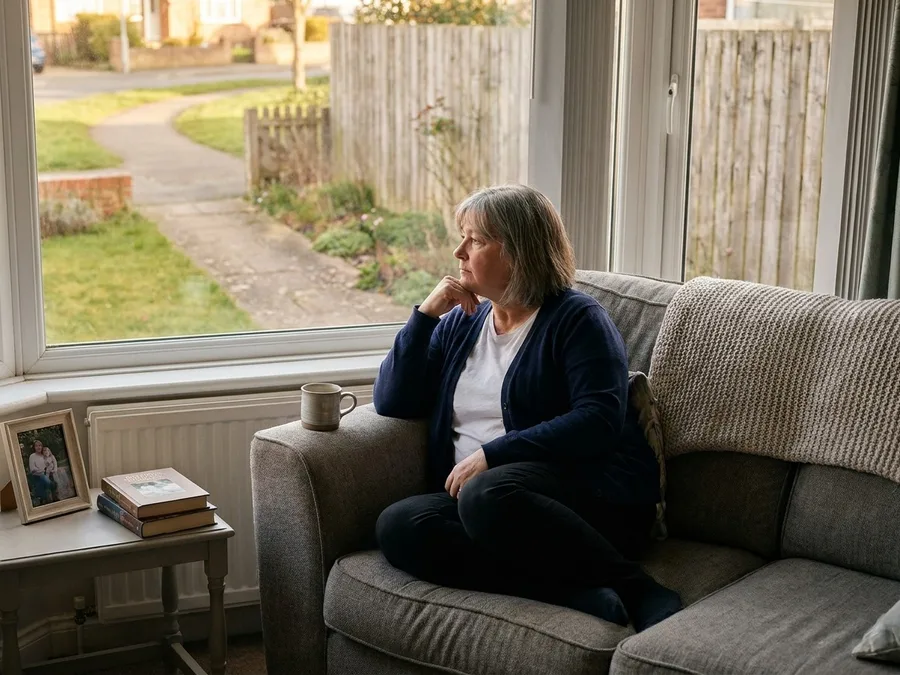
None of this changes if there was never a ring. The dishes still sit in the sink, the money still gets spent differently, one of you still wants quiet while the other wants to talk. What changes is the exit.
A marriage ends with paperwork, a lawyer, a date on a form. A long-term partnership just… thins out. Nobody announces it. One of you stops coming back on Tuesdays and neither of you says the words, so the choosing has to be spoken instead of assumed. Say it out loud. 'I'm still in this' is a sentence long partners go years without hearing, and it costs nothing.
And if you're single and quietly terrified of picking wrong, here's a better question than 'is this the one.' Ask whether this is a person you could choose again on a bad day. Not a holiday, not a first date. A Tuesday when they're tired and you're annoyed and nothing about the evening is romantic.
Screen early for contempt, for control, for being afraid of someone's reaction. Those are not raw material you can work with, and no amount of patience turns them into it. Different music, different spending, different noise levels – that's ordinary difference, and it's reframed every week by couples who stay.
Being single isn't the failed version of this story. The question only bites once you're actually choosing somebody.
A Week of Practicing the Choice
Frequently Asked Questions
Does this mean I should just settle for someone who treats me badly?
No. The 97-year-old is talking about ordinary mismatch — habits, moods, histories — not cruelty, control, or contempt. If your partner is dismissive or abusive, the choosing question doesn't apply. Get help or get out.
What if we've been together for years and I still feel like I picked wrong?
That doubt is common, and it doesn't necessarily mean you picked wrong. It means the romantic script you were sold doesn't match reality. Ask whether you're willing to keep choosing the person in front of you, and whether they're willing to keep choosing you.
How do I stop keeping score when I feel like I'm doing everything?
First, check whether the imbalance is temporary or chronic. If it's been years, it's not a season — it's a conversation. If it's a rough patch, name the feeling without the ledger. 'I'm exhausted' lands better than 'I always do everything.'
Is it okay that my partner isn't my best friend?
Yes. One person cannot be your best friend, therapist, co-parent, financial equal, and ideal lover all the time. Get friendship from friends and intellectual stimulation from books. Your partner can be one important thing, not everything.
We never married. Does any of this apply to us?
The irritants and the decision to stay are the same. Without a ceremony, the exit is quieter, so the choosing has to be said out loud. Don't assume; tell each other, regularly, that you're still choosing.
What if I'm single and afraid of picking wrong?
Swap the search for the one for a test you can actually apply: is this a person I could choose again on an ordinary bad day? Screen early for contempt, control, and fear. Ordinary difference is workable; those three are not.
The Question You Carry Into This Week
The verdict is a swap, not a slogan. The question was never did I pick the right person. It was always am I willing to choose this one again, starting today. That question has an answer, and you can give it.
The first move is small: take one recurring annoyance — the dishes, the silence, the way they spend money — and before you react, ask where it came from. What is it doing for them? What did they learn? Reframing one habit won't fix everything, but it changes the fight.
This does not apply to contempt, control, or fear. No amount of choosing fixes those. If you're living with them, get help.
But for the ordinary mismatch, the 97-year-old has one final piece of arithmetic: 64 years with Robert, and she would sign up for 64 more. That's the whole story.
Practice the Choice This Week
Pick one annoyance and ask what it does for your partner before you react. That's the whole exercise — and it's enough to start.