
The honest answer to what people in their 70s would tell their 50-year-old selves is that almost none of it is about money. It's about the body, the friends, the calendar, and the house. The complication is that none of those send an invoice today.
Right now the knee complains on the third flight of stairs, and you file it under things to fix when it actually breaks. Then you watch a parent negotiate a walker across a kitchen floor and quietly decide that's a problem for later.
It isn't random. The 70s are mostly a bill for the 50s: muscle you didn't build, sleep you never had checked, friendships you didn't put on a schedule, a home you never adapted while moving was still cheap. What follows are ten course corrections, each specific enough to start this month. By the end you'll know this week's one physical move, whether to move house or modify the one you have, how often to see a friend, and which single item on the list you can safely skip.
Independence at 70, options at 70, a full week at 70 – those are the compound interest on a handful of choices made now. Start the ones that carry the most and skip only the one your situation makes reckless.
Quick Tips Before You Start
Start with strength
Two 20-minute resistance sessions a week is the highest-leverage habit on this list.
Pick a date
Choose one recurring social commitment and put it on the calendar before you finish reading.
Get cleared if needed
Recent fall, dizziness, or a joint diagnosis? See a physical therapist before starting balance work.
Treat sleep like a symptom
Loud snoring, gasping, or daytime exhaustion warrants a sleep study, not a supplement.
Practice retirement early
Test one weekday activity six months before your last day of work.
The body you'll live in
Everything else on this list — travel, friendships, volunteering, learning — runs on the body that carries you there. The people in their 70s who are still doing all of it aren't lucky; they made specific deposits in their 50s that their older selves are now drawing on.
This first group of four is about the physical platform. Strength, balance, joint care, and sleep are the payments that either buy independence at 75 or bill you for it in the form of walkers, fog, and a social life that shrinks to the distance you can comfortably walk.
1. Strength now buys independence later

Muscle is the one asset that pays out every single day of your 70s, and it is the answer every older adult gives when asked what they would have started sooner. Not money, not a better diet – lifting something heavy, twice a week, back when the knees still cooperated.
The distinction the decades make is blunt. A person who spent their 50s loading muscle and bone often lives alone at 75; the one who didn't may need assistance for the small physical feats that independence actually runs on.
Picture the specific moments. Catching a stumble on a curb before you go down. Carrying the grocery bags from the car in one trip. Getting off the living room floor after playing with a grandchild – no chair, no second person pulling you up. Those three movements are the difference between a house and a facility.
The training that builds them is unglamorous. Two sessions a week, 20 to 30 minutes each, using dumbbells, resistance bands, or bodyweight alone. Cover legs, back, chest, and hips, and make the last two reps of every set genuinely hard while keeping your form.
💡 Tip: Start lighter than you think you should. Add weight only when the last two reps feel hard but controlled.
⚠️ COMMON MISTAKE
Don't wait for a diagnosis
Most people start strength training after a fall or a scare. Start before one. Muscle and bone respond to load at any age, but the buffer you build in your 50s is what protects you when life gets unpredictable.
2. Walking is not a strength plan
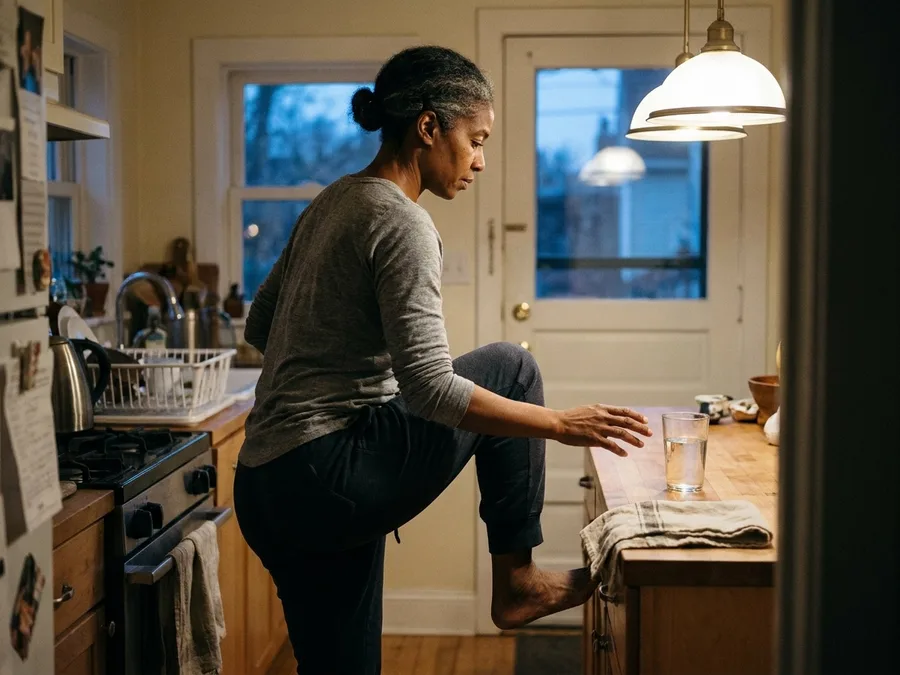
Your walk is doing real work – just not the work that keeps you upright. Cardio builds heart and stamina, and that matters, but it never asks muscle or bone to adapt to a load. The daily-steppers who fall at 70 often walked faithfully and did nothing else.
So give each kind of movement its own job. Cardio most days of the week. Resistance twice a week. Balance work two or three times a week – separate from the miles.
Balance training is the cheapest insurance you will ever buy. Stand on one foot near a counter, hand hovering, 30 seconds each side, a few times a day. Or join a tai chi class, which stacks the balance work inside a social hour. That is it.
One caution before you start hopping on one leg. A recent fall, dizziness, numbness in the feet or a diagnosed balance disorder means a physical therapist or trainer should set the progression – going too fast at home is how the first session becomes a setback.
Walking is one payment toward the 75-year-old self, not the whole bill. The person who catches a stumble on a curb has trained balance and strength, not just logged the miles.
💡 Tip: Brush your teeth on one foot. It's 30 seconds of balance work twice a day, built into a habit you already have.
3. Babied joints stiffen; used joints endure
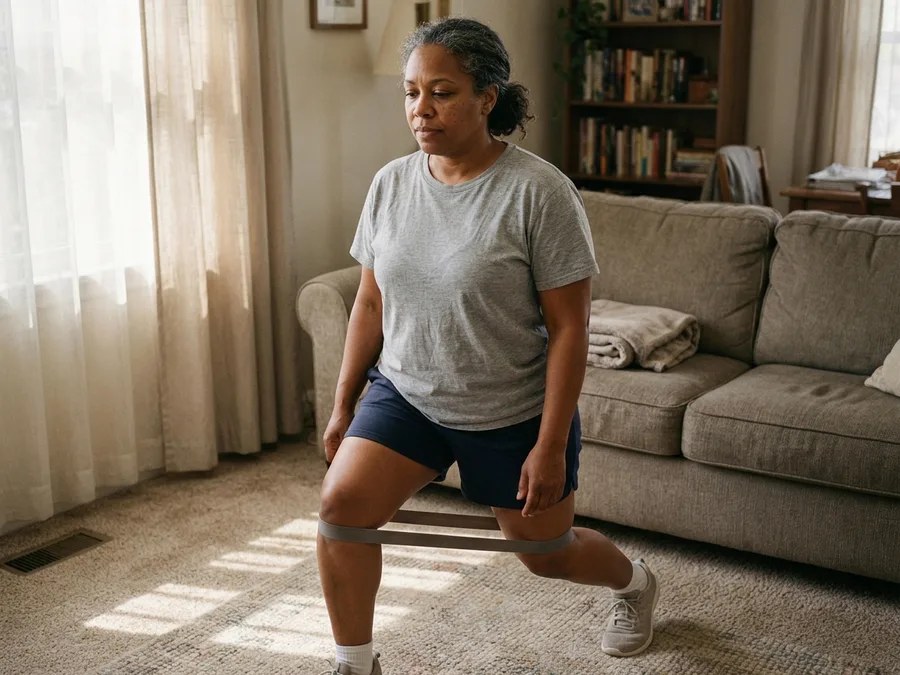
The knee that hurts on the stairs is not asking for the couch. It is asking for a load it can tolerate.
Once the week is split into strength, cardio, and balance, the next question is what happens when one joint starts talking back. Most people in their 50s hear a diagnosis – arthritis, a torn meniscus, patellar pain – and quietly stop using the leg. Within weeks the joint loses range of motion, the muscles around it thin out, and the whole limb gets weaker than the injury ever made it. Waiting for the knee to feel perfect is the mistake. It will not feel perfect, and the waiting is what costs you.
The useful split is between two kinds of pain, and it is not subtle once you know what to feel for. Soreness is dull and spread out, hard to point to with one finger, and it eases as you warm up or is gone by the next morning. Sharp pain is pinpoint, catches on a specific step or twist, and stays or worsens over the following day. Soreness gets movement. A sharp catch earns a stop and an assessment, not a heroic push through.
For most garden-variety aches – the stiff knee after sitting, the shoulder that complains overhead – graded movement and a few sessions of physical therapy outperform bed rest, and the therapists who treat this every week say the same thing. The old prescription of two weeks off was the harm. Beyond a couple of days of true rest, the joint capsule tightens and the quad or the rotator cuff that should be protecting it gives up strength it will need back.
The strength and balance numbers that matter
What the research on adults over 60 consistently shows
4. Ignoring sleep problems at 50 buys fog at 70

Joint pain gets people to move differently during the day, and sleep decides what your brain does with the night. The fog that settles in at 70 usually has roots in a snore at 50 that no one thought to investigate.
Ask the adults two decades ahead and the same regret surfaces: they wish they had looked into the snoring, the insomnia, the afternoons spent fighting to stay awake. Poor sleep does not stay fixed. It compounds, and what it compounds into is mood and memory.
The signs of sleep apnea are not subtle once you know what to watch for. Loud snoring that rattles the room, gasping or choking in the night, pauses in breathing that a partner notices and you do not. Waking unrefreshed after eight hours, or nodding off in a chair by mid-afternoon, counts too.
Alcohol and screens are the two quiet saboteurs. A drink before bed fragments the second half of the night, so you wake at 3 a.m. and cannot explain why. Late scrolling delays the moment you fall asleep and trims the total, which is why you can spend eight hours in bed and still feel shortchanged.
The next step is a sleep study, not a supplement. A study identifies apnea or another treatable cause and points to a plan. Home tests are widely available now, and one night of monitoring tells you more than a shelf of melatonin ever will. If snoring or daytime exhaustion has followed you for years, this is worth raising with your doctor.
Sleep is a payment made in your 50s that either buys clearer memory and steadier mood at 70 or bills them as fog and irritability. The brain repairs itself during quality sleep, and that repair shift does not happen on schedule if the night is fractured. You are choosing, most nights, which version of your 75-year-old self shows up.
Sleep Study — At a Glance
⏱️ Test time
One night
🛌 Signs you need one
Snoring, gasping, daytime exhaustion
📅 Results
Usually within 2 weeks
💊 Treatment
CPAP, positional therapy, or lifestyle changes
💰 Cost
Often covered by insurance
Why it matters
Untreated apnea is linked to high blood pressure, heart rhythm problems, and cognitive decline.
The life you'll retire into
Retirement is not a date on a calendar. It's a life you either build before you get there or inherit by default. The people in their 70s who are thriving didn't just save money — they built a weekday structure, a home that works for their body, and a list of experiences they didn't postpone.
These three entries cover the retirement life your body has to inhabit. Money matters, but the regrets that come up most often in this group aren't financial. They're about empty Tuesdays, stairs that stopped being safe, and trips that expired while waiting for the right time.
5. Retirement is a social cliff, not a date
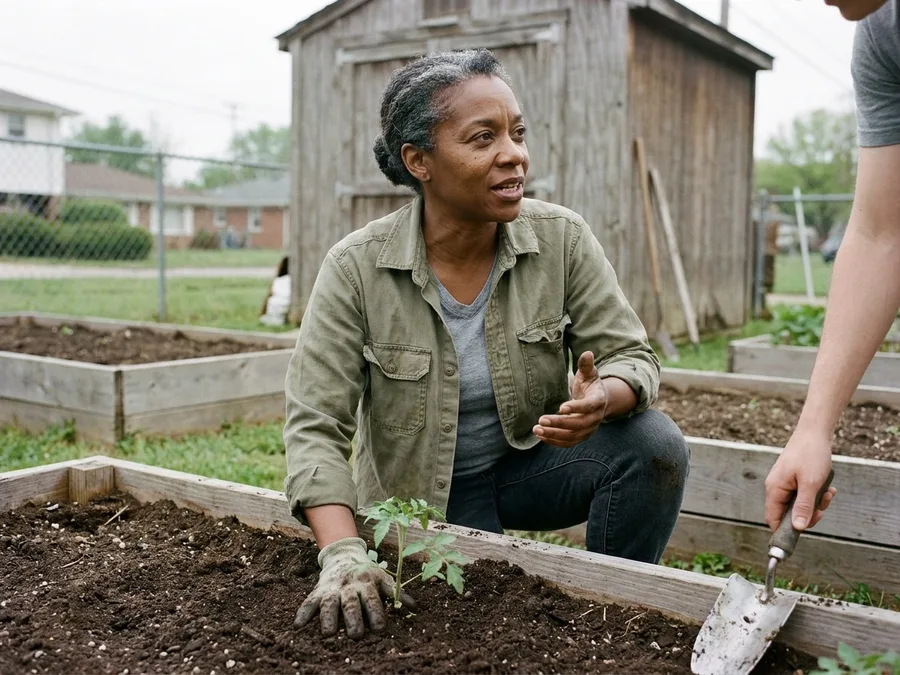
With the body's daily maintenance handled, the next regret moves from the body to the calendar. What do you actually retire into, not just from?
Money is the part everyone plans for. The warning that goes unspoken is that retirement removes structure, colleagues, and a reason to leave the house. The social cliff does not arrive gradually. It arrives on the last day, when the building, the gossip, and the 8 a.m. reason to get dressed all disappear at once.
Keep the two plans separate. One spreadsheet for the money, and one list for the weekday life: the people you see, the recurring activities that fill a Tuesday. If the second list is blank, that is the gap the 70-year-olds describe.
Name one recurring activity now, before retirement, and start it early. A Tuesday volunteer shift, a weekly class, a standing lunch with a friend. Six months of practice before the last day makes it a habit rather than a decision you have to summon from an empty morning.
For people whose entire social network and sense of identity come from the job, phased retirement fits better than a clean stop. Reduced hours or consulting keeps the structure while you build the replacement. Stopping cold removes the social network and the role in the same week.
The 75-year-old self needs a filled Tuesday, not just a funded account. Work's structure is either replaced in your 50s or mourned at 70, and the mourning is quieter and longer than most people expect.
💡 Tip: Write down the three things work gives you besides money — structure, people, purpose — and plan how you'll replace each one.
Aging in Place vs. Moving Before You Have To
Modify and stay
- Grab bars in the bathroom and a no-step entry
- Main-floor bedroom if stairs are a concern
- Better lighting throughout the house
- Familiar neighborhood and neighbors
- Lower cost if the modifications are modest
Move while you have options
- Smaller home near services and transit
- Closer to people and activities you already enjoy
- Less maintenance and yard work
- More social opportunities within walking distance
- Higher upfront cost, but planned rather than rushed
6. Downsize before the stairs decide for you
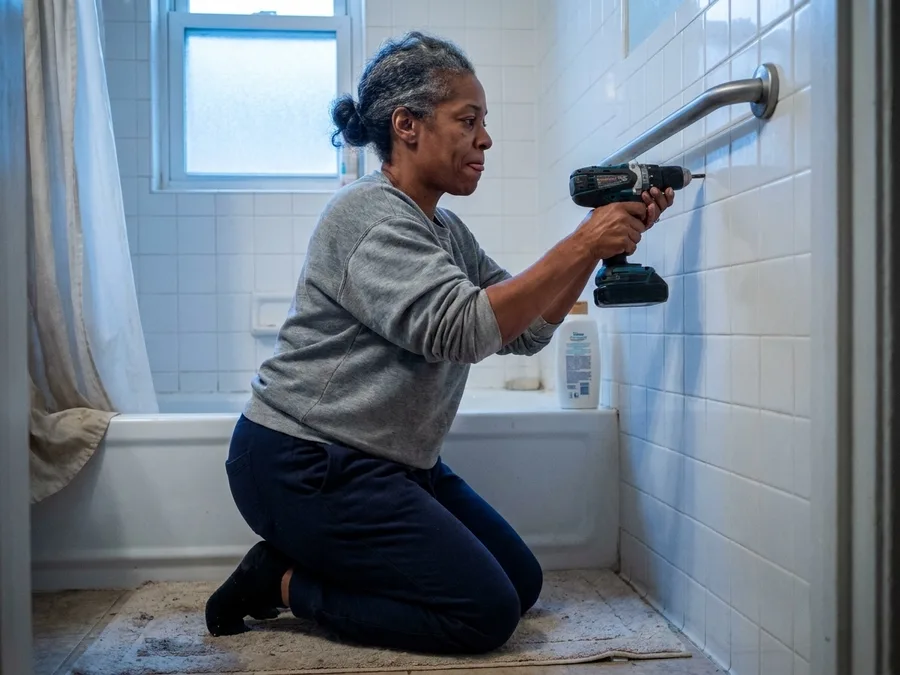
A retirement life needs a place to happen. The home that works beautifully at 55 can turn into a trap at 75, and moving or modifying while both money and health are still on your side is a decision that gets harder every year you wait.
Ask the 70-year-olds and the same wish repeats: they had wanted to move or modify in their 50s, while they had the money and the knees for it. Waiting turns a choice into a crisis, and a crisis is the worst time to make a decision about where to live.
If you want to age in place, make it real. Grab bars in the bathroom, a main-floor bedroom, a no-step entry, better lighting through the hallways. Those changes are cheap and quick now, and far more expensive once a fall has forced the issue.
If you would rather move, look for a smaller home near services, transit, and people. The delay cost is specific: one fall can force a rushed sale, a rehab stay, and a move to whatever is available rather than what fits. The home you choose in a hurry is not the home you would have chosen calmly.
The emotional hurdle is real. Sorting thirty years of possessions is easier with a deadline and a helper, so start with one room or one category before a crisis sets the pace. The attic does not have to be done in a weekend. It has to be started.
The 75-year-old self either walks into a planned home or is carried into an emergency one. The 50s are the last cheap window to decide which.
7. Take the trip that requires walking now

A house that fits the next twenty years frees up a different question: what the money is actually for. And the honest answer most people arrive at too late is that some of it is for experiences with an expiration date.
The regret that comes back from people in their 70s is rarely the beach week they skipped. It is the trip that demanded stamina. The hike in the Dolomites, the cobblestoned old town walked end to end, the fourteen-hour flight to a place they had talked about for years.
Those trips are perishable assets. They do not keep.
A walking trip at 55 is not the same trip at 75, even for a healthy person. Knees that handle eight miles of trail now may handle two in twenty years, and balance on uneven stone changes. Recovery time stretches, so a packed itinerary starts to cost a day to recover from.
The itinerary itself changes shape. Fewer hours on foot, more sitting, more planning around stairs and altitude.
So separate the trips that expire from the ones that do not. A resort with a pool and a short stroll to dinner can happen at 75, 80, whenever. A five-day trek with a pack cannot.
If the stamina trip is on the list, treat it like training and logistics, not just a booking. Build walking practice into the two or three months before, longer distances on hills if the route has them. Buy trip insurance that covers medical and cancellation. Use the mobility aid if a knee is already complaining, because a cane or a trekking pole extends the trip rather than spoiling it.
One line holds the whole test: spend on what expires, defer what keeps.
Now the exception. If high-interest debt is sitting on a card or active caregiving ties the calendar to someone else's needs, the trip is not a discipline problem, it is a bad idea right now. In that case, save, and let the beach version be the later one. What is reckless is not the trip, it is the trip on borrowed money while a parent needs you home.
Some readers will find that a walking trip in their 50s buys a memory and a fitness habit the 75-year-old self draws on. Others will find it bills the retirement account for something they could have done in a different form. The difference is which experiences truly expire, and that answer is specific to the person holding the calendar.
The spend belongs where the body, not the bank balance, sets the deadline. Everything else can wait for the later version.
💡 Tip: Book the trip that requires walking before you turn 60. The window doesn't close suddenly, but it does close.
The numbers behind the regrets
What the 70-year-olds wish they'd known in their 50s
The people and mind you keep
The last group is the one people underestimate. By 70, the quality of your life depends less on your bank balance than on whether you have people to call, a mind that still stretches, and a nervous system that isn't running on old grudges.
Friendships, forgiveness, and learning are the three deposits that compound the slowest and pay the longest. They're also the easiest to postpone, which is exactly why the 70-year-olds put them on this list.
8. Friendship needs a standing date, not good intentions

Travel is an event you plan. Friendship is a system you maintain. The isolation people describe in their 70s is rarely the result of a fight or a falling-out. It is the residue of friendships that were allowed to drift through the 50s, when work and kids and a full calendar did the drifting for them.
The fix is not waiting to be invited.
Name the habit and put it on repeat. A monthly dinner on the fourth Thursday. A Sunday morning call. A Saturday walk with the same two people. The specifics matter less than the repetition. A standing date survives busy weeks because the default is yes; an intention to catch up survives nothing.
Then protect it like a meeting on the work calendar, because that is what it is.
Work friends are a particular case. The shared building, the hallway gossip, the nine a.m. coffee run, the whole scaffolding of a work friendship, disappears on your last day. Convert the closest ones into out-of-work contact before that day arrives, not after. A dinner at a restaurant with no work talk is a start.
For people who have moved, or whose circle has thinned through divorce, illness, or death, a group rebuilds what work once supplied. A walking club, a choir, a volunteer crew, a class. The point is not the activity. It is that the activity puts the same faces in front of you every week.
Friendship compounds with scheduled contact. Good intentions come due at 75 as an empty week, and the calendar at that age does not fill itself.
💡 Tip: Put one recurring friend date on your calendar this week. Not 'sometime' — a date and a time.
💡 PRO TIP
Turn work friends into real friends
Before your last day, invite two colleagues to something outside work — a hike, a dinner, a game. The shared building disappears; the relationship doesn't have to.
9. An old grudge costs you more than them

Scheduled friendship builds the connection that is missing. There is a second kind of connection, older and quieter, that goes silent for different reasons: the sister you have not spoken to since a fight over a will, the friend who said the thing at the wedding twenty years ago.
People in their 70s talk about these estrangements with a particular kind of grief, because by then the decades are gone and the person may be too. The question in your 50s is whether to reach out.
First, separate the two things people run together.
Forgiveness is releasing the anger inside you. Reconciliation is rebuilding contact with the other person. They are not the same move, and only the first one is clearly yours to do for your own health.
The cost of a held grudge is physical. Repeating the old injury in your head, on the drive home, in the shower, at 2 a.m., keeps your body in the stress response it was designed to use for short sprints, not for decades of reruns. It also steals attention from the relationships you actually have now.
Forgiving lowers that load. It does not require the other person to apologize, or even to know.
Reconciliation is optional, and sometimes unsafe. If there is ongoing abuse, if reaching out would put you or someone in your household at risk, or if the person has a history of using contact to hurt you, do not reopen the door. Forgiveness can happen entirely on your side of it.
A grudge is a debt your 75-year-old self pays in stress and lost years. You can cancel the internal part without ever picking up the phone.
10. Learn something hard to keep your mind soft

The attention you reclaim when you stop replaying an old argument has to go somewhere, and what you pour it into shapes the mind you carry into your 70s. Look at the people two decades ahead who are still curious, still quick with a name, still asking questions at a dinner table, and you will usually find that in their 50s they were beginners at something. A language they could not yet speak. An instrument that sounded terrible for months. A craft with a vocabulary they had to learn from scratch.
The crossword is the trap. Not because it is bad, but because it is a fitting that no longer requires anything new from you. Novel learning forces the brain to build fresh patterns, while routine puzzles mostly rehearse the ones already built. The distinction matters after 50, when the brain's default is to consolidate and settle.
A 55-year-old who takes up Spanish builds new wiring. The same 55-year-old doing the same Thursday crossword builds almost nothing.
Pick something hard enough to be humbling, because humbling is the point. A language, an instrument, a woodworking skill, a second career's worth of accounting – it needs to be a thing you are bad at on day one and measurably less bad at on day ninety.
The social form of learning does two jobs at once. A class, a group, a teacher gives you people and accountability, so a Tuesday evening you would have skipped becomes a standing appointment with a room that notices when you are absent.
You cannot easily cancel on a teacher who expects you.
That combination of new material and regular contact is what the sharpest older adults have in common, and neither piece works as well alone. The class may matter more than the subject.
Some memory changes deserve a doctor's visit rather than a self-improvement plan. The ones that warrant checking are sudden, disruptive, or interfering with bills, driving, or daily tasks; ordinary lapses tend to be stable and recoverable, the kind that are annoying rather than alarming.
If the forgetting is new, or getting worse, or costing you function, that is a conversation with your physician, not another app.
Learning is a 50s deposit into a version of you that will want somewhere to go. A closed skill set is a softer mind with fewer rooms to enter.
The bill and the payment run the same way. Every month you spend rehearsing the familiar, the 75-year-old self gets a smaller room to stand in; every month you spend being a beginner, the room gets a little bigger.
💡 Tip: Pick one skill that makes you slightly uncomfortable. Discomfort is the signal that your brain is building something new.
📆 Your First Month: What to Do This Week
Book a strength session
Schedule two 20-minute resistance sessions this week and put them on the calendar.
Add balance work
Stand on one foot near the counter for 30 seconds each side, twice a day.
Check your sleep
If you snore or wake unrefreshed, book a sleep study instead of buying a supplement.
Plan one social date
Text a friend and put a recurring monthly dinner or walk on the calendar.
Pick a hard skill
Sign up for one class — language, instrument, craft — that starts within the month.
Frequently Asked Questions
What's the single most important thing I should start in my 50s?
Strength training. Two 20-minute resistance sessions a week preserves muscle and bone in a way walking cannot. It's the habit that makes the biggest difference to your independence at 75.
Is walking enough exercise if I do it every day?
Walking is excellent cardio, but it doesn't build strength or balance. You need resistance training twice a week and balance work two or three times a week alongside your daily steps.
Should I move or age in place?
It depends on your health, your home, and your community. If you want to stay, modify now with grab bars, better lighting, and a main-floor bedroom if needed. If you'd rather move, start looking while you still have options — waiting turns a choice into a crisis.
How do I know if my sleep problem is serious?
Loud snoring, gasping or choking, witnessed pauses in breathing, waking unrefreshed, or falling asleep during the day are signs to get a sleep study. A study identifies treatable causes like apnea.
Is it worth reaching out to someone I haven't spoken to in years?
Forgiveness — releasing the anger inside you — is almost always worth it. Reconciliation, rebuilding contact, is optional and sometimes unsafe. You can forgive without reopening the door.
What actually protects my brain as I age?
Novel learning is one of the strongest levers. Pick up a new language, instrument, or craft in your 50s. Social learning — a class or group — adds accountability and people, which helps you stick with it.
Book the strength session before you book anything else
Of all ten, strength training ranks most urgent, and it isn't close. Two resistance sessions a week protect the thing every other item depends on: the stairs, the trips, the standing Tuesday with a friend, the ability to stay in your own home. Cardio and walking can wait their turn. Lifting cannot.
This week, book two sessions of 20 to 30 minutes, Tuesday and Friday, and write them down like a meeting you can't move. Chair squats, wall push-ups, band rows, and a hip hinge cover the whole body with dumbbells, bands, or just your bodyweight. If you're carrying an injury or balance problems, call a physical therapist before the first session, not after.
The one you can safely skip is number seven, the trip that needs stamina – but only if high-interest debt or full-time caregiving makes it reckless right now. Don't skip it to fund a life you haven't changed, and don't touch number one.
That ache on the stairs and that walker in your parent's kitchen are the same message arriving early. Your 75-year-old self isn't asking for a perfect decade. Just the first two lifting sessions on the calendar, this week.
Start with two sessions this week
Put two 20-minute strength sessions on your calendar right now, before you close this tab. Your 75-year-old self is counting on it.