
Most families assume four nights in a hospital bed buys Mom her rehab. It doesn't. The clock that decides the bill doesn't count nights at all — it counts a status, and that one word can stay missing from every conversation until the discharge papers are already printed.
An 81-year-old who lives alone goes in after a fall and a bout of pneumonia. Her daughter is running discharge by phone from another state, and she counted four nights — two of them, the paperwork later shows, logged as observation, a word she skimmed past.
Medicare Part A ties skilled nursing coverage to a qualifying inpatient hospital stay, so a bed and a room number settle nothing about who pays.
Twenty days of skilled rehab at $365 a day comes to about $7,300, and the only real question is whether that lands as Medicare or as private pay.
The protection is one question, asked out loud every day, answered in writing, and confirmed with the plan before anyone signs: was she admitted as an inpatient, or is she under observation? That label — not the night count — decides the bill, and it is still changeable while Mom is in the building.
The three-day rule counts status, not nights

Four nights in a bed proves nothing to Medicare. What the program counts is days the hospital formally admitted her as an inpatient, and that is a different thing from nights she slept there.
The shorthand everyone uses, the three-day rule, is really a requirement for a qualifying inpatient stay before Medicare will help with skilled nursing facility care. If she was never admitted, the days do not tally, no matter how sick she was or how many times you drove to the hospital.
So what was she? Inpatient means the hospital formally admitted her, in writing, with an admission order on the chart. Observation is the other lane: she is still an outpatient while the team decides, and observation time does not count toward the requirement at all.
That is why the count can come up short while every night felt like a hospital night.
The counting rules and the exceptions attached to them change, so do not take any number as fixed. Check the current rules at Medicare.gov, call 1-800-MEDICARE, and ask your state SHIP to walk you through it. The stakes are simple: a qualifying stay means Medicare may pay for the rehab, and no qualifying stay means private pay from the first day.
| The question | Admitted as an inpatient | Under observation |
|---|---|---|
| What does the record call her stay? | Formal inpatient admission with a written order | Outpatient care while the team decides whether to admit |
| Does the time count toward Medicare's requirement? | Yes, if the stay qualifies under current rules | No — observation time does not count |
| Who pays for the rehab stay? | Medicare may cover it if other conditions are met | Private pay from day one, no grace period |
| Where do you confirm it? | Hospital case manager or utilization review, in writing | Same people — ask for the answer in writing |
| What if she has a Medicare Advantage plan? | The plan runs its own prior authorization | The plan still runs its own prior authorization |
| What is the typical cost if it goes wrong? | Covered stay, subject to deductibles and rules | $365 a day at the local facility — about $7,300 for 20 days |
| When must you act? | Before the discharge order is written | Before the discharge order is written |
Observation status looks like a stay, but isn't
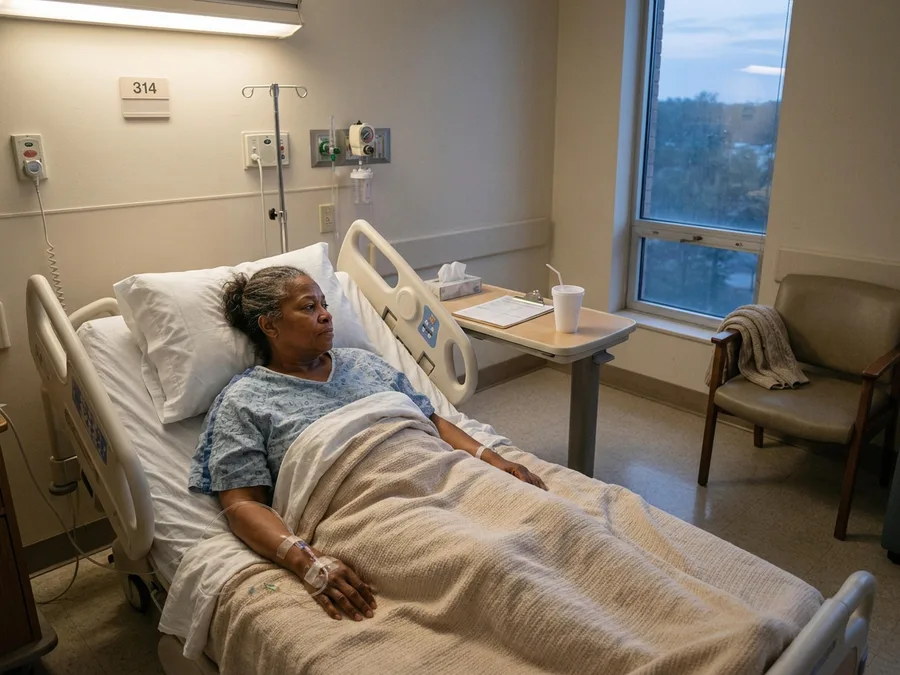
She can have a bed, a room number, a call button, and a doctor rounding every morning and still be an outpatient on the hospital's books. Observation status is what the team assigns while it decides whether she meets inpatient criteria, and it is billed as outpatient care from the first hour.
Nothing in the room tells you which one she is.
Observation can run for days, and her status can flip mid-stay in either direction, one way on Tuesday and back again on Thursday. That is why the answer you got Monday is worth less than the one you get today.
The word itself is not hidden, exactly. It shows up on the discharge summary, on the Medicare Summary Notice that follows in the mail, and on the paperwork someone hands the family on the way out. On the discharge sheet it sits a few lines down, in the same small font as the medication list, and a tired reader skimming for the therapy schedule goes right past it.
To find out before discharge, ask the hospital case manager or the utilization review department. Ask for the answer in writing, with the date and the name of the person who gave it, because a verbal answer is not one you can hold up later.
⚠️ COMMON MISTAKE
The mistake most families make
They trust the night count. Four nights in a hospital bed feels like four days of coverage, but observation nights are invisible on the calendar and decisive on the bill. Ask what the record calls the stay, not how many times the sun went down.
The plan, not the hospital, has the final say

It works differently if Mom is in a Medicare Advantage plan, because that plan runs its own authorization for skilled nursing and can insist on approving the stay before the facility admits her. Traditional Medicare rules do not carry over unchanged, and assuming they do is the mistake that costs families the most.
On day one the hospital case manager and the plan often give the family different answers. Not because either wants to mislead you, but because they are looking at different rulebooks, and only one of them is paying.
So get the plan's answer, not the hallway's. Call member services, ask whether the rehab stay is authorized, and write down the reference number for that call. A reference number with a date attached is the closest thing to a receipt this process offers.
Plan rules and exceptions shift from year to year, which is why the state SHIP office is worth a call as a second opinion on what your plan's document actually says this year.
The question to carry into every one of these conversations is short: is the rehab stay authorized by the plan, in writing, and for how many days. Then write down who told you, and when.
The paperwork trail: where the status hides
The word shows up on the discharge papers

It is printed, not announced. The status that can cost the family thousands sits quietly in the lines of the discharge instructions, on the Medicare Summary Notice that follows in the mail, and on the plan's explanation of benefits weeks later.
Nobody reads it aloud in the discharge meeting. The paperwork is handed over as everyone is gathering coats and the rehab bed is already being arranged, so the one word that decides who pays is the word you are least likely to stop and read.
When the daughter in our example finally sat down with the pages, she found two of her four counted nights listed as observation, an admission order she could not locate anywhere, and an outpatient billing code on the notice.
The words to hunt for are observation, outpatient, and a missing admission order. Any one of them changes the arithmetic on twenty days of rehab.
So do not wait for the curb. Call the hospital's discharge planner the day before Mom is expected to leave and ask for the full packet in advance, then sit with it at a kitchen table instead of a hospital hallway, where you can read a line twice and call the plan while the office is still open.
The rehab facility checks coverage after the fact

A rehab facility's insurance check usually happens once Mom is already undressed and in its bed, and the staff will not warn you before a denial surfaces.
Fill the bed first, sort the payer second. That is the order of operations at many facilities: a pre-admission desk copies the hospital face sheet, runs the plan card, and requests the admission order, but the actual verification of whether Medicare or the plan covers the stay can wait until the resident is in the room.
When the answer comes back denied, the family tends to hear about it mid-week.
Call it day two or three of a planned twenty, when the welcome folder is still on the nightstand and nobody has unpacked the suitcase.
By then Mom has slept in the room, the therapy schedule is running, and the tone of the conversation changes from admission to billing.
Before anyone moves her, put the question to the facility's admissions coordinator in exactly these words: "Has Medicare or the plan authorized this stay in writing, and for how many days?"
Written and numbered is the only version you can act on.
A verbal "should be fine" from the front desk is not a hold, and it will not survive a denial.
Federal rules require the facility to hand you a notice of non-coverage before it bills the family privately, so ask when that notice would be issued and what date it takes effect.
Until an authorization number sits in your hand, treat that bed as private pay and plan accordingly.
The transfer conversation — at a glance
📄 Bring to the desk
The observation days, flagged on the face sheet — they may not count
📞 Call this number
1-800-MEDICARE, then your state SHIP, to confirm the counting rule
🔢 Write down
Authorization number, day count, and the date care begins
💰 Run the math
Quoted daily rate x days — get the number before the bed is filled
⏳ Set the tripwire
The date the non-coverage notice takes effect — mark it on a calendar
If the answers differ
The hospital case manager and the plan gave two answers. The plan's written authorization wins — get it in writing before she moves.
An appeal after discharge is a long shot

After Mom is discharged, the fast appeal stops being fast. The window that matters is the hospital's expedited review while she is still admitted, which is a different process entirely from a later fight over a rehab bill.
Start with the hospital's utilization review department. That is where an expedited review request goes first, and if it is refused, the fast-appeal route runs to the state's Quality Improvement Organization.
The odds are poor. The burden falls on the family to produce an admission order that existed, and the paper trail is often thinner than the family remembers.
Which is why the records matter more than the argument: every discharge page, the plan's authorization number, and the name and date of every call made to the case manager, the hospitalist, and the plan.
Keep them in one folder, digital or paper, and add to it the same day. A documented request that went unanswered is worth more in an appeal than a story about a phone call nobody logged.
Two paths through the same week
Before the discharge order
- Status confirmed in writing, daily
- Plan authorization number in hand
- Facility's private-pay rate known
- Expedited review requested if needed
- Discharge papers requested a day early
After the discharge order
- Status is already documented
- Appeal falls on the family to prove
- Private-pay bill starts day one
- $7,300 for 20 days at $365/day
- Paperwork trail goes cold fast
The bill starts the day Medicare says no

There is no grace period. The day Medicare declines the stay, rehab is private pay, and the meter is running.
At the facility quoting $365 a day, twenty days of skilled rehab comes to about $7,300. If the inpatient status and the plan's authorization line up, Medicare may pay for that same stay; if they do not, the family pays the whole bill itself. Same bed, same therapists, same twenty days of work on Mom's balance after pneumonia – only the payer changes.
Know where the line sits. Skilled rehab – physical therapy after a fall, gait retraining, the supervised nursing that comes with it – is covered when the status and authorization qualify. Custodial care, the hands-on help with bathing, dressing, and stairs that may follow, is not covered by Medicare no matter what Mom's hospital status says. Two different questions, two different answers.
The clock on the decision is short. Hospitals usually want the transfer settled the same day or the next after the team says Mom is ready, which leaves roughly twenty-four hours to confirm how the stay is paid for.
And $365 is one facility's number. Rates swing widely by facility and region, so ask each place on your list for its own private-pay figure and its hold policy, rather than budgeting from someone else's quote.
Ask the status question every single day

The one move that pays off before discharge is a single question, asked out loud, day after day.
"Is she admitted as an inpatient, or is she under observation?" Say it exactly like that and write down the answer.
Aim it at three people. The hospital case manager, the hospitalist who rounds on Mom, and utilization review if the first two give you different answers – which happens. Then ask the same question again after any change in condition: a new fever, a fall, a move between units.
Keep a simple log. Name, date, answer. A running note on the phone is enough, and it becomes the only record you will have of what you were told and when.
Daily matters because status is not fixed. A patient can shift from observation to inpatient or in the other direction overnight, and Monday's answer is not Wednesday's answer. The count that decides the bill is the one on the chart the day the discharge order gets written.
⏱️ The 24-hour sequence before discharge
Call the case manager
Ask the status question and request the answer in writing.
Call the plan
Get an authorization number for the rehab stay and the number of approved days.
Ask the facility for its private-pay rate
Get the number in writing, and ask whether it will hold the bed while coverage is sorted.
Request expedited review if the status is wrong
Ask the hospitalist to change the status before discharge and document why.
Line up fallbacks
Ask about home health, outpatient therapy, and a family-funded short stay.
Request the discharge papers a day early
Read them before the transfer, not after.
Push for a correction while Mom is still admitted

A daily answer is only worth the call that follows it: the status gets fixed before Mom leaves, or it does not get fixed. The fix is not in the notes the discharge planner hands you at the curb, and it is not on the phone with the facility. It happens at the physician's keyboard, while Mom still occupies a bed on the unit.
Start with who can actually move this. The admission order is a physician order, so the case manager and the billing office can describe her status but cannot rewrite it. That means the request goes to the hospitalist rounding that morning, or whoever is writing the orders that day, and the most reliable route is to ask the case manager to put it on that physician's list.
Make the ask exact: "If her care meets inpatient criteria, will you change her status to inpatient before discharge, and document the reason?" Ask for the reason in writing, because a chart note explaining why the change was made is what carries into an appeal later, and a verbal yes that never reaches the order set does nothing.
Then sit with the answer. An overnight turnaround is common if the care supports it and the physician agrees; a flat no is information, not a dead end. If it is no, request expedited review through the hospital's utilization review department and ask for that denial in writing before you end the call. The state SHIP can walk you through the next step while Mom is still in the building.
The reason to do all of this now, not after she settles into the rehab room, is narrow and unforgiving: a change made after discharge is rare. Once the discharge order is written, the window closes. Before that order exists, it is still open, and it is the only point in this whole process where the family holds any leverage at all.
Settle the money question before the rehab bed

The last move is a phone call to the rehab facility's admissions office, made before anyone signs a rehab admission sheet, to get its private-pay rate in writing and a straight answer on whether it will hold the bed while coverage is sorted. Do this while Mom is still in the hospital and the clock is running.
The order matters. First, get the status in writing from the hospital case manager. Second, get an authorization number from the plan. Third, ask the facility for its private-pay rate and what payment plan it offers. Each step is one call, and you can run them in a single afternoon from your kitchen table.
If the coverage does not come together, there are fallbacks. Ask the case manager about home health and outpatient therapy, and ask the facility's social worker about a family-funded short stay. Bringing Mom home is not the plan: the house is two stories with the only full bathroom upstairs, and she cannot climb those stairs yet.
One more question before anything is signed: does the facility offer charity care or a reduced rate? Ask it plainly. The worst answer is the one you did not ask for.
Then make the first call: the hospital case manager, with the status question, because every number that follows hangs on that answer.
Frequently Asked Questions
Does the three-day rule mean three nights in the hospital?
No. The shorthand name is misleading. Medicare Part A's skilled nursing facility coverage is tied to a qualifying inpatient hospital stay, and what counts is the status the hospital assigned, not the number of nights. Observation time does not count toward the requirement, even if it lasts several days.
How can Mom be in a hospital bed and still be an outpatient?
Observation status is care given while the team decides whether to admit, and it is billed as outpatient. She can have a bed, a room number, and a doctor rounding daily and still be classified that way. Ask the case manager or utilization review to confirm the status in writing.
If Mom has a Medicare Advantage plan, do the same rules apply?
Not exactly. A Medicare Advantage plan runs its own prior authorization for skilled nursing, and it can require approval before the facility admits her. Traditional Medicare rules do not apply unchanged, so verify with plan member services and your state SHIP.
Can we appeal the rehab bill after Mom is discharged?
You can, but the odds are poor. The hospital's expedited review while she is admitted is a different, faster route. After discharge, the family has to prove an admission order existed. Keep every discharge paper, authorization number, and call log.
What does private-pay rehab cost if coverage falls through?
At the local facility, $365 a day for 20 days comes to about $7,300. Rates vary by facility and region, so ask each facility for its own private-pay number. Skilled rehab is also distinct from custodial care, which Medicare does not cover regardless of status.
The call to make before the discharge order is written
The rehab bill is decided by two things: Mom's written hospital status and the plan's authorization. Not by how many nights she spent in the bed. Your one moment of real influence is before the discharge order is written.
So make one call first: the hospital case manager, asking, "Is she admitted as an inpatient, or is she under observation?" Then run the next 24 hours in order. Get the status in writing. Get the plan's authorization number. Ask the facility for its private-pay rate and hold policy, and ask about charity care or a reduced rate. If the status is wrong, ask the hospitalist for a documented change before discharge.
Go back to that four-night count, and the two observation nights printed on the paperwork. The surprise was there all along, in writing, early. That same paper can still be corrected while Mom is in the building — so decide now, before the discharge order is written, not weeks from now when the bill arrives.
Ask the question today
Call the hospital case manager now and get the status in writing. Use the 24-hour sequence in this article before the discharge order is signed.