
A boy born today in the United States has a life expectancy of about 77 years. So does the man reading this who turns 77 this year. That is not a reason for anyone to feel sorry for him, and he would be the first to say so. It is simply the truth, stated plainly, and the start of a conversation.
The harsh realities of being 77 tend to arrive in a particular order. Time compresses first. Then the body starts sending invoices, the address book thins out, and the paperwork you kept putting off turns into a stack on the kitchen table. None of it is a tragedy.
Being honest about it now is what lets you enjoy the years still in front of you.
Quick Tips Before You Start
Give up the ladder
A 10-foot ladder is a broken hip waiting for a windy afternoon. Hand it to a younger neighbor and hire a handyman for the gutters.
Write the one-page sheet
Will, advance directive, burial or cremation, and the name of who decides. Keep it in one folder the family knows about.
Keep the twice-weekly gym slot
Two sessions a week is the floor, not the ceiling. Add ten minutes of balance work on the off days.
Skip the wet walk
Being teased for staying in when the pavement is slick is cheaper than six months of rehab.
Call the brother
A drifted relationship doesn't repair itself. Pick up the phone this week and suggest one shared project.
Use the holiday table
Thanksgiving is the easiest moment of the year to name your health care decision-maker out loud, with a witness in the room.
1. Time Left Is Short and Precious

The clock is the thing that changes first, before any of the aches. Life-expectancy tables put a male baby born today at 77, which happens to be the exact age in this example, so the average is not some distant number. It is the row you are sitting in. Insurance companies quietly bet on it too: price an annuity or a life policy for a man of that age and the actuaries assume he will be gone inside ten years. It is sobering to read your own row in a spreadsheet.
The upside of the math is that time stops being taken for granted. Instead of assuming next summer will happen, you notice it. Nobody knows whether the answer is tomorrow or fifteen years, and that uncertainty is exactly what turned a trip to Iceland a couple of years ago into a possible last trip overseas.
It is also what makes the last cruise, and the last visit to a brother, worth planning carefully and paying attention to while you are there.
A useful habit: when something goes on the calendar, ask whether it might be the last one. If the honest answer is maybe, book the better seat and take the longer route. A last visit to a brother three states away stops being a cheap flight and a rushed weekend and becomes four unhurried days at the kitchen table.
The fear softens once you use it. Time you take for granted gets wasted; time you count, you actually taste.
💡 Tip: Keep a small travel notebook of the trips you still talk about. It makes the next one easier to plan and the last one easier to remember.
💡 PRO TIP
The one-page sheet
Write the will, the advance directive, burial or cremation, and the decision-maker's name on a single page. Put it in a folder the family knows about and say where it lives.
2. Health Becomes the Whole Job

Counted time makes every test feel heavier, which is why the patient portal has become such a menace. Blood work gets posted online before the doctor has called, flagged as out of range or unfavorable, and there you are at eight in the morning wondering whether you are in trouble. Most of the time you are not. But the fright is real, and it lands after every annual physical.
Every visit can turn into a question about mobility, or something worse, which is why a heart procedure about two years ago still sits in the mind as a before-and-after line. Health at 20 is a tight cluster on a graph. Past 50 it scatters out into people who have died, people with new hips and knees, and people still playing tennis.
One practical move: read the portal, then call the office and ask one plain question. Is this value something we watch or something we act on this week? That single sentence turns a scary number into a plan.
💡 Tip: Don't open the portal first. Wait for the call, and write your questions on paper the night before the appointment.
3. Sleep, Senses and Night Driving Change
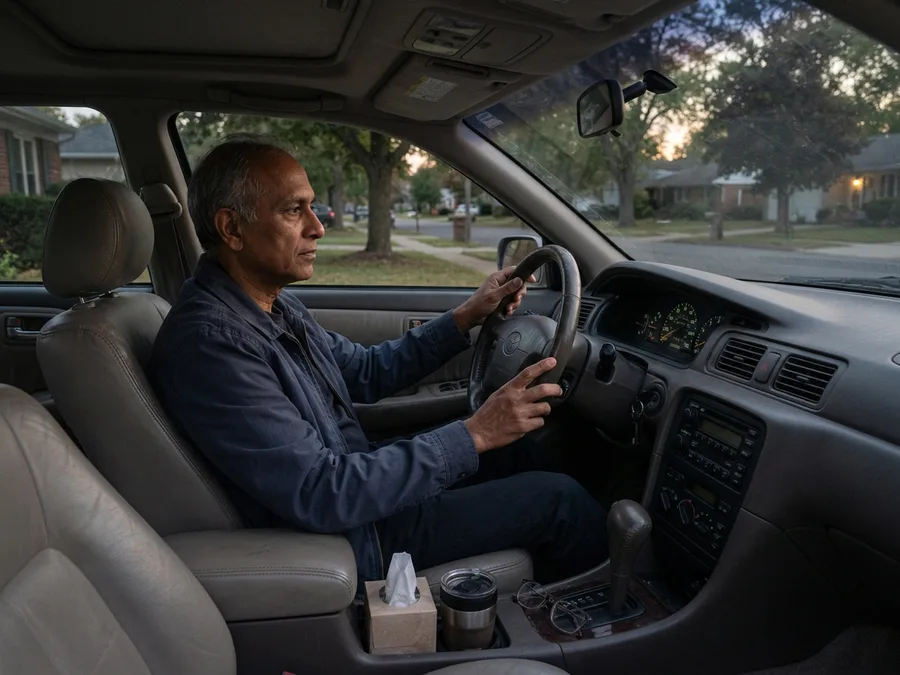
The big findings steal the attention, but the small daily changes are what actually fill the hours. You wake at 4:30 or 5 and cannot get back to sleep, and the bathroom trip at two in the morning is standard for the 70s and 80s.
Background noise starts to bite, even without a hearing aid, and nearly everyone this age either has cataracts or has had the surgery. The car bought six years ago for its safety features has only 25,000 miles on it.
The driving quietly shrank. Nothing announced it. It just did.
🌱 GROWING TIP
Fixes that work from 75 up
Book the eye exam before the night driving starts feeling unsafe. Get the hearing test instead of turning up the television. And move the night light to the bathroom route, not just the hallway.
4. Independence Hangs on One Bad Fall
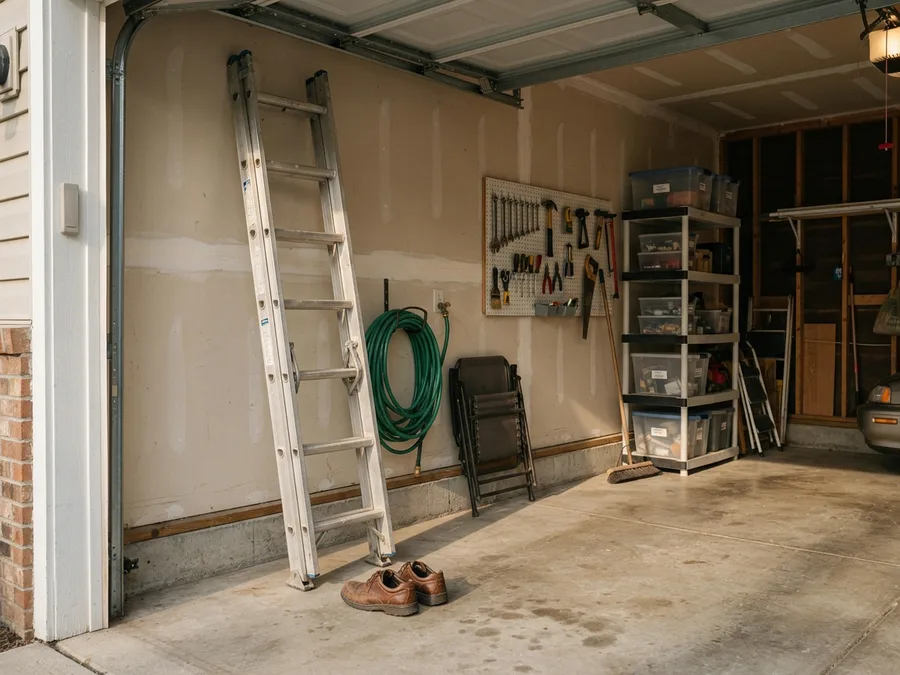
Fragile enough that one bad fall and a broken hip could change the rest of your life, or end it. That is the whole reason to be careful, and the whole reason the caution is not cowardice.
The man who gave away his 10-foot ladder and now skips rainy walks with the guys knows exactly how it sounds. They tease him. He can live with the teasing. He calls the goal being anti-fragile: not avoiding life, but removing the moves that can take it apart in one second.
So every doctor's finding triggers the same question. Is this lifestyle-changing, or life-ending? The answer decides how you spend the next month, and it is worth asking out loud rather than leaving the office in a fog.
That same logic is why he skipped the ladder in the first place, and why a wet sidewalk now counts as information.
💡 Tip: Walk the house once a season with a flashlight: loose rugs, cords, the step you keep forgetting. Fix one thing each pass.
5. Names Vanish and Checklists Save You

Walking into a room and forgetting why is routine. So is blanking on a name you have known for years. That does not make it pleasant, and it does not answer the question sitting underneath it: is this ordinary, or is something wrong?
After two years of twice-weekly gym visits, one man called a regular named Max 'Norm' and could not retrieve the right name for two days. It came back. It also scared him, which is the honest response.
Checklists have become his best friend, and the household runs as a team. His wife heads out to play cards and he asks, 'Do you have your phone?' before the door closes. She does the same for him. It sounds small. It catches the keys, the wallet and the pill on the counter more often than either of them can count.
Managing memory is a team sport. Ordinary lapses and dementia are two different things, and knowing which is which takes a log, not a guess. Write down the slips for a month, with dates, and bring the page to the doctor's visit instead of relying on a vague feeling.
The second pair of eyes is the underrated part. One person forgets the name; the other remembers it was Max, and neither of them has to carry the whole thing alone.
6. Dementia Stops Being Abstract
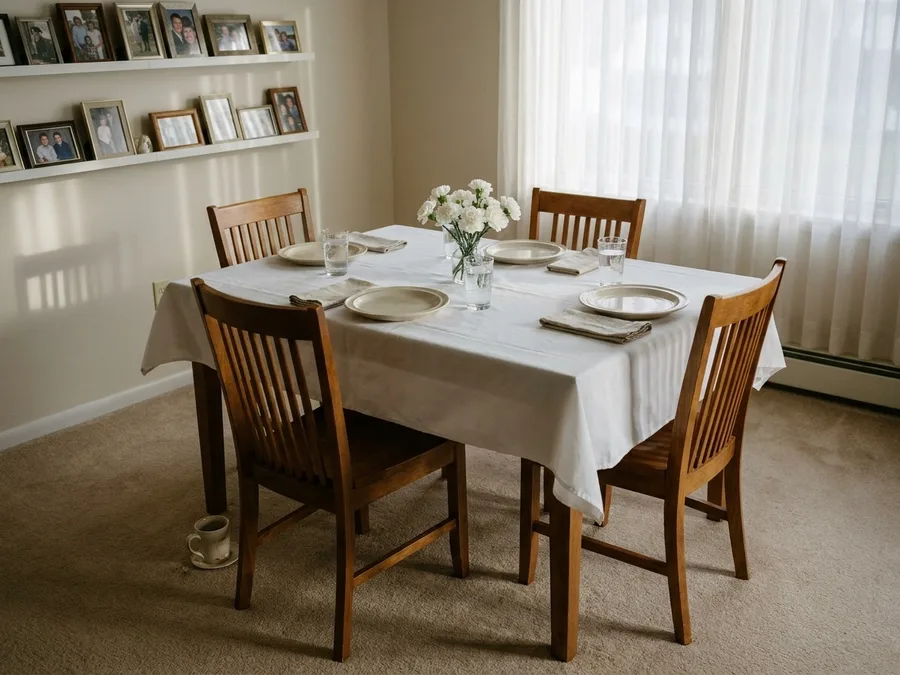
You are at a funeral or a hospital bedside, or maybe just standing in a kitchen while someone you have known for forty years calls you by the wrong name, and it lands on you that this is not a story about other people anymore.
The dinner-party group made it personal. Three couples rotated hosting for years, and of those six people, two died of dementia. One had the slow kind and lived with it for roughly eight years, then spent her final time in memory care before dying the year before last. She was his wife's closest friend, and watching that decline was its own long grief, the kind that starts years before the funeral.
The other went faster. More than forty years of friendship, and then it was over.
That is why every forgotten name now carries a second question underneath it. The useful thing to know is that the slow version is where the planning pays: memory care costs real money and usually needs a diagnosis and paperwork long before anyone moves. So ask the doctor at the first repeat, not the tenth, and write down what was said.
7. Neighbors Die and the Table Empties

That is how the table empties, one household at a time, and the street does not tell you it is happening.
Nine years in a retirement community, and four neighbors are gone. Two on one side, a husband and wife on the other, and all four used to come over for dinner. The first couple: the husband used a wheelchair and died before he turned 80. His wife followed not long after, still in her late seventies.
The second couple: she was around 80 and went on dialysis, and died two years later. He developed dementia, moved to assisted living, and died six months after that of throat cancer.
The houses are still there. The invitations are not. What nobody tells you is that this is not bad luck, it is the ordinary arithmetic of a street where everyone is old, and it will keep happening. So the practical move is to widen the circle on purpose while you still can: one younger friend, one club, one standing lunch that does not depend on the neighbors.
💡 Tip: Keep a written list of the people still standing. Call two of them this month, not next.
The Community Nine Years In
What the neighborhood has taken
Figures are from one household, not a survey.
8. The Marriage Is the Thing You Fear Losing

You notice it at night, in bed, listening to her breathe, and the thought arrives before you can stop it.
Fifty-two years married, and the spouses who go first are not a statistic. They are the people down the road. Losing her scares him more than anything else on this list, more than the heart, more than the money.
The catch is that fear can make you clingy or quiet, and neither helps. What does help is letting it sharpen your gratitude: say the thing out loud, take the trips while both of you can walk, and put the practical side in place so a crisis does not eat the time you have.
9. Drifted Relationships Get Rebuilt

Usually not, but it takes a reason to be in touch more than once.
Two brothers had drifted into different lives. What pulled them back was a shared project: a YouTube channel they built together. The collaboration brought them closer, and each learned things about the other he had never known.
Retirement is the time you get back. Spend some of it on a shared activity with someone you have let slide, and put a regular hour in the calendar rather than waiting for a reunion.
💡 Tip: A shared project beats a phone call. Restore a piece of furniture, digitize the family photos, build something together.
10. Accumulating Gives Way to Letting Go
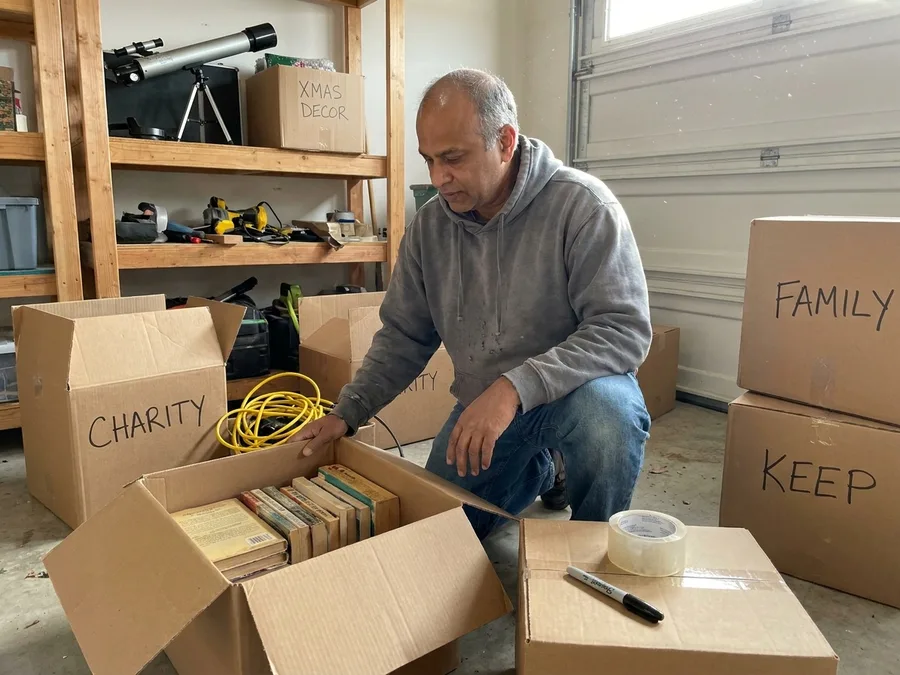
You stop wanting more stuff. That is the plain truth of it, and it arrives without any announcement.
The shift is quiet. You stop wanting more clothes, more gadgets, more anything that needs shelf space. He buys very little now and is actively trying not to collect more.
The harder question is what happens to what you already have. A collection you have spent decades building becomes a puzzle: does it go to a museum, does it get sold, does it become a burden for someone else to sort through? He has asked that question out loud and does not have the answer yet.
Simplifying takes more courage than it sounds like. Not everyone is ready for it, and there is no timetable. Start with the easiest room. One box to a charity shop, one box to a family member, one box you genuinely still want.
What the Monthly Budget Has to Cover
🏡 Housing
Rent, mortgage, taxes, upkeep
🩺 Health costs
Premiums, copays, dental, hearing aids
🚗 Transport
Insurance, fuel, repairs, rides
📄 Legal and estate
One-off fee, worth doing once
🍽️ Daily living
Food, utilities, subscriptions
Worth knowing
A fee-only planner charges by the hour and sells no products, which makes the one meeting you need easier to trust.
11. The Less Money You Have, the More It Matters

That letting-go shift has a mirror image, and it sits in the bank balance. The smaller the income, the bigger the difference every single dollar of it makes, because housing, health costs and the car all keep moving up while the monthly figure stays exactly where it is.
So the budget needs three lines written down and looked at honestly: what the roof costs, what the medical side costs even with coverage, and what the car and getting around costs. Then the monthly income gets measured against them, not against a feeling.
If the numbers get tight or complicated, that is the moment for a fee-only planner, someone paid by the hour rather than by what they sell you. Ask what the fee is before you sit down.
12. The Paperwork Is Planning, Not Surrender

Money is a conversation you can postpone. Paperwork is not, and here is the flip side of the budget talk. Filling out a will feels like admitting something. It is the opposite: it is a set of instructions, so the people you love are not guessing at a kitchen table some awful week.
The list is short and specific. An up-to-date will. A living will, now usually called an advance care directive, saying whether you want a ventilator and at what point treatment should stop. A decision between burial and cremation. A choice between a funeral and a life celebration.
Research it, write it down, and sign it. The catch is that a draft nobody signed, or a decision nobody wrote anywhere, is worth nothing when it counts. Planning is not giving up. It is the last useful thing you can hand someone.
💡 Tip: Name a backup decision-maker. The person in charge may not be reachable the day it matters.
13. The Conversation Is the Hardest Part

Picture the holiday table with both brothers there, plates going round. That is where the paperwork becomes real. Two years ago at Thanksgiving, one brother was named health care decision-maker and the other sat as a witness while the wishes were said out loud.
That is the whole task: one person in charge, the wishes stated, somebody else hearing it. Plenty of men have not decided between burial and cremation at all. If that is where you are, decide this week, before the next holiday.
14. You Start Seeing the Old Guy

Hearing goes, and the answer is not to pretend it didn't. Get the hearing aid, fit it, wear it. Being able to follow the conversation is worth far more than looking a certain way at a dinner table.
Then there is the repeating. Men in their seventies tell the same story and never notice, and there is no polite way to find out whether it is happening to you. Ask your wife. Ask your daughter. Then believe the answer.
The more annoying version is the know-it-all. A man in his forties starts a story, and the temptation is to outdo it with your own. That habit gets stronger with age, like a muscle nobody should be training.
The fix is to hold back the advice unless it is asked for, and let the younger story finish. Follow people just entering retirement, listen to what they are wrestling with, and fight the urge to act as if you know everything, because you do not.
Here is the test. If a younger man tells you about his new job and you spend the next ten minutes on your old one, you have just met the old guy. He is wearing your shirt.
⚠️ COMMON MISTAKE
The face in the photograph
At 77, a resting face reads as sad or angry in a photo, and it is not what the man is feeling. Smile on purpose when the phone comes out. It is a habit, not fake cheerfulness.
15. Grumpy Is a Choice You Have to Fight

That face is also how grumpiness starts. At 77 a resting face reads as sad or angry in photographs, so you have to consciously smile, and the pictures are a warning about the mood before the mood is a habit.
Some people are carrying chronic illness, and they have earned the right to be grumpy. The rest of us have to fight it, and the fight is small: catch the complaint before it becomes the daily script, watch the tone when a plan changes, and let someone else pick the restaurant without a debate.
This is not fake cheerfulness. It is noticing that you have been sour since breakfast over nothing at all.
16. You Stop Needing to Be Right
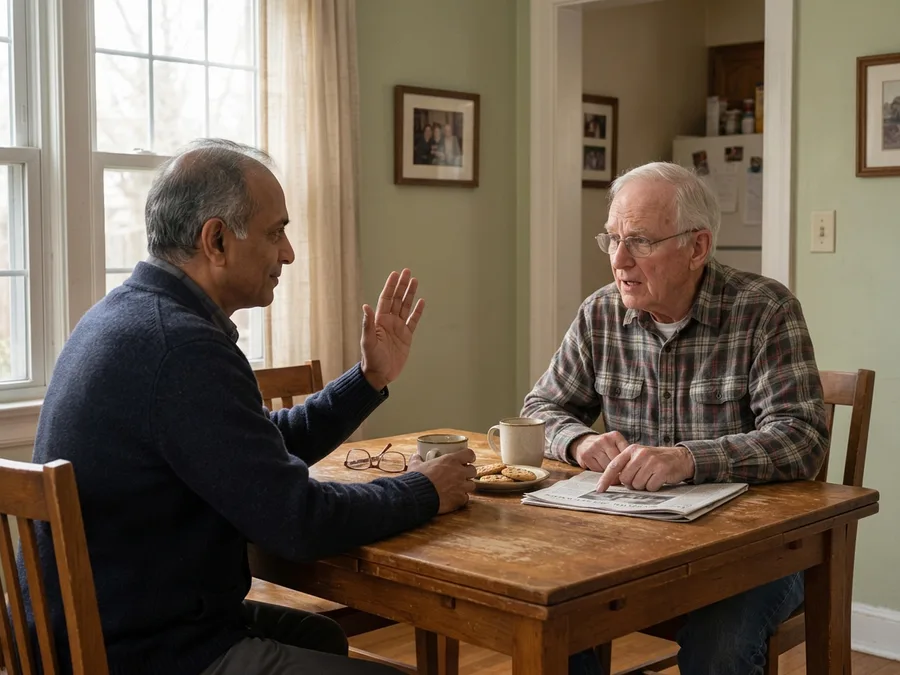
That short fuse you spent a lifetime defending tends to go quiet once the arguing stops paying. You learn not to need to be right, mostly because you have watched enough arguments end with nobody moved. You will not change people's minds, and there is a decent chance you are the one who is wrong.
Patience helps enormously here, and it is not always easy. Some mornings the old instinct is still there, ready to correct a son-in-law about a road or a fact. What settles in beside the patience is what people call wisdom: been there, done that, and no need to jump into every fight.
Skipping the argument costs nothing and saves an afternoon. Next time a disagreement starts up at the table, try one plain sentence – "I see it differently, but that's all right" – and let it sit. Nobody has to lose for the meal to stay pleasant.
17. What Remains Is Love and Gratitude
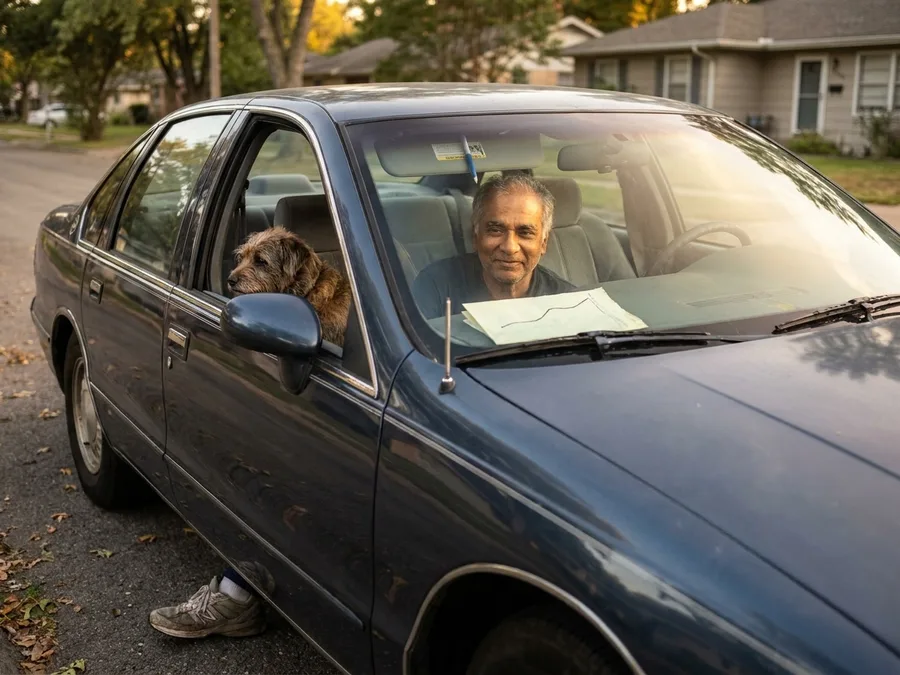
Not the promotions, not the bigger house, not the impression you made on people who have long since forgotten your name. Those things fade. What is left is the people around the table and the gratitude for still being at it.
Here is a small exercise that makes it concrete. Take a sheet of paper, draw a line down the middle, and on one side list what you chased in your forties – the title, the square footage, the car. On the other, list who was at your last birthday. The second column is the one you would fight to keep.
If you are alive at 77, you have something to be thankful for, and saying it out loud is a decent way to spend a morning. The competitiveness fades too, and that is not giving up. It is the opposite. The fight has already been fought and won.
There is nothing left to prove and no reason to keep score. What is left to enjoy is quieter than the years before it, and better for it.
💡 Tip: Write three things you are grateful for on a card and keep it where you drink your coffee. It works better than a resolution.
🦶 A Fall-Proofing Routine for 75 Plus
Keep the gym twice a week
Two sessions is the floor, not the ceiling, and it is where strength and balance are built.
Add ten minutes of balance work most days
Heel-to-toe standing at the kitchen counter, sit-to-stand from a firm chair, single-leg holds with a hand on the counter.
Change the house
Grab bars at the toilet and in the shower, night lights on the route to the bathroom, no loose rugs or cords, a lamp within reach of the bed.
Swap the slippers for shoes
A firm sole and a back make a real difference on stairs and wet pavement.
Review medications and vision yearly
Ask the doctor at the annual physical, because some prescriptions affect balance and eyesight changes creep up.
When Forgetting Is Worth a Doctor Visit
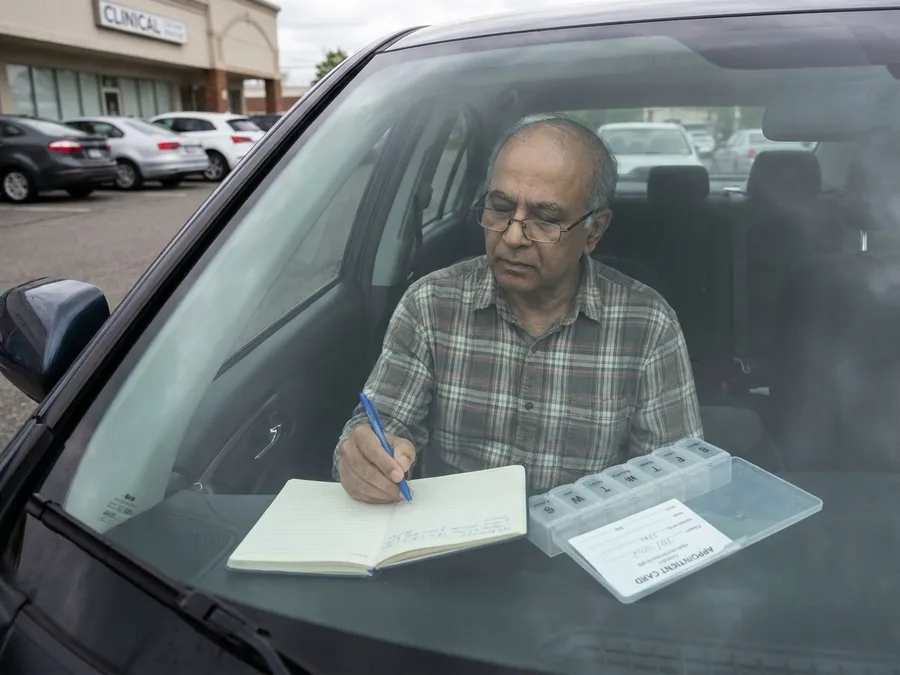
Some forgetting is ordinary housekeeping. You walk into a room and the reason evaporates, a name sits just out of reach for a minute, and then it comes back. Those lapses wander in and out and rarely follow a pattern.
The ones worth a doctor's visit do have a pattern, and the pattern is far easier to see on paper than from inside your own head. So keep a two-week log. Write the date, what happened, and what kind of thing it was: a name, a room, a bill, a pill, the car keys. Two weeks of that is something a doctor can actually work with.
Bring four things to the appointment if they show up in the log: forgetting something that touches money, medication or driving; getting lost on a route you have driven for years; asking the same question twice within minutes; and any change that arrived suddenly rather than creeping in slowly. A sudden shift deserves a call sooner, not a wait-and-see.
Take the log, and take the person who sees you every day, because they notice what you have stopped noticing. Then ask plainly for a cognitive screen and a review of every medication you take – some drugs, and some combinations, muddy memory all on their own. Do not diagnose yourself from a list on the internet, and do not let a bad week convince you of anything. Walk in with the notebook and let a professional read it.
Frequently Asked Questions
Is 77 really the life expectancy for a man born today?
Published life-expectancy tables put a male baby born in the United States at roughly 77 years, which surprises people who assume modern medicine has pushed it much higher. Treat the number as a planning prompt, not a verdict. Nobody knows their own date, and many men live well past it.
How do I tell normal forgetting from something serious?
Normal lapses are a name, a room, a reason for walking upstairs, and they come back to you later. The flags are forgetting something that affects money, medication or driving, getting lost on a familiar route, or repeating a question within minutes. A sudden change is a reason to call the doctor sooner.
What documents should be finished before 80?
An up-to-date will, an advance care directive that names your wishes about ventilation and when treatment should stop, a decision between burial and cremation, and a note on whether you want a funeral or a life celebration. Then name the person who decides for you and tell them, with a witness in the room.
Should I stop driving at night?
Let the eye exam decide, not pride. Cataracts and glare make night driving harder for almost everyone in their late seventies, and surgery often fixes it. If your night vision is fine, keep driving. If it isn't, drive in daylight and get the cataracts handled.
What is the first thing to do when a neighbor or friend dies?
Call someone. Isolation after a loss is what turns grief into a longer slide. Keep a written list of the people still standing and put two calls on the calendar for this month. The dinner invitations have to be sent by someone, and it may as well be you.
Is giving away the ladder really necessary?
Falls are the fastest route from independent to dependent, and ladders are where older men take the biggest risks on a Saturday afternoon. Give the ladder away and hire a handyman for the gutters. The teasing from your friends costs nothing compared with a broken hip.
The Folder on the Kitchen Table Is Not a Surrender
None of this is giving up. It is planning wisely, which is a different thing entirely, and it is what separates a man who is frightened of 80 from one who is ready for it.
Start with one page this month: the will, the advance directive, the choice between burial and cremation, and the name of the person who decides for you. Then book the conversation at the next family meal, with a witness at the table.
The fall-proofing routine and the two-week memory log come next. That is a short list, and it is the one worth starting today.
Write the sheet this week
Open a document and type four headings: will, advance directive, burial or cremation, decision-maker. Fill in what you know, and take the gaps to a lawyer or a fee-only planner.