
The cost of ignoring this is fifteen items in your cart every week and a liver that never gets a break. A parent or sibling with fatty liver is a warning shot, not a sentence.
You are standing in the aisle with a 20 fl oz soda already in the cart, a loaf of white bread and a half pound of deli meat, and the question is not whether you have a problem but which items in this cart are the ones that matter.
The problem is not one forbidden food. It is the regular forms and portions already in your cart: the daily soda, the 2 slices at lunch, the 2 tbsp of dressing poured without measuring.
15 specific items to stop buying, exactly what goes in the cart instead, and the three to drop first. No diet overhaul, no scare tactics, just a shelf test applied fifteen times.
Swap one item per week across 15 weeks. Keep a four-week shopping list, and bring it to your next scheduled visit with the clinician.
Quick Tips Before You Start
Ask who is buying
A family history means the cart is shared. The swaps only hold if the person doing the shopping knows which three items went first.
Drop first: the daily drink
The 20 fl oz bottle and the 8 fl oz juice glass are the two easiest to stop this week. Neither is a meal, so nothing else in the cart has to change.
Drop second: the lunch bread
Two slices of white bread are the base of the sandwich you eat most often. Change that one sandwich before touching the rest of the loaf.
Drop third: the deli counter
Two oz per sandwich adds up across five lunches. Ask for half the usual weight and let the vegetables fill the gap.
Measure the two sauces
A 1 tbsp pour of ketchup or 2 tbsp of dressing is the portion the label counts. Most bottles never see a spoon, so the cart looks cleaner than the plate.
1. Regular soda and sweet tea

A soda a day sounds moderate until you count the year. That is roughly 730 bottles cycling through a body whose liver is already being asked to handle more than it should.
Liquid sugar sits at the top of nearly every liver-clinic handout, and it is also the least painful thing to change — there is nothing to cook, no meal to rethink, just a different bottle going into the cart.
The everyday version usually looks like one of three things: a 20 fl oz bottle grabbed at the register, a 32 oz fountain cup refilled at lunch, or a pitcher of sweet tea sweating on the counter, poured over ice from morning until the news comes on.
Here is the part that matters at the dinner table. A sweet drink comes with no chewing, no fiber and nothing that signals fullness, so it does not stand in for food.
It rides along with the meal. The sandwich, the chips and the soda all get eaten, and the drink adds on top of a day that was already full. Your body registers the calories in about two minutes and asks for nothing back.
The swap that sticks for most people is carbonated, not sweet. Sparkling water with a wedge of lemon, unsweetened iced tea brewed by the pitcher on Sunday and kept in the door, or seltzer with just a splash of juice for color.
Be honest about who this entry is for. Someone who has one soda on a Saturday is not the target. The daily bottle, the refilled 32 oz cup, or the sweet tea that never really stops — that is the habit worth interrupting first.
💡 Tip: Brew a pitcher of unsweetened tea at night and keep it in the door. The habit is the pour, not the sugar.
| Food | What it usually looks like | Buy instead |
|---|---|---|
| Regular soda and sweet tea | 20 fl oz bottle, 32 oz fountain cup, all-day pitcher | Sparkling water with lemon, unsweetened iced tea |
| Beer, wine and cocktails | 12 oz beer, 5 oz wine, cocktail with 1.5 oz spirits | NA beer, soda and lime, spritz with more seltzer |
| 100% fruit juice | 8 fl oz glass at breakfast, 64 oz carton, juice boxes | Whole oranges, apples, berries |
| White bread and soft deli rolls | 2 slices per sandwich, 6-inch sub roll, bag of soft rolls | Bread with whole-wheat flour as first ingredient |
| White rice and seasoned packets | 1 cup cooked side, 2 cups in takeout bowl, 2-serving packet | Brown rice, barley, quinoa, or half portion plus veg |
| French fries and fried sides | Medium order about 4 oz, diner basket, frozen bag | Oven-roasted potato wedges, side salad or slaw |
| Fried chicken and breaded cutlets | 2-piece meal, fried sandwich, freezer cutlets | Grilled, baked or rotisserie chicken, skin off |
| Bacon, sausage, hot dogs, deli meat | 2 slices bacon (1 oz), 2 oz deli meat, 1.5–2 oz hot dog | Home-roasted chicken or turkey, eggs, canned tuna |
| Takeout pizza with thick crust | 12-inch pie, 8 slices, $12–$18, pepperoni | Thin or whole-wheat base, half cheese, vegetables |
| Cream- and butter-heavy pasta sauces | 15 oz jar Alfredo for two, restaurant plate, boxed mac | Tomato sauce with olive oil and garlic |
| Pastries, muffins, donuts, croissants | Bakery muffin the size of a softball, 4-pack, donut | Plain Greek yogurt with fruit, egg on English muffin |
| Ice cream and frozen desserts | ½ gallon tub, ½ cup label vs 1–1.5 cups scooped | Smaller bowl with a real scoop, frozen berries |
| Sweetened yogurt cups and drinks | 6 oz fruit-on-the-bottom cup, tube yogurt, drink bottle | Plain Greek yogurt with fresh fruit and honey |
| Granola and granola bars | ½ cup label serving, 1.5 oz bar, yogurt parfait | Plain oats with nuts and cinnamon, handful of nuts |
| Bottled dressings, ketchup, BBQ sauce | 2 tbsp dressing, 1 tbsp ketchup, 2 tbsp BBQ sauce | Olive oil and vinegar, mustard, salsa, spice rub |
2. Beer, wine and cocktails

Soda is a daily-pour habit you can swap without asking anyone. Alcohol is a daily-pour calculation of the same shape, except this one comes with a question you are not the person to answer.
The usual forms and amounts are worth saying plainly. A 12 oz beer. A 5 oz glass of wine, which is smaller than the pour most people give themselves at home. A cocktail with 1.5 oz of spirits – and the Friday where three of them go down over four hours and feel like one.
It belongs near the top of this list for a reason that is not moral. The liver is the organ that clears alcohol. It is the first place the work lands, which is why a family history of fatty liver makes this the entry that deserves an honest conversation rather than a quiet cut.
Whether you can drink at all, and how much, is a question for your clinician – given your own liver, your enzymes and your family history. This article does not answer it, and a shopping list should not try. Ask at your next visit, and the NIDDK at niddk.nih.gov and AASLD at aasld.org are the sources worth reading before you go.
The swap side is easier than the question side. NA beer in the same koozie at the same cookout. Soda and lime in a pint glass. A spritz built with more seltzer and less wine, so the glass lasts the evening and the alcohol does not.
What changes is not the ritual. It is what is in the glass while the ritual happens, and for a lot of readers that is enough to take the pressure off the week.
🥤 2 quick taps · about 20 seconds
Which swap should you make first?
Three questions, one starting point from the list.
Start with this question
- What is in your hand most afternoons? A soda or sweet tea · A beer or a glass of wine · A glass of juice
Then read the part written for you
- Start with the alcohol question — This list cannot tell you whether to drink. Your clinician can, given your liver and your family history. Until that visit, swap one drink for an NA beer or a spritzer and see how the week feels. 12 oz beer, 5 oz wine Read: 2. Beer, wine and cocktails →
- Start with the breakfast glass — An 8 fl oz glass of 100% juice is the fastest liquid sugar to cut because it has a direct replacement: a whole orange. Same habit, more chewing, more fiber. 8 fl oz glass Read: 3. 100% fruit juice, even unsweetened →
- Start with the daily soda or sweet tea — This is the highest-return swap on the list. Replace the 20 fl oz bottle or the 32 oz cup with unsweetened iced tea or sparkling water for one week and see how the afternoons go. 20 fl oz bottle Read: 1. Regular soda and sweet tea →
- Start with the weekend glass — A few drinks a week is a different conversation than a daily habit, but it is still one for your clinician. In the meantime, try a smaller pour and a seltzer back. 5 oz pour
3. 100% fruit juice, even unsweetened

Juice is the item that surprises people, because it walks into the house wearing a health label and gets poured at breakfast without a second thought.
The usual amount is 8 fl oz in a glass beside the toast. There is a 64 oz carton in the fridge door, and a juice box tucked into a lunch bag for somebody in the house. Over a week that is a lot of glasses.
Turn the carton around and read the front again. 100% juice, no added sugar, not from concentrate — every one of those phrases can be true and the liquid is still fast sugar, because the fiber and the chewing have been engineered out of it.
The swap costs nothing but time. An orange takes about five minutes to peel and eat. A glass of juice takes thirty seconds to drink. Same fruit, very different signal to your body about how much arrived.
Now the fair part. A small glass of juice now and then is not a crisis, and nobody needs to treat it like one. The habit this entry is aimed at is the daily breakfast glass and the juice box that goes to school every single day — the ones that add up without ever feeling like a decision.
⚠️ COMMON MISTAKE
Juice is not a serving of fruit
A 64 oz carton of 100% juice can disappear in a week without anyone feeling full. Treat juice as a condiment, not a drink, and put whole fruit in the lunch bag instead.
4. White bread and soft deli rolls
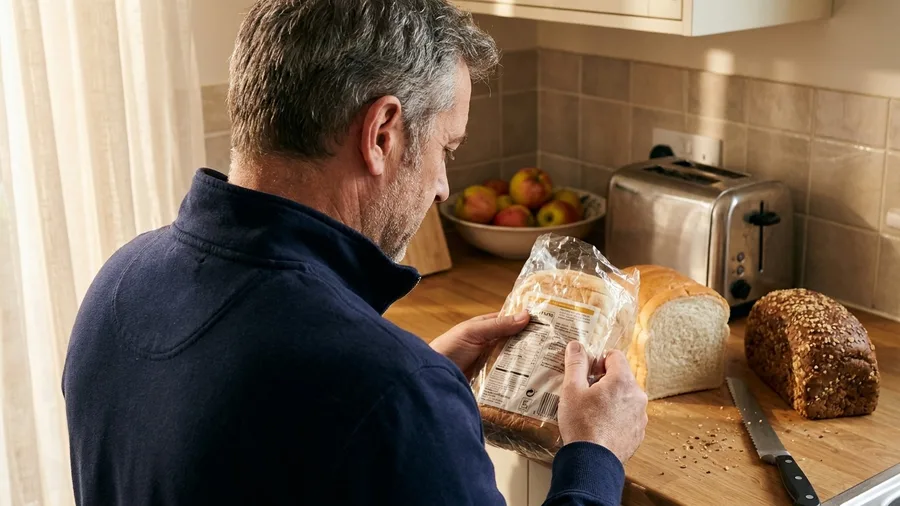
The loaf under the sandwich does the same work as the glass beside it. Refined white flour has had the bran and the germ milled away, and with them the fiber that slows a meal down, so a slice of white bread hits the bloodstream more like fast starch than like the grain it started as. If the drink aisle was the easy first cut, this is the quiet one that comes back every day at lunch.
Picture the usual forms. Two slices cradling a deli sandwich, a 6-inch sub roll, white toast at breakfast, and a bag of soft rolls parked on the counter for whoever wants one. None of those is a feast. That is exactly why it slips past people who would never order a pastry.
The swap is one label check, done once in the aisle. Turn the bag over and read the first ingredient. It should say whole-wheat flour. If it says enriched wheat flour, you are holding white bread in brown packaging, and 'wheat bread' on the front is a marketing word, not a grain.
Buy the loaf whose first ingredient is whole-wheat flour and keep everything else about the sandwich the same. Same mustard, same lettuce, same two slices. The cart changes by one item and lunch does not change at all.
Here is the honest dividing line. If whole-grain bread is already what sits on your counter at most meals, you have made this swap and there is nothing here for you. This entry is for the reader buying the soft white loaf out of habit, week after week, without ever once turning it over.
5. White rice and seasoned rice packets

Bread is the refined starch at lunch; rice is the one that anchors dinner, and it usually arrives in a bigger pile. A cup of cooked white rice is the ordinary side, two cups is what lands in a takeout bowl, and the seasoned instant packet in the pantry is labeled as two servings no matter how it gets eaten.
It stays on the list for the same reason the bread does: the fiber that would slow the meal has been milled away. Then the portion doubles, and often a sweet sauce goes over the top, so dinner delivers a fast starch in the largest serving of the day.
The good news for anyone who cooks rice four nights a week is that the pot does not change. Brown rice, barley or quinoa go in the same water, take a little longer, and keep the fiber the white grain lost. Most people stop noticing the difference in a month.
If white rice is what the household eats, keep it and change the ratio instead. Half the usual scoop, double the vegetables on the plate, and dinner still looks like dinner.
The instant packets need their own fix. The seasoning sachet is where the sugar and the salt sit, so use half of it and taste before adding the rest, or cook plain rice and season it yourself with garlic, cumin or lime. Same shelf, same five minutes, and you decide what goes in.
💡 Tip: Cook a big pot of brown rice on Sunday and portion it into containers. The weeknight decision is then already made.
The shelf test, sorted by how often it shows up
- Whole-grain bread most meals — Already swapped; skip the bread entry.
- Weekly beer or wine — Ask your clinician before deciding; the liver clears it first.
- Occasional small juice — A small glass now and then is not the target.
- Daily soda or sweet tea — The highest-return swap: 20 fl oz bottle or 32 oz cup.
- Daily white sandwich — 2 slices per deli sandwich, refined flour first ingredient.
- Takeout pizza twice a week — Three list entries in one slice.
Frequency decides which swap pays off first.
6. French fries and fried takeout sides

A takeout meal rarely fails on the main dish.
It fails on the bag of hot, salted fries riding next to it, handed over at the same window and eaten first because they are still crisp.
A sandwich, a burger or a container of rice can be a reasonable meal on its own. Add the fryer side and it stops being one.
The usual US portion is a medium order at about 4 oz, a diner basket piled well past that, or a bag of frozen fries spread on a sheet pan at home with dinner. That is the everyday form this entry is about.
Now the answer to what you are actually asking: the potato is not the problem.
A potato carries a little fiber, some potassium and real bulk, and none of that changes because it got sliced. What changes is the oil it sits in for three or four minutes and the size of the order that comes out.
Frying is how a vegetable becomes a fat-delivery system.
Compare that with the rice side it tends to replace in the same takeout order. Plain rice is starch and little else, but it is not fried. The fry carries a double load: the starch of the potato plus the oil the potato soaked up, so it lands heavier and swallows more of your day.
For a reader trying to keep the load off a liver that already runs in the family, that is the point of this whole list. This is not about weight. It is about the type of fat and how often it shows up, and fried sides show up more often than almost anything else because they come bundled with food you were already going to order.
Here is what actually goes in the cart instead.
Small potatoes, cut into wedges, tossed with a spray of oil and a pinch of salt, roasted at 425 for about 25 minutes, flipped once. They come out crisp at the edges and tender inside, and the oil is the spray can, not a vat.
If the meal is already a takeout combo, ask for a side salad or a slaw in place of the fries. Most places will do it, and it costs you the same.
Then there is the trap that makes this entry matter more than it looks. Walk into any fast-food counter and the fries are not sold alone. They arrive with the drink, both in one bag. For the price of one combo run, two of the everyday items worth cutting land on the counter at the same time.
The fix is simple if you know it going in: order the sandwich on its own and add a side or a drink separately, and suddenly you have a choice you did not have before.
One honest note about effort. Replacing a hot fry with a cold salad is not the same experience, and the first few times it feels like a downgrade.
Give it a month. Your mouth adjusts, and the evening stops feeling like it is missing something.
This is not a food you have to give up forever. It is a food you have to stop getting automatically.
Put it on the same list as the rest: if a fried side comes with the meal by default, the default is what changes. The wedges, the slaw and the plain sandwich are the cart items that replace it. Everything else on this list stays steady while you work through them one at a time.
7. Fried chicken and breaded cutlets

Chicken is not the problem. Breaded chicken is.
A fried-chicken combo runs $9-$13 and stacks a fried main on the fried side that already came with it, so the breading-and-oil math doubles in one bag. The usual forms are a 2-piece meal, a fried-chicken sandwich, or breaded cutlets pulled from the freezer case.
Look at what the coating does. That crust is a sponge for oil, and the cutlet underneath is usually bigger than a deck of cards, so a single sitting carries more fat and more meat than the plate needs.
The swap is the cooking method, not the bird. Grill it, bake it, or buy a rotisserie chicken and pull the skin off. For a cutlet, press the same piece into panko and bake it on a rack in the oven so the oil drips away instead of soaking in.
If your week already runs on grilled and baked chicken, skip this one. This entry is aimed at the household where fried chicken is a weekly fixture, not an occasional order. Swaps land one at a time; pick the one that shows up most on your own schedule.
Deli meat at a glance
🥓 Bacon slice
2 slices = about 1 oz cooked
🥪 Deli meat per sandwich
2 oz
🌭 Hot dog
1.5–2 oz
🏠 Better swap
Home-roasted chicken or turkey
📅 Frequency
Occasional sandwich, not daily
🏷️ Label lesson
'Uncured' still means cured
The label lesson
'Uncured' and 'no nitrates added' do not make it a fresh meat — the salt and the fat are still there.
8. Bacon, sausage, hot dogs, deli meat
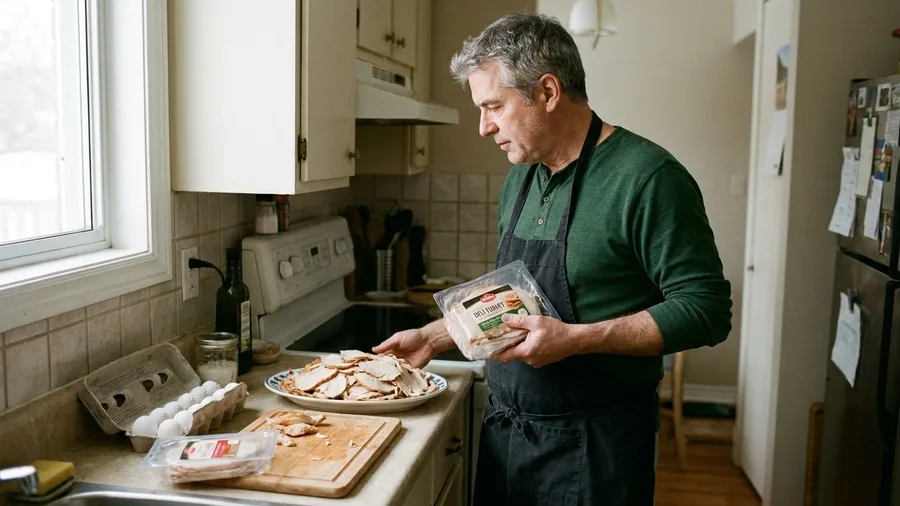
The processed meats are the ones that hide, because they never show up as a meal. Bacon is a strip laid beside eggs, deli turkey is a layer inside a sandwich you already consider healthy, and a hot dog is something you eat standing up.
Count what actually goes in. Two slices of bacon off a 1 lb pack is roughly 1 oz once cooked, a sandwich carries about 2 oz of deli meat, and a single hot dog runs 1.5 to 2 oz on its own.
None of those numbers is large. The problem is the word most days.
Cured, salted and often fatty, these are foods built to keep and to taste strong in small amounts, and they slip into breakfast, lunch and the kids' plate without ever reading as a portion you chose. That habit is what passes the shelf test badly, and why it earns a place on a list aimed at a family dealing with fatty liver.
The swap is simpler than it sounds. Roast a chicken or turkey breast on Sunday, slice it thin, keep it in the fridge, and lunch rebuilds itself for four days. Eggs, canned tuna, or last night's leftovers do the same job. Keep the deli counter for the sandwich you actually plan, not the one you assemble on autopilot.
Now read the front of the package carefully, because the front is where the money went. 'Uncured' and 'no nitrates added' are not the same as fresh meat. The salt is still there. The fat is still there. Celery powder and sea salt are still salt.
Turn the pack over and look at the sodium line, then compare it to the chicken you roasted yourself. That gap is the whole lesson, and it takes about ten seconds in the aisle.
💡 Tip: Roast a whole chicken on Sunday and slice it for sandwiches. You control the salt and the portion.
9. Takeout pizza with thick crust

The delivery pie is the one that lands hardest. A 12-inch pizza is 8 slices for $12-$18, and a typical sitting is two or three slices with pepperoni or sausage on top.
Count what is stacked in one slice: white-flour crust, a heavy layer of cheese, and processed meat. That is refined starch, dairy fat and cured meat in the same bite, three of the everyday staples this list is built to replace.
The fix is partly the pizza and partly the frequency. Build it on a thin or whole-wheat base, use half the cheese, load it with vegetables and grilled chicken, and cap it at two slices with a large salad on the side instead of four slices alone.
A homemade pizza on Friday is a different food from a delivery pie twice a week. The recipe is not the only variable. The habit is the other half, and the habit is what a cart change can actually shift.
10. Cream- and butter-heavy pasta sauces
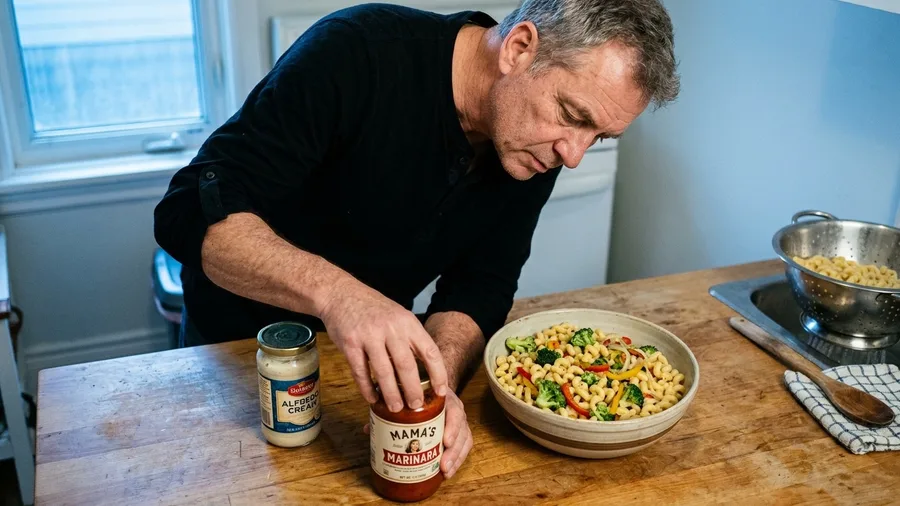
Takeout food tends to hide two things at once, starch and fat, and the sauce pot on your own stove does the same trick with less noise. A cream sauce is where a plate gets heavy while still tasting light.
Is it the pasta or the sauce? For most people it is the sauce, and the portion of pasta follows along because cream does not register as filling. The noodles are not the whole story; the fat sitting on them is.
The usual form at home is a 15 oz jar of Alfredo, which the label calls two to three servings and most households split two ways. In a restaurant it is a plate of fettuccine Alfredo the size of a dinner plate, and in the pantry it is a box of mac and cheese on a weeknight.
Cream and butter make a plate dense without making it filling, so a large portion goes down easily and nobody pushes back from the table. That is the mechanism, and it is why the jar disappears faster than expected.
The swap is a tomato-based sauce with olive oil and garlic, which keeps the pasta night and changes the fat load in the pot. If Alfredo stays in the rotation, make it with less cheese and more milk, and put a real vegetable on the side of the plate instead of garlic bread.
At the same restaurant, order marinara with grilled chicken and a side of vegetables, and the meal lands somewhere different without giving up the dinner out. This is one entry in a longer list of swaps, not a ban on pasta.
Start with the jar you buy most often, and swap that one next time you shop.
💡 PRO TIP
The sauce is where the price is
A 15 oz jar of Alfredo is built for two to three servings, but most people pour it over one. Halve the jar, add a splash of milk, and put the vegetables on top.
11. Pastries, muffins, donuts and croissants
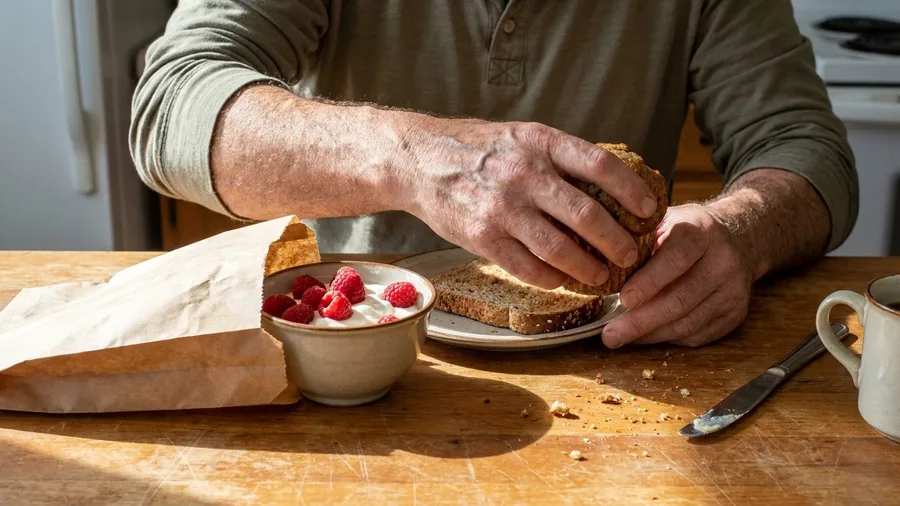
A creamy sauce hides its fat under the noodles. The pastry case hides flour, sugar and butter in a form you can hold in one hand while the other hand holds a coffee.
And the comparison in your head — is a muffin really worse than a donut? — is the wrong question. The muffin you buy with your coffee is a donut with bran in the name and two servings in the label.
The bakery muffin sits in the case the size of a softball. A supermarket four-pack puts that same cake in your bag for the week.
White flour, sugar and butter, in a portion that most people eat in one sitting without noticing.
What goes in the cart instead: plain Greek yogurt with fruit, whole-grain toast with peanut butter, or an egg on an English muffin. All three of those take the same morning minutes a pastry does.
The coffee-shop reality is the piece people miss. The pastry is almost always an add-on to a drink, so the two arrive together and the cart counts both.
12. Ice cream and frozen desserts

The morning pastry and the evening scoop are the same habit in different clothes. Sugar and dairy fat after dinner, often nightly, and almost never measured.
Can you keep dessert? Yes. What the cart has to lose is the nightly bowl, not the flavor.
The tub in the freezer door is a half gallon, with a half-cup serving printed on the label. The scoop you actually put in the bowl at home is one cup, often one and a half.
A smaller bowl with a real scoop does most of the work. Frozen berries with a spoon of yogurt, or a square of dark chocolate, replaces the pint some nights.
That last point is the whole test. Someone who has ice cream twice a month is not the reader this section was written for.
💡 Tip: Use a measuring cup as the scoop for a week. You will see the real serving size without guessing.
13. Sweetened yogurt cups and yogurt drinks

The nutrition halo is thickest two shelves from the ice cream, in the dairy case at seven in the morning. A fruit-on-the-bottom cup looks like the sensible thing to eat before work. Read the label and the fruit layer is mostly added sugar sitting on top of a small amount of protein.
The usual form is a 6 oz cup, the kind sold in a four- or six-pack, or the kids' tube yogurt in the lunch bag, or a drinkable bottle in the car cup holder.
6 oz is small enough that most people eat two without thinking about it, and the two cups put the sugar of a dessert in front of you at breakfast. The cup is not large. The habit is.
The swap is plain Greek yogurt with fresh fruit and honey you add yourself, so you can see how much goes in. Plain yogurt also works in place of sour cream on tacos and baked potatoes, which saves a second purchase.
Try the aisle lesson once. Pick up a flavored cup and a plain tub and read the sugars line on each. The difference is the whole argument in two numbers, and it takes about ten seconds.
A reader who eats plain yogurt already is not the target of this entry. The daily flavored cup, or the two-cup habit, is what this entry is about.
14. Granola and granola bars

A yogurt cup proves that sugar can wear a health halo. Granola does the same thing one shelf over, in a bag of oats that sounds like breakfast, and the serving is smaller than anyone pours.
Read the label on a bag of granola and you will see half a cup listed as a serving. Picture half a cup in a bowl. It looks like a polite snack, not a breakfast, which is why most people fill the bowl twice and call it one serving.
The oats themselves are not the problem. What makes the clusters stick together and taste so good is usually a syrup, honey or oil poured in by the cupful at the factory, and that is what turns the bowl into something closer to dessert.
Bars are the same recipe pressed flat. A 1.5 oz bar is one serving per the wrapper, but the small size makes it easy to treat as a snack rather than the sweet it is.
The trap is not any single bar. It is the car bar, the desk bar and the bar after the gym, which add up to three dessert servings in a day.
The parfait at the coffee shop layers granola into a sweetened yogurt cup, so two of the entries on this list arrive in one plastic cup. Two scoops of granola on top turns a small yogurt into a sundae.
The swap is plain oats, cooked warm and topped with nuts and cinnamon, or a handful of plain nuts when the snack urge hits at three in the afternoon. If granola stays, keep it as a two-tablespoon topping sprinkled over plain yogurt instead of a full bowl. That little bit of crunch is where the flavor lives anyway.
💡 Tip: Keep a jar of plain almonds and walnuts where the bars used to sit. The reach is the same; the load is not.
The words on the label, decoded
Read the first ingredient before you trust the front of the package.
15. Bottled dressings, ketchup and BBQ sauce
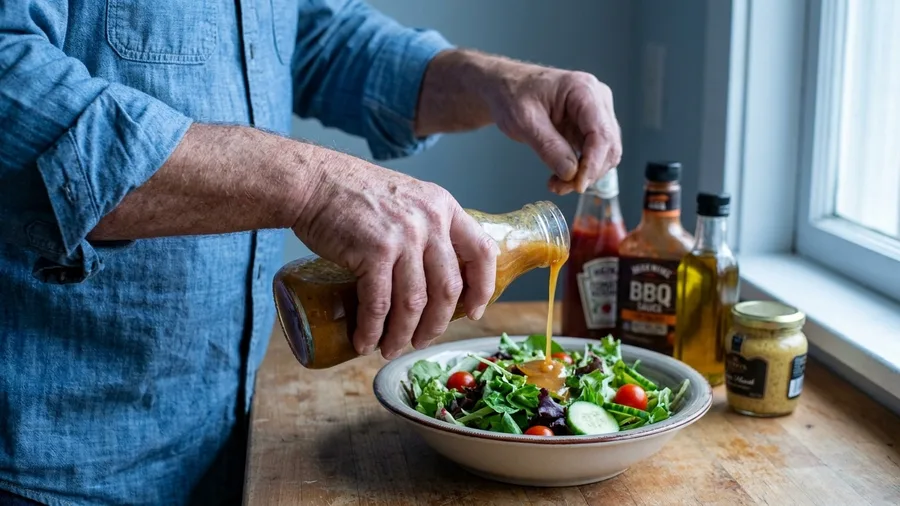
Sugar also hides at the finish line, in the bottle you pour over a meal you thought you had cleaned up. A salad, a piece of grilled chicken and a burger look fine on paper; the sauce is where the sugar and salt go uncounted.
Take a lunch salad and the two tablespoons of bottled dressing that go over it. That pour is rarely measured, and a sweet dressing can carry as much sugar as a scoop of ice cream, invisible under the lettuce.
Ketchup is worse than its name suggests. The one-tablespoon serving is mostly sugar and salt, and the honest portion on a plate of eggs or a burger is more like three or four.
BBQ sauce is the sweetest of the group. Two tablespoons over grilled chicken puts sugar back on meat that was already a good choice, and the glaze often doubles the calories.
The honey-mustard dip at the sandwich counter has no serving size written on the paper cup. The cup is a pour, and the pour is never measured.
None of these sauces needed to be sweet in the first place. The food underneath them was already fine, and the bottle was doing the work of candy.
The swaps cost almost nothing. Olive oil and vinegar on the salad, mustard on the sandwich, salsa or hot sauce on eggs, plain yogurt mixed with herbs as a dip, or a dry spice rub on the chicken instead of a sweet glaze.
A plate of vegetables under three tablespoons of sweet dressing is not the change you think it is. Taste the vegetables. They hold up better than you expect.
Frequently Asked Questions
Does this list replace a diagnosis or a treatment plan?
No. This is a shopping list, not a diagnosis. Whether you have fatty liver, whether you should be tested, and what treatment looks like are questions for your clinician, especially given your family history.
How fast should I make these swaps?
One item per week for fifteen weeks. That pace lets the change stick and gives you time to build a four-week shopping list you actually use.
Which three should I drop first?
Liquid sugar (soda and sweet tea), alcohol, and the breakfast pastry. The first two are the biggest everyday loads; the pastry often travels with a drink that is already on the list.
Can I still have treats?
Yes. The list targets the daily and weekly habits, not the occasional slice of cake or glass of juice. Frequency decides which swap pays off first.
What do I bring to my next appointment?
Bring your four-week shopping list and the question of whether you should be tested, given the family history. Leave the drinking question and any treatment plan to that conversation.
Drop these three first, then one a week
Drop the liquid sugar, the alcohol and the breakfast pastry first. Then swap one item per week across 15 weeks, keep a four-week shopping list, and bring it to the next scheduled visit with the clinician.
This list is not a diagnosis and not a cure. 'Never' is the headline's shorthand for 'the 15 that give you the least back.' Ask your clinician whether you should be tested given the family history, and leave the drinking question and any treatment plan to that conversation. NIDDK (niddk.nih.gov) and AASLD (aasld.org) are the sources to read between visits.
Back in the aisle, the cart with the 20 fl oz soda, the white bread and the deli meat now has 15 specific swaps. Start with one of them this week, not the whole list.
Start with the cart, not the calendar
Pick one item from this list for this week's shop. Swap it, keep a four-week list, and bring the list to your next clinician visit.