
Most people assume that by 60 their lifespan is already written somewhere in the body, and that a morning when the jar will not open is the first line of it. The research says something less tidy: a weak grip or a slower walk is not a countdown, it is one system asking to be looked at.
That is the useful part. Each of the 13 signs that follow is a prompt to have something checked, never a deadline, and the same holds whether it is your grip, your balance, your sleep or your memory.
Every entry below carries a short list of what that sign can mean and a firm limit on what it cannot. That is what separates a checkup prompt from a self-diagnosis, and it is the whole reason to read the list in order.
By the end you will know which changes to write down and which to let go, which questions to put to a clinician and which worries to drop. The practical output is small: two or three tracked changes, dated, plus a medication list.
Quick Tips Before You Start
Write down what changed
Note the date, the change, and what you were doing. A pattern is what a clinician can work with.
Bring your medication list
Include doses and how long you have taken each one. Several signs on this list have medication side effects as a likely cause.
Use the same tool each time
Same tape, same scale, same chair. Consistency across months beats any single reading.
Give it two to four weeks
One bad morning means little. A change that lasts a month is what belongs in the conversation.
1. Grip strength reflects muscle reserve

A handshake that has gone soft is worth a look at a checkup, not a reason to start counting years. Grip is the one strength measure you can take with no equipment at all, which is why it turns up first in any conversation about muscle.
Think about the specific moments. A full bag of groceries carried in from the car, a jar lid that used to give on the first twist, a stiff doorknob you now brace against your body to turn. Those are grip tests you run without meaning to, several times a week.
What a clinician does with that information is more careful than a single squeeze. Grip gets read relative to your age and sex, and more usefully, against your own past, because a number means little in isolation.
One squeeze on one bad morning says almost nothing. A drop that holds across months says considerably more.
The list of what a weak grip can actually reflect is longer than most people expect: muscle mass overall, nutrition, arthritis in the hands, nerve problems such as carpal tunnel or a pinched nerve in the neck. Several of those are treatable, and none of them comes with an expiry date attached.
Here is the error this sign invites. A home grip meter gives you a number, and somewhere online is a chart of study averages by age, and the temptation is to compare yourself to a group and call it a verdict. A study average describes a population, not a person, and it is not a personal deadline.
What to raise at a checkup is the change, described plainly: new weakness, dropping things you used to hold easily, trouble with jars that started sometime in the last several months. Say when you first noticed it and what has changed since.
That is the whole ask. Bring the observation, not a diagnosis you assembled from a chart. The grip is pointing at a system worth examining, and the examining is the part you can act on.
💡 Tip: Skip the home grip meter. A dynamometer number from a study group is a group average, not a personal expiry date.
📋 3 quick taps · about 20 seconds
Which of these signs should you track first?
Answer four quick questions and get the sign that fits what you have been noticing.
Answer these for yourself
- What have you noticed most in the last month?
- How long has the change lasted?
- Does the change affect daily life?
Then read the part written for you
- Start with grip and hand function — Note when you drop things or struggle with jars, and bring that log to your next visit. Grip is the easiest sign to track at home with no equipment. Item 1 Read: 1. Grip strength reflects muscle reserve →
- Start with balance and walking pace — Usual walking pace and unsteadiness are the two signs most worth a physical therapy conversation. Note near-falls and what you were doing. Items 2 and 3 Read: 3. Balance while standing flags fall risk →
- Start with waist and weight changes — Use the same tape at the same spot every few months. Unplanned weight loss with looser clothes is the version that needs a medical check first. Items 5 and 8 Read: 8. Unplanned weight loss deserves a medical check →
- Start with memory and sleep context — Bring a family observer's notes about what changed and when, plus a two-week sleep diary. Memory lapses need context, not panic. Items 9 and 13 Read: 13. Memory lapses need context, not panic →
2. Walking speed shows system coordination
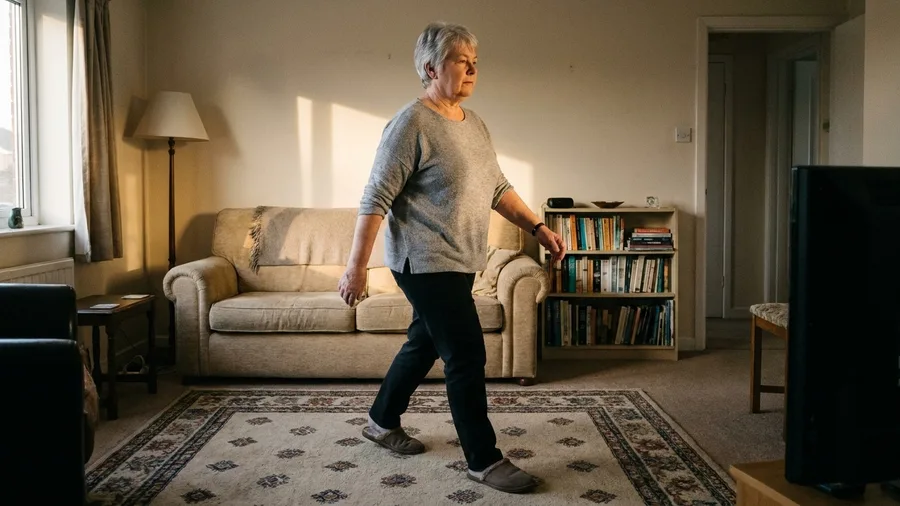
A slower walk is not a verdict on your future; it is a signal that several systems are no longer working in step, and each of them can be checked. Grip measures one muscle group in isolation, but gait asks the whole body to cooperate at once – the heart supplying oxygen, the nerves carrying signals to the feet, the knees absorbing load, the eyes reading the floor ahead.
Watch how you cross the living room on an ordinary afternoon, not how fast you can move when you are trying.
The useful comparison is against yourself six months ago. If the walk from the kitchen to the front door now takes noticeably longer, or you find yourself reaching for doorframes you used to ignore, that is the detail worth writing down: what changed, roughly when, and whether anything else shifted alongside it – breath, knee pain, a new prescription.
A slowdown can have a long, ordinary list behind it. Aching joints change stride to spare the sore side. Breathlessness from a heart rhythm or lung problem shortens the distance before a rest. Nerve trouble in the feet dulls the feedback that keeps steps even. Recovery after a flu or a hospital stay leaves muscles deconditioned. Vision that has slipped makes the ground harder to read.
None of that is a countdown; several of those causes are among the most treatable things on this list.
The distinction that matters is timing. A pace that has eased gradually over years is often just the arithmetic of getting older. Papers that shuffle, or a walk that has clearly slowed across a few weeks, is a change worth reporting – the speed of the change tells a clinician more than the speed of the walk.
No walking speed sets a date, and a slow walker is not automatically heading for disability. A fair share of slow walkers are slow for a reason someone can fix: a knee that needs physical therapy, a sedating medication taken at the wrong hour, or a heart rhythm that was never checked. Bring the observation, not the conclusion – when it started, what it stops you doing, and how it compares with last year – and the clinician has something to act on.
3. Balance while standing flags fall risk
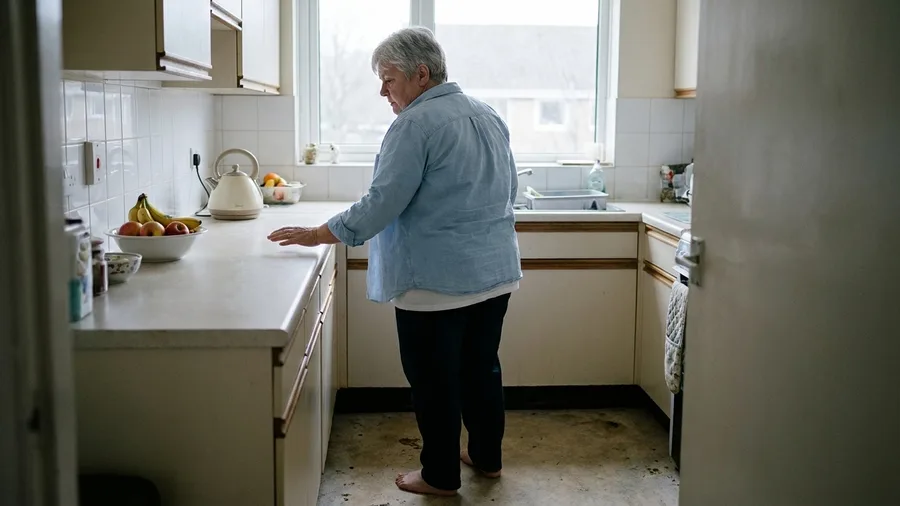
Feeling unsteady on your feet is a reason to get your balance looked at, not a reason to fear the worst. Walking is balance in motion – take away the motion and you are left with balance itself, which is the system most directly tied to whether a person stays upright or falls.
The simplest test costs nothing and takes fifteen seconds. Stand with your feet together, one hand hovering an inch above the kitchen counter, and hold for ten seconds. That is the whole check – nothing on a stool, nothing in the dark, and no eyes-closed version attempted alone, since it strips away the input your body relies on.
Repeated wobbling, or a near-fall you caught by grabbing the counter, earns a proper look. The causes a clinician wants to hear about are a short list of fixable things: a sedative or blood pressure drug that is dropping your pressure when you stand, an inner-ear problem, or neuropathy in the feet that has dulled the sense of where the floor is.
Falls are not an inevitable part of aging, and balance responds to training. Physical therapy, tai chi and simple balance exercises all build the postural control that keeps a person upright, and the improvement shows up in weeks rather than years.
What matters here is not to buy a cane on your own or move the rug and hope – take repeated unsteadiness to a clinician or a physical therapist, who can find the cause and train the balance back.
Of all these signs, this is the one where the checkup prompt is most clearly worth more than any prediction about how long you have.
💡 Tip: Repeated unsteadiness or a near-fall goes to a clinician or physical therapist, not to a new rug or a cane bought alone.
💡 PRO TIP
The three-visit rule
If the same sign has sent you to the doctor three times without an explanation, ask for a medication review before anything else. Sedatives, blood pressure drugs and decongestants each show up on this list.
4. Muscle mass shapes illness recovery
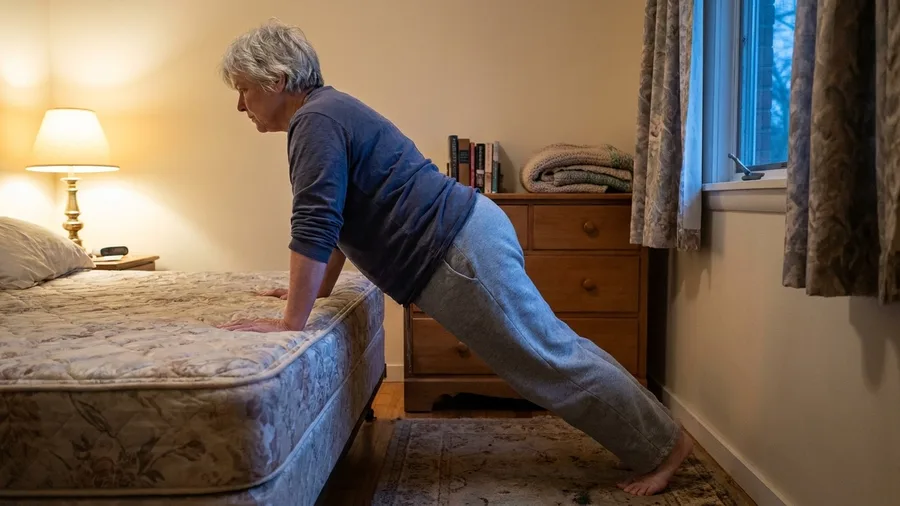
Losing muscle after 60 does not shorten your life on a schedule, but how fast you lose it changes what your body can do when illness arrives. That is the part worth watching.
The distinction that matters is speed. Gradual thinning over a decade is ordinary aging; muscle that falls away over a few months, along with frailty or weight dropping without trying, is what sends someone to a visit.
Muscle is not just the thing that lifts the grocery bag. It pulls glucose out of the bloodstream, it moves you across a room, and it is the reserve you draw on after surgery or a bad flu.
A hospital stay is where low reserve becomes visible. Someone who went in walking comes out needing two hands on the bed rail, and the weeks after are spent rebuilding what the illness took.
three sessions of resistance work a week, with a day off between, is what physical therapists commonly suggest for adults in their 60s and beyond. Start lighter than feels necessary.
Protein needs and training plans are individualized with a clinician, because kidney disease, certain medications and your current intake all change the answer. That conversation is worth having before you buy a gym membership.
No measure of muscle promises a specific number of added years. The payoff is function: getting up from a low chair without pushing off, carrying a full laundry basket, walking back to your own front door after an operation.
💡 Tip: No muscle measure promises a specific lifespan gain. The payoff is function — rising from a chair, carrying, getting back to walking after an operation.
Muscle and Recovery — At a Glance
⏱️ Fast-Loss Flag
Losing it over 3-6 months, not years
🦵 Function Test
Chair stand — 5 rises in under 12 sec
✊ Grip Check
Weak grip in a doorway is a prompt, not a verdict
⚠️ Ask First If
Dialysis, heart failure, or a recent fall
💰 First Move
One set of 8 chair stands, 3x a week
The Real Signal
Speed of loss matters more than the number on the scale — compare this month to six months ago, not to age 40.
5. Waist size tracks metabolic strain
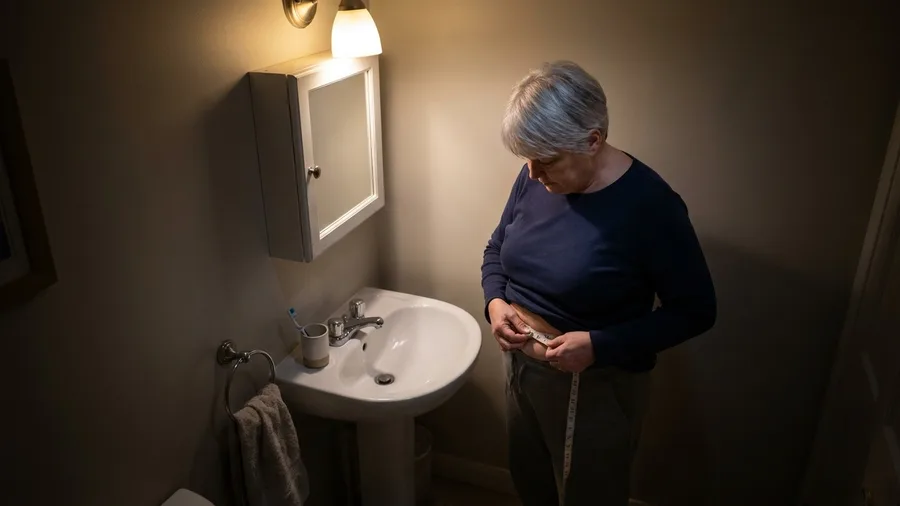
Belly fat after 60 is more telling than weight alone because where it sits matters as much as how much there is. A tape measure reads that better than a scale does.
Muscle sits under the skin; the fat that wraps the organs sits deeper, and it is the one tied to insulin resistance, inflammation and heart risk factors. It travels as a cluster, not on its own.
The method is simple and the consistency is the hard part. Tape at the navel or the narrowest point, level all the way around, after you exhale, and always at the same landmark so the readings compare.
One number from a dressing room mirror tells you nothing. The same tape in the same spot every three months, written down, tells a clinician something.
Waist and BMI are screening tools, not diagnoses. Neither one names a condition or a date, and this list hands you no threshold to measure yourself against.
What a rising waist deserves is a question, not a verdict. Ask your clinician whether your blood pressure, fasting glucose and cholesterol have been checked lately, because those numbers describe the strain directly.
My own waist crept up two inches over a winter of shorter walks and I did not notice until a pair of trousers stopped closing. The tape noticed before I did.
6. Blood pressure patterns matter beyond one reading
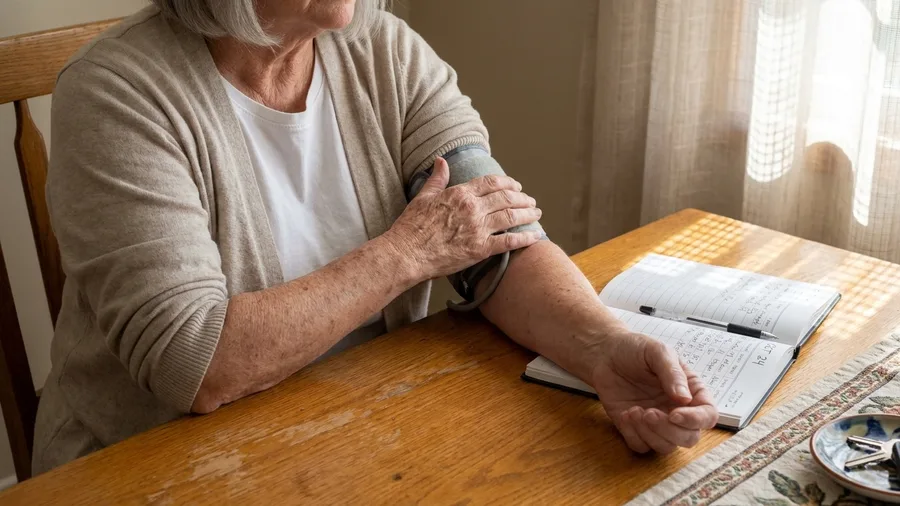
The reading to trust is the pattern across a few weeks, not the single number that startled you at a clinic or a pharmacy machine.
Take it at home, seated with your back supported and feet flat on the floor, arm resting at heart level. Sit quietly for five minutes first, then measure at the same time each day and keep the log.
Standing up and feeling dizzy, or readings that swing widely from day to day, is a pattern worth reporting rather than a number to work out alone. So is a reading taken five minutes after a stressful phone call.
No cut-off and no treatment target comes from this list. Those come from a clinician and the official guidance that clinician follows.
One high reading is not a diagnosis, and one normal reading is not a guarantee. A home log with dates and times turns a frightening single number into something a clinician can actually act on.
Two weeks of entries, each with a date, a time and what you were doing beforehand, is what a clinician needs to see whether your pressure is genuinely high or just having a bad morning.
What to track, what to report, what to ignore
- Grip, waist, walking pace — Track at home with simple tools and consistency.
- Resting heart rate on a stressful morning — One bad morning is a data point, not a forecast.
- Blood pressure and resting heart rate — Track patterns, not single readings. Report swings.
- Slow walking alone — Ask what changed and when before assuming decline.
- Irregular pulse or new unsteadiness — Report promptly — these need a clinician, not interpretation.
- Unplanned weight loss — Prompt evaluation, because waiting is the actual risk.
7. Resting heart rate reflects recovery
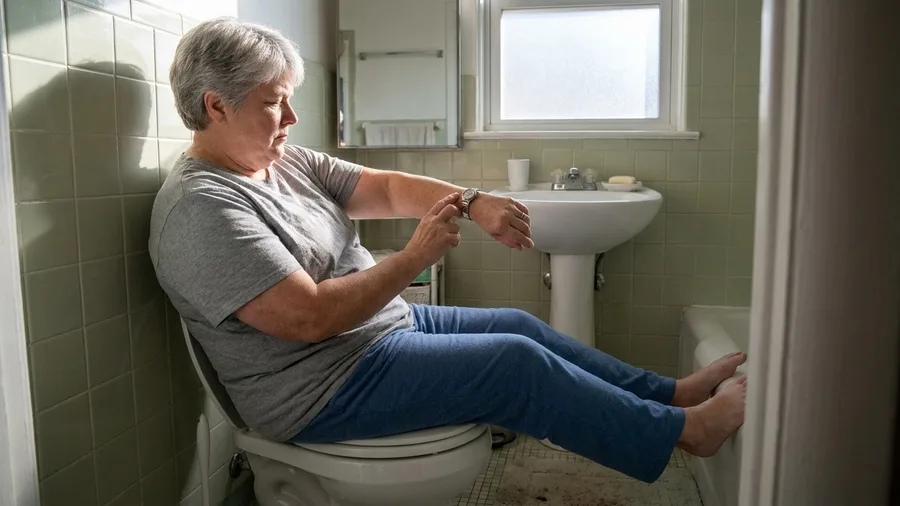
A resting heart rate that runs high is not a countdown clock, and that is the most useful thing to know before you take another reading. Blood pressure is a home number many people already keep a log of; pulse is its partner, and it swings far more with the moment it was taken.
Take it properly or the number means nothing. Sit for a full five minutes, back against the chair, before coffee, and not within an hour of a hard walk, a hot shower, or a phone call that left your jaw tight. The clock matters: a pulse read thirty seconds after climbing stairs can sit ten to fifteen beats above your true resting rate.
Fever, dehydration, anxiety, a thyroid running hot or cold, and plain poor sleep all push the number around. So do medications: beta blockers tend to slow it, decongestants tend to speed it. For a reader past 60, that drug list is often the whole explanation.
One reading is a snapshot of one morning, not a forecast of your lifespan. A pulse that reads 88 after a night of broken sleep and a salty dinner is a fact about that night, and it will look different after a calm one. The pattern across a week is what carries information.
There are three things worth flagging to a doctor: a rate that stays high, one that stays unusually low, and an irregular rhythm. Irregularity deserves the most attention, because it can point to atrial fibrillation, a treatable heartbeat problem that often goes unnoticed for years.
When you report it, bring the specifics. A date, a time, the number you saw, and what had happened beforehand gives a clinician a real starting point. The point of the note is to describe, not to decide.
💡 Tip: Report a date, a time, the number and what was happening beforehand. Do not assemble a diagnosis at home.
⚠️ COMMON MISTAKE
The scale is not a verdict
Losing weight without trying is a symptom, never an achievement. Mention clothes fitting looser, appetite changes and dental pain together at one visit.
8. Unplanned weight loss deserves a medical check
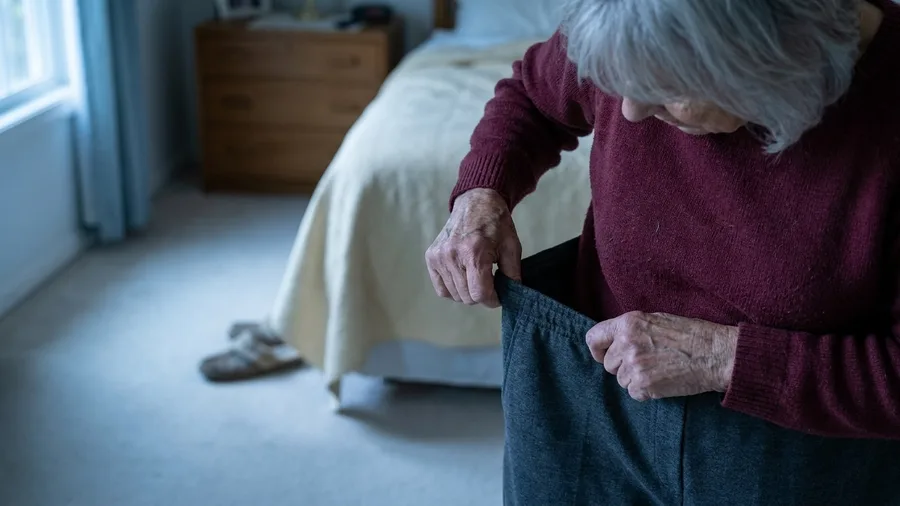
Weight that drops without trying is a reason to book a visit, not a reason to feel quietly pleased. Heart rate and blood pressure are numbers you take on purpose; this one usually announces itself in the waistband of your trousers before you ever step on a scale.
The signal to take seriously is loss you did not plan, paired with clothes that hang looser than they used to. It is not the same as dieting, a new walking habit, or a scale that got shifted to a different floor and reads oddly low.
There are many possible explanations. Appetite can fade with age; a sore tooth or ill-fitting dentures can make eating a chore; depression can quietly remove interest in food. Digestive disease, cancer, and medication side effects all sit in the same list, and so does simple trouble getting to a store.
Expect some thorough questions at the appointment. A clinician may ask about swallowing, bowel habits and whether you can afford and reach food, and may order blood work. Those questions are the assessment itself, not polite small talk, so answer them plainly.
You will not find a number here to measure yourself against. Some percentage of body weight is not the point; prompt evaluation is. This is the one sign on the list where waiting is the actual risk, which is why the visit matters more than the interpretation.
Bring the change as a fact to be investigated, not a verdict to be reached. Unexplained weight loss is a symptom, and it is never an achievement.
9. Sleep quality mirrors health and routine

Sleep that grows lighter in your sixties can simply be how sleep ages; it does not by itself mean your health is turning. Appetite, mood and weight all leave their marks overnight too, and the small hours are where pain, breathing trouble, low mood and the timing of your pills tend to surface.
Waking two or three times a night and rising earlier than you used to is ordinary after 60, a normal shift in how the body runs its sleep cycles. What is worth reporting looks different: loud snoring, gasping or choking in the night, long stretches of lying awake, and falling asleep in a chair at three in the afternoon.
Two of the commonest causes are treatable and often dismissed for years as just getting older. Sleep apnea in particular can go unnoticed until a bed partner mentions the pauses, and chronic pain is frequently accepted rather than addressed. Both are worth asking about directly.
No target number of hours guarantees a longer life, and a single rough night means nothing at all. Readers who chase a precise sleep figure tend to sleep worse, not better.
Before the next appointment, log two weeks of it. Write down when you went to bed and got up, each waking, any naps, the caffeine and alcohol that came before, and what a bed partner hears. This costs nothing and turns a vague complaint into a record a clinician can read.
A doctor works better from a pattern than from a memory. Show up with the log, and the conversation shifts from how your sleep has been to what it is actually doing.
💡 Tip: The diary gives the clinician a pattern instead of a memory, and it costs nothing to keep.
Compare healing against your own past, not anyone else's.
10. Slow healing reflects immunity and circulation

A cut that used to close in four days now takes ten, and a bruise on the forearm lingers for weeks instead of fading in a week. That slowdown is the body's repair capacity showing itself in the smallest places, and it is often the first place you notice that something in the system is running differently.
Watch for small cuts and scrapes that stay pink and open longer than they once did, gums that bleed when you brush, or a minor infection that hangs on after it should have cleared. Each one is tiny on its own. Together they are a pattern, and the pattern is the thing worth reporting.
Several contributors are treatable. Diabetes raises blood sugar and slows tissue repair; poor circulation in the legs and feet reduces what reaches a wound; steroid medications thin skin and blunt the inflammatory response that starts healing; and poor nutrition leaves the body without the protein and vitamins it needs to rebuild tissue.
Do not treat this with supplements bought after a search result. Slow healing is a reason to see a clinician, not a reason to self-prescribe, and the answer usually comes from blood work and a medication review rather than a bottle.
That is also why it is worth the visit. Once the cause is found, the sign is often modifiable: better glucose control, attention to circulation, a change to a medication that is slowing repair, or nutrition support. The fix does not happen overnight, but it is within reach.
The comparison that matters is against your own healing from a few years ago, not against a spouse or a neighbor. You are the only baseline that means anything here, and you are the only one who can say whether a cut that took a week now takes two.
11. Dental health is a daily marker

Gum bleeding belongs on two lists at once: it is a healing sign and a dental one, because the mouth is where circulation, immunity and nutrition show up every single day. That double duty is why it earns its own look.
Mouth health shapes chewing, swallowing, nutrition and social eating. A sore gum can quietly narrow what someone cooks and who they eat with, until meals that were a pleasure become a chore and dinners with friends get skipped.
Two things to report rather than live with: dry mouth from medications, and gums that bleed when you brush. Both are common, both are easy to write off as normal, and both are worth raising at a visit instead of simply tolerating.
No one is claiming dental care adds years to your life. The honest framing is that the mouth belongs with blood pressure and walking speed as part of overall health, one more system whose state tells a clinician something about the rest of you.
The ask is a dental check, plus two questions: which of my current medications cause dry mouth, and would a fluoride or saliva product be appropriate for me? A pharmacist or dentist can often answer both, and neither requires a specialist referral.
The mouth is checked daily by the person using it, which makes it one of the earliest places a change shows. You brush and eat every day, so you are already looking at it. The move is to notice when something persists and to write it down.
💡 Tip: The mouth is checked daily by the person using it, which makes it one of the earliest places a change shows.
12. Hearing and vision loss affect safety

They matter, and mostly not in the way people fear. Neither hearing loss nor vision loss sets a date, but both decide how safely a person moves through the world and how much company they keep.
The two senses finish what teeth and gums start. Chewing decides whether someone eats well; hearing and seeing decide whether they get out the door, cross a room, and answer when a friend calls.
A few concrete signs from a normal week. The TV volume creeping past where a partner likes it, or a phone call where a joke lands and nobody laughs but you. The menu in a dim restaurant that stays unreadable while you pretend to know it. A bruised thigh from a coffee table corner you could have sworn was a foot further away.
Untreated loss is sneaky about safety. Hearing loss pulls people out of conversations and then out of social life; one noisy dinner where the background buzz wins can be enough to make someone decline the next invitation. Vision changes raise the odds of missing a curb, a stair edge, a car in the next lane.
Cataract care, updated glasses, and properly fitted hearing aids can restore much of what was lost, often in a matter of weeks once the appointment is booked. These are among the most fixable items on any list of body signs, and the fix shows up in function: reading the menu, following the group, driving at dusk, walking down the stairs without a hand on the rail.
Function regained is the whole framing here. This is a safety and connection issue with clear remedies, not a decline to accept.
The ask is two appointments: a hearing test and an eye exam, usually available without a referral. Book them the same week, because one tends to get put off behind the other. Ask the optometrist about the low-light driving and reading you have been quietly avoiding.
Then the fix does its work. A week into the new glasses or the hearing aids, most people are back to the things they had started to avoid without ever naming it.
Four terms you will hear at the visit
13. Memory lapses need context, not panic

Losing a name mid-sentence or finding the keys in the refrigerator is ordinary at 60, and on its own it means nothing. The lapses that need a professional look are different in kind: taking the long way home and not recognizing the street, asking your wife the same question three times in an afternoon, or staring at a bank statement unable to work out what the balance means. Those are changes in function, not failures of recall.
Forgetting where the car is parked in a lot you have used for years is the gap between an everyday slip and a reason to book a visit.
Several contributors are reversible, and a few may already be on your radar from the rest of this list. Poor sleep, untreated depression, a medication that dulls thinking (sedatives, older antihistamines, some blood pressure drugs), hearing loss that forces the brain to work harder to follow conversation, and infections such as a urinary tract infection in an older adult can all mimic memory decline. Correct the cause and the fog often lifts.
A single forgotten appointment is not dementia, and it does not shorten anyone's lifespan by a day.
The question a clinician actually works through is whether function has changed, not whether memory feels worse. Can you still pay bills, follow a recipe, drive a familiar route, take medications on schedule? Those daily tasks are the yardstick, and they shift for reasons that have nothing to do with Alzheimer's.
The person affected is usually the last to see the pattern, which is why a family observer's notes carry real weight in the appointment. A spouse or adult child who jots down what shifted, when it started, and what the person can no longer manage hands the clinician a picture that a five-minute interview cannot produce. Something as small as a note that Dad stopped doing the crossword in March, or that Mom repeated the same story at two Sunday dinners, is worth more than a vague sense that something is off.
That is the same method the rest of this list asks for.
Bring those observations alongside the other two or three changes you have tracked over a few weeks, and a frightening word turns into a set of concrete things a clinician can test, rule out, and treat. Memory is the sign that needs context most of all, and context is something you can write down starting tonight.
💡 Tip: Bring those notes alongside the other two or three tracked changes. That turns a frightening word into a set of observations.
Frequently Asked Questions
Do any of these 13 signs predict how long I will live?
No. Each sign points at a body system that can be checked, explained and often changed. Any specific risk numbers should come from an official source and your own clinician, not from a list.
How many changes should I track at once?
Two or three lasting changes over a few weeks is enough. The point is to bring a pattern, not a full inventory, to your visit.
Should I buy home devices for grip, blood pressure or heart rate?
A home blood pressure cuff with a log is worth it. For grip, a study-group dynamometer number is a group average, not a personal expiry date. Ask your clinician what is worth measuring at home.
What should I bring to the appointment?
Your notes with dates and what changed, a full medication list with doses, and any home readings. A family observer's notes help most with memory changes.
Which sign is the most fixable?
Hearing and vision loss, and balance. Hearing aids, cataract care, updated glasses and physical therapy can restore function that people assume is gone for good.
What the next four weeks are actually for
No single sign on this list predicts how long you will live. Each is a prompt, and the useful work over the next four weeks is to note two or three changes that persist, what changed, when it started, and what it stops you doing, then bring those notes and a full medication list, supplements and over-the-counter included, to a clinician.
Specific risk numbers, thresholds and targets come from an official source, a clinician or a health authority, never from a list like this one. Let them supply the numbers and let this list supply the questions.
The jar that would not open on that first morning was never the opening line of anything. It was a reason to book a visit, and if you have written down when it started and what else has changed since, you have already answered the body's request for a conversation.
Start with two notes, not thirteen
Write down the two or three changes you have noticed, with dates, and add your medication list. Bring that page to your next visit.