
A course video is paused at minute 12 on a laptop at the dining table, and the notebook beside it holds a column headed who to call first with three numbers penciled under it.
Picture a 66-year-old in Ohio, retired 18 months, giving 12 to 15 hours a week to a laptop, with $250 set aside for courses, reliable internet and a car in the driveway. Across these 14 skills, pay runs $18 to $45 an hour or the monthly-package equivalent, and a first paying client usually shows up 4 to 10 weeks after the start.
Learning costs run from free, through library classes and nonprofit guides and payer-portal tutorials, up to about $200 for a certificate. Most of these skills need only equipment already in the house. Work arrives as 3 to 5 repeat clients or one small practice, never a single employer, and payments come through Stripe, PayPal or Zelle, each one logged for the tax preparer.
Pick by the constraint that binds you, not by the rate. Then take that skill's free course and line up two free practice clients inside two weeks, with one free class or two free sessions at a senior center, a one-page site and a printed card at the library and the pharmacy doing the marketing. One skill with three repeat clients beats fourteen certificates.
Quick Tips Before You Start
Name your ceiling first
Write the number on paper before you browse: $250 total, and zero for a second certificate until $500 of invoices has cleared.
One log, export monthly
Put Stripe, PayPal and Zelle in the same spreadsheet column, or login-errors and gift payments will not match your bank total.
Ten cards, not a hundred
Ten is plenty. Keep five at the senior center desk and five in your wallet for people who ask in passing.
Book a free class within 14 days
The date, not the course, is the deliverable. Two free practice clients at the senior center should be booked before the second video finishes.
Price in six-week blocks
Quote $18-$45 per hour only when you must; the same work sells easier as a fixed six-session package with a clear end date.
1. Chronic-Condition Coaching by Phone
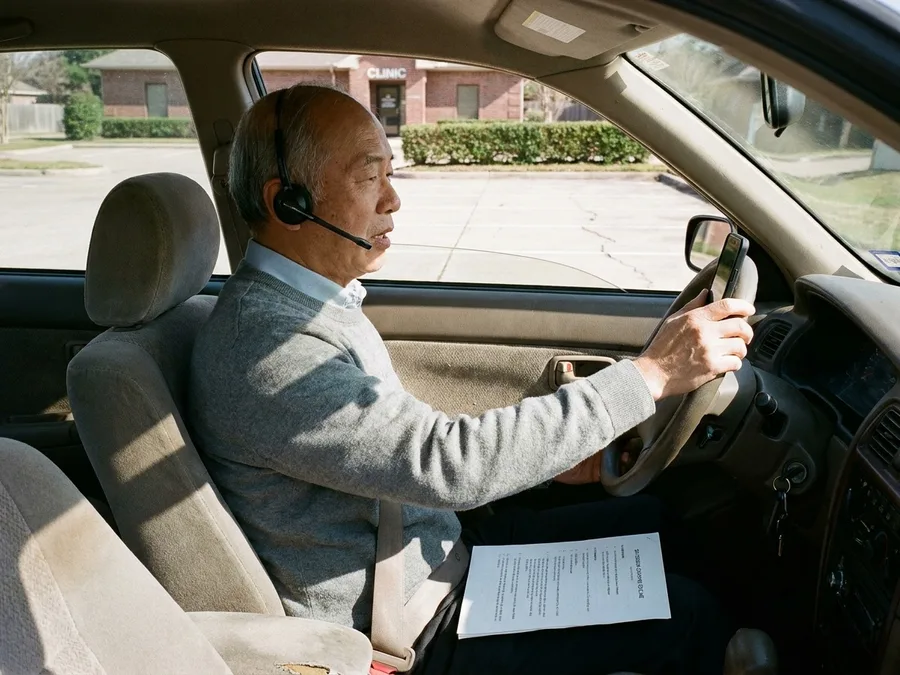
Somebody who has kept their own blood sugar or blood pressure in range for a decade already knows the material. What they lack is a structure to sell it in.
Coaching people through the first months after a new diagnosis pays the most of anything here. The example rate sits at the top of the range, $45 an hour, and the reason is packaging: most coaches sell a six-call block up front, so a client commits $270 before the first conversation and the coach's calendar fills by design rather than by luck.
The certificate is the gate, and it is not a hard one. Figure 60 hours of online coach-training, finished in about 8 weeks if you give it two hours a night, and roughly $200 of your $250 course budget. Everything after that is schedule.
What you sell is habits and routine: meal timing, a walking plan, how to log a reading, what to say at the next appointment. The moment a client asks whether to change a dose, the answer is a sentence that sends them to the clinic. Stay on that side of the line and the training covers you.
The people who do well here have lived with a condition long enough to talk about it without flinching. Good on video calls helps, but it is not the deciding factor.
The deciding factor is whether you can sit with someone else's fear three afternoons a week and stay useful. No car is required. A tolerance for illness talk is.
If hearing the same worry from a stranger would wear you down rather than settle you, this is the wrong first skill no matter what it pays.
💡 Tip: Write your six-call outline before you buy the course. If you cannot name what happens in call one versus call six, the certificate will not fix that.
| Skill | Cost to learn | Weeks to first client | Example rate | Best for |
|---|---|---|---|---|
| Chronic-condition coaching | ~$200 | 8 | $45/hr (6-call package) | Lived experience + video calls |
| Portal and app setup help | Free | 2–4 | $60 per 90-min visit | Patient + has a car |
| Transcription editing | $120 | 6 | $30/hr | Fast readers, quiet room |
| Plain-language health writing | Free | 4–6 | $40/hr or $250/handout | Teachers and editors |
| Remote intake and scheduling | Free | 2–4 | $22/hr | Phone comfort, tidy calendars |
| Home safety walkthroughs | $80 | 4–6 | $150 flat per visit | Handy, mobile, has a car |
| Chair yoga on Zoom | ~$180 | 4–8 | $20 drop-in / $75 monthly | Body that can demo movement |
| Grocery label tours | Free | 3–6 | $60 per head | Cooks who stand well |
| Caregiver coaching | $150 | 4 | $40/hr remote | Ran a parent's care |
| Daily check-in calls | Free | 2–4 | $45/month per household | Early riser, reliable |
| Claims follow-up | $90 | 4–6 | $28/hr remote | Stubborn about paperwork |
| Dementia activity kits | Free–$40 | 4–8 | $35–$60 per kit | Crafters with a spare table |
| Hearing communication coaching | $120 | 4–6 | $30/hr or $85 for 3 | Own hearing loss, has a car |
| Monthly clinic newsletters | Free | 4–6 | $300/month retainer | Writers who like routine |
2. Patient-Portal and Health-App Setup Help
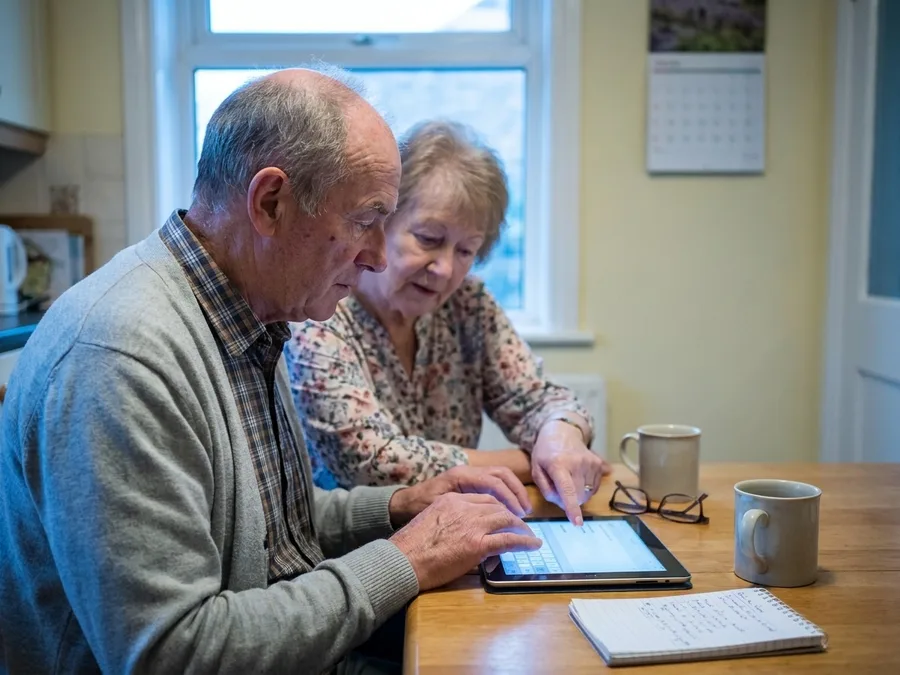
The same trust that gets you on the phone with a newly diagnosed client has a lower-tech twin: sitting at a kitchen table while an older adult learns to use the portal that stands between them and their doctor.
Portals, refill requests, video visits, the app that keeps crashing. This is work people know they need and cannot make themselves sit down and do, which is why they hand you $60 for a 90-minute house call, about $40 an hour, follow-up phone call included.
Nothing to buy. The library runs device classes for free, and every health system publishes its own portal walkthroughs on its website. Two afternoons of either gets you competent.
One rule holds the whole thing together. Sit beside the client and let them type their own password. Never log in as them. It protects their account, it protects you, and it means they can do it again next month without you.
This one lives or dies on a car and patience, in that order. A certificate buys you nothing here. A driver's license and the willingness to say the same instruction four times without a sigh buy you everything.
Start by offering three free sessions at a senior center. The people who take you up on it are the ones whose friends will call you next.
The referral base is built in one room, over one morning.
💡 PRO TIP
Charge the Visit, Not the Hour
Once you have done five setups, stop billing hourly. A flat $60 for the visit plus one follow-up call is easier to say out loud, easier to pay, and it rewards you for being fast instead of slow.
3. AI-Assisted Medical Transcription Editing

Reading a screen carefully, in the right order, without skipping a line: the same habit that makes someone good at untangling a portal makes them good at this. The difference is you do it alone, in silence, with a clinical vocabulary.
Clinics no longer draft every note by hand. Software listens to the visit and writes a first pass, and that pass is full of small errors a machine cannot catch: a name spelled two ways, 5 mg where 50 was said, left knee where the patient pointed right. A careful human fixes those before they reach the record.
The job is the correcting, not the typing. That distinction matters, because it is what still exists now that software handles the first draft.
Entry cost is modest. A $120 online course in medical editing, plus a short grammar and terminology test, gets you ready in about 6 weeks. Agencies pay around $30 an hour in the example, and they are the ones who find the clinics, so you are not cold-calling anyone.
The binding constraint on this one is noise. It needs a closed door, headphones and a wired connection, because a dropped word in a medication note is not a small thing. It is the one skill here that cannot happen at a kitchen table with grandchildren in the next room.
Fast, literal readers take to it. People who already know the vocabulary settle in quickly.
If repetition numbs you by the second hour, the pay will not make up for it.
4. Plain-Language Health Writing for Clinics
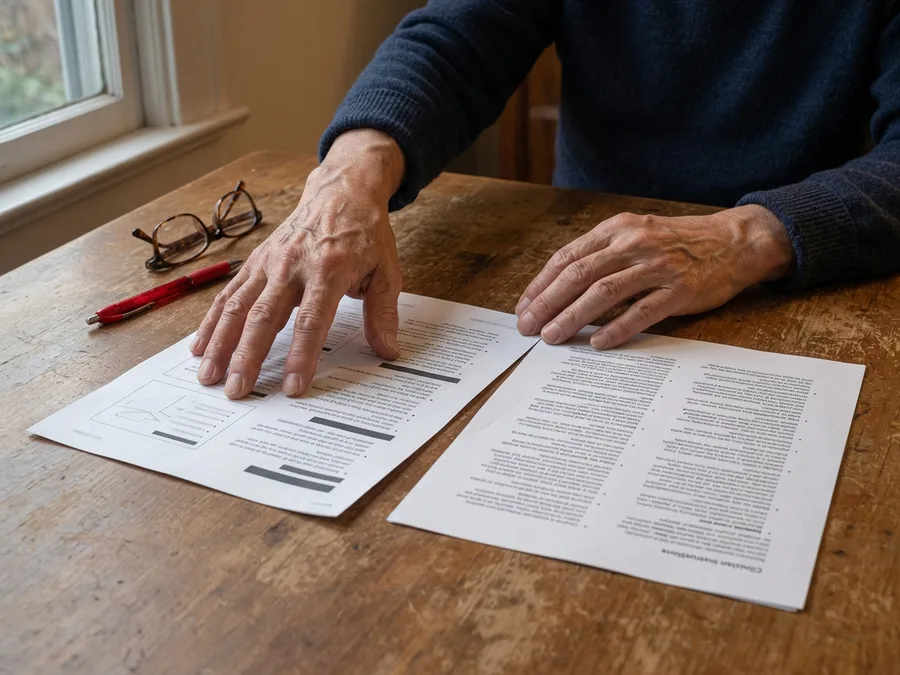
Reading clinical language closely enough to correct it is the training. The same eye can be sold to the small practices that wrote their patient handouts in a hurry and know the sheets are unreadable.
Family doctors, dentists and chiropractors write their own patient instructions between appointments. What comes out is a handout at a twelfth-grade reading level that half the waiting room cannot follow, and the practice knows it and has no one on staff with the time to fix it.
The job is not writing from scratch. You take the clinician's four pages on wound care or blood-sugar checks and you keep every instruction and every warning intact while dropping the reading level, so a tired 70-year-old can follow it the first time.
Show the before and after side by side on one page and the sale is largely made. The clinic manager can see the meaning was not changed, only the sentence lengths and the jargon.
Example pay runs $40 an hour, or $250 flat for a four-page handout rewrite. Either way, the practices that hire you are small enough that one or two a month is real money and not a full-time job.
Three rewritten samples are the entire portfolio. Three, not thirty. A rewrite of a page you printed off a clinic website, done for free and handed back with the original beside it, is a sample.
Learning costs nothing. Federal health agencies publish plain-language guides and the free style checkers will grade a draft at a click. Six weeks of evenings gets you fluent in the method.
The constraint here is language precision and three samples, not a car. You never leave the chair, and the work suits former teachers, editors, and anyone who has already rewritten a doctor's instructions for a relative at the kitchen table.
It is slow, exacting work. The reward for getting it right is that a practice manager forwards your name to the dentist down the hall.
💡 Tip: Pick one real handout to rewrite as your sample, then email it to three nearby practices with a single line: 'Here is yours, plainer, free.'
From Course to Cash: A Realistic 10 Weeks
5. Remote Patient Intake and Scheduling
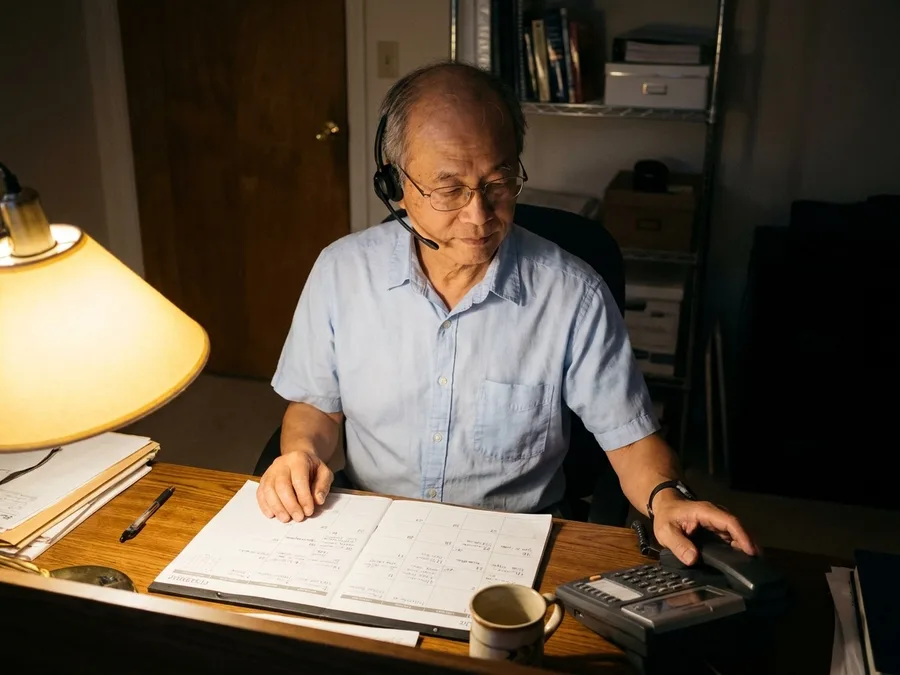
The small practices that pay for plainer patient language need a second, humbler thing: a reliable voice on the phone for ten hours a week. That one is entry-level in the honest sense of the word.
Patients call to book, reschedule, ask about a bill, ask whether the doctor takes their insurance. The front desk is drowning, and the practice will happily hand those calls to someone remote if the details come out right.
Example pay is $22 an hour for 10 to 15 hours a week, and the practice trains you on its own scheduling software. No certificate, no course, no budget line. You learn the software in a week because it is clicking, typing and reading a screen.
What the job actually demands is a private room, a headset and internet that can hold a call without dropping. A quiet spare bedroom qualifies. A kitchen with grandchildren in it does not, and the calls are on a schedule, so you cannot work around the noise.
The ask is accuracy. Spell the name right the first time, take the insurance details correctly once, confirm tomorrow's appointments the day before. Miss those and the practice loses a patient and you lose the hours.
Two local practices will fill a ten-hour week. You are not looking for an employer, you are looking for two managers who each need a dependable person for a few mornings.
Suits anyone who likes phones and keeps a tidy calendar. The constraint is the quiet phone room, not the car. Two practices, and a call log you can show at tax time.
Two Kinds of Skill, Two Kinds of Day
Talk-Based Work
- Phone, video or in-person sessions scheduled ahead
- Paid per package, retainer or visit
- Income grows with repeat clients
- You can be having a bad knee day and still work
- Examples: coaching, check-in calls, intake, hearing coaching
Desk-Based Work
- Quiet room, headphones, no interruptions
- Paid hourly, often through an agency or practice
- Income is steady but capped by hours
- Depends on concentration, not stamina
- Examples: transcription editing, claims follow-up, newsletters, plain-language writing
6. Home Safety Walkthroughs for Aging in Place
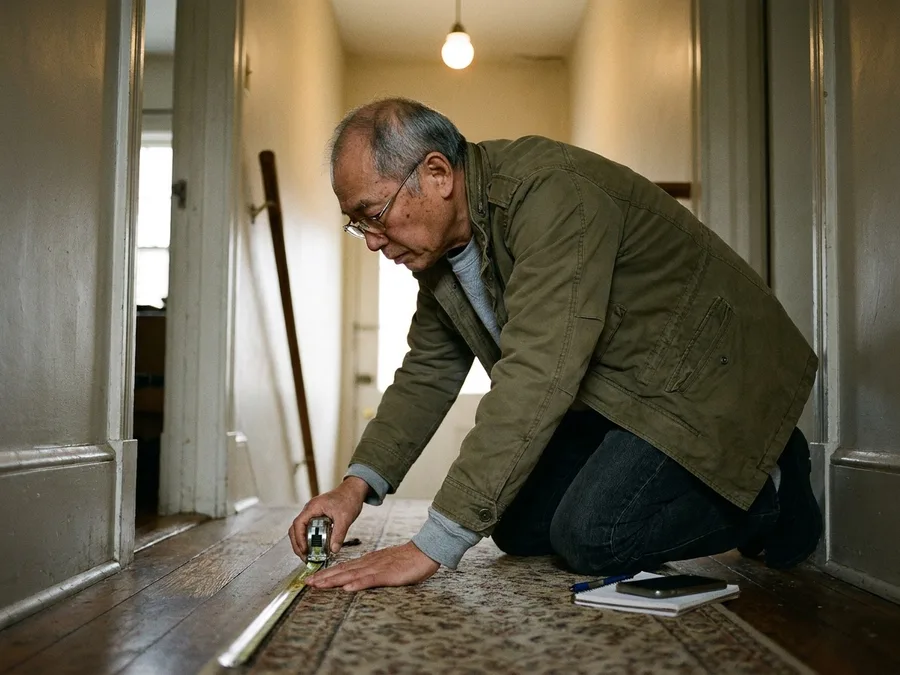
Some of this work happens on a headset in a spare bedroom. This one happens on somebody else's front porch, with a tape measure in your pocket.
A home safety walkthrough is a paid visit, usually ninety minutes, where you walk a house room by room and write down what could put a 70- or 80-year-old on the floor: the rug that slides on bare wood, the hallway bulb that throws 40 watts where it needs 100, the grab bar missing beside a tub everybody in the family has grabbed a towel rack to reach.
The visit itself is the easy part. What sells is the paperwork after: a written checklist delivered within two days, each item photographed and numbered, with the fix suggested in plain terms.
In the example figures, a walkthrough bills out at $150 as a flat fee rather than by the hour, which rewards you for working quickly and keeps the price easy to say out loud over the phone.
The barrier to entry is lower than most people expect. An $80 online course covers the assessment method, free occupational-therapy checklists give you the item list to work from, and a tape measure and a phone camera finish the kit.
You recommend; you never install.
That one sentence keeps this out of contractor territory, since no tools, no ladder work and no liability policy for construction are involved. You write down that the bathroom needs a bar rated for the person's weight, and the family books a handyman.
Suits someone handy with a car.
The fix list has to sound like it came from a person who has crawled under a sink, not from a brochure, and the car matters because you are driving to two or three houses a day across a county.
The physical side is real, though. Ninety minutes on your feet, up and down stairs, crouching to check the clearance under a threshold is more demand on hips and knees than a morning at a laptop, and three visits in a day will tell you by 4 p.m. whether your body wants that schedule.
Start with two free walkthroughs for friends, one of them preferably somebody with a stairway and a poorly lit landing. Before-and-after photographs from those two houses, the dark hallway relit, the loose runner now tacked down, sell the next five paid visits more convincingly than any flyer.
Local senior centers and physical therapists who treat falls are where those referrals come from, and the offices already field the question of who can look at a house and tell a family what to change.
7. Chair Yoga and Balance Classes on Zoom

A living-room walkthrough can fix the house around an older body. Movement taught over video fixes the body itself, and it reaches the people who will never walk into a studio.
Chair yoga classes sell to adults who have decided, quietly and permanently, that floor work is over for them. The teaching happens from a spare room, a laptop propped on a stack of books.
The gate is a 30-hour chair-yoga certificate, about $180 of the $250 course budget, finished online over several weekends. Pricing is simple: $20 for a drop-in, $75 for a monthly pass, $35 an hour for a private session.
Eight paying students, twice a week, works out to roughly $480 a month at those numbers.
The teaching rule is the whole skill: demonstrate every move seated first, so nobody in the class has to get down on the floor or think about getting back up. Once the class trusts that, the camera angle does the rest.
This one suits a person who already keeps a steady practice, however modest, and can frame a camera to show the full body from chair to feet. Notice where the constraint sits. It is not a certificate, a car, or a storefront. It is your own knees, hips and shoulders, on the days you teach.
Zoom Chair Class — At a Glance
📅 First Client
4–6 weeks, from one free session at a senior center
📷 Camera Setup
Laptop on books, full body chair-to-feet in frame
💳 Payment
Stripe, PayPal or Zelle; log every class for the tax preparer
👥 Capacity Ceiling
12 students per class before form cues stop landing
⚠️ Skip If
Unmanaged knee, hip or shoulder pain on teaching days
Why It Sells
Most students arrive after a fall or a surgery and stay because the seated format never asks them to get up.
8. Grocery-Store Label-Reading Tours

Teaching movement sells a weekly habit to people avoiding studios. Reading a label sells an even more familiar routine, the grocery run, as a paid ninety-minute group outing.
Four people, one supermarket aisle, ninety minutes of turning packages over to compare sodium, added sugar and what a serving size actually means. No classroom, no projector, and payment in cash at the end.
The rate is $60 a head for a group of up to four, which lands around $25 to $30 an hour by the clock.
There is nothing to buy. Dietitian handouts and the federal label guide carry the whole curriculum, and no certificate exists for this work anyway.
Two logistics matter more than the teaching. Ask the store manager before a group stands in an aisle; most say yes to a quiet weekday morning. And keep every word on reading labels, never on treating a condition.
It suits someone who cooks and can stay on their feet for two hours, usually more once the questions start. Cardiac-rehab and diabetes-support groups are where the first four customers come from, which means the real binding constraint is comfort running a conversation in public.
Discomfort at the front of a group is the honest disqualifier here. Everything else about the work, a person already has.
⚠️ COMMON MISTAKE
Do Not Teach Disease, Teach Labels
The fastest way to lose a store tour is to start talking about what someone should eat for their condition. Read the panel, compare two products, explain serving size. The clinical conversation belongs to their dietitian.
9. Caregiver Coaching and Family Care Coordination
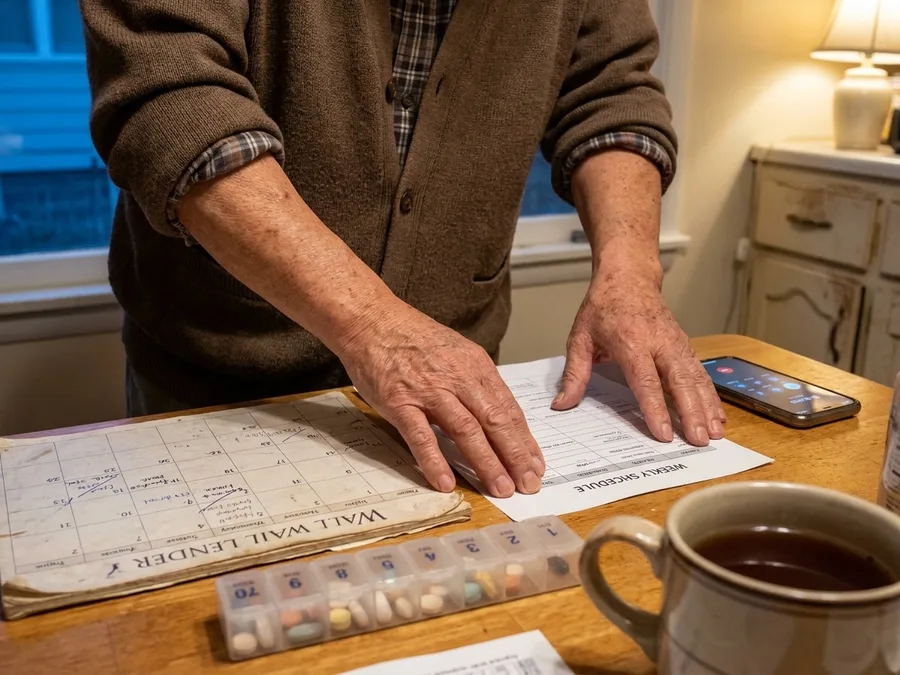
A label tour serves a room full of strangers and ends when the cart does. This one serves a single family, in private, and draws on what you already did at your own kitchen table for eighteen months.
Picture the middle of it: the daughter in Denver on speakerphone, the son in Cleveland insisting he handles the money, and nobody able to say who sits with Mom on Thursday. The person who can settle that has done it before.
The client is an adult child who lives two hours away and feels the pull every time the phone rings. What they want is not advice about their mother. It is a plan they can see.
You sell a calendar the whole family can open, a written schedule for who refills the prescriptions and which pharmacy, and a one-page list that puts a name next to every job that keeps repeating.
Those three pieces are the product. Agreement on paper is what families are buying, not a conversation.
Remote work of this kind runs about $40 an hour, and families usually buy a set of sessions rather than a single call.
Learning the structure is the gate, not the experience. A $150 online course on family care coordination takes roughly four weeks at a few evenings a week, and it gives you a repeatable sequence to follow so the first call does not become a cry on the couch.
Experience alone teaches you what a crisis feels like. A course teaches you the order to ask the questions in.
Sessions stay on logistics and respite. Sleeping arrangements, transport, who covers Saturday, whether a paid aide comes three mornings a week. Any question that lands on a diagnosis, a drug or a treatment goes back to the care team, stated plainly once at the start so nobody has to be corrected later.
This is the first item on the list where the test has nothing to do with a room. No quiet office, no car, no certification to maintain. The room can be your den and the drive is zero.
What it demands is a temperament. Can you sit on a three-way call while two brothers talk over each other about their father's money and not take the side that sounds more reasonable to you?
If the answer is no, this skill will burn you out inside a month, and there is no hourly rate that fixes that.
You need to have run a parent's care yourself, because the credibility in the first call is that you have already found the pharmacy that delivers and the aide who shows up.
It should go without saying that this is care coordination for a family, not medical advice. Keep the line bright and your clients will trust you with the rest.
Two free families from your own congregation or a nearby support group will teach you more in a month than the certificate does all year, and the second one is usually paying.
💡 Tip: Build the calendar template once in a free spreadsheet and reuse it for every family. Most of the work is knowing what to ask, not designing forms.
What a Coaching Practice Actually Rests On
Bottom layers carry the top ones — skip them and the top layer collapses
The example practice: 12–15 hours a week, a few hundred dollars of course spend, and three repeat clients.
10. Daily Check-In Calls for People Living Alone
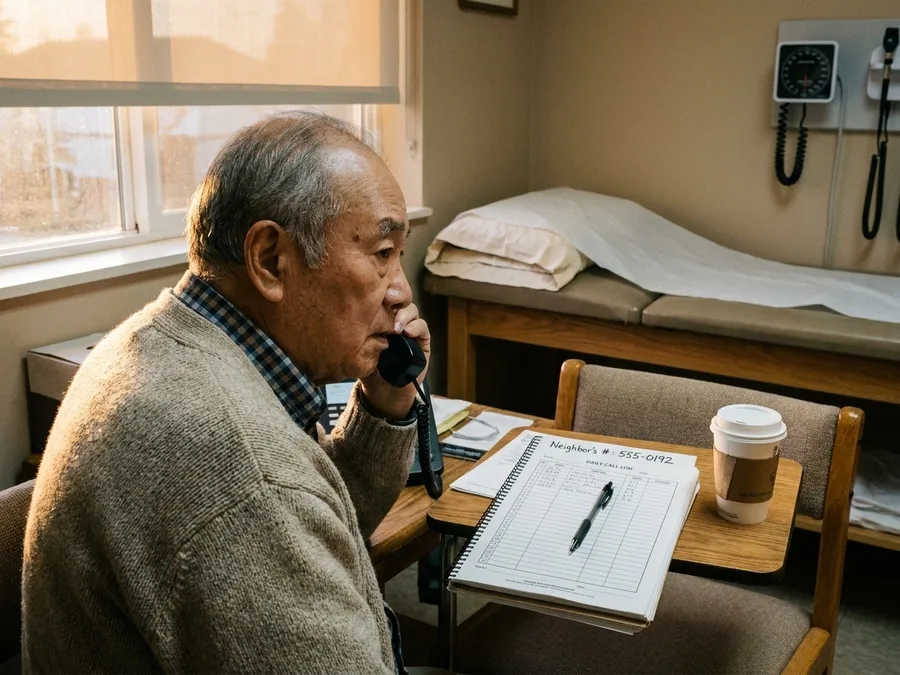
Project work pays once. A standing call pays every month.
Caregiving for a parent arrives as a sprint – a discharge, a move, a crisis week. The steadier version of the same instinct is a subscription: adult children who live two hours away will pay a fixed monthly fee for a familiar voice checking on a parent at the same time each morning. Fifteen minutes on the phone, four times in a row, tells you more about how someone is really doing than a single long visit.
The rate in the example is $45 per household per month for a 15-minute call booked at a set time, say 8:30 every weekday. Twelve households clears about $540 a month – rent-sized money for roughly an hour of talking a week, and the reason to stop at twelve is that thirteen is where you start being late.
The kit is paper. A spiral notebook works: date, time, whether the phone was answered, one line on how the person sounded that day. A neighbor's number goes at the top of every page, so if no one picks up two days running, one call goes to the family and one to the neighbor. No medical advice, ever – symptom questions go straight to the clinic, and that rule is what keeps the arrangement safe for both of you.
What you actually sell is that you are already up with coffee at 6:30 and unlikely to forget.
There is no certificate and nothing to buy; the library's free phone tutorials cover anything you don't already know. The cost is reliability. Same time, same voice, and a call to the family the moment something feels off – that is the whole product, and one missed week starts the cancellations.
Early risers do well here, as do people who can listen without filling every pause. One senior-center notice board at the example typically produces four of the first twelve households, since adult children read it on visits and call the number on the card.
11. Claims Follow-Up for Small Medical Practices

Your phone desk is already set up. Make it earn for stubbornness instead of charm.
Some claims sit unpaid for months because the front desk at a small practice is answering three lines and checking in patients at the same time, and nobody has two quiet hours to work through denials. That stack is the job, and it is done entirely from a chair at home.
The example rate is $28 an hour remote. Learning runs about $90 for a course on how the payer portals work, plus the free tutorial each insurer publishes – every one of those sites teaches its own screens, and they differ more than you would expect. At twelve hours a week that is roughly $340, which is not headline money but arrives without a commute, a uniform or a client who needs entertaining.
Monday morning the practice sends a fresh list of unpaid and denied claims. You build a working sheet: which ones were simply never resubmitted, which were turned down for a missing modifier or a wrong date of service, and what each one needs before it goes back in. Tuesday and Wednesday go to the phone – steady, unhurried calls where you write down the reference number, the name of the person you spoke to, and the date.
Friday afternoon, one page goes the practice manager's way: the list, what was fixed, what is still with the insurer, and what is waiting on the physician. That page is the whole business. It turns invisible hold time into something the doctor can hold and judge, so when the quarterly budget gets tight your hours survive.
This suits someone who finds a tidy ledger satisfying and can stay civil through a fourth transfer. Anyone who needs work that feels emotionally warm should keep moving down the list – the constraint here is patience for hold music, and it is not negotiable.
12. Dementia-Friendly Activity Kits Sold Online

You can run this business from one table, one printer and a shelf that nobody else uses.
The same discipline that keeps a claims list accurate turns out to suit a very different product: a boxed kit of sorting, folding and matching activities that families use with a parent in memory care. A drawer of mismatched socks to pair, a stack of folded washcloths, a set of wooden shapes to sort. Sold at $35 to $60, with $12 to $18 of materials inside, twenty kits a month leaves about $500 in profit at the example figures.
You do not have to invent the activities. Nonprofit activity guides hand the ideas out free, and local memory-cafe programs are glad to tell you what residents actually reach for. What you sell is assembly and labelling – the instruction card a tired adult child can read in a minute – plus the packaging that makes it look like a gift instead of a craft project.
The photograph is the product.
Families buy the picture of a mother's hands moving a stack of cloths, not a contents list – so each kit gets photographed in use, hands and all, before it goes into the listing. That single image does more selling than three paragraphs of description, and the phone camera will do it.
A spare table, a printer and a shelf that can stay covered and half-finished between sessions are the physical requirement. The first ten kits go to two local care homes at cost in exchange for honest feedback – what got ignored, what wore out, what needed a bigger card – and that becomes the second version of the product.
The binding constraint is work space. Unlike the phone and screen work, this one will take the spare room, and anyone who cannot leave a project out overnight should pick a different row.
💡 Tip: Label every bag with the activity name and a one-line instruction at 18-point type. Care staff pick up the box in a hurry and labels do the training.
13. Hearing-Loss Communication Coaching for Couples

Some skills turn a pair of hands into a product. This one turns a problem you already live with into a service for two people at once, and it is a skill hardly anyone markets.
The gap it fills is the table, not the ear. A hearing aid can be fitted and working and the couple still eats dinner in near silence because they haven't changed how they sit, which lamp is on, or whose face is visible when someone talks. Coaching is the missing follow-through on all of that.
Put a number on it: about $30 an hour, whether you drive to the house or run it on video. Couples usually buy it bundled — three sessions for around $85 — because one session does not change a habit built over decades. Most people come into a room with old communication problems of their own, and it takes a few sittings to build something new.
14. Monthly Wellness Newsletters for Local Clinics

Sessions are paid per visit, per walkthrough, per call. A retainer is different: the money lands whether the week was good or bad, and that is what the last skill on this list offers. Instead of selling thirty-minute phone calls, you sell writing.
The product is a two-page email that goes out once a month to the patients of a small practice — a chiropractor, a dentist, a senior center. It is a standing arrangement, not a one-off document. $300 a month per client, priced in the example at about $25 an hour for roughly 12 hours of work per month.
Your costs are close to zero. The free version of a design tool and a free email platform cover the whole job at this size, and you can learn both from free video tutorials in a weekend. If you already write cleanly, you have the skill already.
One thing you never do is invent medical content. The clinic picks the topics and approves the copy, so you are laying out and lightly editing what the clinician already wants to say — you are a writer, not a source of medical claims.
💡 Tip: Deliver on the same date every month, even if the copy is only eight-tenths perfect. Retainers are lost to missed dates far more often than to dull writing.
Frequently Asked Questions
Do I need a certificate to earn money from any of these?
Only condition coaching, chair yoga, transcription editing and a few of the home-visit skills list a course. Portal setup, scheduling, check-in calls, label tours, newsletters and dementia kits can all start with free learning. Where a certificate exists, expect to spend between $80 and $200.
How long before the first paying client actually appears?
Typically 4 to 10 weeks from the week you start learning, and it usually comes from a free session at a senior center or from someone you already know. If twelve weeks pass with nothing, the fix is usually the offer, not the market — sell a package instead of an hourly rate.
Is this taxable income?
Yes. Payments arrive by Stripe, PayPal or Zelle and every one should be logged with date, client and amount for your tax preparer. Course and supply receipts get kept in the same folder. If the amounts grow past a few hundred dollars a month, ask a tax preparer about quarterly filing.
Can I do several of these at once?
You can, but the arithmetic favors depth. Three repeat clients in one skill is $500 to $1,300 a month with one marketing effort. Three half-built practices is three marketing efforts and no referrals. Pick one, run it for a full quarter, then consider a second.
What if I do not have a car or a quiet room?
Then rule out the home visits and the transcription at the start rather than discovering it later. Desk work (writing, newsletters, claims follow-up) needs a quiet room but no car. Phone work (intake, check-in calls, coaching) needs a quiet line but no car. Choose from what you already have.
How do I get the first three clients without advertising?
One free class or two free sessions at a senior center, a one-page site, and a printed card at the library and the pharmacy. Add one line to three local practices. That combination produces the first clients in almost every case, and it costs less than $40.
Pick by the Constraint, Not by the Rate
Choose one, not fourteen. The constraint is the deciding fact: a quiet room for transcription editing, a car for home visits, a body that can demo the movement, a tolerance for hold music when the claims line rings — the same test that separates part-time jobs worth a look from the rest. Whichever of those your life already handles, that is your row. Three repeat clients in one skill beats signing up for three, and the other certificates can wait until the first has paid for itself twice.
Then do the single first action for that skill inside two weeks: the free course or free tutorial, plus two free practice clients in the same fortnight.
The Ohio example is the whole picture in one line: 66 years old, retired 18 months, 12 to 15 hours a week at a laptop, $250 for courses, reliable internet and a car, and a first paying client 4 to 10 weeks out. That is the constraint standing in as the business plan, and the skill that survives a bad week is the one to start.
Now go back to the paused video and the notebook with its three numbers. Add the fourth, the free practice client, and press play.
Name your constraint, then name the skill
Look at the decision table above and pick the one row that matches your house, your car and your patience. Then block two evenings this week for that course — not next month.