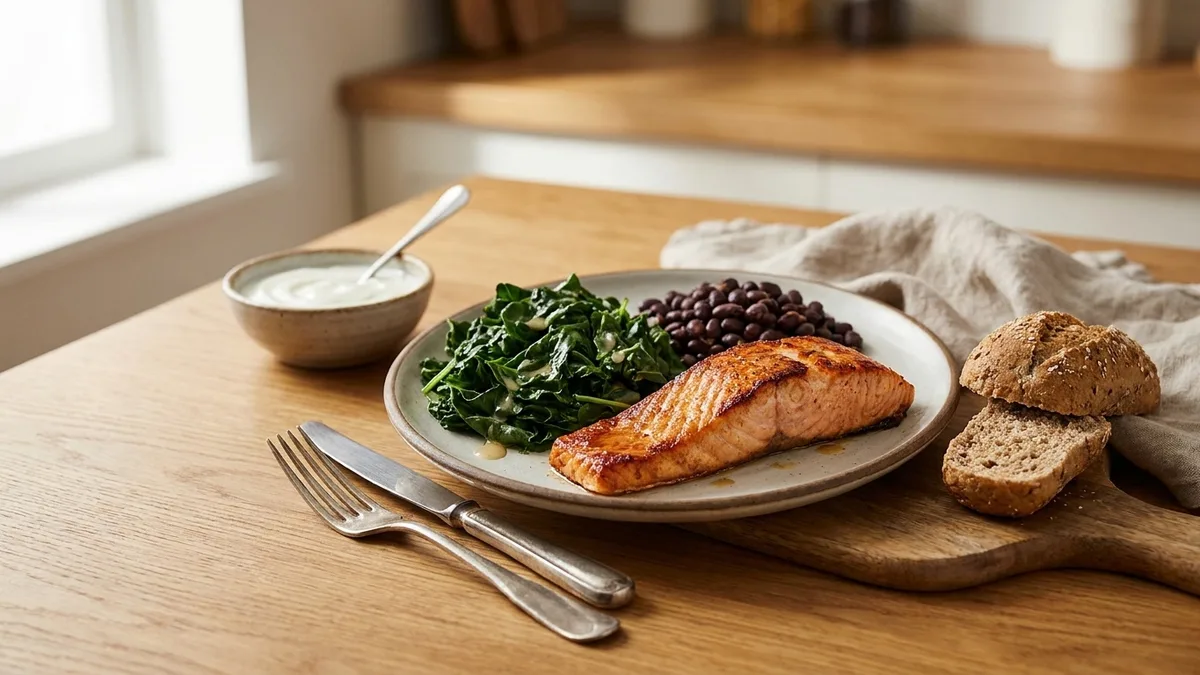
The sugar in your cart is mostly in the drinks and the starch, not in the dessert you already feel guilty about. That is the part most people over 50 do not expect, and it matters because the everyday items are the ones that set the baseline your blood sugar lives at.
This is written for the person standing in aisle four after a checkup that put blood sugar in the watch-this range, or with a parent who has type 2 diabetes and a clear view of the road ahead. What is wanted is a straight list, not a lecture. The useful line is not good food versus bad food; it is which everyday item carries a big sugar, carb or sodium number with little fiber, protein or fat to slow it down, and what goes in the cart in its place without wrecking the meal. Fifteen items follow, each with its number and its replacement.
The point is simple. Know the fifteen, know the swap for each, and the next shop is decided before you walk in. Treats still fit. No single food guarantees anything on its own.
Quick Tips Before You Start
Read the panel, not the box
Front-of-package claims are advertising; the sugar and fiber grams per serving are the only numbers that count.
Fix drinks first
Liquid sugar hits with no fiber or protein to slow it, so the beverage aisle earns your first hour.
Measure a real cup once
Most bowls hold two servings of cereal, so scoop your usual portion into a measuring cup one morning and see it.
Swap, do not ban
Every item on this list has a replacement that does the same job. Bring the replacement home the same trip.
Compare two brands
Pick up the regular and the plain version of the same product and read the sugar grams side by side in the aisle.
Change one aisle a week
Fifteen swaps at once never sticks. Take the beverage aisle this week, breakfast next week, snacks the week after.
1. Sugar-Sweetened Soda and Fountain Drinks

Start here because nothing else on the shelf is easier to fix. A single 20-oz bottle of regular cola carries 65 grams of sugar, and that sugar arrives with nothing to slow it down: no fiber, no protein, no fat. It is not a treat that fills you up. It is a drink you finish in four minutes and forget.
Put the can beside the bottle. A 12-oz can of regular cola holds 39 grams, roughly ten teaspoons, and the 20-oz bottle holds 65. A fountain cup is the same solution in a bigger container, and the cup that comes with a combo meal runs past 20 ounces without anyone asking how many servings that is.
That matters more at 55 than it did at 35, because the same sugar load lands on a body whose insulin response is already slower than it used to be. The drink gives you the hit and none of the slowing – which is why it is the highest-yield item to drop from the weekly cart.
The swap is not deprivation. Keep seltzer or sparkling water in the fridge, cold, in a pitcher, with lemon or lime slices floating in it, and pour it over ice in the same glass you used for soda. A splash of juice in plain seltzer covers the people who need some sweetness in the glass.
Then there is the drive home. One can at a cookout is not the routine that earns the swap; the 20-oz bottle bought on autopilot at the same station every afternoon is. That is the one worth breaking this week, and the only one.
For anyone already carrying a blood sugar diagnosis, or on medication that affects it, the numbers you work from are the ones your own doctor reads off your chart, not the ones on this page.
💡 Tip: Buy seltzer in cans, not a 2-liter. A can gives you a stopping point; the bottle in the fridge door does not.
| Cut back on | What it carries | Reach for instead |
|---|---|---|
| Regular soda, 12 oz can | 39 g sugar (about 10 tsp) | Seltzer with lemon |
| Regular soda, 20 oz bottle | 65 g sugar | Cold sparkling water in a pitcher |
| 100% orange juice, 8 oz | 26 g sugar, under 1 g fiber | A whole orange (15 g sugar, 3 g fiber) |
| Sweetened flakes or flavored instant oatmeal, 1 cup | 12–16 g sugar | Plain rolled oats with cinnamon and berries |
| Flavored latte with syrup, 16 oz | About 35 g sugar | Latte with cinnamon, or cold brew and milk |
| White bread, 1 slice | About 13 g carbs, under 1 g fiber | 100% whole-wheat (about 2 g fiber) |
| White rice, 1 cup cooked | About 45 g carbs, 1 g fiber | Brown rice or half rice, half cauliflower |
| Deli ham or turkey, 2 oz | 600–900 mg sodium | Home-roasted chicken, tuna, or eggs |
| Frozen dinner, typical | 700–900 mg sodium | Rotisserie chicken plus frozen vegetables |
| Fruit-on-the-bottom yogurt, 6 oz | 20–25 g sugar | Plain yogurt with fresh berries (about 8 g) |
| Granola bar, 1.5 oz | 12 g sugar | Nuts, or cheese with an apple |
| Large bakery muffin | 400–500 calories, 35–45 g sugar | Egg on whole-grain toast |
| Large fries | About 490 calories | Side salad or fruit |
| Sweet tea or lemonade, 20 oz | 50–60 g sugar | Unsweetened brewed iced tea |
| Barbecue sauce, 1 tbsp | 12 g sugar | Mustard, hot sauce, vinegar, or salsa |
| Potato chips, 1 oz | 15 g carbs, 1 g fiber | Nuts, olives, or hummus with vegetables |
2. 100% Fruit Juice Poured by the Glass

Orange juice is liquid sugar too. The pulp, the fiber and the chewing in whole fruit are exactly what get stripped out, leaving a drink that hits the bloodstream about as fast as a soft drink.
The numbers sit side by side without much argument. Eight ounces of 100% orange juice carries 26 grams of sugar and under a gram of fiber. A whole orange carries 15 grams of sugar and 3 grams of fiber, plus the few minutes it takes to peel and eat it.
That fiber and chewing change the picture. Whole fruit arrives with a slower package, so the sugar comes in gradually rather than all at once. This is why the cart move is whole fruit, not cutting fruit out entirely.
If juice stays in the morning, shrink it. Pour 4 ounces into a small glass and cut it half-and-half with water or seltzer, and keep the whole orange on the counter for the days you want to chew breakfast.
The keepable version is a small glass with breakfast, not a tumbler of juice sipped all morning at the desk. The ritual survives; the volume goes.
🛒 Your First Month, Aisle by Aisle
Week 1 — Beverages
Clear soda, juice, sweet tea and lemonade from the fridge and restock seltzer, whole fruit and unsweetened tea.
Week 2 — Breakfast
Swap sweetened cereal, flavored oatmeal and bakery muffins for plain oats, plain bran and eggs.
Week 3 — Plate and lunchbox
Change the bread to 100% whole wheat, the rice to brown or half-cauliflower, and the deli meat to home-roasted chicken.
Week 4 — Snacks and sauces
Replace chips, crackers and granola bars with nuts, cheese and hummus, and move barbecue sauce and ketchup out of daily reach.
3. Sweetened Cereal and Flavored Instant Oatmeal

The bowl of sweetened flakes with the heart-healthy banner on the front can put 12 to 16 grams of sugar into your morning before you have eaten anything else. The same is true of flavored instant oatmeal, which hides its sugar under the word apple or cinnamon on the packet.
Front-of-box claims are advertising, not nutrition. The number that counts is on the side panel, and the honest comparison is two columns: grams of sugar per serving set against grams of fiber per serving. A cereal with 12 grams of sugar and 1 gram of fiber is a different food from one with 5 grams of sugar and 6 grams of fiber, even if both boxes say whole grain.
Plainer grains stay on the shelf. Plain rolled oats with cinnamon and berries, or plain bran flakes with milk and nuts, give you a bowl that still tastes like breakfast without the early sugar hit. The fiber in the oats and bran is the part that slows the carbohydrate down.
One last check: measure a real cup once. A wide cereal bowl usually holds closer to two cups, which quietly doubles whatever sugar number is on the label.
💡 Tip: Flavored instant oatmeal packets are the sneaky one — the plain packet beside it on the same shelf has a fraction of the sugar.
4. Flavored Lattes and Coffee-Shop Syrup Drinks

The drink you treat as a small afternoon pleasure is often the second sugar delivery of the day. A 16-oz flavored latte with syrup carries about 35 g sugar and 250 calories. Black coffee or coffee with a splash of milk carries none.
The espresso is not the problem. The syrup is.
That matters after 50 because liquid sugar arrives with nothing to slow it down. No fiber, no protein, no fat to speak of – the syrup moves through faster than a piece of fruit ever would, and your body handles a fast sugar load less gracefully than it did at 35.
The lever is the pump count, and it is entirely in your hands. Ask for half the syrup and the drink still arrives warm and sweet and familiar, just with closer to 17 g sugar instead of 35. Ask for none and add a shake of cinnamon on top, and you have kept the ritual and dropped the load.
Watch the extras, because they hide in plain sight. Whipped cream adds roughly 80 calories and a few grams of sugar. A caramel drizzle is another tablespoon of syrup on top. And the drinks labeled 'skinny' often still pour syrup – the calorie number drops while the sugar stays put.
Cart replacement for the home counter: brew a latte at home and dust it with cinnamon, or keep cold brew in the fridge and add a splash of milk. Same 3 p.m. pause, a fraction of the sugar.
What the Daily Drink Costs You
Figures are per typical serving as labeled. Your own daily limit is a conversation for your doctor.
5. White Bread, Bagels and Soft Rolls

The refined-carb-without-fiber problem doesn't stay at the coffee counter. It follows you down the bread aisle, where the slice and the bagel decide how the whole sandwich lands.
A slice of white bread runs about 13 grams of carbohydrate with barely a gram of fiber behind it. Whole-wheat, by comparison, delivers about 2 grams of fiber for the same slice.
That gap is the entire argument. Fiber is what slows the release of starch into your bloodstream; strip it out and the bread behaves like the syrup in a flavored latte, arriving fast with nothing to hold it back.
The fibers you eat, not avoid, are part of joint health and appetite control too, which matters more with each birthday.
a single large deli bagel is roughly four slices of bread eaten in one sitting. That's a whole breakfast's worth of refined starch in something that feels like one item.
So the cart move is 100% whole-wheat or rye, sliced thin, or half a bagel with the soft inside scooped out and the edges kept. Same sandwich, different math.
The label test is simpler than it sounds. Turn the loaf over and read the first ingredient; it should say whole wheat or whole grain, not plain wheat flour.
Choosing the loaf and the roll is how you decide the sandwich before you get to the filling – and it's a swap you make once a week, not once a day, which is what makes it stick.
⚠️ COMMON MISTAKE
The Label Reads Wheat, Not Whole Wheat
Bread labeled simply wheat is usually refined flour with a little bran added back — the fiber count barely moves. Look for 100% whole wheat as the first ingredient, then check that the fiber is at least 2 grams per slice.
6. White Rice and Seasoned Instant Rice Packets

If bread is the sandwich, rice is often the plate. One cup of cooked white rice carries about 45 grams of carbohydrate and just 1 gram of fiber.
Brown rice has the same carbohydrate count but about 3.5 grams of fiber. That fiber difference is the whole story: it slows how fast the starch moves into your system and keeps you fuller for longer.
The swap is small in effort and large in benefit, especially on a dinner plate where rice can be the biggest single carb hit of the day.
Seasoned and rice-mix packets deserve their own warning. They stack sodium and sugar on top of the grain, so the number on the packet panel is the one to check before you buy.
Three cart options work equally well: switch to brown rice, do a half-rice, half-cauliflower blend, or scoop just half a cup of cooked rice and fill the rest of the plate with extra vegetables and a protein.
Portion is half the battle. Half a cup cooked, measured once so you can see it, not a mound that looks like a serving but is closer to two.
💡 Tip: Cook a big batch of brown rice on Sunday, portion it into half-cup containers, and the dinner decision is already made.
7. Deli Meat and Cured Sandwich Meats
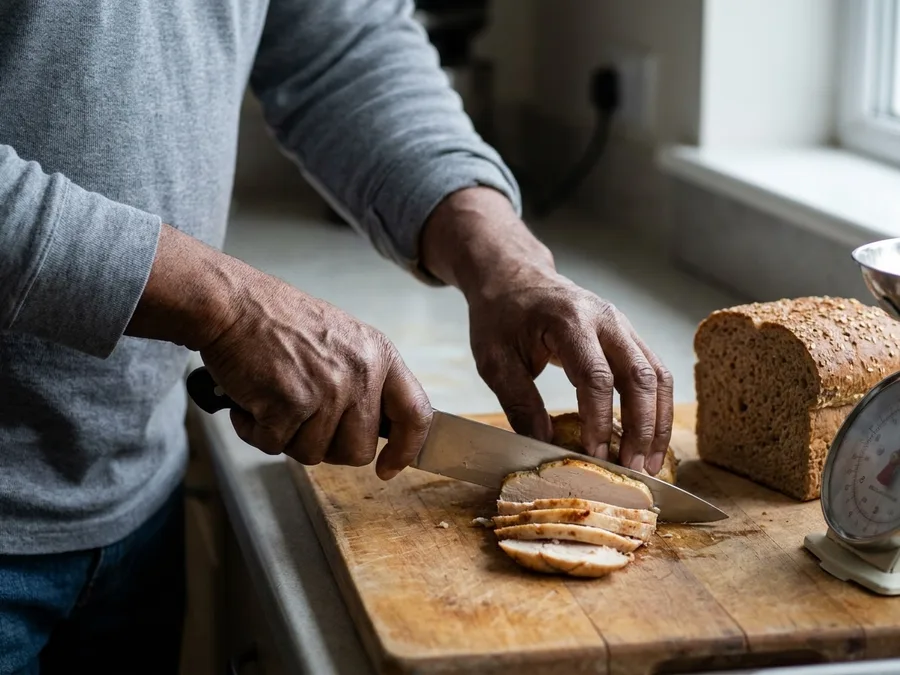
The starch on the plate draws the eye, but the meat laid beside it brings a different kind of load. Deli turkey and ham carry sodium, not sugar, and that is the number worth turning the package over to read.
Two ounces of sliced deli ham or turkey lands somewhere between 600 and 900 mg of sodium. That is a sandwich's worth before the bread, the cheese or the pickle gets counted. Stack the slices thicker and the number climbs.
Salami, bologna and bacon carry saturated fat on top of the salt, and the cured meats sit lower on the list of things to buy often.
For blood sugar specifically, the bread and chips sharing the plate usually move the number more than the meat does. The meat's job is the salt load, and it does that job generously.
The replacement is straightforward: roast a chicken or turkey breast at home and slice it cold for the week, or keep canned tuna, boiled eggs and hummus in the fridge for the sandwich slot. The sandwich survives; the sodium falls.
If the deli counter stays in the routine, pick the lower-sodium brand and weigh out two ounces on the kitchen scale. A piled-high sandwich is three or four ounces before anyone notices, so weighing it once shows the real serving.
Deli Counter — At a Glance
🧂 Sodium
600–900 mg per 2 oz
🥪 Portion
2 oz weighed, not piled
🌭 Worst offenders
Salami, bologna, bacon
🍗 Best swap
Home-roasted chicken or turkey
🐟 Fast alternative
Canned tuna or boiled eggs
What matters more
The bread and chips beside the meat usually affect blood sugar more than the meat itself.
8. Frozen Dinners and Packaged Entrées
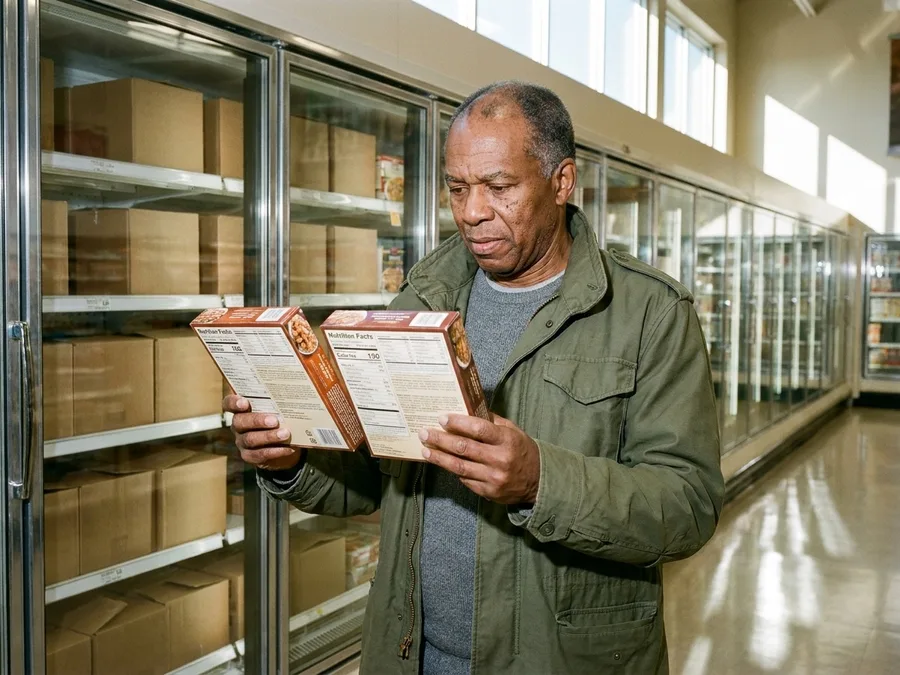
The freezer aisle is where a busy week gets solved in one box, and where sodium meets refined starch without much fiber to slow either down.
A typical frozen dinner carries 700 to 900 mg of sodium, often built on white rice or pasta with a vegetable portion that amounts to a garnish.
The 'light' versions are the trap. They cut the calories, which is what the front of the box advertises, and frequently keep the sodium right where it was. Both numbers on the panel matter; only one of them got smaller.
The alternative takes about the same time. A plate pulled from a rotisserie chicken, a bag of frozen vegetables and a measured half-cup of rice gives you the same ten-minute dinner with the salt under your control instead of the manufacturer's.
If frozen is the only realistic option on a given night, compare two boxes side by side in the aisle. Take the lower-sodium one, and check that a vegetable, not a starch, sits first on the ingredient list.
9. Fruit-on-the-Bottom and Sweetened Yogurt

The packaged-food problem follows the cart into the dairy case, where yogurt is shelved as health food and the flavored tubs carry dessert sugar.
A six-ounce fruit-on-the-bottom yogurt holds 20 to 25 grams of sugar. Plain or plain Greek yogurt in the same case carries about 8 grams of natural milk sugar and nothing added.
That gap of roughly 15 grams is the difference between a snack and a slice of cake, and it comes in a container with a picture of fruit on it.
Yogurt itself earns its place. The protein and calcium are worth having, and plain Greek delivers more protein per spoon than most snacks on the shelf. The flavored tub is what comes off the list.
The swap keeps the ritual: buy plain yogurt and stir in fresh berries or a teaspoon of jam. Same breakfast, same bowl, roughly 12 fewer grams of sugar before nine in the morning.
Line up a flavored tub and a plain tub side by side in the aisle and read the sugar grams on both panels. Once the two numbers sit next to each other, the choice makes itself.
10. Granola Bars and Energy Bars

Walk down the bar aisle and every wrapper says fuel, protein, whole grain. Turn the box over and read the sugar line.
A typical 1.5-oz granola bar carries about 12 g of sugar, and often only a few grams of protein to slow it down. That is a snack doing the job of a cookie while charging you the price of a health food.
The protein number is the one that flips the decision. A bar with 12 g of sugar and 3 g of protein hits your bloodstream much like candy, because there is nothing in the bar to blunt the rise. Look for 10 g of protein or more alongside the sugar grams, and the same size bar behaves very differently after lunch.
💡 Tip: Hold the bar so the protein grams are above the sugar grams. If it does not clear that bar, put it back.
The 3 p.m. Snack: Two Ways
What leaves you hungry at 4
- Granola bar, 12 g sugar, little protein
- Six refined crackers, about 11 g carbs
- Pretzels, 23 g carbs per ounce
- A second coffee with syrup
What actually holds
- Handful of almonds and a string cheese
- Plain Greek yogurt with berries
- Apple slices with peanut butter
- Hummus with cucumber and carrot
11. Bakery Muffins, Doughnuts and Pastries

The bakery case is where a morning decision quietly outranks dessert. A large muffin runs 400 to 500 calories and 35 to 45 g of sugar, which is often more than the doughnut sitting beside it in the same glass case.
Serving reality is the part that gets missed. The muffin in the case is frequently listed as two servings on the label, so the number posted on the card is not the number you eat.
A pastry now and then is not on trial here. The coffee-shop muffin as a standing breakfast is the pattern, because it starts the day with the sugar load of a dessert and no protein behind it to slow the morning down.
The cart replacement is not giving up the morning slot. Split one with someone, or put an egg on whole-grain toast in the same place at the table, and the morning still works.
12. French Fries and Fried Fast Food

The fries get blamed for the whole tray, and fries are only part of the stack. Take one fast-food order: a bun, a large fries and a 20-oz soda are three portions of refined starch arriving together, and the fries alone run about 490 calories with very little fiber to slow any of it.
The good news is that the fix does not require giving up the burger. Change the drink and the side first: water or unsweetened tea instead of the soda, a side salad or fruit instead of the fries, and the burger stays on the tray.
Put the numbers together and the tray stops being a mystery. Soda at 65 g of sugar, fries at roughly 490 mostly-starch calories, and a refined bun on top of it all – swap the drink and the side and you have removed the largest part of the load without touching the thing you came for.
Once a week is not the problem. The drive-thru three nights a week is the routine, and that is the version worth interrupting.
Rewriting One Fast-Food Order
13. Bottled Sweet Tea, Lemonade and Sports Drinks

That tray came with a drink, and the drink is where a lot of people quietly step sideways instead of forward. Sweet tea, lemonade and sports drinks all get bought in good faith by someone who already gave up cola, and the label reads like progress. The numbers say otherwise.
Twenty ounces of bottled sweet tea carries about 50 grams of sugar. The same size lemonade runs around 60. So a lemonade can land more sugar in your hand than the soda you were proud of putting down.
An 8-ounce sports drink is the modest one at about 14 grams, which is fine as a number and easy to overrun when the bottle is 20 ounces and you finish it in the car.
there is no fiber, no protein and no fat alongside any of it, so nothing slows the sugar into the bloodstream, and nothing tells your body it has been fed. You can drink 60 grams and still be hungry an hour later.
The cart replacement does the same job without the load. Brew plain tea and chill it, or keep a pitcher of water with lemon or cucumber in the fridge door. Save a sports drink for long, genuinely hard exercise, not for a warm afternoon.
Read the front of the bottle carefully, too. No high-fructose corn syrup does not mean low sugar, and a bottle sweetened with cane sugar or fruit juice concentrate carries the same grams.
The routine that earns this swap is the one you buy by habit, week after week, from the same shelf.
14. Ketchup, Barbecue Sauce and Teriyaki
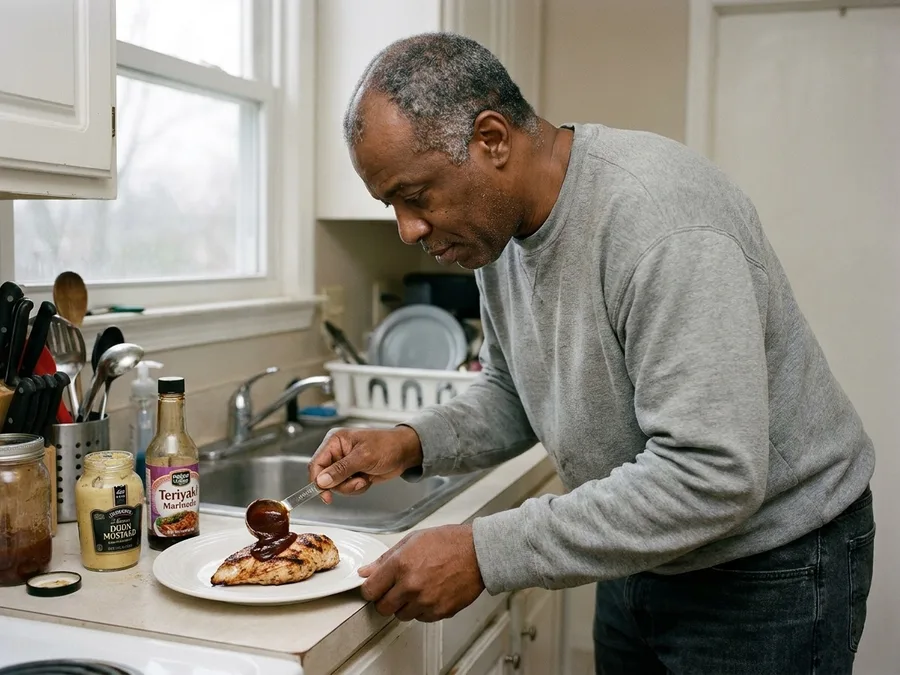
Once the drinks are handled, the sugar that is left tends to arrive by the spoonful, poured over the plate where nobody thinks to count it. Sauces are the quietest sugar in the kitchen, because they are treated as seasoning rather than as food.
A tablespoon of barbecue sauce carries about 12 grams of sugar. Ketchup is roughly 4 grams a tablespoon, and teriyaki runs 3 to 4. Those are small numbers, which is exactly why they go uncounted.
Now do the free-hand math. A generous pour of barbecue sauce over one chicken breast, the kind that comes out to about 3 tablespoons, is around 36 grams of sugar sitting on the meat.
That is close to a can of cola, eaten with a fork, on a plate you thought was a lean dinner. For a reader in the watch-this range, this is the kind of load that never shows up in the meal you would describe to your doctor.
The replacements are already in your fridge. Mustard, hot sauce, vinegar, salsa, or plain yogurt stirred with herbs all season the same food without the sugar behind it.
Then measure once, for real, with an actual tablespoon rather than the pour you have been doing for years. Seeing 1 tablespoon in the spoon recalibrates your hand, and the serving becomes visible instead of assumed.
One more number on those bottles: soy and teriyaki are heavy with sodium as well, so if blood pressure is on your list alongside blood sugar, check both figures on the same panel.
💡 Tip: Brush sauce on at the end of cooking instead of basting throughout — you use a third as much and taste it more.
15. Chips, Pretzels and Refined Crackers

The snack aisle is the last stop, and the surprise there is that salt is not the main event. Refined starch is, and it is the number that matters for blood sugar.
One ounce of potato chips carries about 15 grams of carbs and roughly 1 gram of fiber. The same ounce of pretzels is about 23 grams of carbs, and six refined crackers land around 11.
Treat these as starch portions, not as snacks. A handful of pretzels is doing the work of a slice of bread, minus the fiber that would slow it down, and it is easy to eat three portions while standing at the counter.
Which brings up the bag. The serving is 1 ounce, not the bag, and very few people stop at an ounce with an open bag in their lap.
Pour a portion into a bowl, put the bag back in the cupboard, and sit down with it. That single act does more than any brand swap on the shelf.
The replacements are things you can build a snack around: nuts, cheese, olives, hummus with vegetables, or popcorn measured into a bowl rather than eaten from the bag.
Each of those brings protein or fat or fiber along with the carbohydrate, so the snack holds you until the next meal instead of setting up the next one.
💡 Tip: Buy the smallest bag your store sells. The family-size bag is a portion decision made for you by the package.
Frequently Asked Questions
Do I have to cut all fifteen at once?
No, and trying usually backfires. Start with the drinks — soda, juice and sweet tea carry the largest sugar load with the least fiber to slow it. Take one aisle a week for a month and the fifteen swaps happen without a single dramatic Monday.
Is any amount of these foods actually safe?
An occasional serving is not the problem. The risk sits in the daily routine — the 20-ounce bottle on the drive home, the muffin as breakfast, the chips every evening. Move those to occasional and the load drops substantially.
What if I already have prediabetes or type 2 diabetes?
Then these swaps are more important, not less, but they work alongside your care rather than replacing it. Bring this list to your next appointment and ask which items matter most for your own blood sugar readings and any medications you take.
Will these changes alone keep diabetes away?
No single food on this list guarantees anything on its own, and neither does cutting one. The evidence points to the overall pattern — what you drink, what your plate is built on, and how much you move — so treat the list as a way to change that pattern, not a shield.
How long before my numbers change?
Most people who clean up the liquid sugar see fasting readings shift within four to eight weeks, especially when the soda and juice go. Weight and waistline changes tend to follow more slowly, which is normal and not a sign it is not working.
Three Swaps Do Most of the Work Here
The verdict is plain: if you change only three things from this list, make them the soda, the juice, and the white bread or white rice portion at dinner. Those carry the heaviest sugar and refined-carb load in an ordinary week, and they are the ones that move your numbers first.
One job for this week: open the fridge, pour out the soda and the juice, and restock the door with seltzer and a bowl of whole fruit at eye level. That single action pulls more sugar out of a normal week than any label you could stand there reading.
Your own numbers belong to your own doctor, so ask what your fasting glucose and A1C mean for you, and look at a CDC-recognized National Diabetes Prevention Program for structured support; the American Diabetes Association and the CDC both publish plain-language guidance for your specific readings. Back in aisle four, the next shop starts with the drinks and the dinner starch. One routine swap, repeated, is the daily lever.
Start With the Fridge, Today
Clear the soda and juice out of the door, restock seltzer and whole fruit, and read one nutrition panel before you check out this week.