
Two people hand over their badges on the same Friday night. Same city, same savings, same Social Security check. Eighteen months later one is swimming three mornings a week and eating lunch with people who know her name, and the other has dropped the gym, put off a cleaning, and stopped answering texts.
At the farewell party, everyone toasts the vacation. What almost nobody toasts is the quiet stack the job was carrying: the $185 a month for Part B, the $140 for Medigap, the $38 for Part D, the walking and lifting that came free with the commute, a calendar that filled itself, and a title that answered the question of what you do. Those supplies do not retire when you do.
That is the reality nobody mentions between the cake and the card. Retirement security is not a permanent holiday. It is a deliberate rebuild of coverage, body routine, relationships, purpose, and a health budget that treats all of it as a line item.
Work through the 17 and you can name every unspoken cost and gap before it lands. Then you leave with something better than a toast: a 90-day audit of what the job used to supply, and a six-month review already on the calendar.
Quick Tips Before You Start
Pull the Premium Stack
Write down every monthly health premium before anything else — Part B, Medigap, Part D, dental, hearing.
Date the Reminders
Put the annual physical and dental cleaning on the calendar yourself, in your birthday month.
Schedule Movement
Replace the commute with two 20-minute walks and two strength sessions on a fixed day.
Call Two People
One social lunch and one group activity each week — put both on the calendar like appointments.
Hold $5,000 Back
Keep one bad health year's worth of cash separate from savings so a hospital bill never touches rent.
Coverage and costs hit first

Retirement health costs arrive before the hobbies do. The premium stack keeps billing, the dentist still wants paying, and nobody at the office explains the difference between the hospital benefit and observation status.
Start here because money and coverage decisions made in the last six months of work are the ones you cannot undo cheaply after the cake is cut.
1. Medicare Leaves Dental, Vision, and Hearing Mostly Out

The farewell card promises rest. The dentist's invoice does not.
Original Medicare's covered-services list is narrow on exactly the parts of your body that wear out first: teeth, eyes, and ears. Before you assume a procedure is paid, pull up the What's Covered tool on Medicare.gov and read the plan's Summary of Benefits line by line. If the service isn't on the list, the bill is yours.
The numbers are not small. A routine dental cleaning runs about $180. A pair of hearing aids runs about $2,300. Glasses run about $220. Every one of those sits outside the premium stack you already pay each month, so none of it is folded into the Part B, Medigap, and Part D money that leaves your account automatically.
Medicare Advantage plans sometimes add dental, vision, or hearing benefits, and that is worth a look. The trade-off is a narrower network and an annual maximum that can run out before the work does. Price the plan's real coverage against what a separate dental or hearing policy would cost you, not against the glossy summary.
The mistake that hurts is timing. Physical therapists and benefits counselors see it over and over: people price this after the first bill arrives, when the decision has already been made for them. If a cleaning, a crown, hearing aids, or glasses are on your next-year list, price a separate dental or hearing plan before you retire, not after the cake is cut.
That is the first unspoken reality, and it is only the first layer. The premiums you already pay keep arriving too.
💡 Tip: Ask the dental office for their in-house membership plan price. It often beats a standalone dental policy for someone who only needs two cleanings a year.
2. Your Health Premiums Keep Rising After You Stop Working

The dental, vision, and hearing bills you pay yourself are the irregular layer. Underneath them sits a bill that arrives every single month, whether or not you see a doctor.
For this 66-year-old, that floor is $185 for Part B, $140 for Medigap, and $38 for Part D. Roughly $363 a month, before a single prescription is filled or a single tooth is cleaned.
It does not shrink. The $363 does not fall to $300 in year two, and the retiree who penciled in the first year's number and stopped looking is the one who gets surprised.
Premiums move on their own schedule. Carriers reprice, plans re-tier, and the Part B figure adjusts most years, so the line can climb while the $1,950 Social Security deposit stays flat.
Here is the detail that catches people. A cost-of-living raise shows up as a slightly bigger deposit and feels like a win, but it does not hold the premium still, and a 3% bump in benefits against a 6% bump in premiums is a net loss that nobody announces.
Medigap is where the price varies most, and where timing decides what you pay. What a plan costs depends on the plan letter, your age, your zip code, and in some states your health history, and enrolling outside your window can mean a company refuses you or rates you higher.
That is worth a call before you retire, not after. Confirm the rules for your state at Medicare.gov and with the state insurance office, and write down the answer while you still have an HR department to ask.
One budgeting move makes the annual increase survivable: treat the coming year's premium as already spent. Set aside one extra month of that stack, about $363, so the renewal notice is absorbed rather than argued with.
Then actually read the Medigap renewal notice when it lands. It states the new figure in plain text, and that figure, not last year's, is what the budget has to carry for the next twelve months.
What the $65 Copay and the $1,600 Bill Sit On Top Of
The fixed premiums are the floor; the specialist visit and the hospital stay are billed above it
None of these appear on a monthly statement, which is why they blow the budget the premium alone seemed to fit.
3. One Hospital Stay Can Expose the Gaps

Monthly premiums are the bill you can plan for. A hospital stay is the one you cannot, and it can land as a four-figure number even when Medicare and a supplement are both in place.
Consider a 3-day stay that ends with a $1,600 balance after Medicare and the supplement paid their shares. The retiree who assumed the supplement handled everything is the one staring at that number.
The word that caused it is observation. Being kept overnight for monitoring is outpatient in Medicare's eyes, so the hospital benefit and the supplement may not cover the same share they would for a formal inpatient admission.
Ask for the paperwork. When your status is observation, the hospital is required to hand you a Medicare Outpatient Observation Notice, which puts the status and the billing consequence in writing while you are still in the bed.
A supplement narrows the gap but does not close it. Without one, that same $1,600 bill can run larger, which is the trade you make when you weigh the Medigap premium against this exact risk.
The practical fix is a cash reserve you do not touch for anything else. Setting $5,000 aside in its own account covers a $1,600 hospital bill plus a dental or hearing cost in the same year without dipping into rent money.
Call it the bad-year fund. If a hospitalization, a crown, and a pair of hearing aids all hit in the same twelve months, the fund absorbs them, and the $1,950 Social Security check keeps doing its regular job.
4. Prescription Costs Move More Than Your Income

A hospital bill is a shock you can see coming. A drug bill changes quietly, once a year, in a letter you might set aside.
The retiree in this example pays $185 a month for Part B, $140 for Medigap, and $38 for Part D, which comes to $363 before a single pill. Add $120 a month in prescriptions and the core health number is $483 – the second-largest fixed cost after rent, and the one most likely to move without warning.
Here is the mechanism behind that movement. Every Part D plan publishes a formulary, a ranked list of the drugs it covers, and a tier, the price band a drug sits in. Both get revised each plan year. A drug that filled at a low tier in January can land on a higher tier next January, or come back requiring prior authorization – a note from the prescriber before the plan pays anything.
You did nothing wrong. The list moved under you.
Two calls can lower the $120 without changing the prescription. Ask the prescriber whether a generic exists for any brand on your list. Ask the pharmacist whether a 90-day mail-order refill costs less than three counter visits. Neither call changes the drug; both can change the cost.
Then do the annual review. During open enrollment, pull your current plan on Medicare.gov, confirm this year's dates, and compare the next year's formulary and premium side by side before the window closes. Ten minutes with the drug list in hand beats a year of surprise copays.
💡 Tip: Bring the actual pill bottles to the pharmacy counter. The brand name on your list is not always what the plan prices at the lowest tier.
⚠️ COMMON MISTAKE
Do Not Skip Open Enrollment Because Nothing Changed
Plans change formularies and premiums every January whether or not your health did. Twenty minutes with the next year's plan documents at Medicare.gov is the cheapest insurance review you will do all year.
5. Dental Work Waits Until It Hurts

A drug cost moves and you notice, because the pharmacist tells you at the counter. A toothache moves too, just slower and more expensively.
The example carries a $180 cleaning and a $1,100 crown, and dental sits outside original Medicare almost entirely. That is the trap: the retiree who postpones the $180 cleaning usually meets the $1,100 crown later at the emergency stage, when the tooth has already decided the schedule – and sometimes the root canal or extraction that follows it.
Can you afford to keep up with dental care? Usually yes, if you plan the small bill. The crown you did not plan for is the one that hurts.
Ask the dentist's front desk about an in-house payment plan before the work begins – many offices spread a crown over several months at no interest. Dental savings plans are a second option, but read the exclusions before paying the membership fee: most impose a waiting period on major work, so a plan bought the week your tooth aches will not cover the crown.
Then check what you qualify for. Call Social Security or Medicare about Extra Help, the program that lowers drug costs, and ask your city or county health department whether a community dental clinic serves your area. Eligibility is confirmed with those offices directly. It is never guessed.
Your body notices the missing workday
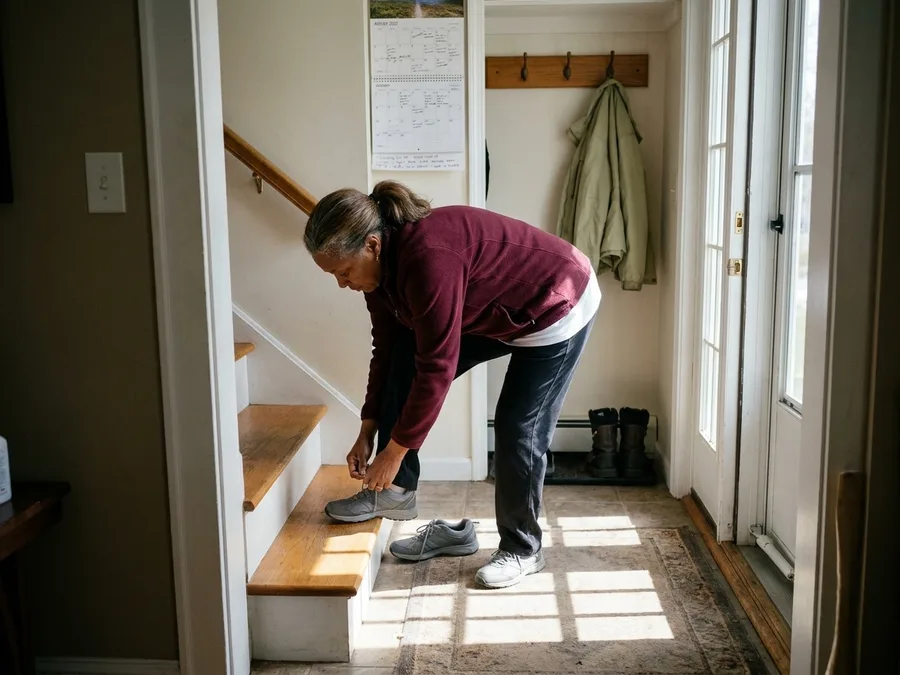
The job supplied movement and structure nobody itemized: the walk to the train, the stairs, the file boxes, the reason to be vertical at 7 a.m. All of it stops in the first two weeks.
What replaces it is whatever you schedule on purpose. This stretch covers the habits that quietly keep muscle, sleep, hearing, and screening on track after the badge stops working.
6. Your Body Noticeably Declines Without a Workday

The coverage gaps are one kind of unpaid benefit the job was quietly supplying. The other is the movement itself. Walk to the platform, carry the file box down the hall, take the stairs because the elevator is slow. None of that was exercise; all of it added up.
It stops in the first weeks.
The commute goes first because there is nowhere to commute to. Then the incidental lifting, the errand walking, the stairs taken on reflex. By the second month the daily step count has quietly halved and nothing on the calendar has replaced it.
Stiffness is the first sign, and it arrives in the morning rather than the afternoon. Standing up from a low chair takes a small push off the arms. That is not damage. It is muscle and connective tissue that stopped receiving a daily load and adapted to the easier week it was handed.
A workable starting plan for the first month: one 20-minute walk and two strength sessions per week. That is the floor, not the goal. Build from there toward three 20-minute walks a week, which is the pattern in the example week (three 20-minute walks, one social lunch, six hours of volunteering) and enough to hold ground while the rest of retirement takes shape.
Bodyweight is fine for the strength sessions at the start: a chair squat, a push-up against the kitchen counter, a step-up on the bottom stair. Two sets of eight to ten, slow on the way down. That is the whole protocol for month one.
The $35/month gym is cheaper than a fall. Use it for the strength equipment when the bodyweight version gets easy, a balance class if one is on the schedule, or the indoor walking track on the days weather keeps the walk inside. The membership is not the workout; it is the place the workout happens.
Strength and balance work matter more than step count alone. Walking is good for the heart and the mood; it does not rebuild the leg strength that catches a stumble on a wet curb or the balance that keeps a hip from meeting the floor. Falls are the health event that turns a good retirement year into a bad one, and the muscle that prevents them is the muscle the workday used to load without anyone thinking about it.
Three walks a week and two strength sessions are the replacement for the movement the job supplied. That is the first body routine, not the final one. It gets adjusted when the first version does not fit, the same way the coverage does.
💡 Tip: Do the balance work near a kitchen counter you can grab. One minute standing on each foot, shoes off, most days.
7. Sleep Gets Worse Before It Gets Better

Take away the 6:15 alarm and two things happen at once: the body moves less, and the clock it ran on disappears. Sleep is often the second thing to wobble, right after the knees and the stairs.
The mechanism is daylight, or the lack of it. The workday used to deliver bright morning light through a windshield or an office window, and that light is what anchors the body clock. Retire, sleep in, spend the morning in a dim kitchen, and the internal clock drifts later, so bedtime slides and the night gets thin.
Worry fills the space the commute used to occupy. Money, the premium stack, a parent's appointments, the strange quiet of a Tuesday, all of it shows up at 3 a.m. when there is no meeting to distract from it.
The first fix is boring and it works: pick one wake time and hold it seven days a week. After a bad night, still get up. Then get outside within an hour of waking, even on a gray day, for ten or fifteen minutes; the earlier bedtime tends to follow on its own within a week or two.
Watch what you drink and when. Caffeine after midday hangs around longer in a 66-year-old body than it did at 40, and alcohol near bedtime fragments the second half of the night. The pour that starts at 5 p.m. is a common reason a retiree is wide awake at 2 a.m., and the drink that felt relaxing is the thing that broke the night.
Give it a month before you judge it. Sleep rarely repairs in a week, and the first stretch of retirement is the worst stretch for it because the routine has not formed yet.
Snoring, gasping, or daytime sleepiness that has you dozing in the chair is a different problem and worth a doctor's look; apnea is common after 60 and treatable. Weeks of poor sleep that do not respond to a fixed wake time deserve the same call. Expect a referral and the $65 specialist copay that comes with it, and treat it as part of the rebuild rather than a failure of it.
🌅 Rebuild the Day in Five Moves
Fix the wake time
Choose one wake time and keep it seven days a week, even after a bad night.
Get morning light
Walk outside within an hour of waking to anchor the body clock.
Add strength twice
Two sessions a week of the gym's weight machines or a resistance band.
Walk 20 minutes
Three walks a week, scheduled on the same days so they become automatic.
Book the checkup
Annual physical and dental cleaning in your birthday month, reminder set two weeks ahead.
8. Hearing Loss Sneaks Up in Quiet Rooms

The quiet room is where it shows first. Not the restaurant with the birthday party, not the noisy family dinner, but the living room, the car, the kitchen table, where someone asks you to say that again and you both laugh it off.
That small moment is the real early clue, and it costs nothing to notice. The other one is the television volume creeping up past what everyone else in the room wants, or the phone call where you catch yourself leaning in.
The visible cost comes later: about $2,300 per pair for hearing aids, and original Medicare mostly leaves hearing aids out. The invisible cost arrives sooner. Hearing loss pulls a person out of conversation, and then out of the lunch group, and then out of the activities that kept the calendar full. From the outside it looks like a preference for staying home. It is not.
Testing is cheap and fast. A hearing test runs from nothing to about $250 depending on where you go; start with primary care or call an audiologist directly and ask for a baseline test. Ask for a copy of the audiogram, because you will want it at the next appointment and the one after that.
Before the last shift, check what your current plan or a Medicare Advantage plan adds toward hearing aids, and compare the annual maximum against the price of a pair. The coverage question is easier to answer while you still have an HR benefits office to call.
Look at the room you are sitting in tonight. If the television is louder than it used to be, that is your baseline test talking.
The Workday Supplied It — Retirement Makes You Buy It
Came free with the job
- Walking to the train and between floors
- The 6 a.m. alarm and a fixed bedtime
- Break-room contact five days a week
- A title that answered 'what do you do'
- Someone else scheduling the annual physical
Now a line in the plan
- Three 20-minute walks and two strength sessions
- A chosen wake time and morning daylight
- One social lunch plus one group activity a week
- Six volunteer hours a week, on the calendar
- Birthday-month physical and dental cleaning
9. Alcohol Becomes a Daily Habit Without Anyone Noticing

A quiet house does something to a drink that a noisy bar never did. At the bar, the glass emptied between conversations and the commute home closed the evening; at home, the glass gets refilled in a kitchen that has no one watching, sitting on a counter, no one counting. The same glass of wine that marked the end of a bad workday becomes, in retirement, the way the whole day gets a clock: it is 5 p.m. whether anyone is coming over or not.
What makes it hard to notice is that there is no longer any social ceiling. One glass becomes two on a Tuesday because no one has to be anywhere tomorrow morning, and the second pour is always a little more generous than the first, since there is no bartender to measure it. Standard drink sizes are not what pours into a kitchen glass – a US serving is 5 ounces of wine, 12 ounces of beer, 1.5 ounces of spirits – so the person who answers "about seven drinks a week" may be drinking twice that without ever opening a second bottle at dinner.
the 2 a.m. wake-up, the dry mouth, the heart racing at an hour no one is awake to talk about. Blood pressure drifts up as well, and in a body already dealing with the sleep changes that retirement brings, the evening pour can work against the exact things – deep sleep, a steady resting heart rate – the reader is trying to protect. The drink feels like the relaxation; the numbers say otherwise.
Try measuring the pour instead of estimating it. A cheap kitchen scale or a shot glass will show what the nightly glass actually costs, and a few weeks of honest notes will show whether it is a glass with dinner or a habit built around the couch and the clock. No label needed for that first step.
If cutting back feels harder than expected – if the glass is no longer about taste or a meal but about getting through the evening – chances are the first move is a conversation: primary care, a therapist, or the SAMHSA National Helpline at samhsa.gov, which is free and anonymous. The article's care figure applies here too: a $40 therapy copay is a cheap first step compared with a hospital bill. No lecture, no diagnosis – the conversation is the whole first step.
10. Preventive Care Slips When No One Schedules It

Some health habits run on a daily loop – the pour, the bedtime, the wake-up – and they get all the attention because they announce themselves every evening. The annual ones are quieter. The physical, the cleaning, the colonoscopy, the bone scan: none of them call out to you on a Tuesday morning. What called was the employer, and it called through a benefits portal, a reminder email, a wellness incentive, an HR poster by the elevator.
Your job was the calenadar. That is the part nobody puts in the farewell speech.
Retirement removes the prompting, not the need. The first year is the dangerous one precisely because nothing feels wrong yet – you skip the physical in March, the dental cleaning slides into summer, and by the time you notice, you have gone fourteen months without the checks that used to happen on a schedule you never built yourself.
The fix is dull and it works: build one folder and one recurring reminder, and let the calendar do what the benefits portal used to do.
Put the annual physical and the dental cleaning in your birthday month, so the date is anchored to something you will never forget. Keep a single running list of screenings in the same folder, on paper or in your phone's notes app, and set a phone reminder two weeks ahead of each one – two weeks is enough lead time to book, reschedule once, and still get in.
Nobody schedules preventive care after retirement – that is exactly why you have to.
At 65, sit down with a doctor and confirm what is actually due for you: colorectal screening, breast screening if applicable, cervical screening if applicable, a bone density scan if applicable, current vaccinations, and any lung or heart screening that fits your history. Medicare.gov lists the covered preventive services, so you can check the list against your plan before you assume a test is paid for.
The referral is where the small bill hides. That $65 specialist copay is the example cost of being sent onward, and it only applies cleanly if the specialist is in your Medicare or Medicare Advantage network. Ask when you book, not when the statement arrives.
A calendar built in a birthday month will outlast the good intentions that fade by the second spring.
The people and the purpose are health items

Loneliness and lost purpose are not soft topics sitting beside the real medical ones. They change sleep, movement, appetite, and whether health problems get noticed at all.
This stretch covers the relationships the job maintained automatically and the daily reason to get up that a title used to supply.
11. Your Work Friends Disappear Faster Than You Expect

You can schedule every screening and still spend the year alone. The body gets its checks, the calendar stays empty, and the phone stops ringing on a weekday morning – which is the change that catches most new retirees off guard.
Daily work contact was not the friendship. It was the glue under the friendship: the shared break room, the commute, the fifteen-minute complaint about the same deadline. None of it required effort, and all of it kept the connection warm. Take away the building and the contact, and the warmth cools faster than people expect.
The two-month mark is where it usually shows. The first invitations after a farewell party feel like promises; by the second month the automatic see-you-Monday is gone, coworkers are absorbed in the work you no longer share, and the lunches thin out one cancellation at a time.
The friendships that lasted for years still exist. The infrastructure that maintained them does not.
So set a floor and treat it with the same seriousness as a prescription. One social lunch and one group activity every week is the minimum worth aiming for. The typical week already includes the lunch, so the missing piece is the group – a walking club, a church committee, a volunteer shift, a class, anything with a standing time and the same faces.
Those appointments are health appointments. Isolation deepens low mood, and it takes the pressure off movement: fewer reasons to leave the house, fewer walks, fewer errands on foot. It also makes health problems easier to ignore, because there is no one around to notice you have gone quiet.
A standing table for four on a Wednesday does more for your blood pressure than most of the things you will be sold this year.
💡 PRO TIP
Book the Group Activity Before the Lunch
Lunch with one friend ends when the meal does. A recurring group — a volunteer shift, a class, a club — rebuilds the weekly rhythm the office used to supply, and it does it without you organizing it every time.
12. Purpose Is a Health Issue, Not a Luxury

The work friends thin out, and beneath that loss sits a bigger one: the thing that got you out of bed with a reason attached. A job title is only a label. Daily purpose is a scheduled activity – a place to be, people expecting you, a task that is yours to finish. It is the reason the alarm had meaning.
That is why the first unstructured Monday feels less like freedom and more like a small grief.
Six hours a week of volunteering is two three-hour shifts, and that is enough to rebuild the structure a working week used to supply. Put them on the calendar the way you would put a doctor's visit on it. A shift with a start time and a person who counts on you does something a hobby rarely does.
Watch for the drift into something heavier. Withdrawal from activities, a low mood that persists, sleep that shifts, appetite that changes, or a sense of hopelessness lasting more than two weeks – those are not just a phase of adjusting to retirement, and they are worth naming out loud.
Start with primary care for a first screen, since a physical cause can look like a mood. A therapist is the option for ongoing work, and the example's $40 therapist copay makes it concrete rather than abstract. A community group is the low-cost route to structure and company at the same time.
Purpose is not a luxury you earn back after the finances settle. It is part of the health budget, and it goes on the calendar.
13. Caregiving Arrives Before You Feel Ready

Purpose can be rebuilt on purpose – the volunteer shifts, the standing Tuesday lunch, the class you put on the calendar like a doctor's visit. Then a parent's balance goes, and the free time you were filling becomes the time you spend driving.
The typical shape of it is about 8 hours a week. That is two mornings of appointments, a pharmacy run, a wait in a parking garage, layered on top of your own checkups and the structure you were just starting to build. Nobody hands you a schedule; it simply fills.
How the crowding works is quiet. The calendar fills with someone else's specialists – the cardiologist, the physical therapist, the follow-up that got moved twice – and your own annual physical slides to next quarter, then to after the holidays.
Respite care is the lever most people never ask about. At roughly $25 an hour, 8 hours a week of relief runs about $200; even 4 hours a week is $100, and those four hours can be the ones that hold your own medical visits in place.
Put the paperwork ahead of the crisis, not behind it. A health care proxy, a HIPAA release so a doctor will actually talk to you, a durable power of attorney, and an advance directive – the parent's doctor or an attorney can tell you which forms your state requires and in what form.
This is the trade the job never made you name. Retirement was meant to hold your time; caregiving borrows it back without asking, and the rebuild only works if you price the hours before they are all spoken for.
14. Grief and Anxiety Show Up in the Body

Caregiving adds strain and loss to a year that was already asking you to rebuild. What arrives after it often does not look like grief at all – it looks like a back that aches, a stomach that turns before breakfast, a 3 a.m. wake-up with no obvious cause.
The body reports the loss before you name it. Insomnia, digestive upset, and vague aches show up weeks before anyone thinks to say the word grief, and a retiree who was relieved to leave the job can feel absurd admitting to sadness.
Leaving a role, a set of colleagues, and a daily identity is a loss whether you chose it or not. Feeling it is not a failure of gratitude. The two things sit in the same person at the same time, and one does not cancel the other.
Start with primary care when the symptoms are new or physical. A first screen there costs you a copay and an honest conversation, and a physician can rule out the things that mimic anxiety before anyone decides it is emotional.
Ongoing help is the next step, and it is cheaper than most people assume – a therapist copay in the range of $40 makes regular sessions a budget line rather than a luxury. Go when the symptoms persist past a few weeks, when the low mood deepens, or when the loss is clearly the trigger.
The point is not to talk yourself out of what you feel. It is to read the body's report early enough that it stays a signal and does not become the year's defining health problem.
Money, work, and the first year

The last stretch ties the costs and the body back together: what a part-time job is really for, how much of the monthly budget belongs to health, and how to run the first year as a rebuild rather than a long vacation.
This is the part that turns the first sixteen items into dates and names.
15. A Part-Time Job Is Often About Insurance, Not Income

Emotional strain and a health budget that keeps rising push a lot of retirees back toward work. Often the driver is not the paycheck – it is the fear that coverage will not hold without an employer behind it.
Run the numbers before you take the badge. Twenty hours a week at $22 an hour is $440 gross a week before tax, and it comes with no benefits at all. Your coverage still comes through Medicare, which means the job is buying you schedule and contact, not insurance.
The coordination rules are where people get caught. Past 65, Medicare and an employer plan interact differently depending on how large the employer is and how the plan is built, so a job taken for coverage can leave you with a plan that duplicates what you already have or conflicts with it.
Check two places before you accept anything for the insurance: the employer's benefits office, and a Medicare counselor who can tell you in plain terms where you would stand. That call is free and it takes an afternoon.
There is a real upside that has nothing to do with money. Twenty structured hours a week rebuilds a weekly rhythm that retirement removed – a reason to be somewhere, people who notice when you are not.
Take the job for that if it is what you want. Do not take it to solve a coverage problem Medicare may already be solving, and do not sign the schedule before you know which one you are doing.
The Monthly Budget — At a Glance
💵 Social Security
$1,950 a month
🩺 Core health line
$483 a month
🏠 Rent
$1,550 a month
🏋️ Gym
$35 a month
🛟 Health buffer
$195 a month (10%)
What the buffer protects
A $195 monthly set-aside covers the irregular costs — dental, hearing, vision, caregiving — that never appear on a premium statement.
16. Your Retirement Budget Is a Health Budget

Retirement math changes the moment you treat health coverage as a line item rather than a given. If part-time work is really a coverage decision, then the whole monthly budget becomes a health budget, and the health numbers have to sit at the top, not the bottom.
Start with the core stack. In the example that is $185 for Medicare Part B, $140 for Medigap, $38 for Part D, and $120 in prescriptions, which lands at $483 a month. That figure arrives whether or not you travel, take a class, or buy a single hobby supply.
$483 a month is $5,796 a year, before anything goes wrong.
Budget built only on premiums is the trap. Dental, hearing, and vision mostly sit outside original Medicare, and they arrive irregularly: a $180 cleaning, a $1,100 crown, $2,300 for a pair of hearing aids, $220 for glasses. One crown and one pair of glasses in the same year is $1,320 that never showed up in the monthly math.
Then there is the money that competes with the fun line. Food, the $35 monthly gym, and caregiving all draw from the same pot. Driving a parent to appointments 8 hours a week is unpaid time, and buying those hours back at $25 an hour for respite care runs about $200 a week if you use all eight – a week of caregiving that can outrun a short trip.
The practical fix is a buffer, not a crystal ball. Take 10% of your monthly income and ring-fence it for health; on the example's $1,950 Social Security base, that is $195 a month set aside for premiums, dental, hearing, vision, and caregiving surprises.
That $195 does not cover everything, and it is not meant to. It is the cushion that keeps a crown or a hearing aid from landing on a credit card, and it is the number to check against your real premium notices at the end of each year.
17. The First Year Is a Rebuild, Not a Vacation

Once the premium stack and the irregular bills sit in the monthly budget, the question shifts from what health care costs to what to actually do first. The answer is smaller than most people expect: run the first three months as a test, not a signing ceremony.
Nothing about the first version has to be permanent.
Treat those 90 days as a trial of four things at once – the hour you walk, the volunteer shift you accepted, the Medicare plan you enrolled in, and the standing weekly lunch. Keep a plain note of what each one actually felt like: whether the 20-minute walk happened before or after the heat, whether the volunteer shift left you drained for two days, whether the plan's network included your specialist at the $65 copay, whether the lunch held up when someone canceled.
A trial only works if you write down what failed.
A retiree who walks at 2 p.m. in July and quits by August has not failed at walking; the timing failed. Change the time, not the habit. The shift from full-time work to retirement follows its own phases, and knowing the hard one helps you recognize it in the four retirement phases. Same with the plan: if the prescription moved to a higher tier at the first refill, that is information to bring to a counselor, not a verdict on your judgment.
Then put one six-month review on the calendar – a single appointment, not a vague intention. Bring four things to it: the premium and prescription stack written out, the current medication list, the screening calendar you built, and the social calendar with its lunches and volunteer shifts on it. Seeing the health costs and the empty weeks on the same page is what shows which one needs adjusting.
The first phone call is the one that turns all of this from a list of worries into names and dates. Call a Medicare counselor, a benefits advisor through your state's program, or your primary care office and say plainly: I retired this year and I want to check my coverage, my prescriptions, and my screenings. That conversation produces a short list – who to call about the drug tier, when the next appointment is, which plan question needs an answer before open enrollment.
One call, one list, one review date.
And give yourself permission to revise. The early version of retirement – the one built on a vacation feeling, planned around trips and long mornings – can be reworked without admitting anything went wrong. The rebuild holds only if you change the routine, the coverage, and the social contact when the first attempt does not fit. The people who land well are not the ones who planned perfectly; they are the ones who treated the first year as something to adjust.
Frequently Asked Questions
Does Medicare cover dental, vision, or hearing aids?
Original Medicare covers very little of these. Cleanings, crowns, eyeglasses, and hearing aids are mostly out of pocket unless you buy a separate plan or a Medicare Advantage plan that includes them. Check Medicare.gov's What's Covered page and the plan's Summary of Benefits before you book the appointment.
Why did my hospital stay cost $1,600 when I have Medicare and a supplement?
If the stay was billed as observation status rather than inpatient, the hospital benefit and supplement may cover a smaller share. Ask for the Medicare Outpatient Observation Notice, which states the status and billing implication in writing. A supplement reduces the gap — it does not erase it.
How much should I set aside for health in retirement?
Start with the core monthly line — premiums plus prescriptions — then add about 10% of your Social Security base for the irregular costs like dental, hearing, vision, and caregiving. In this example that is $483 a month plus a $195 buffer, held in a separate account.
Is it normal to feel lost and achy after retiring?
Losing a role, colleagues, and a daily routine is a real loss, and grief and anxiety often show up as insomnia, stomach upset, and aches before they show up as sadness. If low mood, sleep change, or hopelessness runs past two weeks, have primary care screen you and ask about a therapist.
Should I go back to work part-time for the health insurance?
After 65, the answer is usually about structure and social contact, not coverage — Medicare is already your coverage. Check with the employer's benefits office and a Medicare counselor before taking a job for insurance, since employer plans coordinate with Medicare differently depending on the employer's size.
Audit What the Job Used to Supply, Then Book One Call
The verdict is plain. Retirement security is not the farewell cake and not the vacation. It is the coverage, the body routine, the social contact, the purpose, and the health budget rebuilt on purpose after the badge stops working, and nobody announces any of that at the party.
So start the 90 days now. Write down every health cost you carry, premiums, prescriptions, dental, hearing, vision, along with every screening you are due, every exercise habit on your week, and every person you see on a schedule. Then book one appointment with a Medicare counselor or benefits advisor, and before you hang up, put a six-month review on the calendar.
Back at the party, the cake is cut once. The premium, the hospital gap, the empty Monday, and the missing lunch group arrive every month. The retiree who leaves with a 90-day audit and a six-month review has already replaced the job's hidden benefits with visible ones, and the two paths that started at the same desk stop looking the same.
Do the Four-Column Audit Tonight
Write the four columns from the list above, then make one call this week to a Medicare counselor or your primary care office and put the six-month review on the calendar.