
Two months of rent. That was the deal, back when the layoff was still fresh and the first of the month felt temporary.
Fourteen months and $12,600 later, the $900 still leaves by automatic transfer on the same date. Nobody re-decided it. It is a bill now, and $10,800 a year is the number to hold in your head.
The suspicion that sent you looking is correct, and it is bigger than the transfers. Postponed dental work, prescriptions stretched to make the month work, a $25,000 emergency fund sitting at $11,000, a $38,000 HELOC balance, a retirement spreadsheet that used to say 65 and now says 68.
Total the last twelve months, put a cap and an end date and a purpose on the next request, and pay the specific bills directly instead of sending cash. That is how the help continues without the plan paying for it.
Quick Tips Before You Start
Pull 12 months of statements
Every transfer, every co-signed payment, every draw. You need the actual total, not the monthly figure you carry in your head.
Write the number down
One number on one sheet of paper. That total is the starting point for every conversation that follows.
Set an end date now
Open-ended help never gets reviewed. A date on the calendar forces the conversation you have been avoiding.
Pay bills directly
Rent to the landlord, childcare to the provider. Cash transfers blur into spending; direct payments stay visible.
The money that leaves every month
Before you look at the big numbers, start with the small ones that leave on a schedule. These are the costs that feel temporary, get set up automatically, and are never re-decided once they become routine.
A one-time rescue is reviewed every time. A monthly bill is not. That is the difference between helping your child through a rough patch and quietly funding a second household out of your retirement account.
1. A one-time rescue becomes a monthly line item

It starts with a call, not a spreadsheet. The layoff landed in March, the rent was due, and two months of it was the obvious answer. Nobody wrote down a second month, or a tenth.
Fourteen months later the same $900 leaves on the same date, $700 of it rent, and the total is $12,600. It has never been voted on again. It simply became the way things are now.
The automatic transfer is the tell. A one-time rescue gets reviewed each time the request comes in; a bill just goes. Somewhere in month three or four the question stopped being whether to help and became only whether the account had the money in it.
Hold the annual number, not the monthly one. $10,800 a year is what this actually costs, and $10,800 a year is what sits on the table next to a $480,000 retirement plan and a date that still says 65.
At 62, a dollar leaving the retirement account now does not just leave; it takes with it every year of growth it would have earned between here and the day the paycheck stops. That is the part the monthly figure hides.
The first payment was a decision. The fourteenth was a habit. That gap, between the rescue and the line item, is where a quiet rescue becomes a permanent cost in the plan.
💡 Tip: Put a calendar reminder for the first of each month that says: 'Review, don't renew.' It forces the decision back into your hands.
⚠️ COMMON MISTAKE
The trap of the automatic transfer
Setting up a recurring transfer feels generous and efficient. But it turns a choice into a bill, and bills don't get questioned. Send money manually each month — even if the amount is the same — so every payment is a decision you make on purpose.
2. Rent help outlasts the lease you signed

A rescue that settles into a monthly habit stops being a rescue and turns into a standing obligation, and the moment a lease gets signed with a parent's name on it, that obligation can outlast the crisis that started it.
Here is how it works in practice. The lease term is 12 months and it rolls over on its own unless someone actively ends it, so nobody ever has to decide to keep helping; the calendar decides for them.
Then the phone rings. It is the landlord's office, not the child, and the message is that the $700 share is late this month. That call is the sound of a contract, not a misunderstanding.
The part most co-signers do not see coming: if the child packs up and moves out in month five, the $700 does not follow them out the door. Your name stays on the paper for the full term, and the landlord can come to you for every remaining month.
Signing on someone's behalf is not a vote of confidence in their character. In the eyes of a lender it makes you a borrower, with the same obligations and none of the keys.
The exit is a date, not a conversation. Set ground rules before they unpack, write the lease-end date on the calendar now, and treat that date as the point where the arrangement gets renegotiated on purpose instead of renewed by default.
For the household in this example, the retirement plan is now carrying a 12-month rental commitment that no amount of talking can cancel. That is the cost the spreadsheet has to hold.
| What you're covering | Monthly cost in this example | What it takes from the retirement plan |
|---|---|---|
| Rent for the 29-year-old | $700 | $8,400 a year against the $480,000 balance |
| Car payment for the 26-year-old | $410 | $4,920 a year; 19 months so far is $7,790 |
| Grandchild childcare | $600 | $7,200 a year hidden inside a grandparent role |
| Prescriptions | $210 | Skipped or stretched doses lead to a bigger medical bill later |
| Gym membership | $145 | The health habit the retirement date was supposed to buy |
| HELOC payment | Varies with balance | Against a $38,000 balance on the house |
3. You finance the car and the repairs
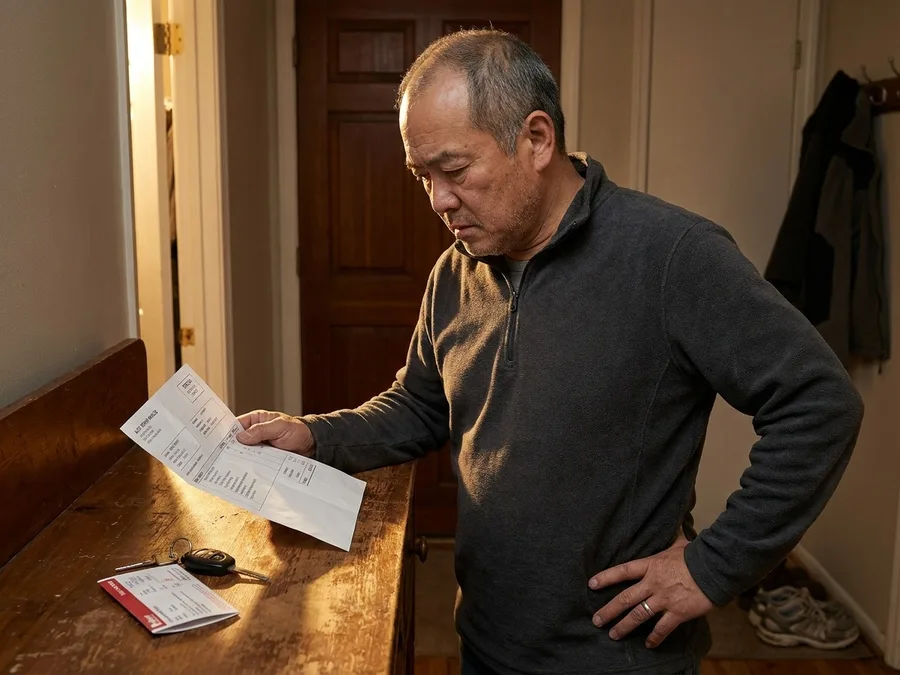
A rental contract is one document that keeps charging you after the emergency ends. A car loan is the next one, and it brings two passengers the lease never had: an insurance policy and a repair shop.
The monthly figure looks manageable. At $410 for 19 months, the total crossed $7,790 against a car now worth roughly $9,000 and still carrying a balance, so very little of that money has bought anything the family owns outright.
The payment, though, is the small end of the bill. The insurance sits in the parent's name, and a $680 repair landed there too, which means the part of the car that shows up on a statement is the least of what the car actually costs.
Two documents decide who really carries the risk, and neither is the loan agreement. The title says who owns the vehicle; the deductible says who pays when a fender bender happens on a Tuesday.
Both need a name on them before the next trip to the shop, and the handover works best as one event: the payment, the insurance and the title change together on a date the reader sets. Until that day arrives, the car is a retirement expense that happens to have tires.
For the plan, the number to hold is not $410. It is $7,790 plus collision risk, and every part of that pushes the same annual outflow higher.
💡 Tip: Call the insurer and ask what it would cost your child to carry the policy alone. Having the number makes the handover conversation concrete.
Ranked by what they drain
4. Grandchild costs become a second family budget

A car payment ends on a date printed on the contract. Two days a week of childcare does not. It renews with the school year, then the summer gap, then the next school year, and at $600 a month it is $7,200 a year running quietly underneath the help you already counted.
The money rarely arrives labeled as help for a 29-year-old. It arrives as a grandchild who needs a coat, a school trip form with a check due Friday, and a childcare invoice in a week the adult child's paycheck does not stretch. Say hello to the $600 a month, then add the extras: the coat, the school fees, the birthday party that costs more than it should. That is the second household budget you are carrying, and it never shows up on the calendar as one.
This is why the line is so hard to draw.
Refusing a request framed around a grandchild feels like withdrawing from the grandchild, not from the adult child's choices, so it does not get refused. It gets absorbed. And a budget line that never meets a no does not stay one-time; it becomes a standing expense nobody decides on again.
The practical move is to stop sending cash and start funding the exact thing. Pay the childcare provider directly, buy the coat, write the check to the school for the trip. The grandchild still gets what they need, the adult child gets a clear picture of what is covered, and you get a receipt with a number on it rather than an open tap.
For the plan, the $600 is $7,200 a year, and it is hiding inside a grandparent role rather than a bailout line, which is exactly why it has never been reviewed. If that figure ran for a decade, the number competing with your retirement savings gets very large. The cap, the date and the named purpose apply here as much as anywhere: two days a week, this provider, through June.
One word of caution: this one involves a relationship, not just a contract. A direct payment for the specific thing protects the child and your plan at the same time; a cash transfer protects neither, because no one can tell which it funded.
The costs that don't look like cash
These are the expenses that never appear as a transfer but still come out of your retirement. They hide in co-signed loans, drawn-down savings, and home equity that was supposed to be your long-term care plan.
They are harder to see, which makes them more dangerous. You cannot cap a cost you have never counted.
5. Co-signing ends with you making the payments

Childcare is a line you can see leave the account every month. A co-signed loan is invisible right up until the lender stops waiting, and then the signature you lent becomes a payment you make.
In this household, a $22,000 personal loan carries the 29-year-old's name first and the parents' name right behind it. Three consecutive months have now come out of the parents' account, and the loan still reads as the child's on paper.
the late marks land on your credit file too, not just theirs.
That matters more at 62 than it would at 32. Your borrowing capacity is what stands between you and a bridge loan if the roof goes, and a fresh schedule of missed payments narrows it while you still need it.
So call the lender this week, before a fourth payment is due, and ask for two things in writing: the exact remaining payoff and the current loan status. Get the balance in a document, not a phone conversation you have to remember.
The goal of that payoff is not to clear the arrears and settle back into the arrangement. It is to get the parents' name off the loan entirely.
Until that happens, treat the debt as a household obligation wearing the child's name on the envelope. The retirement budget covers it either way, and the spreadsheet that says 68 already knows.
💡 Tip: Ask the lender about a release of liability, not just a payoff quote. They are different requests and only one gets your name off the contract.
6. The emergency fund is now the kids' fund

When a co-signed payment comes due and the borrower does not cover it, the money has to come from somewhere. In most households, the next stop is the account set aside for the furnace, the roof and the medical bill that will not wait for a payment plan.
This one opened at $25,000. A $14,000 draw later, it holds $11,000.
That $14,000 went out fast, and it did not come back when the crisis ended.
Picture the February morning the furnace quits and the contractor quotes the replacement on the spot. At $25,000, that was a check. At $11,000, it is a credit-card balance at today's rate, or one more loan added to a stack that already has a co-signature on it.
The pattern is the part worth noticing: the emergency fund absorbs the first shock, and then it is too thin for the actual emergency it was built for.
Set the rule while the balance is still $11,000, because it will be easier to hold to than a rule written after the next withdrawal. This is the one account that does not get tapped for a child's crisis, however urgent the call sounds.
Eleven thousand dollars is not a cushion. It is one dead furnace away from new debt, and the retirement plan has no line for that.
The safety net — At a Glance
🏠 HELOC still owed
$38,000 — interest-only is not a plan
📆 Months of cover left
$11,000 pays roughly 4 months of the $2,855 outflow
💳 First to hit the card
$1,900 crown, then the furnace quote
🐢 Rebuild pace at $400/mo
42 months to get back to $25,000
🚪 When to draw
Only if the furnace, roof or a hospital bill cannot wait 30 days
Why it matters
At $11,000, the next $6,000 shock goes on a card at today's rate and rides into retirement alongside the HELOC.
7. Home equity quietly becomes the family ATM

When the cushion gets thin, the house starts looking like the next wallet.
A HELOC balance of $38,000 does not announce itself as a retirement decision. It arrives as a modest monthly payment folded into the regular bills, which is exactly why it stops feeling like borrowing. The couple in this example drew against their home to keep the family rescue going, and now that payment competes every month with the retirement plan.
The house was always the backstop for the years when work stops. In this plan it was the long-term care fund, the thing you sell or borrow against only if a health crisis demands it. Pledged as collateral for a child's rescue, it stops being a backstop and becomes spendable balance, and spending it feels easier than it should.
Run the draw forward three years instead of backward. At the current pace, the balance is not $38,000 repaid but $38,000 plus more draws plus interest, and the statement will give the exact figure if you sit down with it. That is the number that should sit next to the retirement date.
Then settle the paperwork while everyone is calm: who is on the title, who inherits the house, who is allowed to borrow against it. A surviving spouse who discovers the rules only after a death is a second emergency layered on the first.
Home equity is not spare money lying around. It is the roof overhead and the care fund for the last decade of life, and every draw pushes both a little further out of reach.
8. Early withdrawals cost you twice

Borrowing against the house is a loan against property. Pulling from the retirement account is a loan against time, because the money you remove stops growing the day it leaves.
Take $20,000 out at 62 to cover a year of requests. It is gone from the balance, and it is also gone from every year it would have compounded between now and the age you stop working. You spend the principal and the growth in the same motion.
Taxes and possible penalties may apply on top of that, depending on the account and your age. That is a question for the IRS rules and a tax professional, not for a rate quoted in a magazine.
There is a difference people blur: stopping contributions and withdrawing are not the same act. Pausing what you put in slows the plan down. Taking money out removes principal and its future growth, and the plan does not get that back.
Before any withdrawal, ask one question. What does the plan look like if this happens twice? If the answer is that the spreadsheet says 70 instead of 68, you have your number.
The withdrawal is not a one-time fix. It is a permanent subtraction from the $480,000 and from the date the spreadsheet can hold, and it does not come back when the child gets on their feet.
💡 Tip: Before you withdraw, run the arithmetic on the whole balance. $20,000 removed today may cost more than $20,000 in growth over the next decade.
💡 PRO TIP
The double subtraction
A withdrawal removes the money and the growth that money would have earned. That means a $20,000 withdrawal at 62 doesn't cost you $20,000 — it costs you the future value of that $20,000. Ask a tax professional for the exact figure on your own accounts.
The health bill you pay instead
The rescue shows up in your body before it shows up in the spreadsheet. It looks like a postponed crown, a stretched prescription, a blood-pressure reading that keeps climbing, and a week that disappears into caregiving.
These are the costs that don't get a line on the budget, which is exactly why they are the ones that go unpaid until they become a bigger bill.
9. Your own checkups get postponed first

The money leaving the accounts and the equity shows up on a statement. The health costs of the same help show up first as appointments that never got made.
A $1,900 dental crown has been sitting undone since last spring, and the annual physical was skipped and then never rebooked. Neither felt like a decision. Both were the quietest line items in the budget, and both were the first to go.
Waiting rarely makes care cheaper. A crown that keeps waiting can turn into a root canal or an extraction, and the bill that was $1,900 arrives later at a higher number, with more discomfort in between.
The fix is small and specific. This month, book the crown consult, and before you leave the physical, schedule next year's on the way out the door. Two appointments, made in the same visit, stop the drift.
For the reader, that $1,900 was never saved. It is a bill with a later date and a larger total, and it is the first place the rescue shows up in the body.
The health bill in numbers
What the rescue takes from your body and your budget
10. Prescriptions get stretched to cover the gap

A skipped appointment shows up on a calendar as a blank square. A stretched prescription does not show up anywhere.
The monthly number is $210, and it sits in the same budget the rescue money comes out of. So the fill gets pushed back three days, or a dose gets halved to make the bottle last, and nothing about that decision looks like a decision.
Splitting a tablet is not a savings move. A pharmacist has to confirm which pills are scored for it and which are extended-release and release all at once when broken, and the ones that crumble unevenly give a different dose every day.
The call to make is not to the budget app, it is to the prescriber or the pharmacist. Ask about a lower-cost equivalent, a 90-day fill, a different dosing schedule, a manufacturer assistance program. Every one of those is a real lever a clinician can pull; self-adjusting is not.
This is the cut that hides best. No statement line records it, no receipt, no transfer with a date attached, which is exactly why it survives when everything else has already been trimmed.
And the bill does arrive, just on a delay. A blood pressure that runs high for a few months, a blood sugar creeping up, a condition that was controlled and now is not; the body sends the invoice after the budget does, usually at the urgent-care or ER price.
$210 a month is the cheaper number by a wide margin. The retirement plan gains nothing from the trade either, because a health event at 63 spends the money anyway and takes the working years with it.
💡 Tip: Ask about generic equivalents and 90-day fills. Both can lower the monthly cost without changing what you take.
Where the rescue comes from — and where it should come from
Where it comes from now
- Emergency fund down to $11,000
- $38,000 HELOC balance on the house
- Dental crown postponed since last spring
- Gym membership cancelled
- $6,000 fall trip unbooked
Where it should come from
- A fixed monthly cap you decide in advance
- Direct payments to the landlord or provider
- An end date written on the calendar
- The emergency fund left untouched
- The trip and the gym funded first
11. Stress shows up at your own physical

The body keeps its own ledger, and it is more accurate than the spreadsheet.
The 2 a.m. call that ends with a plan to cover rent, the alarm at 6:15 after five hours of sleep, the blood pressure cuff at the last visit reading higher than it has in years. Ask a primary care doctor what a run of that looks like in a patient in their sixties and the answer is short: sleep, pressure, and the heart.
At the physical, hand over more than the numbers. Say the words out loud, that the worry is about money and an adult child and it wakes you up at night, because a clinician can work with that and cannot work with a systolic reading alone.
The example couple changed one thing first: a 10 p.m. phone cutoff, with everything after it waiting until morning. It took about two weeks for the next-day exhaustion to ease, and it was the cutoff that did it, not a new supplement.
Two concrete signs are worth writing down and taking to the visit: a home blood-pressure reading that keeps climbing, and a stretch of nights under six hours. A week of each on paper is more useful than a vague memory of a bad month.
This is where the rescue surfaces before the money does. The retirement date sliding toward 68 is a spreadsheet event, years out; the pressure reading is already here, and it is the one that gets a say in whether those years are good ones.
12. Caregiving turns into an unpaid second job
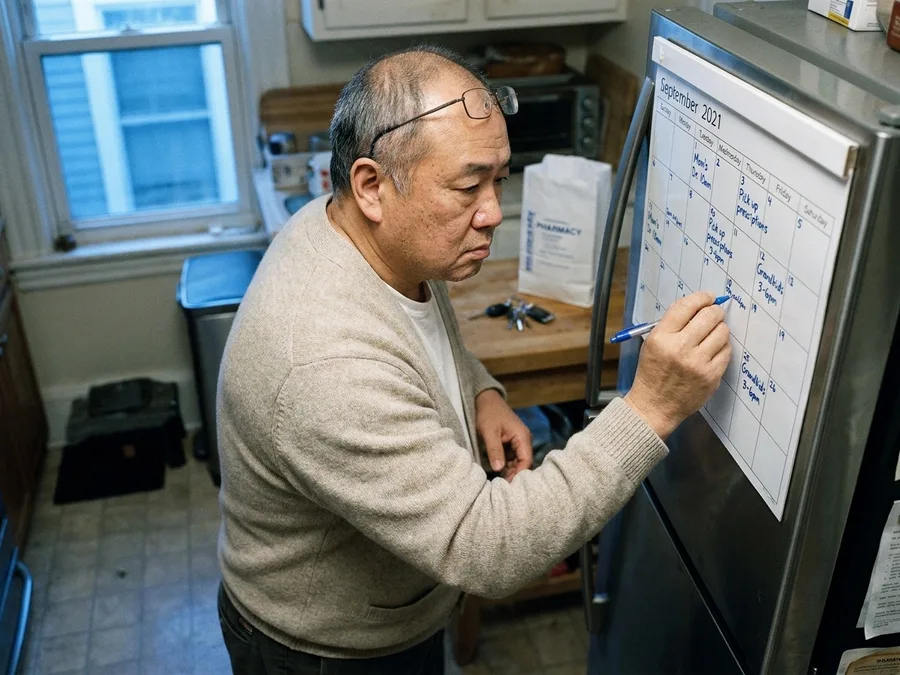
Count the week honestly and a number appears that nobody put on a spreadsheet: roughly 11 hours of driving, childcare days and admin. That is the labor half of the same rescue the money half has been running.
The driving is the part that hides. A Tuesday appointment run is ninety minutes of car time, a pharmacy stop, and the hour spent waiting in a plastic chair with a magazine you have already read.
Then the childcare days, which run from breakfast to nap to the drive home, and the admin that fills the gaps: insurance calls, lease paperwork, the texts that arrive at 9 p.m. asking what to do about a bill.
None of it is paid, and all of it comes out of something. The gym hour goes first, then the early night, then the paid work that could have run an extra billable hour or a Friday shift.
That last one matters more than it sounds, because the income the plan depends on is the first thing these hours reduce.
A routine is harder to break than a one-off, and this one hardened without a decision. The calendar fills a week at a time until every Tuesday belongs to someone else's errand, and by then it looks like a fact of life rather than a choice.
The fix that works is not taking more onto your own plate as penance. Name who else in the family can hold a fixed share, and make it fixed: a sibling takes the Thursday appointment run every week, a cousin owns one childcare day a month, and the schedule is theirs before it is yours.
The point of spreading it is not fairness for its own sake. A load that defaults to the parent never gets renegotiated, because no one else has ever been asked.
Eleven hours is a shift a week, unpaid, added to whatever the paycheck job already takes. The body pays some of it now, in stiffness and short sleep and a lower rung on the treadmill.
The retirement plan pays the rest, in fewer years of paid work behind it and fewer years of energy in front of it. That is the trade sitting behind every open-ended rescue, and it costs more than the transfers ever will.
💡 Tip: Write down every hour you spend on caregiving for one week. The number is usually higher than you expect, and it is the number to bring to the family conversation.
What it does to the plan and the family
By the time the money and the health costs are counted, they have already changed the plan. The retirement date has moved, the travel budget has become the rescue budget, and the survivor's safety net is thinner than it was.
This is the part that is hardest to see in the moment. It only becomes visible when you add it up, and the total is what this next section is for.
13. The retirement date slides back three years
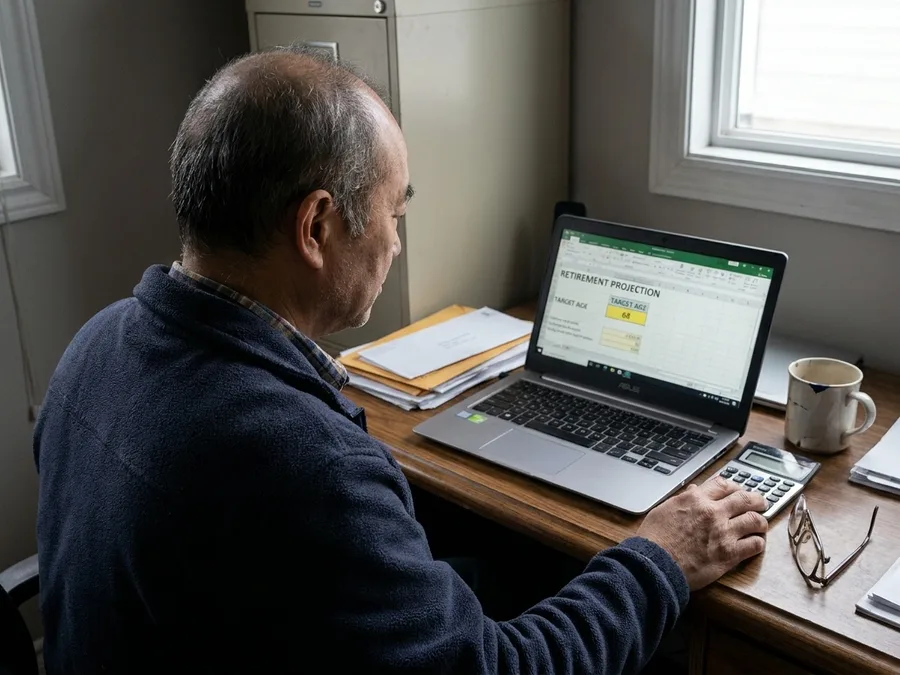
The hours and the money do not meet in a smaller monthly number. They meet in a single cell on the spreadsheet, and that cell holds a date.
For this couple, the cell read 65 for years. It now reads 68. Nothing dramatic happened to change it – no crash, no bad fund, no divorce. A steady outflow of help to two adult children moved the date three years to the right, one transfer and one co-signed payment at a time. Three years is the number to look at, not the $900.
Run the arithmetic the way a planner would. Add up everything that leaves in a month for the kids – rent help, the car payment, the childcare share, the minimum on co-signed debt – then multiply by 12. That annual figure is what actually competes with the retirement plan, and it is what has to be earned back in additional working years. When the outflow crowds the savings rate, the date slides because the money simply isn't there yet.
Three more years of what, exactly.
Three more years of the alarm at 6:15. Three more years of the commute, the standing desk or the warehouse floor, the meetings, the cold mornings scraping the windshield. For a reader at 62, that is not an abstraction; it is the same week repeated 156 more times, and the body is asked for all of them.
Physical work gets weighed against the money and loses on the body's side. Heavy jobs are harder at 65 than at 55, and the extra years are not guaranteed to be healthy ones. A later date also narrows the window the plan was designed around: the travel, the time with grandkids, the health and energy to do any of it. The plan bought years of freedom and paid for them with years at the desk – shifting the finish line shrinks the payout and lengthens the cost in the same move.
This is the part the spreadsheet cannot show. The column that reads 68 hides a second column on the other side of the page: the number of good, mobile, energetic years left to enjoy what was saved. The trade is not a smaller retirement. It is more years at work and fewer years after it, and the years after are the ones the plan existed for.
One honest caveat. The date is not fixed by fate; it moves with the outflow. Cut the transfers, get the co-signed debt off the parents' name, and the cell can start sliding back toward 65. The reader who runs the arithmetic now, before the next request arrives, still has a lever in hand – and a number to put on the table when the conversation comes.
14. The travel budget becomes the rescue budget

A later retirement date is the big number, the one that shows up in red on the spreadsheet. The smaller number is the trip and the gym membership, and those disappear without ever announcing it.
The trip was $6,000, booked for next fall. It is now unbooked. The $145 monthly gym and class membership is cancelled. Neither cut came with a sit-down decision; the money simply had somewhere else to go, and these were the lines soft enough to absorb it. The help was not paid for with a new loan. It was paid for out of the life the retirement plan was supposed to fund.
These cuts feel virtuous in the moment. Cancelling a membership reads as discipline. Unbooking a trip reads as prudence. No one writes down what actually happened, which is that the rescue quietly ate the health and family budget – invisible this year, and more invisible ten years from now.
Discretionary does not mean optional.
The gym membership is the strength training that keeps the knees stable and the balance sharp after 60. The trip is the time with the family while everyone is still able to walk the streets and take the flight. These are not luxuries parked at the edge of the plan; they are the exact things the extra years of work were supposed to purchase. Cut them now and the reader may reach 68 with money for the trip and no knees to walk on it.
The fix is simple to state and hard to do. Name the things you would refuse to give up – the trip, the membership, the class – and fund them first, before the next transfer clears. If the monthly outflow has to be cut, cut it from the help, not from the health and family budget that already runs thin.
For the reader, those lines are not what is left over after the bailout. They are what the retirement date was built to buy, and they are the first thing to protect when the next request arrives.
💡 Tip: Reinstate one thing this month — the gym membership or the trip deposit. A fixed line in the budget is harder to absorb than a leftover one.
15. The survivor's safety net gets thinner

The same help that eats the trip and the gym also thins the cushion the surviving spouse will have to manage alone.
Start with the numbers that follow the household. A $38,000 HELOC is drawn against the house. The emergency fund that once held $25,000 now holds $11,000. Those are not abstract line items; they are the entire safety margin for two people in their sixties, and every dollar of the rescue that leaves the house moves into that margin and takes it down.
Now picture the years when one of them is managing alone. That spouse typically carries the mortgage, the HELOC, the accounts and the adult child's expectations, without the other person to share the decisions. A cushion of $11,000 and a $38,000 balance look very different when there is no second income in the room. If care is ever needed – a fall, a diagnosis, a move to assisted living – the house may have to be sold or the debt refinanced, and the HELOC balance is already a claim against whichever path is chosen.
The paperwork is where this can still be fixed.
Sit down together and write down the practical facts: who is on the title, who knows the passwords and the account numbers, who inherits what, who would be able to borrow against the house. Update the beneficiary forms and the power of attorney while both people are healthy enough to do it – a task that gets put off precisely because it is unpleasant.
For the reader, the rescue is not only a monthly cost. It is a thinner net under the person who will live the longest, and the moment to protect that net is now, before the next request lands on the kitchen table.
16. A capped, dated plan costs less than open-ended help

A thinner survivor cushion is the last item on the ledger and the one that finally forces the question: keep writing checks into a shrinking account, or change how the help itself is structured. The parents who get off this treadmill are not the hard cases who slam the door. They do something quieter, and harder.
They put a number and a date on their generosity before the next text message lands. How much a month, until when, and toward what. That is the whole difference. $250 a month for eight months toward rent is a plan. Another $900, indefinitely, is a leak that feeds on itself.
The moment to say it is not after the request. It is today, in a normal week, on a call that begins with the number you can sustain instead of the number you fear saying.
Then send it where it cannot be redirected. Rent goes to the landlord, childcare goes to the provider, the utility stays in your name. A $700 check made out to the landlord replaces a $900 transfer that could become anything. The amount drops and control returns.
The requests that get a clear no are the ones with a bigger number attached: the car upgrade when the current one still runs, the second loan, the vacation. Those are the asks where the cap earns its keep, and refusing them costs less – in cash and in friction – than another rescue.
For the reader, the limit does two jobs at once. It shields the $480,000 that has to last to 68, and it keeps the relationship off a cash register. The automatic transfer was a reflex. A cap with an end date is a decision, and decisions can be reviewed, defended and, when the date arrives, closed.
💡 Tip: Write the cap on one sheet: amount, end date, purpose. Keep it where you can see it before you answer the next phone call.
Frequently Asked Questions
How do I tell my adult child I need to stop the monthly transfer?
Say it once, clearly, with a date. 'We can cover $400 until June, and after that you will need to take it over.' Arriving with a number and an end date makes the conversation about a plan rather than a rejection, and it gives your child something concrete to work with.
What if my child loses housing because I stop helping?
That fear is real, and it is the reason so many parents keep paying long past the point they can afford it. The honest answer is that a capped plan you can sustain for years is more useful to your child than an open-ended one that ends when your own savings run out. Talk to a financial advisor or a family counselor if the fear is what is stopping you from setting a limit.
Can I get my name off a loan I co-signed?
Sometimes. The borrower usually has to qualify on their own, or the loan needs to be refinanced in their name alone. Call the lender and ask specifically about a release of liability, not just a payoff quote — they are different requests, and only one of them removes your name from the contract.
Is it better to give cash or pay bills directly?
Pay bills directly whenever you can. Rent to the landlord, childcare to the provider, the car payment to the lender. Direct payment keeps the help tied to a specific need, keeps the amount visible, and makes it easier to stop when the need ends. Cash transfers blur into general spending and are much harder to review.
How do I bring up my own health costs with my family?
Name the specific thing you are postponing — the dental crown, the physical, the prescriptions — and say what it will cost if it waits. Many adult children do not realize their parent is skipping care to cover the transfers. Stating the number out loud often changes the conversation more than any argument about money.
What if my spouse disagrees about how much to help?
Get the numbers on one sheet of paper and look at them together: the annual transfers, the co-signed debt, the HELOC balance, the moved retirement date. Disagreements about helping are usually disagreements about an unmeasured cost. Once the total is visible, the conversation shifts from principle to plan.
Add Up The Family Money First
Do the arithmetic before anything else. The $10,800 in rent help, the $4,920 in car payments, the $7,200 in childcare, the $14,000 emergency-fund draw, the $22,000 co-signed loan and the $38,000 HELOC add up to $96,920, and that total is the distance between a spreadsheet that reads 65 and one that reads 68.
Then choose by situation. Still working and still saving: cap it, date it and pay the bills directly. Already drawing down: put the limit on the table before the next request arrives and get your spouse into the conversation.
The first move is the statements. Pull the last twelve months, add every transfer and co-signed payment and draw, and write the number down before another payment goes out.
When the phone rings, the $900 on the first of the month gets replaced by an answer with a limit, a date and a purpose. The retirement date and your own body get the same protection, starting with the number on the page.
Add up the last twelve months
Before the next request arrives, pull twelve months of statements and write the total on one sheet of paper. That number is the starting point for every conversation that follows.