
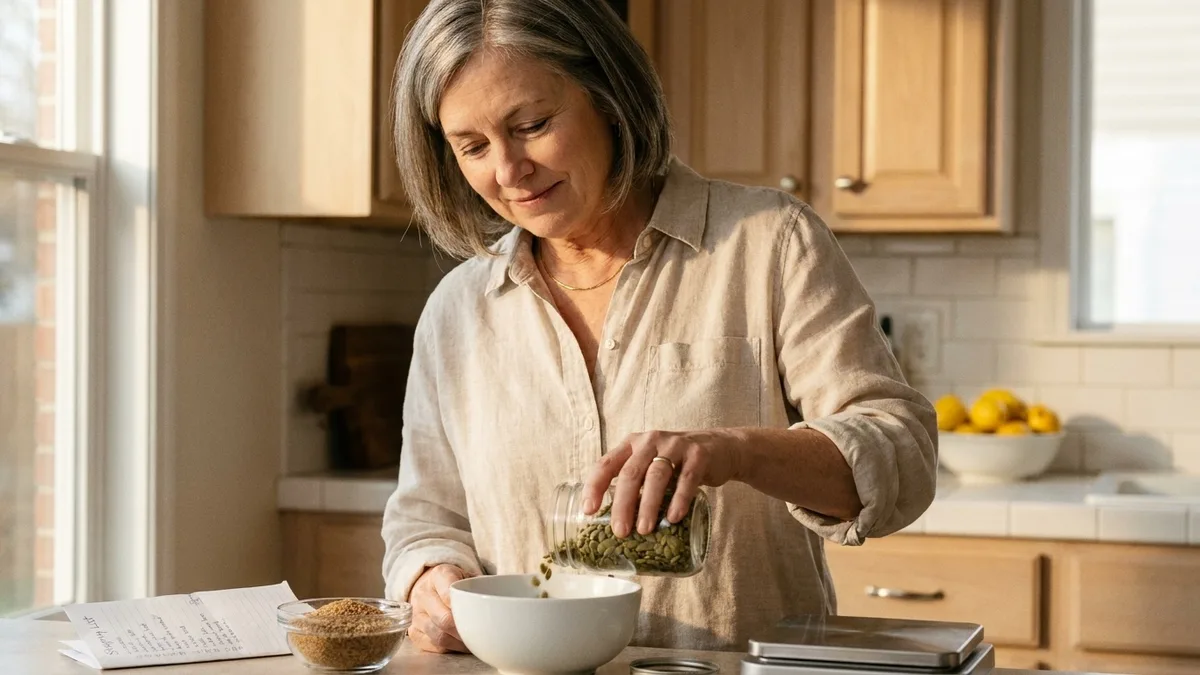
That moment on the stairs when your legs feel like they are filled with wet sand? It is not just a bad day. And the seed you have been sprinkling on yogurt may be doing nothing at all.
Here is the part most people miss: muscle loss is already underway long before you notice it. After 30, you lose about 1% of your strength every year. After 40, up to 8% of your muscle mass per decade. And after 70, that rate roughly doubles.
That is sarcopenia, and it is not a light switch that flips at 65. It is a slow leak. But you can slow it down, and food is one of the tools. Not the only one, but a real one.
This guide walks you through five seeds that have been studied for muscle support, the exact amounts, the preparation mistakes that can send you to the hospital, and a four-week plan that costs less than a takeout pizza. It does not replace your doctor, but it gives you a concrete place to start.
Because waiting is not neutral. Every year you do nothing, the deficit grows. The good news? You can start today with a shopping list and a kitchen scale.
Muscle Loss Starts Long Before 60
If you are wondering whether your weakening legs are just normal aging, here is the honest split: some change is normal, but the steep drop you are feeling is not inevitable. Sarcopenia is a measurable loss of muscle mass and strength, not a vague mood about getting older.
The numbers are blunt. About 1% of your strength goes each year after 30. Up to 8% of muscle disappears per decade after 40. And after 70, that rate roughly doubles. Run the math on a 70-year-old who never lifts, walks hard, or eats for muscle, and you can be looking at roughly a third of the strength they had at 40.
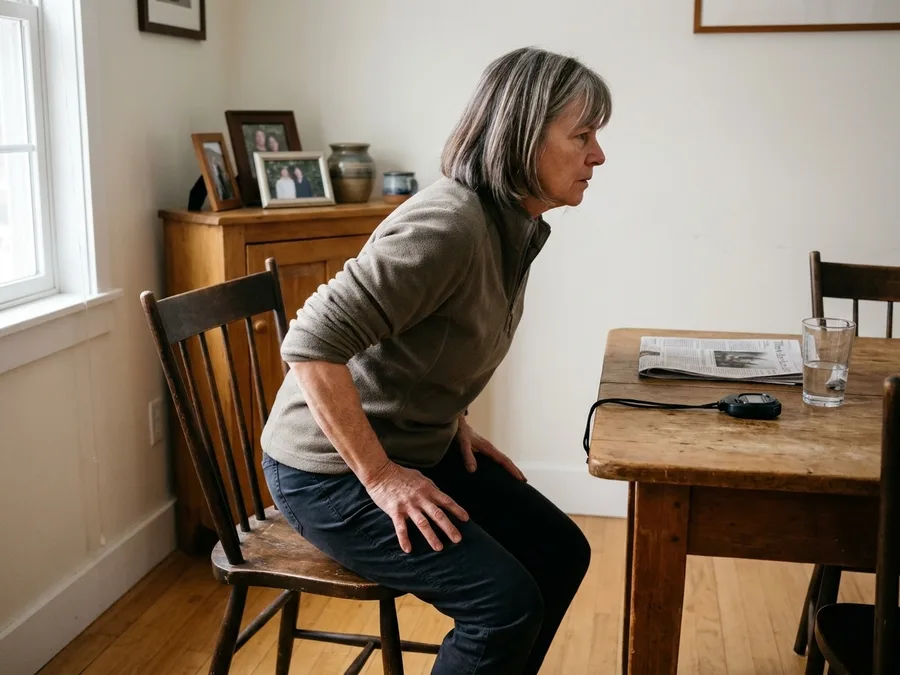
So how do you find out if you are on that track? Try this self-check. Sit in a firm chair, arms crossed, and time how long it takes you to stand up five times without pushing off with your hands. If it takes more than 12 seconds, or if you need your arms to get up at all, that is worth raising with a clinician.
Stairs tell the same story. Do you avoid them? Do you haul yourself up by the railing? That is not just inconvenience. That is data.
Now the promise, and keep it honest: seeds will not reverse aging. Food can help protect the muscle you still have, especially paired with resistance movement, enough protein, and regular check-ins with your doctor. Seeds are one part of a strength plan, not the whole answer.
| Seed | Daily amount | How to prepare | Main role | Key caution |
|---|---|---|---|---|
| Pomegranate | 1/2 cup fresh seeds after workout | Chew to a paste | Post-exercise inflammation | Diabetics: max 1/2 cup per day |
| Chia | 15 g hydrated | Soak 10-15 min in 1:10 water | Anti-inflammatory shield | Never eat dry; obstruction risk |
| Flax | 10 g ground | Grind fresh; refrigerate max 7 days | Omega-3s, muscle fiber protection | Whole seeds pass undigested |
| Pumpkin | 30 g roasted | Roast 160C for 12 min, no salt | Magnesium and zinc for muscle contraction | Avoid salted versions |
| Hemp | 3 tbsp (about 30 g) | Add to smoothies or yogurt | Complete protein (all 9 amino acids) | Test one seed on wrist first |
| Amaranth | 30 g (about 3 tbsp uncooked) | Boil 1 cup with 2.5 cups water for 20 min | Highly digestible protein base | Kidney disease: ask clinician |
A Small Seed Dose Has a Narrow Window
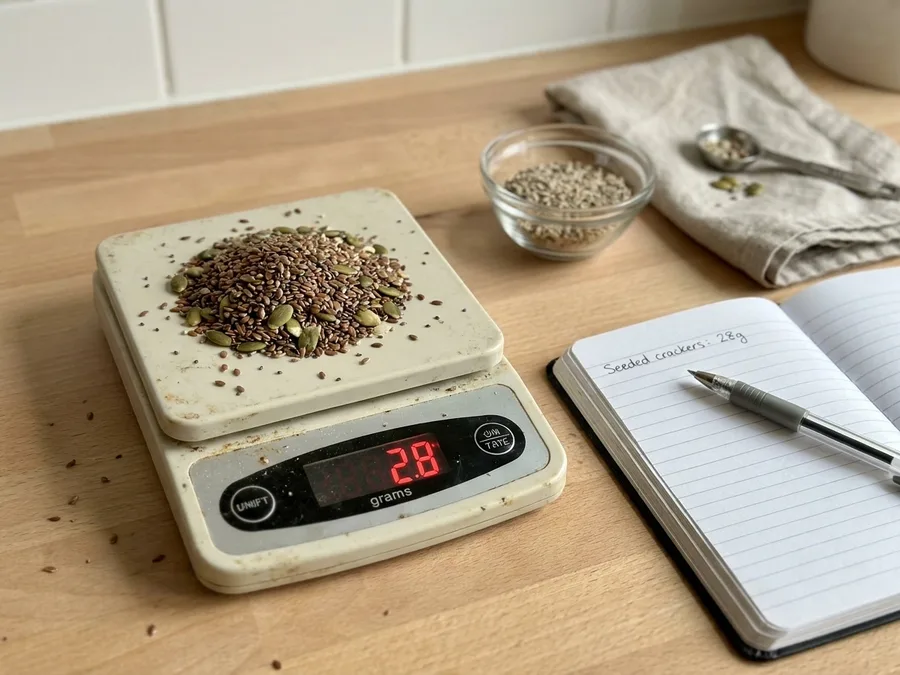
There is a cited study claim worth knowing, and it cuts both ways: 15 grams a day of specific seeds was said to cut atrophy markers by 72%, while going past 20 grams a day was said to triple the risk of hemorrhage.
That is a narrow window. Read it as a finding from one study, not a personal prescription. The exact seed matters, the population studied matters, and you cannot assume the same result lands on you.
Here is the trap. A dramatic number like 72% invites people to double the dose and chase more. Do not. The tested amount is the point of the study, not a floor to beat. Stay within tested amounts and treat the upper edge as a line you do not cross.
If you take warfarin, aspirin, clopidogrel, or any other anticoagulant, the conversation with your clinician is not optional. It is step one, before you add a single spoonful. Seeds that affect clotting can stack on top of your medicine in ways nobody wants to discover the hard way.
So the practical takeaway is simple: use seeds in the amounts that were actually studied, ask before you mix them with anything that thins your blood, and never repeat the 72% to yourself as a guaranteed outcome. Cautious use beats chasing a headline.
Pomegranate Seeds Target Post-Exercise Inflammation
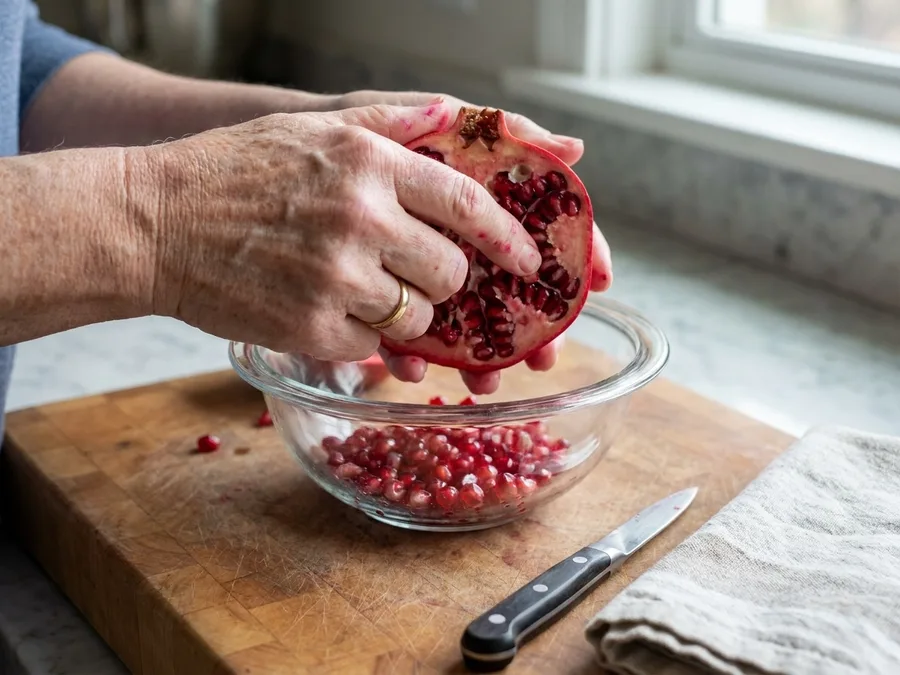
Yes, provided you chew them. The effective dose is 120 grams of newly ground seeds taken following every training session, and they should be broken down into a paste in your mouth, not gulped down intact.
Chewing is the whole point. Around 83% of the useful compounds sit in the seed itself, not the juice, so pressing and straining turns the best part into expensive waste. If chewing is hard, pulse the seeds in a blender just until they crack, then eat them with a spoon. Break them, do not juice them.
There is a story that makes this concrete. A 68-year-old former marathon runner said post-workout pain was forcing him to quit running altogether. He started eating half a cup of fresh pomegranate seeds after each run. Within three weeks he reported the pain had eased, and he was back to 10 km runs.
One story is not proof, and it does not replace medical care for pain that keeps coming back. Treat it as a reasonable, low-risk addition, not a cure.
One caution worth taking seriously: pomegranate seeds carry natural sugar. If you have diabetes, cap it at half a cup per day and count it in your daily intake. And if pain persists, see your clinician before you credit the seeds.
💡 PRO TIP
Chew, don't swallow
Pomegranate seeds should be chewed to a paste. If you swallow them whole, you miss most of the compounds and may irritate your gut. Take your time.
Whole Flax and Dry Chia Waste or Harm
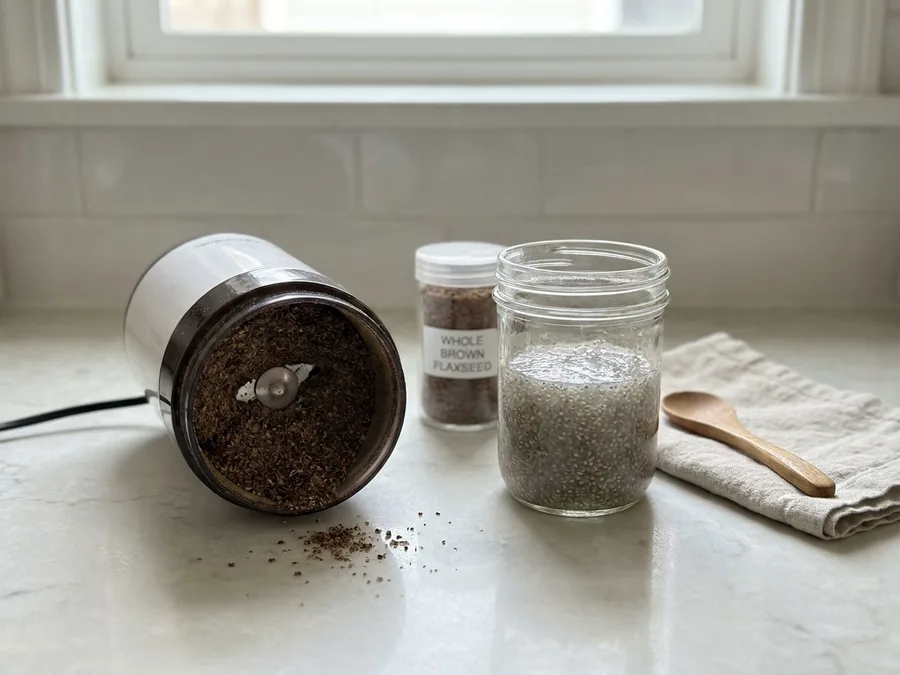
Whole flaxseed and dry chia fail for one reason: your body cannot reach the nutrients locked inside the seed coat. Whole flaxseed simply passes through undigested, like swallowing a locked safe full of gold.
Dry chia is worse than useless, it can be dangerous. A Canadian study cited that 35% of bowel obstructions in the elderly come from poorly prepared seeds, and one 73-year-old patient nearly died when dry chia swelled in his esophagus.
The flax rules are strict. Grind it fresh, because the oils start to oxidize within about 15 minutes of grinding. Store ground flax in the refrigerator for no more than 7 days, or you are eating rancid oil.
For chia, hydrate first. Use a 1:10 ratio with water and let it sit for 10 to 15 minutes until it forms a protective gel that is safe to swallow. Prepared correctly, the research cited 18 omega-3s per 100 g and IL-6 down 40%.
Maria had eaten whole flaxseed for two years and felt nothing. She switched to freshly ground flaxseed and within 30 days said it felt like she had changed the oil in her joints.
If you have swallowing trouble, diverticulitis, or a history of bowel obstruction, ask a clinician before you touch chia or flax. This is not a case for self-experimentation.
Seed prep terms, decoded
Pumpkin Seeds Supply Magnesium and Zinc for Legs
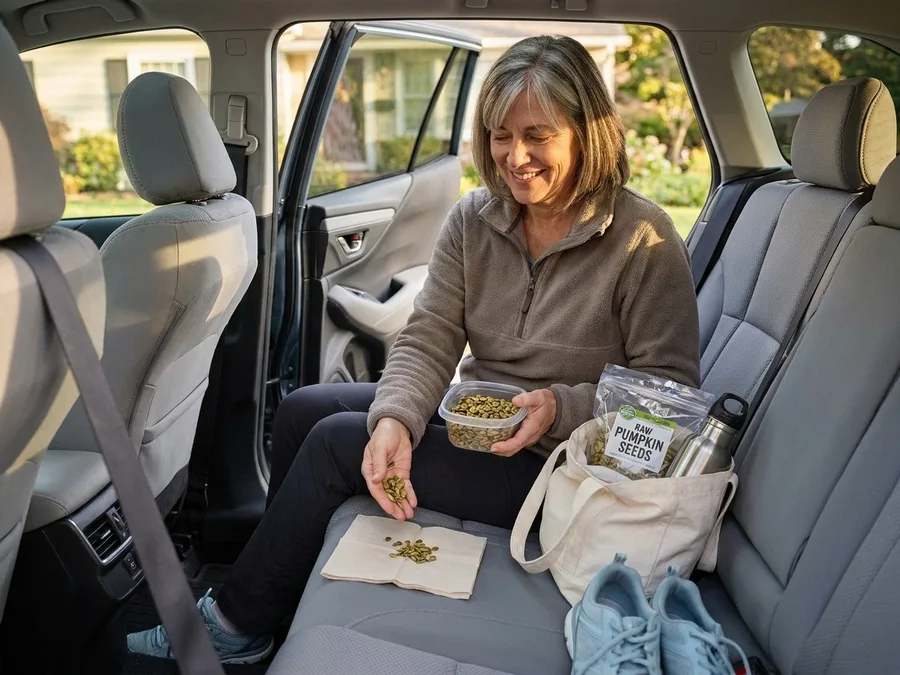
They can, if you are short on magnesium or zinc, and plenty of older adults are. Thirty grams of pumpkin seeds delivers 550 mg of magnesium, which is 138% of your daily requirement, plus 40% of your daily zinc in the same handful.
Magnesium is the spark for muscle contraction. Run low and your legs feel like a luxury car with a flat battery. Zinc matters too: the World Health Organization cited that zinc-deficient elderly people had three times the risk of dying from fall complications within five years.
The preparation matters as much as the seed. Roast raw pumpkin seeds at 160°C for 12 minutes. No salt, since salt pushes blood pressure up. Eat them plain or with herbs.
Joao, a 72-year-old who dragged his feet and could barely rise from a chair, had magnesium levels on the floor and did not want supplements. He started eating 30 grams of roasted pumpkin seeds daily. Two weeks later at his follow-up, he said it felt like someone flipped a switch on his legs.
That is a story, not a study, but it is a low-risk food change. If you have cramps or weakness, get a medical review. Seeds are not a substitute for finding out what is actually causing it.
Hemp Seed Is Complete but Needs an Allergy Test
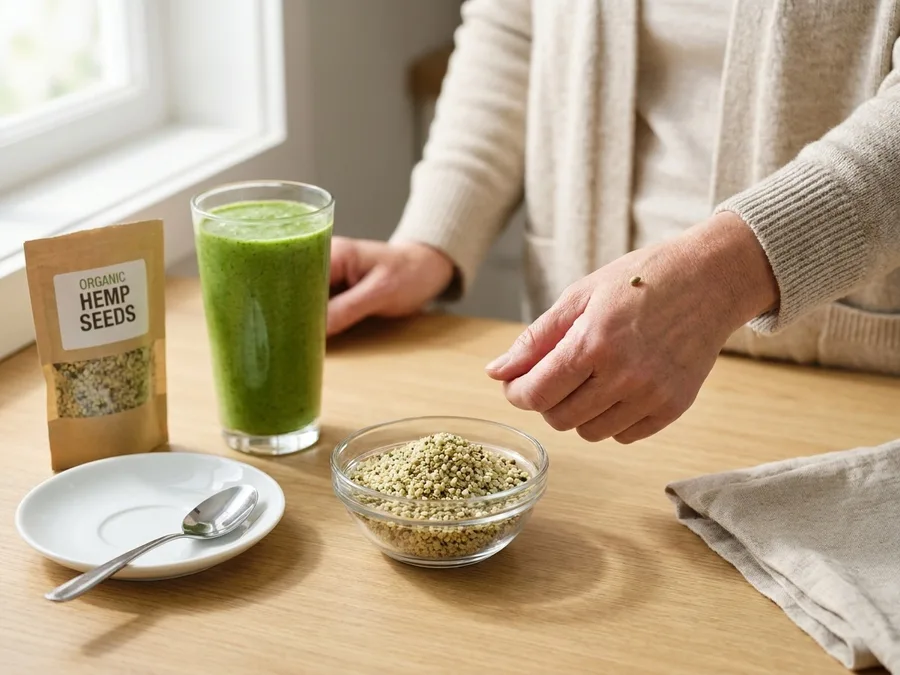
For most people hemp seed is safe and worth adding, but the allergy test comes before the first spoonful, not after. Hemp is unusual in the plant world because it carries all nine essential amino acids.
Three tablespoons give you 10 grams of quality protein. That is a real building block for legs that feel like they are emptying out.
Now the number that keeps you careful. About 0.3% of people have a severe hemp allergy. Small, yes, but you do not want to find out the hard way over breakfast.
The test is almost too simple. Rub one seed on your wrist and wait 15 minutes. Redness or itching means no hemp. Clear skin means you can try a small amount by mouth.
Sandra, 65 and vegetarian, felt her muscles were quietly disappearing. She stirred three tablespoons of hemp into her morning smoothie. Three weeks later, a whole-body densitometry scan was said to show a 12% increase in lean mass.
That is one person and one scan, so hear it as encouraging, not proof.
If you already react to nuts or seeds, ask a clinician before you test hemp at all. Skip that step and you are the person doing Russian roulette with a smoothie.
Hemp tastes mild and nutty. Stir it into yogurt, oatmeal or a smoothie after cooking, never at high heat. Add it last, keep it raw, and let the test stay the gatekeeper.
🌱 GROWING TIP
Test one seed, wait 15 minutes
Before you eat hemp, rub a single seed on your inner wrist. If you see redness or feel itching within 15 minutes, skip it and talk to your doctor about other protein sources.
Amaranth's Digestible Protein Makes It the Base
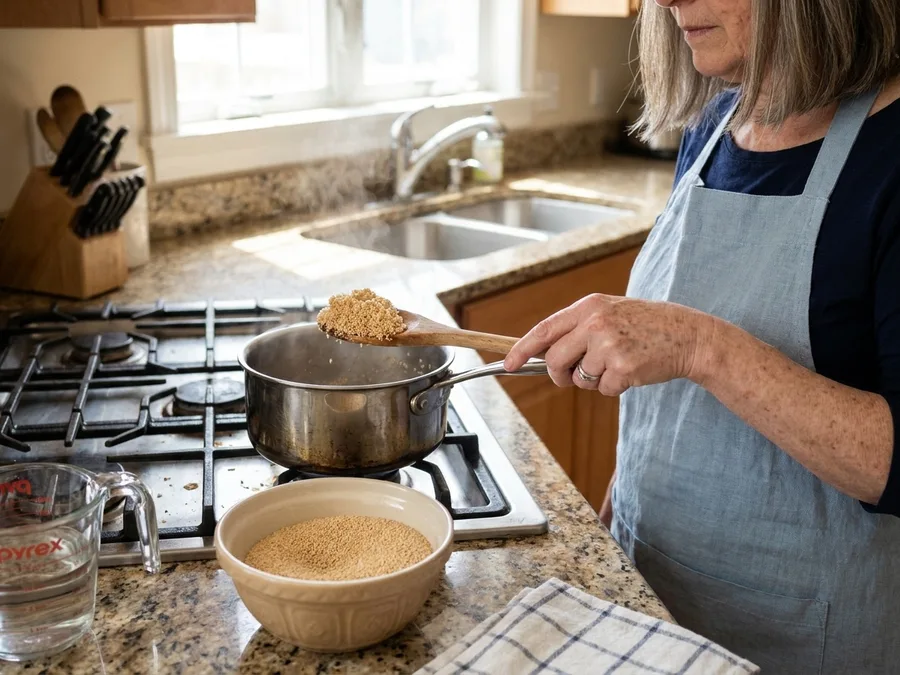
Amaranth earns the base spot because its protein is the most digestible of the seeds, and digestibility is everything when your body absorbs nutrients less efficiently than it used to. Amaranth comes in at 90% digestible, against 65% for kidney beans, 75% for soybeans and 60 to 70% for other seeds.
It also hands you 2.1 grams of lysine per serving, the amino acid missing from most grains and the one your body needs for rebuilding muscle fibers and firming up tendons.
A Mexican study is cited where 30 grams of amaranth daily for 8 weeks in older adults came with 23% more grip strength, a better cardiac profile and lower inflammatory markers. From a food, that is a meaningful jump.
There is more. Amaranth is gentler on the kidneys than animal protein, carries anti-inflammatory and heart-protective qualities, and runs about one-quarter the price of meat. For anyone over 60 watching both strength and budget, that combination is hard to beat.
Cooking it is not fussy. One cup of amaranth to 2.5 cups of water, a gentle boil for 20 minutes, and you have about 3 servings. You can even pop it like popcorn with no oil at all.
One caution before you make it a daily habit. If you have kidney disease, ask your clinician about your protein and mineral intake first. That conversation is worth having before amaranth becomes a staple rather than after.
It is not just about the amount of protein. It is about how much your body can actually use.
— The amaranth lesson
Digestibility decides whether a protein feeds your muscles or just passes through.
Four Preparation Mistakes Turn Seeds Against You
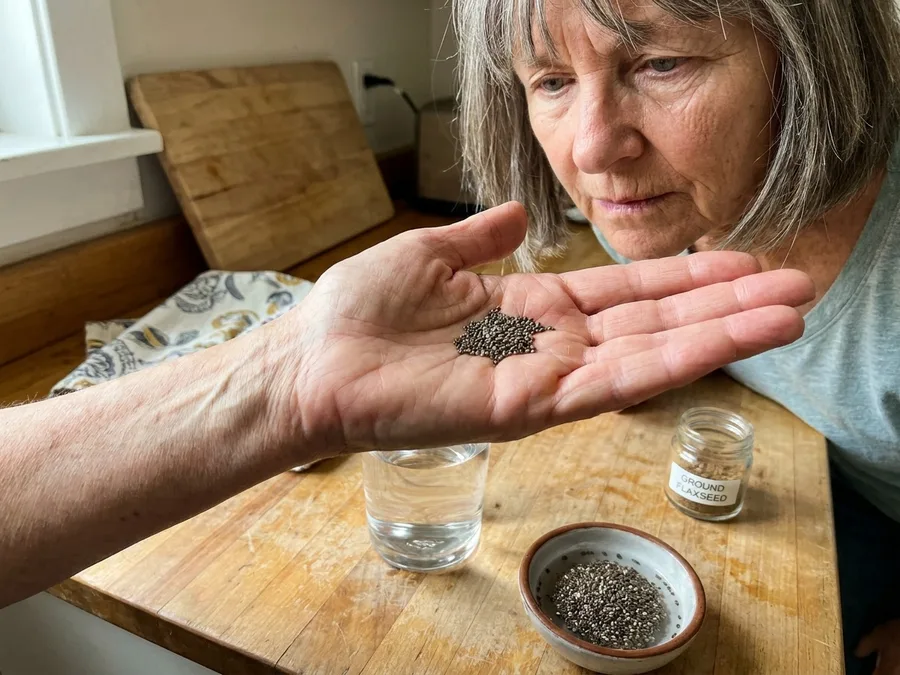
Four preparation mistakes turn good seeds against you, and they are the ones that keep coming up. Whole flaxseed is expensive trash, because it passes straight through. Dry chia can block the esophagus. Salted pumpkin seeds push your blood pressure the wrong way. And any dry seed eaten straight from the hand is compared to Russian roulette.
Each one has a plain fix. Grind flax fresh. Hydrate chia for 10 to 15 minutes. Roast pumpkin plain. Eat every seed with enough fluid and food, not dry by the handful.
These fixes are about absorption and safety, not flavor. A whole seed you cannot break down gives you nothing. A dry seed that swells in the wrong place gives you a bad afternoon in a hospital corridor.
Salted seeds are the sneakiest, because they taste like the healthy version while quietly working against the reason you bought them.
Here is your red-flag line, and it is a line, not a suggestion. If you have swallowing difficulty, diverticulitis or a prior bowel obstruction, ask a clinician before using chia or flax at all.
Now you know the traps. The next step is turning these seeds into a plan you can actually follow week by week.
Seed prep: right vs. wrong
Do this
- Store ground flax sealed and refrigerated, use within 7 days
- Stir chia into 1:10 water and wait until fully gelled
- Roast pumpkin plain at 160°C for 12 minutes, no salt
- Sip water with every spoonful and eat alongside a meal
- Place one hemp seed on your wrist for 15 minutes first
Not this
- Keep ground flax in the pantry past a week
- Pour dry chia into a dry mouth and chase it with water
- Add salt to pumpkin seeds before roasting
- Eat a dry handful on an empty stomach with no drink
- Ignore a tingle, itch or redness after hemp contact
A Four-Week Build Adds One Seed at a Time
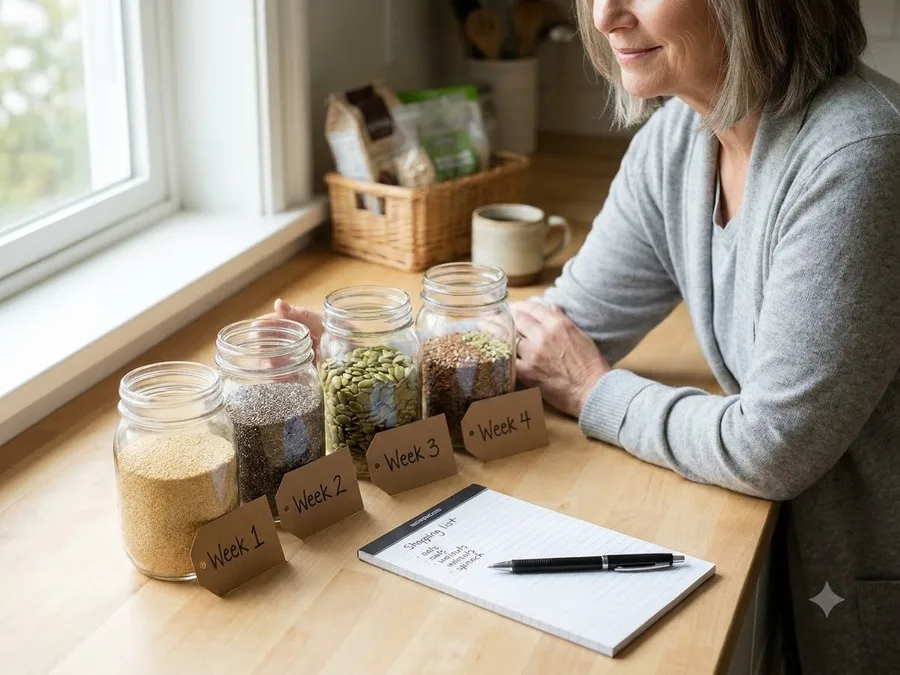
Add them one at a time, starting with amaranth, so your body gets a fair hearing on each seed. Week 1 is 30 grams of amaranth daily.
Week 2, add 15 grams of hydrated chia. Week 3, add 30 grams of roasted pumpkin seeds. Week 4, add 10 grams of ground flax plus 20 grams of hemp. That is your build, and it is deliberate.
The logic is simple. One new seed at a time lets you catch an allergy, gas, bowel changes or swallowing trouble and know exactly what caused it. Add everything at once and you will be guessing.
The cost is modest. All five seeds together run under R$30 (about $6) a week, against roughly R$500 (about $100) for supplements that may deliver half the results. That gap shows up in your grocery budget every single month.
Be realistic about the amounts. Split them across meals. If you dislike a seed or cannot find it, swap it for another from the list rather than forcing it down. Consistency beats perfection every time.
One more thing worth knowing. That 15-gram dose sits in a narrow window, and pushing past 20 grams a day is not the win it feels like. Stay inside the plan, and let each week prove itself before you add the next.
🗓️ The four-week seed build
Week 1: Amaranth base
Cook 1 cup amaranth in 2.5 cups water, 20 min, makes 3 servings. 90% digestible vs 60-70% for other seeds; 2.1 g lysine per serving.
Week 2: Add chia
Soak chia 1:10 in water for 10-15 min before eating. Cited: 18 omega-3s per 100 g, IL-6 down 40%. Skipping the soak means bloating.
Week 3: Add pumpkin
Roast at 160°C for 12 min, no salt. 30 g gives 550 mg magnesium (138% of daily need) and 40% of daily zinc.
Week 4: Add flax and hemp
Grind flax fresh, refrigerate, use within 7 days. Hemp: 3 tbsp = 10 g protein, all 9 essential amino acids. Skin-test one seed on wrist 15 min first.
Act Now, but Treat Care Costs as a Comparison
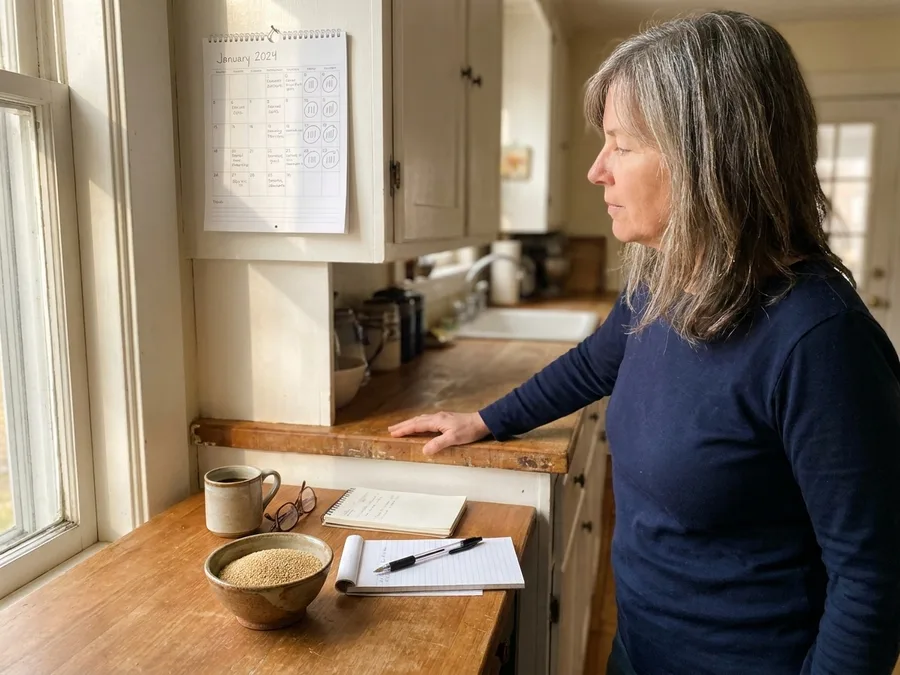
Waiting costs you strength you will not easily get back, so the first move is starting Week 1 amaranth today and booking a strength check. Now the comparison, and treat it as a comparison only.
Seeds run about R$30 (roughly $6) a week. Ten years out, the caregiver figure is often put near R$15,000 (about $3,000). That number is illustrative, not a quote, so do not build a budget on it. Build it on the arithmetic that seeds are cheap and care is not.
And remember the rate of loss roughly doubles after 70. Start earlier and you protect more. This is not about shame and it is not a guarantee. It is about action, taken while it still changes something.
The strength check is easier than it sounds. A simple chair-stand test and a conversation about your risk factors can tell you where your legs actually stand.
If you have chronic disease, take blood thinners or have swallowing problems, see a clinician for personalized advice before you change your diet. That is not delay. That is safety.
The seeds are cheap nutrition support, not a cure. They work best beside resistance exercise and enough overall protein. You don't need a gym or an hour a day to start, and a short routine built for beginners shows how to begin where you are. The first step is yours, and it is a small one.
Common mistakes and how to fix them
Frequently Asked Questions
Can seeds alone reverse sarcopenia?
No. Seeds are nutrition support, not a cure. They work best alongside resistance exercise, adequate protein, and medical care. Think of them as one piece of a strength plan.
How long before I notice a difference?
Some people report changes in a few weeks, but that is anecdotal. Measurable strength changes typically take 4-8 weeks of consistent effort. Use simple tests like the 30-second chair stand to track progress.
Are these seeds safe if I take blood thinners?
Ask your clinician first. Some seeds, especially in high doses, may affect clotting. The cited study mentioned a narrow window between benefit and risk. Do not combine seeds with anticoagulants without medical advice.
Can I eat the seeds if I have diverticulitis?
Only after checking with your doctor. Seeds and nuts may be restricted for some people with diverticular disease. Hydrated chia and ground flax are usually better tolerated than whole seeds, but get individual advice.
What if I cannot find amaranth?
Swap it for another seed from the list that you can find and tolerate. The goal is consistency, not perfection. Quinoa is a reasonable substitute if amaranth is unavailable.
The Seed Plan Is Cheap Support, Not a Cure
So here is the blunt verdict: the seed plan is cheap nutrition support, not a cure for sarcopenia. It will not replace your doctor, and it will not work if you skip the strength training.
But it is a concrete, affordable start. Begin with Week 1 amaranth today and book a simple strength baseline with your clinician. That baseline gives you a number to measure against.
If you are on blood thinners or have kidney, swallowing, or bowel problems, see a clinician first. That step is non-negotiable. For everyone else, the seeds are low-risk and worth trying.
Your legs are not going to wait. But they can respond. Start with one seed, one meal, one week, and see what happens.
Ready to start Week 1?
Book a strength check with your clinician, then pick up a bag of amaranth and a kitchen scale. Your first week starts with one serving a day.