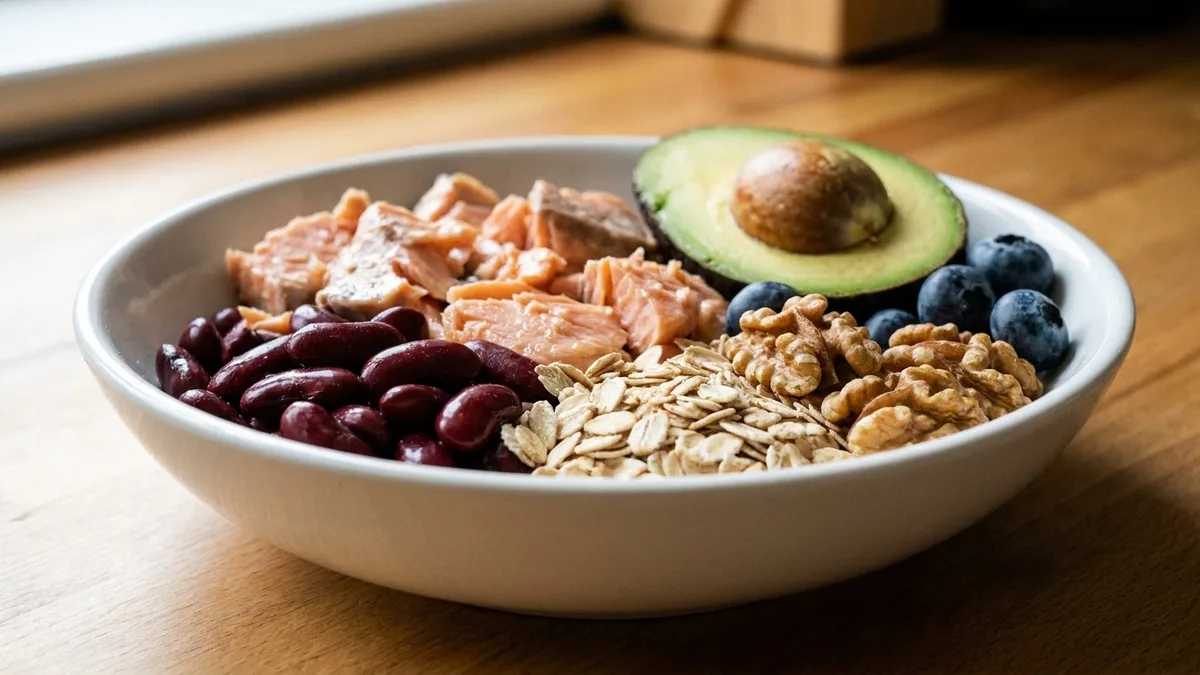
Yes, dietitians eat a real list, and the surprising part is how little of it comes from a health-food aisle. Nine everyday foods carry most of the heart work, and five ordinary ones cause most of the trouble. Nobody has to relearn cooking to make that trade.
You are standing in the refrigerated case with a deli-turkey package in one hand, told to watch your heart, unsure what a dietitian actually puts in her cart. Here is a concrete one: a 54-year-old dietitian in Midwest cardiac rehab, shopping once a week on about $85. That budget keeps it ordinary and repeatable.
Her cart is five direct swaps and four additions: canned salmon for deli turkey, beans for fried chicken, oats for white bread, nuts for the danish, berries for soda. Then olive oil, spinach, avocado and plain Greek yogurt go in alongside.
Cost each serving, set the weekly frequency, and leave the store with one swap made. That is how a dietitian's cart turns into yours, and it costs no more than the food it replaces.
Quick Tips Before You Start
Read the sodium line first
On canned goods, the no-salt-added version usually costs the same and cuts hundreds of milligrams per serving.
Buy frozen berries
They cost less than fresh, keep for months, and need no cutting or thawing before they hit the bowl.
Keep two cans of salmon
A pantry stockpile is what makes the lunch swap happen on a busy Tuesday, not willpower.
Portion nuts on Sunday
Five small bags or containers, one ounce each, so the coffee-break grab is already decided.
Put the oil by the stove
The fat you reach for is the fat you cook with. Move the bottle and the butter gets used less.
Start With Lunch And Dinner
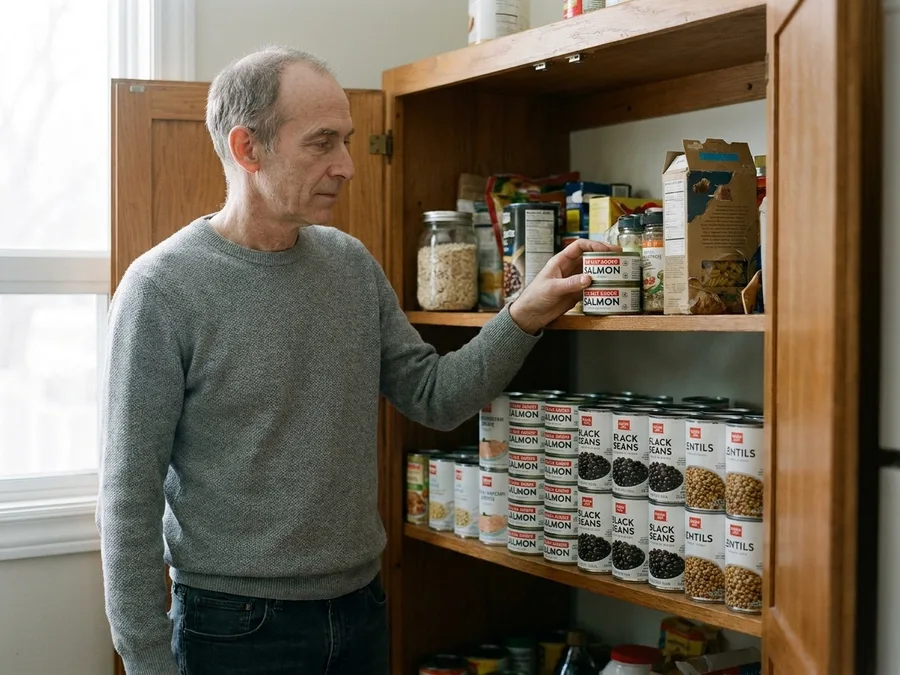
Lunch and dinner are where most hearts get into trouble, because those are the meals built on habit and speed: the sandwich, the drive-thru bag, the plate that gets assembled in four minutes flat. These first two swaps live in exactly that window.
You are not learning to cook differently here. You are changing what is in the fridge and the pantry so the fast choice becomes the good one.
1. Canned salmon replaces deli meat
The deli counter is where the heart-health conversation usually starts, and it is also where it usually stalls. Two ounces of sliced turkey runs about $1.50 and looks like the leanest thing in the case, but it is a processed meat, and the sodium load arrives with every thin slice. The dietitian in cardiac rehab walks past it without slowing down.
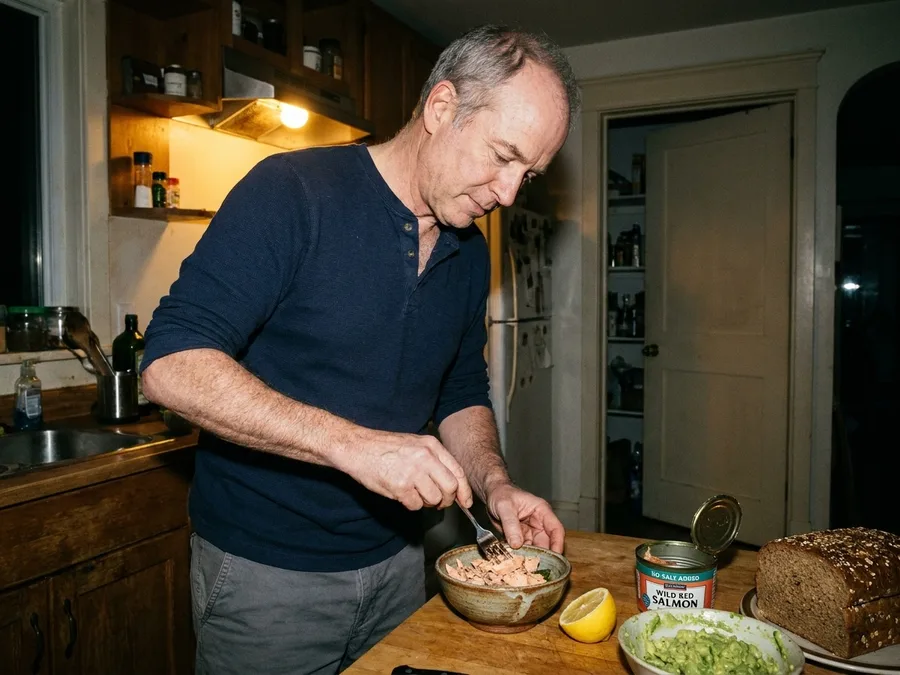
What goes in its place is not a specialty item. A 5-oz no-salt-added can of salmon costs about $2.50 and makes two 3-oz portions, so one can covers two lunches a week at roughly $1.25 a serving.
Mash it with a fork, fold in mashed avocado or a spoon of plain Greek yogurt, and it spreads like tuna salad. Same bread, same assembly, same five minutes at the counter. Different lunch entirely.
That is the trade: fewer omega-3s become more, and processed-meat sodium drops out of the middle of the day. For anyone over 50, that midday sandwich is often the single most repeated decision in the week, which is exactly why it is worth changing once.
This swap fits the person who eats a sandwich most days and wants the protein without rebuilding their routine. It also fits anyone with room for two cans in the pantry, because canned salmon keeps for years and never has a use-it-or-lose-it deadline. Shelf test: $2.50 covers two meals and matches the deli slices for convenience, with none of the processed-meat sodium.
💡 Tip: Buy the cans with no salt added; the regular version can carry several hundred milligrams of sodium more per can.
What The Cart Actually Costs
The four love-only additions to the weekly shop
Prices are typical grocery-store figures, not a promise.
2. Beans replace the fried chicken run

Lunch meat is one convenience meal, and the drive-thru is the other. A fried chicken meal runs about $9 and delivers a heavy load of saturated fat and sodium in the time it takes to pull through the line. The dietitian's alternative costs $0.60 a serving and comes out of a can.
Half a cup of no-salt-added canned beans or lentils, four times a week. Microwave them with whatever spice is in the cabinet, or dump them cold over a salad. The can is already cooked, so there is no soaking and no pot.
The part worth sitting with is the price gap. Sixty cents against nine dollars, four nights a week, is the difference between a grocery budget that holds and one that quietly drains.
There is also the fiber. Beans and lentils carry it in a way a fried chicken meal does not, and fiber is one of the levers that matters more as the years go on, not less.
This one is built for the person whose dinner defaults to a drive-thru because nothing at home is ready in five minutes. Keep four cans in the pantry and the excuse disappears.
Shelf test: the no-salt-added can does the hearty and fast job the fried meal was doing, without the saturated fat and sodium that come with the fryer.
💡 Tip: Rinse canned beans for 30 seconds and you wash off a good share of the added sodium.
| Food | Love or avoid | Typical serving | Cost per serving | How often |
|---|---|---|---|---|
| Canned salmon, no salt added | Love | 3 oz | $2.50 per can, 2 portions | 2x/week |
| Deli turkey | Avoid | 2 oz | $1.50 | Skip |
| Beans or lentils, no salt added | Love | 1/2 cup | $0.60 | 4x/week |
| Fried chicken meal | Avoid | 1 meal | $9.00 | Skip |
| Plain low-fat Greek yogurt | Love | 5.3 oz | $1.20 | Most days |
| Rolled oats | Love | 1/2 cup dry | $0.25 | 5x/week |
| White bread | Avoid | 2 slices | $0.40 | Skip |
| Nuts or seeds | Love | 1 oz | $0.50 | 5x/week |
| Packaged danish | Avoid | 1 | $1.80 | Skip |
| Frozen berries | Love | 1/2 cup | $0.60 | Most days |
| Sugary soda | Avoid | 12 oz | $0.75 | Skip |
| Olive oil | Love | 1 tbsp | $0.20 | 2 tbsp/day |
| Spinach or kale | Love | 2 cups | $0.80 | Most days |
| Avocado | Love | 1/2 medium | $1.00 | 3x/week |
Breakfast And The Coffee Break
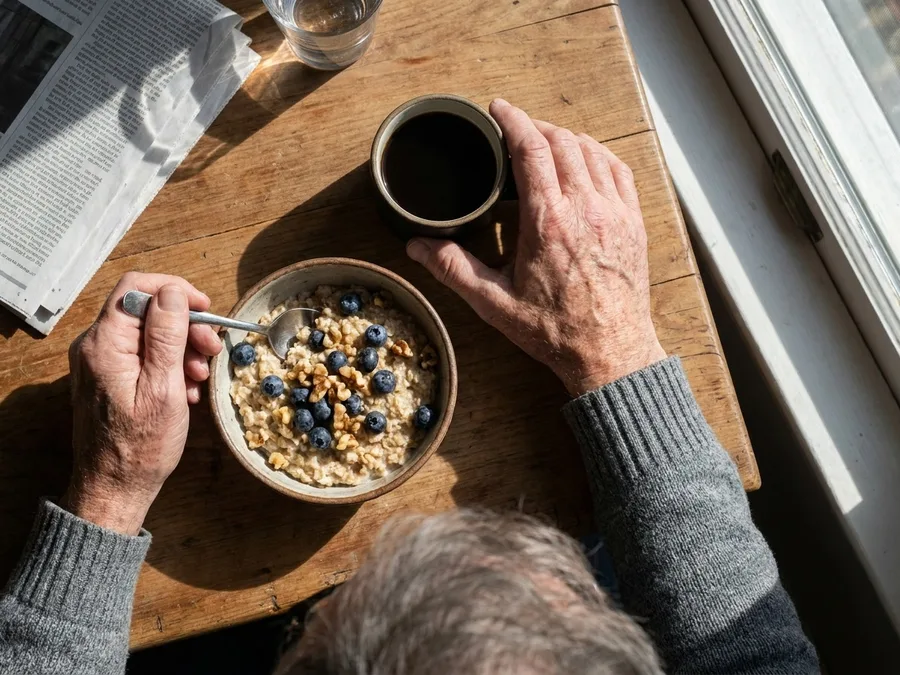
Breakfast and the mid-afternoon slump are where refined flour and added sugar do most of their work, because both get eaten fast, alone, and without a second thought.
Standing at the counter with toast, or hitting the vending machine at three, is not a character flaw. It is a routine with no friction in it, and the next three foods are habit replacements, not recipes. Each one keeps the routine exactly as it is: same bowl, same coffee, same 3 p.m. pause.
White bread, two slices at $0.40, is a refined grain with little fiber, so it buys a fast rise and an early crash. Dry oats, half a cup at $0.25, cooked five days a week and topped with berries and nuts, cost less and carry soluble fiber that holds you fuller past mid-morning, one of the cheap staples grandparents relied on. Same spoon, same bowl, no new skill required.
Nuts and seeds take the coffee break. One ounce at $0.50, portioned into small bags on Sunday so the grab is as fast as reaching for a packaged danish at $1.80, brings protein and healthy fat instead of added sugar and refined flour. The wrapper is already there; only the contents change.
Greek yogurt fills the 3 p.m. gap most days. A 5.3-ounce plain low-fat container runs $1.20 and delivers 15 to 20 grams of protein with no added sugar, and berries or nuts stirred in put two other list items to work. Chips and pastries are not cheaper; they just sit closer to the register.
Where Most People Slip
3. Greek yogurt becomes the default snack
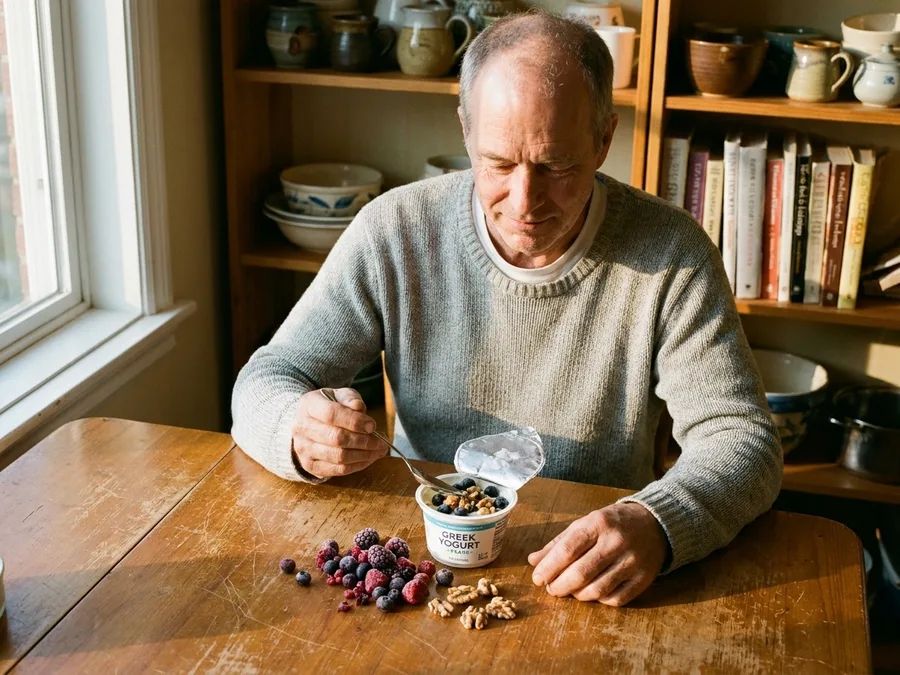
The afternoon is its own gap. Lunch and dinner have a protein answer now; the stretch between them is where the chips and the pastry case usually win.
Plain low-fat Greek yogurt is the snack the cart fills that gap with, most days. A 5.3-ounce container runs about $1.20, and the ingredient list is short enough to read in one breath.
Each container carries roughly 15 to 20 grams of protein, and if you buy plain, none of it comes with added sugar. That protein figure is the whole point: it is closer to a small meal than a snack, and it holds a body steady through the 3 p.m. slump when a handful of crackers would leave you hunting the cabinet an hour later.
Flavor and crunch get added, not bought. A scoop of the frozen berries you already keep, a small handful of the nuts that sit in the pantry, and the container becomes something you look forward to rather than something you tolerate.
Two other items on the list are working inside that one bowl, which is the quiet reason this snack costs so little effort.
Run it through the same shelf test as everything else. Fifteen to 20 grams of protein and no added sugar, at $1.20, against a packaged pastry that delivers sugar and refined flour and leaves you hungry anyway. The yogurt wins on cost, on staying power, and on the fact that you do not have to think about it at 3 p.m. — it is already in the fridge, waiting.
💡 Tip: Flip the container over. Under 8 grams of sugar per serving means it is genuinely plain.
⚠️ COMMON MISTAKE
The Granola Trap
Sprinkling granola on that yogurt can add 12 grams of sugar before you have finished the bowl. Toast a spoon of oats in a dry pan for two minutes instead and you get the crunch without the syrup.
Breakfast and snack upgrades
4. Oats take over the toast slot
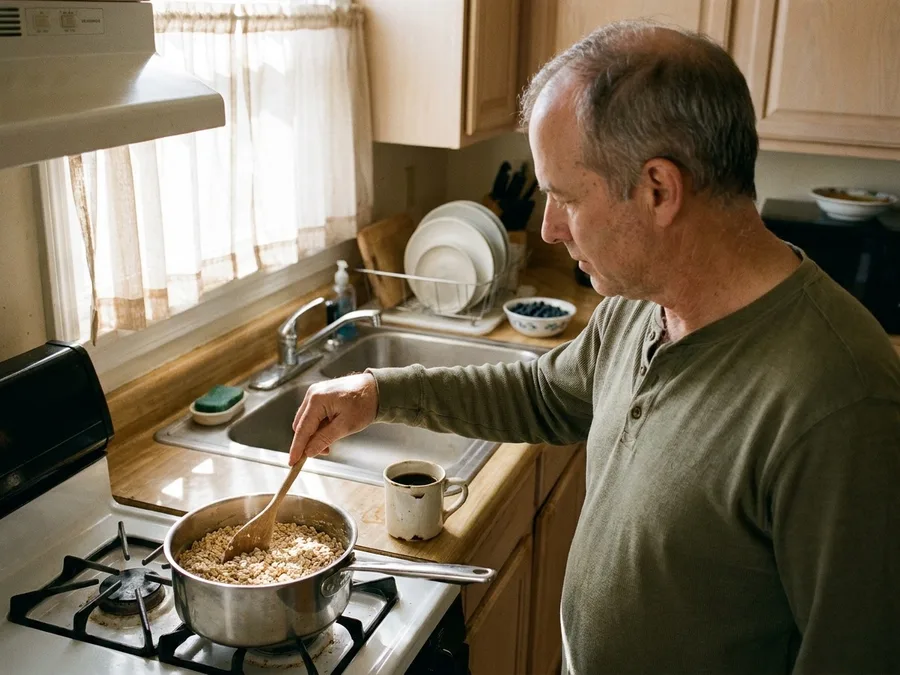
Breakfast is where the cart stops being a decision and becomes a habit. Most people do not choose toast in the morning; they reach for it, the way they reach for the same mug.
Two slices of white bread cost about $0.40 and deliver refined flour with very little fiber. That is exactly the breakfast pattern that leaves you hungry by 10, wondering why a meal you just ate seems to have evaporated.
Half a cup of dry rolled oats costs $0.25 and cooks in the same bowl with the same spoon. Nothing about the routine has to change. Five days a week is the target, and the toppings are already in the fridge from everything else on this list: berries and nuts.
The payoff is soluble fiber, the kind that helps with LDL cholesterol. It also slows the meal down, so the hunger that usually arrives mid-morning shows up late, or not at all. That one shift, from refined flour to soluble fiber, does more for a heart-healthy breakfast than almost anything you could add to it.
Steel-cut oats work too if you like the chew, but they take twenty minutes. The five-minute rolled version is the one that survives a weekday morning, when nobody has twenty minutes and the coffee is already in the mug.
5. A portioned bag of nuts beats the danish

The packaged danish at $1.80 is a coffee-break reflex, and it is built from added sugar and refined flour with almost nothing to slow it down. Twenty minutes later you are hungry and slightly annoyed with yourself, and you have spent nearly two dollars for the privilege.
One ounce of nuts or seeds costs about $0.50. Five days a week, already portioned into small bags or containers, so the grab takes no thought at all. The Sunday twenty minutes of bagging is the whole preparation; after that, the fridge and the desk drawer do the rest.
Walnuts and almonds are the common picks, and walnuts bring omega-3 fats that most snack food has none of. The protein and fat in a single ounce are enough to carry you to dinner, which is the difference between a snack that bridges the gap and one that just makes it worse.
Portioning is the whole trick. A big jar on the counter turns one ounce into four without anyone noticing, and four ounces of nuts is no longer a snack that helps you. The pre-portioned bag is what keeps the shelf test honest: $0.50 an ounce, five days a week, in place of the $1.80 danish and its sugar rush.
Cost per serving, protein and healthy fat in place of added sugar and refined flour — it clears the same standard as everything else on the list, and it fits the coffee-break habit it is replacing.
💡 Tip: One ounce is about 14 walnut halves or 23 almonds — count once, then trust the bag.
Skip the danish and skip the bar aisle too: most bars hit the sugar problem the danish had.
Something Sweet, Something Green
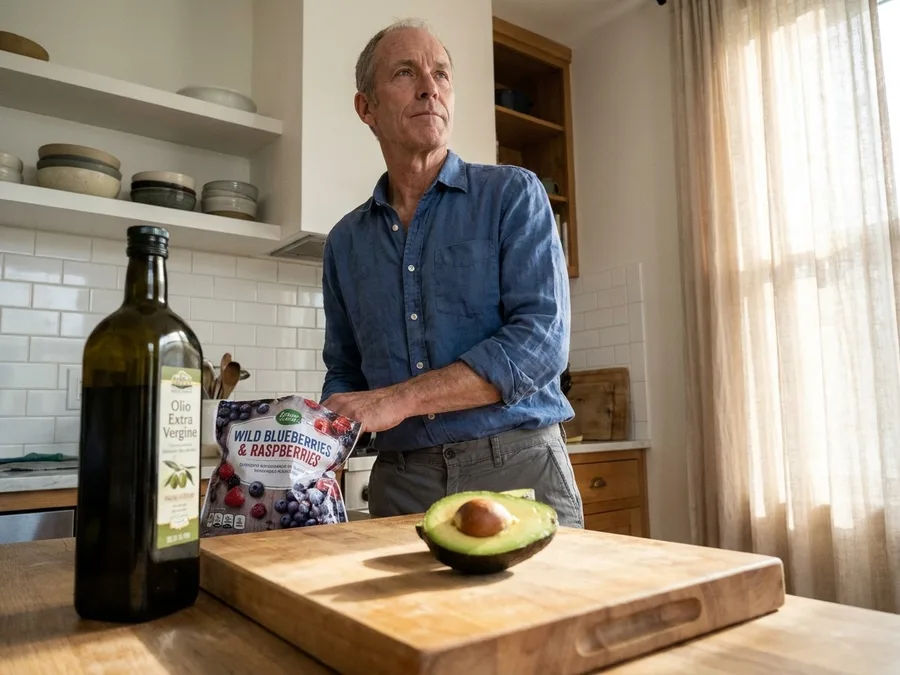
Cravings do not politely leave after 50.
They keep showing up, usually at the same times they always did: mid-afternoon, after dinner, whenever the coffee goes down. So the dietitian answers them instead of arguing with them. The last four items in the cart handle the sweet finish, the fat you cook with, the vegetables on the plate, and the spread on the sandwich.
Those four foods share a quality that makes them worth a separate grouping. They are additions, not bargains struck with yourself. They go in alongside what you already buy, so they meet a craving or a cooking task you would have met anyway – and they do it with fiber, monounsaturated fat, or a fruit or vegetable in place of sugar or refined flour.
What makes them work, though, is that each one takes over a job something else was doing badly. Frozen berries stand in for dessert. Olive oil stands in where butter or creamy dressing went. Wilted or raw greens take half the plate with no recipe at all. Avocado spreads where mayo spread before.
6. Frozen berries answer the sweet tooth
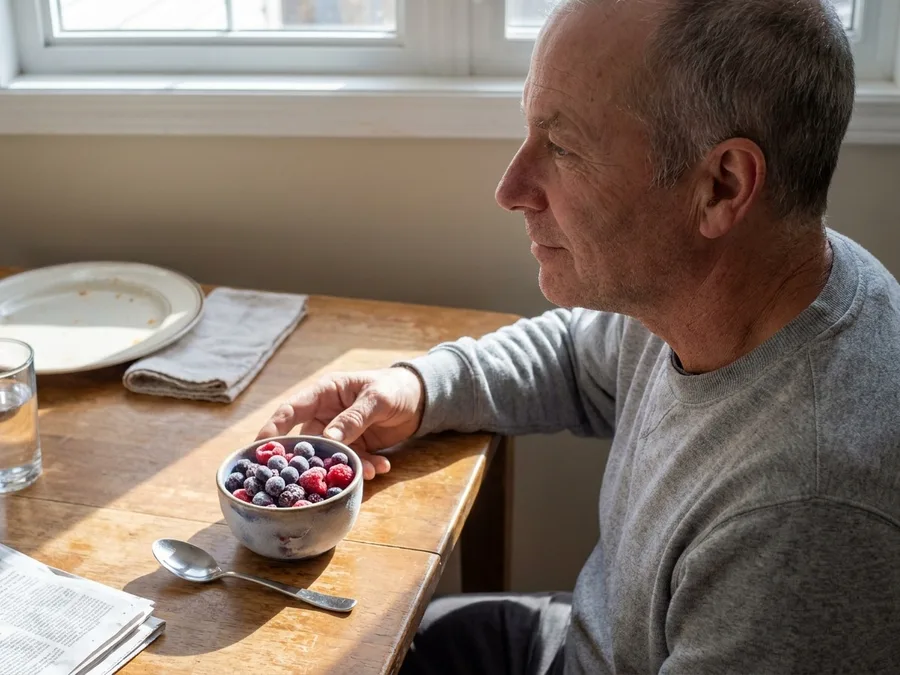
The after-dinner sweet craving is the other habit that hangs on, and it rarely answers to willpower.
A 12-ounce soda at 75 cents is the easiest sweet thing in the house – liquid sugar, no fiber, no vitamins, nothing to slow it down. That is the case the dietitian makes against it, and it is not a lecture about sugar; it is a point about what you get for the 75 cents.
Frozen berries at 60 cents for a half cup, most days of the week, do the same job with something attached. The fiber slows the sugar's absorption, the berries bring actual vitamins, and the cold sweetness lands at the end of a meal the way dessert is supposed to.
The practical case is convenience. No cutting, no thawing, no browning fruit in the drawer to throw out. A bag in the freezer, a half cup in a bowl, straight from frozen.
Try them plain first, or spooned over yogurt. Either way you spend 60 cents against 75, and the sweet finish comes with fiber instead of just a rising glucose curve and nothing else.
The Coffee-Break Choice
A portioned ounce of nuts
- $0.50 per serving
- Protein, healthy fat, some omega-3s
- Bag already made on Sunday
- Carries you to the next meal
- No sugar crash twenty minutes later
The packaged danish
- $1.80 each
- Added sugar and refined flour
- Lives in the car or the desk drawer
- Hungry again by mid-morning
- Repeats the same cycle daily
Fats and vegetables
7. Olive oil by the stove, not in the cupboard
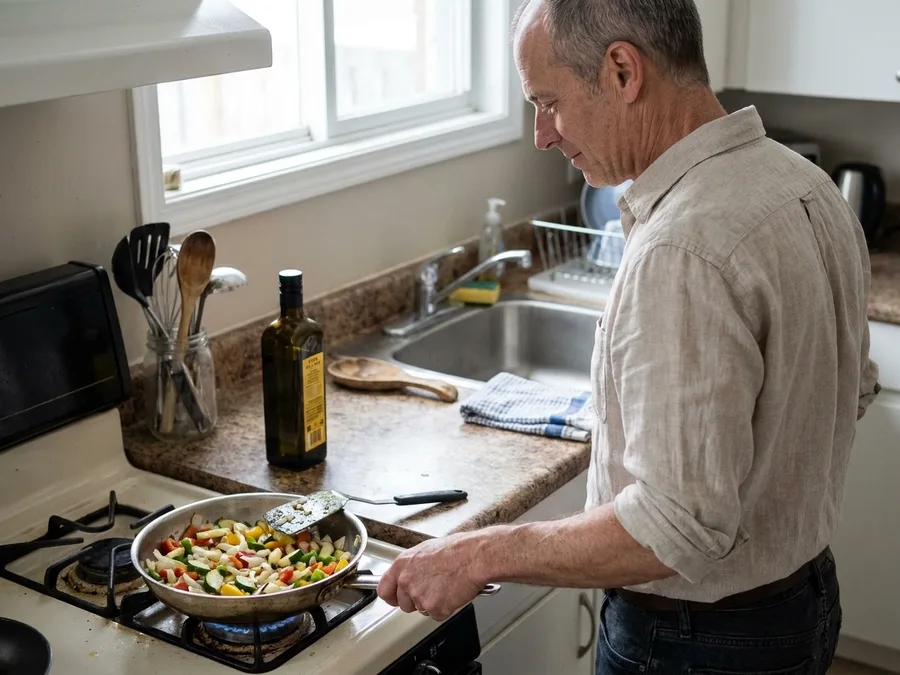
Two tablespoons of olive oil a day, at about 20 cents a tablespoon, is the dietitian's whole cooking strategy.
Sautéing vegetables, dressing a salad, drizzling over cooked grains – one bottle does all three jobs. The draw is monounsaturated fat. And here is the part that changes after 50: that fat works by replacing butter and creamy dressing, not by being added on top of them. Same cooking job, different fat.
The setup matters more than the label. If the bottle sits next to the stove and the butter sits in the fridge door, the oil wins because it is closer. That sounds trivial. It is the whole thing.
Buy dark glass and a size you will actually finish in two to three months. Olive oil goes stale, and the giant tin you cannot get through is not the bargain it looks like on the shelf.
At $0.40 a day for two tablespoons, you are paying for a bottle that earns its place by being the thing your hand reaches for.
💡 Tip: One tablespoon is a full pour to the first line of a standard measuring spoon — no need to guess.
Spinach — At a Glance
⏱️ Time
2 minutes to wilt
🥬 Amount
2 cups, most days
💰 Cost
$0.80 per 2 cups
🎯 Adds
Fiber, vitamins, volume
🍳 Easiest use
Stirred into eggs or pasta
Why it works
It fills half the plate without a recipe, a sauce, or a separate pan.
8. Leafy greens fill half the plate
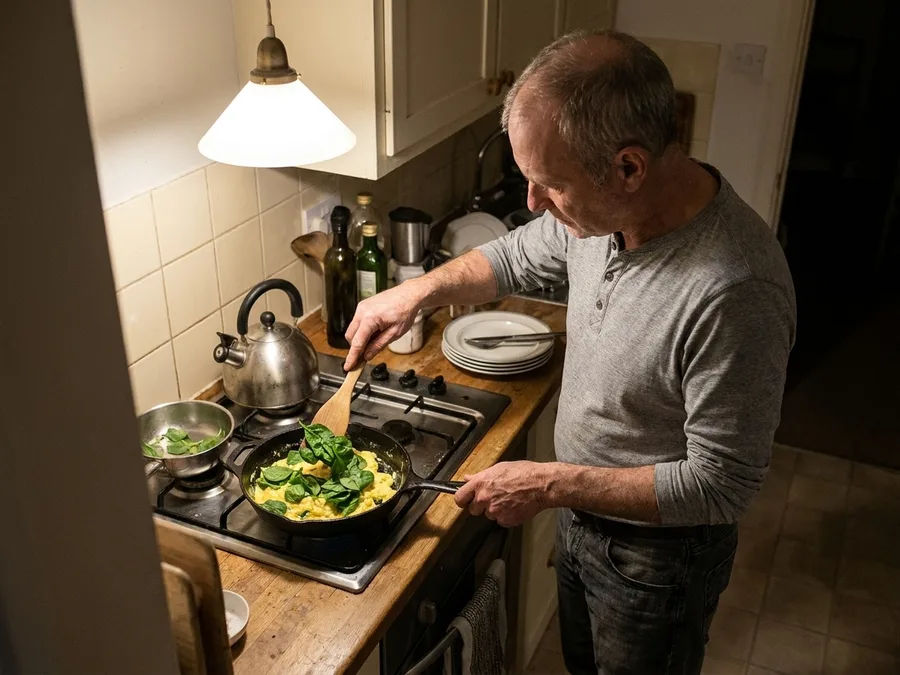
Once the fat is settled, the plate needs something to carry it – and that is where the greens go. Two cups of raw spinach or kale costs about $0.80 and takes up half the plate every day of the week.
The trick is picking greens you can shape – leaves that go into a pan, a pot, or a blender without leaving the meal you were already making.
Wilt a handful into scrambled eggs, stir it through pasta at the last minute, blend the leaves into a smoothie. None of these takes a separate recipe, a sauce, or a step that is not already happening.
Fiber and vitamins come with the volume, and the volume is what makes a plate feel like a meal after 50 – when portions shrink and fullness follows the bulk of food, not the butter on it.
Best for the reader who wants more vegetables on the table without learning a new dish or buying anything in a jar.
9. Avocado does mayo's job
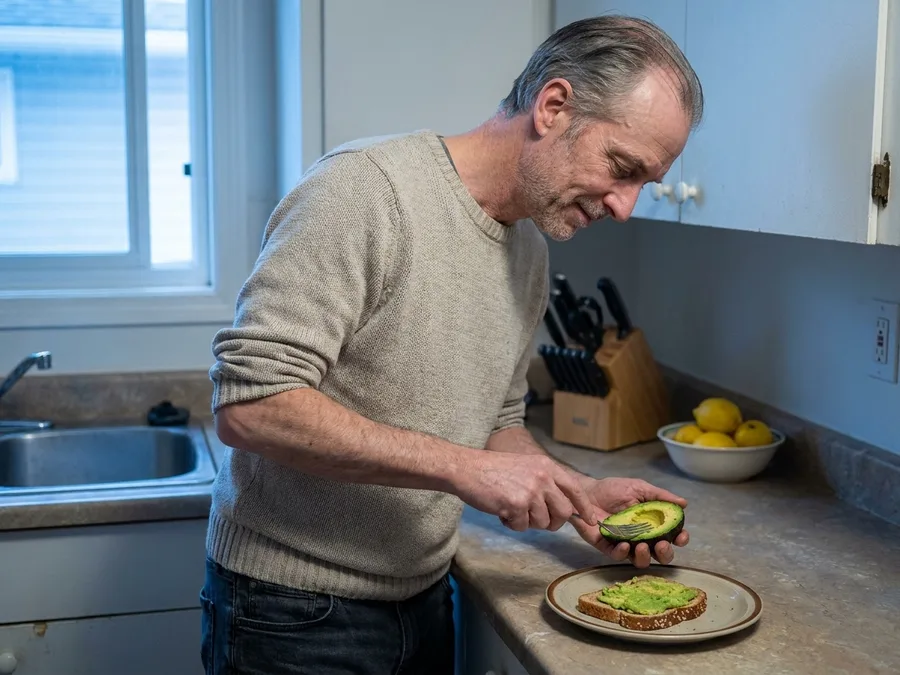
Mayo's job is texture: to make a sandwich feel rich and stop the bread from tasting dry. Half a medium avocado, about $1.00, does the same job with a fork and no jar.
Mash it onto toast or spread it on a sandwich three times a week. Cooked into a pot, the creamy texture is what keeps anyone at the table from asking where the mayo went.
Potassium and monounsaturated fat come with it – and both count for more on a heart-smart plate after 50, where blood pressure and artery health want less pickled and greasy, not less creamy.
Buy the avocado firm and let it ripen on the counter for two to three days. A ripe one gives slightly when you press the stem end, and should not collapse under your thumb.
If half is more than you will use, cut it with the pit in, then store the other half pressed tight against the pit, wrapped in plastic, in the fridge.
💡 Tip: Mash with a fork and a pinch of salt before it hits the bread — the flavor distributes better than slices.
Frequently Asked Questions
Is canned salmon as good for you as fresh?
For heart purposes, yes. It is the same fish with the omega-3 fats intact, and it is usually cheaper and has a longer pantry life. Buy the no-salt-added cans, and if you want the softer bones in your sandwich, mash them in — they carry calcium.
Won't eating nuts every day add too much fat?
One ounce is about 170 calories and the point is that it replaces the danish, not that it stacks on top of it. Measure the first few portions and you will recognize an ounce by sight within a week.
How long before these swaps change anything?
Most people notice steadier energy and fewer late-afternoon crashes within two to three weeks. Blood pressure and cholesterol numbers are slower and also depend on the rest of the plate, so give the swap eight to twelve weeks before you expect the lab result to move.
Do I have to give up deli meat entirely?
The honest answer is to cut back hard rather than to negotiate. If you want it occasionally, buy the lowest-sodium turkey you can find and pair it with vegetables and whole grain. If you eat a sandwich every day, salmon, beans or leftover chicken as filling is the better default.
What is the cheapest item on the list?
Half a cup of dry oats at about $0.25 is the least expensive per serving, and beans and nuts are close. The four additions — oil, spinach, avocado, yogurt — run a few dollars a day.
Does any of this interact with my medications?
Some foods can matter with certain prescriptions — leafy greens with warfarin, for example — so run the list past your own doctor or pharmacist before you change how often you eat them.
Find Your Most Frequent Avoid Food, Then Swap That One
Five swaps, four additions. Greek yogurt, olive oil, leafy greens and avocado go into the diet alongside those swaps, not in place of them, and adding two tablespoons of oil to the same plate of white bread does not cancel the bread. Swap first, then add.
Back in the aisle, the $85 cart is the point: it is ordinary, it is repeatable, and the change is one package left out and one replacement put in. Heart-smart shopping after 50 is a set of shelf decisions made weekly, not a new identity.
So pick the avoid food you actually bought most last week and pair it: deli turkey becomes canned salmon, fried chicken becomes beans and lentils, white bread becomes oats, the danish becomes nuts, the soda becomes frozen berries. Put that one replacement in the cart this week and leave its partner on the shelf.
Pick your one swap tonight
Go to your pantry and find the avoid food you buy the most. Put the matching love food on next week's list — one swap, nothing else to memorize.