
The change takes a week to prove and a month to feel, and most people quit on day four because they aimed at the wrong target. The guilt is aimed at the gym. One missed 45-minute moderate workout is the thing that stings on a Tuesday night, the thing that gets replayed while the kettle boils. But that is one session. The same day holds eight hours at a desk, two hours of commuting, six and a half hours of sleep, two hours of evening screens and a 20-ounce drink in the same cup every afternoon.
Skipping the gym means missing one moderate workout, not going a day without movement. The missed session is outnumbered, not cancelled.
So the habit that repeats daily is the one carrying the load, and the one worth your attention first. Count how often each one shows up in an actual day, and what it stacks onto, rather than how bad it feels in the moment. Each entry below gives you one swap small enough to repeat tomorrow: a 10-minute walk, one earlier bedtime, one drink traded for water. Pick the one that repeats most, and stop self-fixing where a clinician should take over.
Quick Tips Before You Start
Pick the Repeater
Count which habit happens most days this week — frequency beats severity every time.
Swap, Don't Overhaul
Change one slot in the day, not the whole day. A same-cup drink swap beats a new diet.
Two Minutes an Hour
A short movement break every hour interrupts more sedentary time than one long walk after work.
Anchor the Wake Time
A steady morning alarm, weekends included, does more for sleep than a perfect bedtime.
Know the Line
Chest pain, severe breathlessness, or missed prescriptions are clinician territory, not self-fix territory.
The Sedentary Day

Start with the hours nobody calls a habit because they don't look like one. Sitting at a desk, sitting in a car, sitting on a couch — the position itself, held for hours, is the first thing doctors ask about when a patient says the gym isn't working.
The workout is not wasted. It is outnumbered. Three blocks below show how the seated hours stack up before the evening even starts.
1. Sitting Eight Hours Undoes a Workout
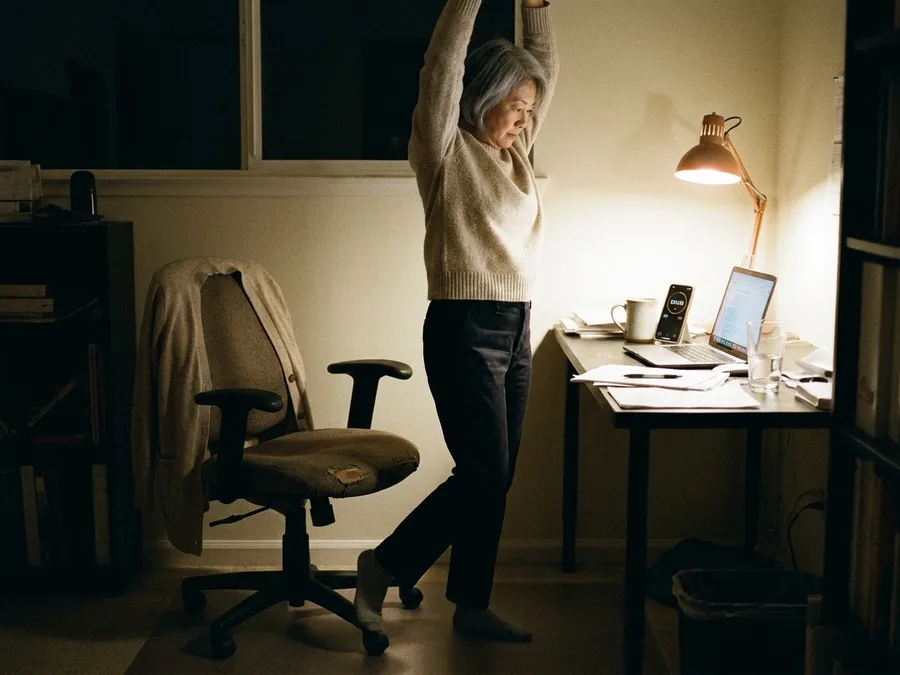
Sitting is not a single missed session. It is the shape of the whole day, and that is the difference that matters.
Start with the honest comparison. Skipping the gym costs you one missed 45-minute moderate workout. A desk day costs you 8 hours seated, plus 2 hours of commuting, which is roughly 10 sedentary hours, five days a week. Put the two numbers side by side and the math stops arguing.
Then the part most people miss: the workout happens inside the sedentary day. It does not replace it.
Train at 7 a.m. and you still sit from 9 to 5, still sit home again, and the day's seated total stays high even on the days you did everything right. That is why a good training week and a bad back can coexist in the same person.
The mechanism is not mysterious. The big muscles of the legs and glutes go quiet for hours at a stretch, circulation slows in the lower body, and the tissue never receives the repeated contraction a workout delivers in one concentrated dose.
One hard session is a signal. Ten idle hours are the silence around it. The body reads the silence too.
You do not need a standing desk, a treadmill underneath it, or a new schedule. The first swap is a 2- to 3-minute movement break every hour – stand, walk to the far bathroom, take the stairs down and back up. Then a 10-minute walk after work, before you sit down for the evening.
The whole point is that it repeats. Three minutes is small enough to do tomorrow, which is the only test that matters here. A 30-minute routine you do twice this week loses to three minutes you do five times a day.
So the workout is not wasted. It is outnumbered – by the hours that surround it, not by the session you skipped. Move those hours and the gym stops being the thing you feel guilty about.
💡 Tip: Keep the movement break boring and repeatable. The break you actually take beats the routine you design and abandon by Thursday.
| Habit | Why doctors flag it | First swap |
|---|---|---|
| 8 desk hours + 2 commute hours | Large leg muscles idle all day; circulation slows | 2-3 minute movement break every hour |
| 2-hour round-trip commute | Eats the minutes sleep and meals need | Walk one stop or stand on the train |
| 2 evening screen hours | Stacks onto desk hours and delays sleep | 10-minute walk after dinner |
| Daily smoking | Repeated injury to blood vessels and lungs | Cessation support through a clinician |
| Drinking most nights | Hits sleep, blood pressure and calories at once | Alcohol-free nights in the week |
| Packaged snacks as default | Crowds out protein and fiber; easy to overeat | One planned snack with protein and fiber |
| 20-oz sugary drink most days | Liquid calories don't register like food | Water in the same cup at the same time |
| 6.5 hours of sleep | Workout recovery gets consolidated here | Fixed wake time plus 30-minute wind-down |
| Bedtime swinging hours | Daily rhythm settles on the wake time | Anchor the morning, let bedtime follow |
| Chronic stress with no downshift | Reaches sleep and blood pressure | One daily downshift, plus support if needed |
| Little regular contact | Isolation behaves like unresolved stress | One recurring call or weekly walk |
| Bed-phone scroll | Delays sleep and keeps the mind alert | Phone charges outside the bedroom |
| Skipping prescribed meds | Daily-by-design doses don't forgive gaps | Pillbox plus a pharmacy reminder |
| Ignoring warning symptoms | Some signs get worse with exertion | Get seen before the next workout |
2. Long Commutes Keep You Sedentary

Eight hours at a desk is only half the seated day. For a typical commuter, another two hours get stacked onto it, one at each end, and those two hours are the ones nobody counts.
Count the real total: eight desk hours, a two-hour round trip, then the evening on the couch. That is closer to eleven or twelve hours in a chair, and the 45-minute workout sits somewhere inside that number rather than replacing any part of it.
The time is the bigger loss. Those two hours come out of the same pool that holds sleep, a home-cooked meal, and a walk after dinner, so the commute shrinks the recovery habits before the reader has even reached them.
You cannot shorten the drive or the train ride. Small balance work at home also makes those reclaimed minutes on foot steadier. Try these balance exercises to prevent falls. You can reclaim four or five minutes from inside it: park at the far end of the lot, get off a stop early and walk the last quarter mile, or stand for the middle stretch of the ride instead of taking the last seat.
The way you travel changes the math. A commuter who walks to the station, cycles part of the route, or covers the last half mile on foot is not sitting for those two hours, and the same commute costs that person far less.
Where the commute lands matters as much as how long it runs. It is the hinge between the desk and the couch, and whatever happens in those first minutes home sets whether the evening opens with movement or with the remote.
Values describe a typical desk-job day, not a measured average.
3. Evening Couch Time Adds Up

The commute ends at the front door. About an hour later, the last long stretch of sitting begins, and it runs for two hours without anyone noticing.
Picture the sequence: plates in the sink, body on the couch, TV or phone on, two hours of scrolling or streaming, then upstairs to bed. It is the most comfortable block of the day, and it is also the one that stacks on top of every seated hour that came before it.
The cost gets paid twice. Two more hours of sitting adds to the desk and the commute, and the same block pushes bedtime later, so the night shortens at the front end while the daytime sitting lengthens.
This is the one stretch of the day nobody else controls. No meeting gets scheduled into it, no boss or family member claims it, which makes it the easiest place in the whole chain to break before it reaches the bedroom.
The swap is small: a 10-minute walk once the dishes are cleared, or folding laundry and tidying the kitchen during the first episode instead of after it. The downtime stays exactly where it was, and only one piece of it moves.
The couch time is not the enemy. The enemy is the two hours passing without a single break in them, and it takes ten minutes to change what the evening sets up for the night ahead.
💡 Tip: Put the shoes by the front door before you sit down. The walk you take is the one that needs no decision at 8:15 p.m.
Where the Self-Fix Stops
What You Take In

The next four entries are about consumption, and they carry a different weight than the seated hours because not every one of them has an equal swap.
Sitting can be interrupted. Some of what goes in cannot be undone by a walk, and that distinction matters for how you handle each one.
4. Smoking Daily Outranks a Missed Session

The gym is one half of the day's ledger. The other half is what goes in, and the item doctors treat as a clinical priority rather than a lifestyle score is the cigarette pack that empties on a schedule.
Walk this through plainly: a 45-minute session on Tuesday does not cancel the ten cigarettes smoked on Tuesday. The workout and the smoke are not a trade. You cannot bank the treadmill and spend it on the pack, because they work on different systems and the smoke keeps its own hours.
The mechanism is repetition, not drama. Every time smoke reaches the bloodstream it injures the lining of the blood vessels and irritates the airways, and a daily smoker does that several times a day, every day, for years. A missed workout happens once; the exposure happens at the same moments each morning, each break, each drive home.
That is why this one sits above the sitting and the commute in priority. Movement habits respond to a swap you can make alone. Daily smoking responds to cessation support, nicotine replacement, prescription options, a quitline, and a clinician who can match the method to how much you smoke and how long you have.
None of that is a character test. Cutting down helps, but most daily smokers need more than willpower to stop, which is why the honest first step is a conversation rather than another resolution.
For a reader in their 50s or 60s who has smoked for decades, the phone call is the habit to start with, because it is the only entry on this list where a 10-minute walk is not the answer. This one is solved with help.
⚠️ COMMON MISTAKE
The Workout Does Not Buy the Cigarette
Fitness does not cancel smoke exposure, and framing it that way delays the conversation that actually helps. Any reduction helps, but daily use is handled with support from a clinician or a quit line, not with a longer cardio session.
5. Heavy Drinking Most Nights Costs More

Alcohol has the same unit of measure as the cigarette: the repeated occasion. Not the wedding, not the birthday – the ordinary Tuesday night when a glass or two becomes the way the evening starts, week after week.
One celebration is not the same data point as a habit. Bottles emptied most nights of the week are a pattern, and patterns are what this list counts. Sit with that distinction before reaching for the official guidance, because it is where the honest counting starts.
The mechanism reaches three places at once: sleep architecture, blood pressure, and calories that arrive without replacing a meal. A skipped workout touches one system for one afternoon. A nightly habit shows up in all three, every week, and the reader doing the counting is usually aware of only the sleep.
Here is where the boundaries belong. No personal limit is handed out in a health article, because the threshold that applies to you is a question for your clinician or the official guidance from the CDC, the NIH, or the American Heart Association – and that guidance differs for men, women, and older adults.
The first swap is simple to say and harder to hold: carve alcohol-free nights into the week. Two or three nights where the glass is seltzer in the same glass at the same hour, and the rest of the evening stays exactly where it is.
If the thought of a dry night brings shaking, sweats, or a racing heart, stop self-fixing and call a clinician, because withdrawal is a medical event and not something to white-knuckle through.
The count that matters is frequency, not volume – nights per week, not drinks per night. It is the same test used on the desk hours, applied to a different block of the day.
Your First Swap, By Where Your Day Is Heaviest
6. Ultra-Processed Snacking Becomes Your Default

Nights of drinking are easy to count, because you remember them. The food nobody counts is the food that fills the gaps – the snack pulled from the desk drawer at 3 p.m. because it was within reach, the ready meal heated up because the day ran out.
That is the pattern to look at: packaged snacks or prepared meals standing in for real food on most days, not because you chose them but because they were the nearest option.
One bag of anything is not the story. The trouble is that these foods are built to be hard to stop eating – the salt, sugar and fat ratios are tuned so the bag empties faster than you intended – and each one takes the place of the protein and fiber that would have held you steady until dinner.
The result is a day that never quite settles. You are hungry again an hour later, so the next snack is another one.
The swap is a substitution, not a new meal plan. Take one planned snack with protein and fiber – Greek yogurt, a handful of nuts and an apple, cheese and crackers with an actual vegetable alongside – and put it exactly where the packaged one lives now. Same drawer, same time.
A single treat on a birthday is not the issue. What you reach for on an ordinary Tuesday is.
For a reader past 50, this matters a little more, because the body uses protein less efficiently with age and the day's total needs to be spread across meals rather than saved up. A snack that carries some is doing double duty – steadying the afternoon and helping hold onto muscle. Nothing about the rest of the day has to change.
💡 Tip: Move the packaged snacks to a top shelf and put the protein snack at eye level. Proximity decides more afternoon choices than resolve does.
The Afternoon Snack — At a Glance
🥣 Protein Target
15-20 g in that snack
⏱️ Prep Time
Under 2 minutes
📅 Notice It Working
Hunger holds 3-4 hours
⚠️ Skip If
Nut allergy – use seeds
💰 Cost
Similar to the bag
Why It Works
Protein and fiber slow digestion, so blood sugar stays level instead of spiking and crashing.
7. Sugary Drinks Replace Water Too Often

Solid food at least makes you sit down and chew. A drink never registers as a meal at all, which is why it is the easiest intake of the day to forget you had.
Take the running example. One 20-oz sugary drink most days, the same cup in the same slot in the afternoon, works out to roughly 365 of them a year. That is not a treat. That is a fixture.
The tricky part is the way liquid calories behave. They do not replace a meal, so lunch still happens on schedule. They do not satisfy like food either, so the appetite that sent you to the fridge at four o'clock comes back an hour later.
So the day's eating carries on unchanged with the drink stacked on top of it, and the water you might have poured instead never gets poured.
put water or an unsweetened drink in that same slot. Same cup, same time of day, same hand reaching for it out of habit. Nothing else about the day needs rearranging.
And be honest about frequency, because that is the whole argument. A soda at a ballgame once a month is not the habit being described. Most days is a different thing entirely.
This is the cheapest swap on the entire list. One purchase changes at the store, no schedule gets touched, no extra minutes get carved out of a day that has none to spare. You are not quitting anything so much as replacing one item in a cart you were already pushing.
The Same Habit, Two Frequencies
Rare
- Soda with a weekend meal
- A late night once a month
- A missed workout every few weeks
- Drinks at a birthday
Most Days
- A 20-oz drink every afternoon
- Bedtime swinging hours every weekend
- Ten seated hours, five days a week
- Drinking most nights of the week
Sleep, Stress, and Connection

This is where the body does its repair work, and it is the section most readers skip because none of it feels like exercise.
Short sleep, a swinging bedtime, unresolved stress and thin connection all make the rest of the list harder to hold. Fix these and the other swaps get easier to repeat.
8. Short Sleep Undercuts Recovery

Everything you eat and drink gets broken down on a delay, and much of that work lands on the hours you spend asleep. Shortchange those hours and the day's processing gets squeezed into less time.
Take the running example: 6.5 hours in bed against a day that already logged 8 hours at a desk and 2 more behind the wheel. By the time the alarm goes, the body has had about as much rest as it spent sitting still.
Sleep is not the opposite of exercise. It is the shift the workout gets processed on, and it is one of the first things a doctor asks about when a patient says the training is not paying off.
Muscle repair, hormone timing, and the appetite signals that decide whether dinner ends at one plate or two are all set overnight. Cut the night to 6.5 hours and the next day's hunger runs hotter while the recovery runs thinner.
Start with two anchors, not an evening redesign: a wake time you hold steady, and a 30-minute wind-down before lights out. The wind-down can be as plain as dimming the room and putting the screens down.
Loud snoring or nodding off at your desk by mid-morning is a different problem from a late bedtime, and it belongs in front of a clinician rather than on another self-fix list.
Here is why this sits near the top of the ledger. Short sleep loosens your grip on every other swap on this page, because willpower itself runs on a rested brain.
💡 Tip: Set the wind-down alarm 30 minutes before lights out, not the bedtime alarm. The warning is what changes the evening.
9. Irregular Bedtimes Wreck Your Rhythm

Seven hours on a schedule that shifts by three is not the same seven hours as a steady one. Length is one measure. The pattern underneath it is the other, and a pattern that slides back and forth cancels a lot of what the hours were supposed to buy.
The usual shape: a 10:30 bedtime Sunday through Thursday, 1 a.m. or later on Friday and Saturday, then a Monday that begins five hours short of the week before. It feels like a reward, and it lands like a debt.
The body takes its cue most strongly from when you get up, not when you get into bed. A steady morning pulls the whole rhythm along behind it, even if the night before was not perfect.
So set the alarm first, weekends included, and let bedtime drift toward it on its own. Give it a week and you will usually be sleepy earlier without pushing.
This is not a ban on late nights. One long evening gets absorbed. What the body cannot absorb is a weekly swing in the same direction, over and over.
For the reader who already has a wake time, this is the same kind of move as the hourly stand-up from the desk: small, repetitive, decided in advance, and it does not cost any time you were not already spending.
10. Chronic Stress Keeps the Body Alert

Stress and sleep pull on the same rope. A nervous system that never gets a downshift during the day will not find one at lights out, which is why the bedtime fix and the daytime fix tend to succeed or fail together.
Most people picture stress as a feeling that sits on top of the day. It is closer to a setting the body runs on, and if that setting stays pinned high from the alarm to the pillow, the physical cost shows up whether or not the day felt dramatic.
Picture the texture of a high-stress weekday: the phone face-up on the desk, the caregiving call squeezed between meetings, the budget math done in the car at a red light. The body never gets a signal that the emergency is over.
That has a downstream effect, and it does not stay in the head. Sustained stress hormones influence sleep, blood pressure and the coping behaviors people reach for when they are worn down, which is how a mood becomes a physical input rather than a passing feeling.
Prolonged demanding days can also shape the choices around them, from a second drink at night to a third cup of coffee at 4 p.m. The stress itself is only half of it; the habits it gathers around it are the rest.
The first step is a single deliberate downshift, placed at the same spot in the day rather than whenever the sky clears. A ten-minute walk after the last work call, or three slow breaths before the commute home, is enough to count.
Stress is a chronic condition in the sense that it is managed, not removed. The goal is one reliable downshift, not a calmer version of your life, and a clinician or mental health professional can help build in more than that.
This one belongs in the same ledger as the sitting hours and the evening drink, and it gets the same test. How many days a week does it repeat? That number is the one worth acting on.
11. Loneliness Is a Daily Health Stressor

The week looks full from the outside. Work, errands, the commute home in the dark, dinner, the couch – and by Friday the last real conversation with a friend was ten days ago.
That is not a crisis. Nobody in that week is in trouble. But the contact kept getting deferred, and the weeks stack the way the seated hours stack.
Stress needs somewhere to go, and most of us discharge it in other people – a call on the drive home, a walk with a neighbor. When those contacts thin out, the stress has nowhere to land.
Doctors treat connection as part of the health picture, not a nice extra. Loneliness behaves like a stressor that never fully shuts off – the body stays on alert, and it reaches sleep and blood pressure the way a bad habit does.
The first step is a single recurring contact on the calendar. Not a coffee that has to be rescheduled every time, but a standing call with a sibling on Sunday, or the same neighbor for a walk Tuesday evening, every week.
Recurring is the whole thing. One dinner that took three tries to book does not count; a slot that happens whether or not you feel like it does, because that is the pattern your body gets.
This is not a request to become the person who organizes the dinner. One scheduled contact is the whole ask – one name on one calendar.
It is also countable. If the walk happens every Tuesday, anyone can look back and see whether it happened last week or whether it quietly stopped in March.
You can put a number on it the same way you can put a number on the hours you spend seated. That is all this habit needs to count as one worth your attention, and it starts with one call this week.
12. Doomscrolling Before Bed Steals Sleep
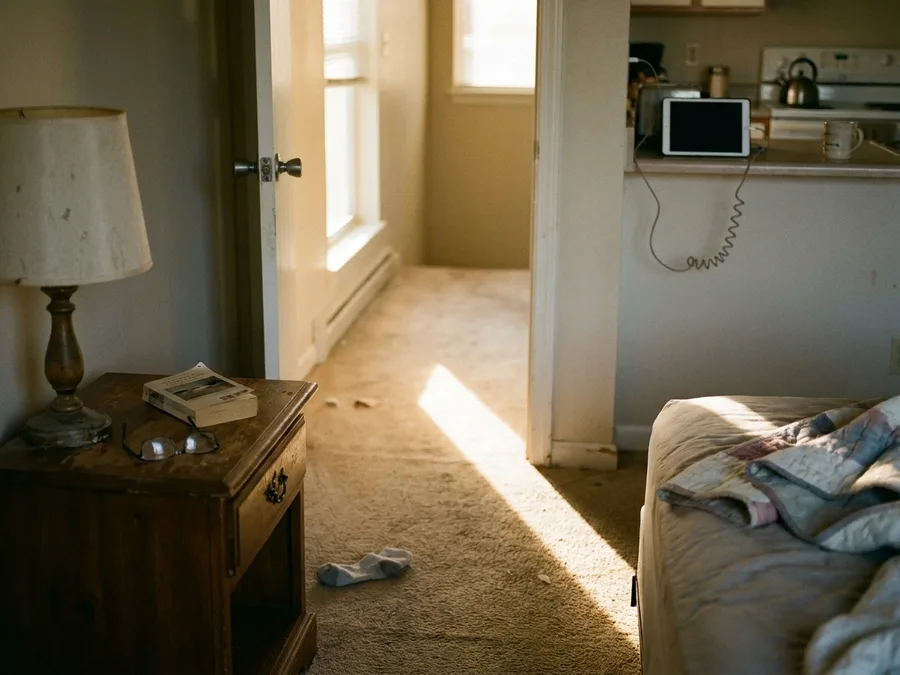
A phone is a doorway into connection and a doorway out of sleep at the same time. The late-evening scroll through news or social feeds sits at the end of the two hours of evening screen time, when the body is winding down for the night, and it lands directly on a night's sleep.
Scrolling delays sleep and keeps the user's mind alert even after they stop reading. The body is ready to wind down; the screen is not. That is the pair that fights for the last hour of the day and the 6.5 hours from earlier in this list.
The bed-phone is not an extra; it is what turns evening screen time into lost sleep. The same two hours, moved back an hour, and the night gains what the phone took. It is the last domino in the chain of evening habits.
The first swap is the phone charging in the hallway, or somewhere off the bed. If that seems like too much, put a 30-minute cutoff on it and let it charge at the door.
Phone use is not the issue; it is the hour it occupies. The device can stay in your life and very much in your evening; just make sure it does not sleep in the same room.
This one closes the loop on a day that already leaned on your sleep, because it is the mechanism that turns the evening block into a shorter night, and it is also the easiest to count: how many nights a week does the phone go to bed with you?
The Health You Ignore

The last two entries belong on a different shelf: things already under someone else's care or already raising a hand.
They are the two places where skipping the gym is genuinely the safer choice — and where the fix is a phone call rather than a swap.
13. Skipping Prescribed Meds Is Not Minor

There is a category of health that does not respond to a walk after dinner or an earlier bedtime. Blood pressure pills, diabetes medication, an antidepressant taken every morning by design – these sit in a clinician's hands, and a lapse there costs more than a skipped session ever will.
Miss a dose and the body does not wait politely for tomorrow.
Blood pressure can climb quietly in the gap. Blood sugar drifts. The steady blood level a daily prescription is built to hold gets a hole in it, and how wide that hole matters is a question for the person who wrote the prescription – not a number worth guessing at from a search bar.
Most people who miss doses are not careless. They are running out the door at 7:40 with a commute ahead and the bottle is in a kitchen cabinet behind a closed door.
The fix costs nothing and touches no schedule. A seven-day pillbox set out on Sunday night, a pharmacy text that fires at the same hour each day, or one call to the prescriber's office asking what to do when a dose gets missed. None of those involve shame, because shame has never once gotten a pill swallowed.
A reminder is the rare item on this whole list that asks for no time, no routine change, and no willpower after the first week. The first step is picking which of the three you will actually set up.
14. Ignoring Symptoms Lets Problems Grow

A missed dose announces itself – the pill still sitting in the box, a gap on the pharmacy record. A symptom that never gets checked leaves no such trace. It is the same kind of lapse, a signal ignored, just without the label that makes it easy to spot.
Some signals should stop you mid-stride.
Chest pain or pressure, breathlessness that arrives with a flight of stairs when the same stairs were fine last month, a change that lingers for weeks instead of days. These are the ones where pushing through is exactly wrong, and where skipping the workout is the safer call.
Here the guilt about the missed session has it backwards.
For chest pain or severe breathlessness, that is an urgent-care call, not a note in a phone to raise at a physical three months out. For the slower, quieter changes – a cough that will not clear, a mole that has shifted shape – book the appointment and let it sit ahead of any workout on the calendar.
Soreness is a different animal, and worth telling apart. New-workout soreness shows up a day or two later, lives in the muscles you actually worked, and eases as you move. A warning sign does not keep to the muscles you trained, and it does not fade on schedule.
So the habit here is to stop and be seen. It takes more nerve than any other fix on this list, because the appointment means hearing an answer you might not want, and that is what makes it worth placing ahead of everything else.
Frequently Asked Questions
Is sitting all day really worse than skipping the gym?
For most desk workers, yes, in hours. Skipping the gym costs one 45-minute moderate workout; a desk day plus a two-hour commute is about ten sedentary hours, five days a week. The workout happens inside that day rather than replacing it, so the seated total stays high even on training days.
Does a workout cancel out a daily cigarette or a nightly drink?
No. Exercise and smoke exposure are separate inputs, and one does not offset the other. The same logic applies to drinking most nights, which reaches sleep, blood pressure and calories at once. Both are conversations to have with a clinician rather than penalties to work off at the gym.
What is the smallest change worth making first?
Pick the habit that repeats most often in your own week. For many readers that is the seated block, so start with a 2-3 minute movement break every hour and a 10-minute walk after dinner. A 20-ounce daily soda swapped for water in the same cup is the cheapest single change if that is your repeater.
How long before a change shows up?
A fixed wake time and a 30-minute wind-down usually shift how mornings feel within a couple of weeks. Movement breaks tend to reduce end-of-day stiffness sooner than that. None of it is dramatic in week one, which is why the swap has to be small enough to repeat.
When should I stop self-fixing and see a clinician?
Chest pain or severe breathlessness is urgent, not a scheduling question. Missed prescriptions, withdrawal symptoms when cutting back on alcohol, loud snoring with daytime sleepiness, and any symptom that persists and does not settle all belong in a clinical conversation. Bring the list to your next visit.
Count the Repeats, Then Make One Swap Tonight
The missed workout is the least of it. Rank the habits by how often they repeat and the answer changes: the one showing up most days is the one to start with tonight, even when another one feels worse. So count what actually appears in the day as it runs, the seated hours, the 20-ounce drink, the six and a half hours of sleep, the phone in bed, and take the most frequent one. Make a single swap and repeat it for a week before adding a second.
Go back to where this started. The guilt was pointed at one missed session while the day's repeats went uncounted, and it is those repeats that were doing the work. Some of this list is not self-fixable, though. Chest pain, unusual shortness of breath, a change that persists, snoring with daytime sleepiness, worry about withdrawal from alcohol, a prescription that keeps getting missed: book the appointment rather than adding another swap. That call costs less than the workout you were feeling guilty about.
Pick One Repeater Tonight
Count which habit on this list happened most days this week, then make that single swap before bed. One repeatable change beats fourteen intentions.