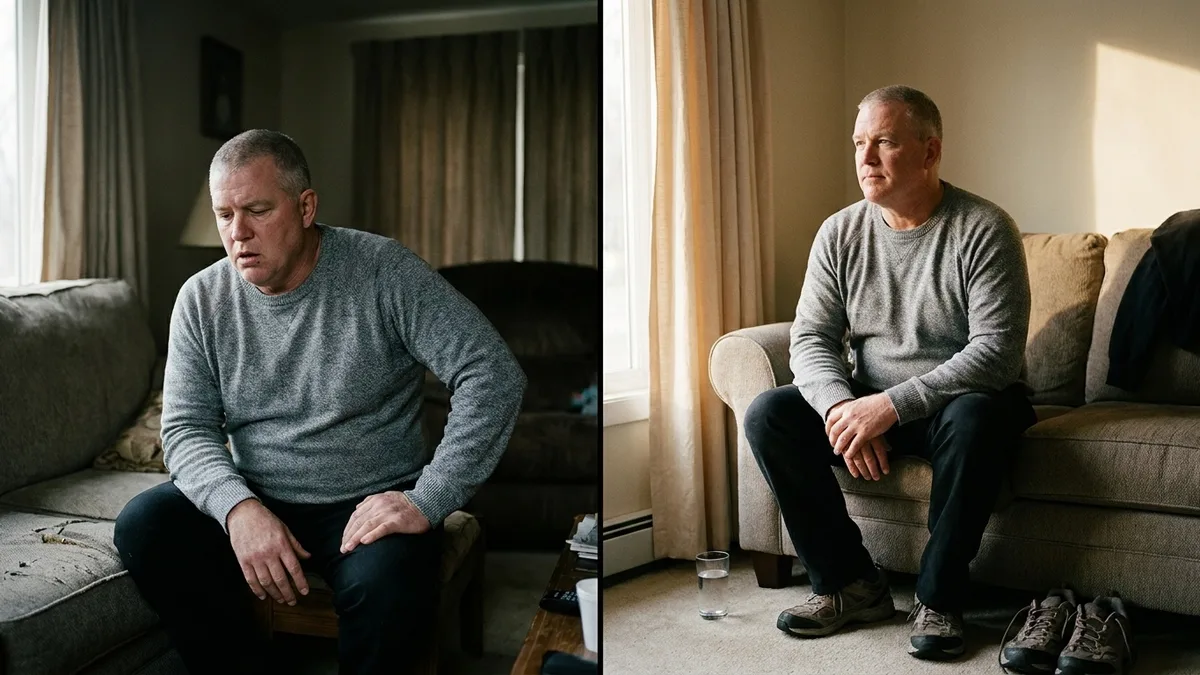
One of us priced her health coverage from her last workday to Medicare before she gave notice, and set aside a cash cushion for the copays she knew were coming. The other assumed her employer plan would somehow carry her. I was the other one.
At 62 I walked out of the billing office in Columbus after 38 years and a $72,000 salary, believing the $380,000 in my 401(k), the $45,000 in cash and the $1,100 pension were the whole decision. Medicare was three years off and I never bridged it.
Now 67, what wakes me is not the $4,200 monthly spending or the paid-off ranch. It is the gap between my last badge swipe and 65, the roughly $560 a month I have paid for premiums, copays, dental, vision and hearing aids, and the body and calendar that quietly changed while I was not looking.
Retiring at 62 is a health decision before it is a money decision. Before you give notice, know exactly how coverage runs from your last workday to Medicare, price the full out-of-pocket year, and build a routine that keeps your body and your people moving. These 11 mistakes are what I got wrong, and they are the checks to run first.
Quick Tips Before You Start
Price Three Bridges
Before notice, get quotes for COBRA, your spouse's plan, and a Healthcare.gov marketplace plan – all three, in writing.
Budget $560 Monthly
That is what I averaged for premiums, copays, dental, vision and hearing aids in my first five years – not just the premium.
Check Networks Twice
Confirm both the doctor and the facility are in network – a covered surgeon at an out-of-network lab still bills you.
Anchor the Week
Put one fixed commitment on the calendar – a volunteer shift, a class – before the work schedule disappears.
Ask About Hearing
Rising TV volume plus daytime fog is a doctor question, not a retirement quirk. Get it checked at your next visit.
Coverage and costs come first
The health side of retiring at 62 is not one decision. It is a bridge from your last workday to Medicare at 65, and then a second set of decisions about what Medicare actually pays for.
These three mistakes are the ones that decide whether 62 is affordable at all. Settle them before you give notice, because after notice you are negotiating from behind.
1. I Retired Before Sorting Health Coverage

The last badge swipe was a Friday in March. I was 62, thirty-eight years into a billing office at a Columbus hospital, and I walked out with a cake and no plan for the three years between that Friday and Medicare at 65.
That gap does not fill itself. There are three doors: COBRA from the hospital, my spouse's part-time plan, or a marketplace policy at Healthcare.gov. I priced all three only after my notice was already in, with a blood pressure cuff on the desk and a refill on the counter.
COBRA turned out to be the expensive door, but at least it was familiar. The marketplace was cheaper month to month on paper, until I counted what the deductible would do to a normal year.
The number I should have written on the back of an envelope first was $560 a month. That is what premiums, copays, dental, vision and hearing aids averaged over my first five years, roughly $6,720 a year, and every one of those dollars came out of pocket whether I felt sick or not.
an insurance navigator will sit with you before you resign. Bring your spouse's plan documents, your prescriptions, and your best guess at next year's doctors.
No retiree coverage, a part-time plan you cannot read, a marketplace menu that makes no sense, two maintenance drugs, a spouse whose hours might change, a doctor you refuse to lose: any one of those is reason enough to book the appointment while you still have a paycheck.
The cost of skipping it was not dramatic. It was three years of paying a little more than I had to for coverage I did not fully understand, and a knot in my stomach every time an envelope from the hospital arrived.
💡 Tip: Write down all three monthly premiums side by side, then add your two prescriptions and one dental cleaning to each. The cheapest premium often loses.
2. I Assumed Medicare Would Cover Everything

Getting from the last workday to 65 without a lapse is the first job. What I never questioned was what happens on the far side of that birthday, when the bridge plan ends and Medicare takes over, because I assumed the government program would feel like the hospital plan I had lived inside for decades.
It does not. For three years I told anyone who asked that Medicare had me covered, without once opening a page to see what I would actually owe for the drugs in my cabinet, the cleaning I get every spring, the glasses I replace every other year, or the hearing aids my spouse keeps mentioning.
Medicare.gov is where that conversation starts, and the first thing it tells you is that you are making two decisions, not one. Doctor and hospital coverage is one choice. The drug plan is a separate one with its own premium and its own list of what it will pay for.
The second thing is that a lot of what I used every year simply is not in the package. Dental cleanings, eye exams, hearing aids: none of those bills disappeared when the card arrived. They stayed inside the same $560 monthly health line I had been feeding for years, and they kept eating.
Two generic prescriptions sound trivial until you are comparing drug plans over them. So does a spouse on her own part-time coverage that needs coordinating, or a standing appointment with a cardiologist you have no intention of changing.
That is the exact profile for sitting down with Medicare.gov or a local benefits counselor before the enrollment window, not after. I did it backward, which means I learned what I owed by receiving the bills.
💡 Tip: Bring your prescription list and your dentist's and eye doctor's names to the counselor. Generic drug tiers and network status change the answer.
⚠️ COMMON MISTAKE
The Premium Is Not the Bill
Most people over 50 budget for the premium and stop there. The bills that scared me were copays, two generic prescriptions, dental, vision and hearing aids – all of it inside the same $560 monthly line. Build the budget around the whole year, not the monthly draft.
3. I Budgeted For Premiums, Not Copays

Once you know what the plan covers and what it does not, the real bill shows up, and it is not the one you circled in your budget. I had organized my whole retirement around a premium line and never gave a thought to the rest of it.
Copays at every visit. Two generic prescriptions refilled every month. A cleaning, an eye check, the hearing aids we finally priced. Those were the expenses that made me sit down at the kitchen table, and none of them fit neatly into a monthly number.
The $560 figure I use is an average across my first five years. Averages are comfortable in hindsight and useless in a bad year, because nothing about that number caps what a single illness can cost. A month with an extra specialist visit and a scan comes out of cash, not out of some fund that grows when needed.
So the cushion has to be its own thing, sitting apart from your everyday savings. I keep a separate small account for a bad medical year so a rough March does not reach into the grocery envelope or the mortgage, which is paid off on the $265,000 ranch and needs to stay that way.
One habit saved me more than any coupon: before I book a specialist, I call the office and ask which plans they take, then I call the plan and confirm. Both sides, every time.
A doctor who is covered still sends bloodwork to a lab that is not, and that lab bills you. I learned it on a routine panel that came back with an extra line I had not authorized, and now I ask which facility before the appointment is set.
💡 Tip: Ask the office for the self-pay price and a payment plan if a bill makes you consider skipping care. Skipping was the expensive choice in my experience.
The Health Line, Five Years In
The body and the routine don't retire with you
Once coverage is settled, the next question is whether retirement is livable. That depends on a body that keeps moving and a routine that does not collapse the week the work schedule disappears.
I kept the walk. I lost almost everything else, and it cost me two years of rebuilding.
4. I Stopped Moving When The Job Stopped
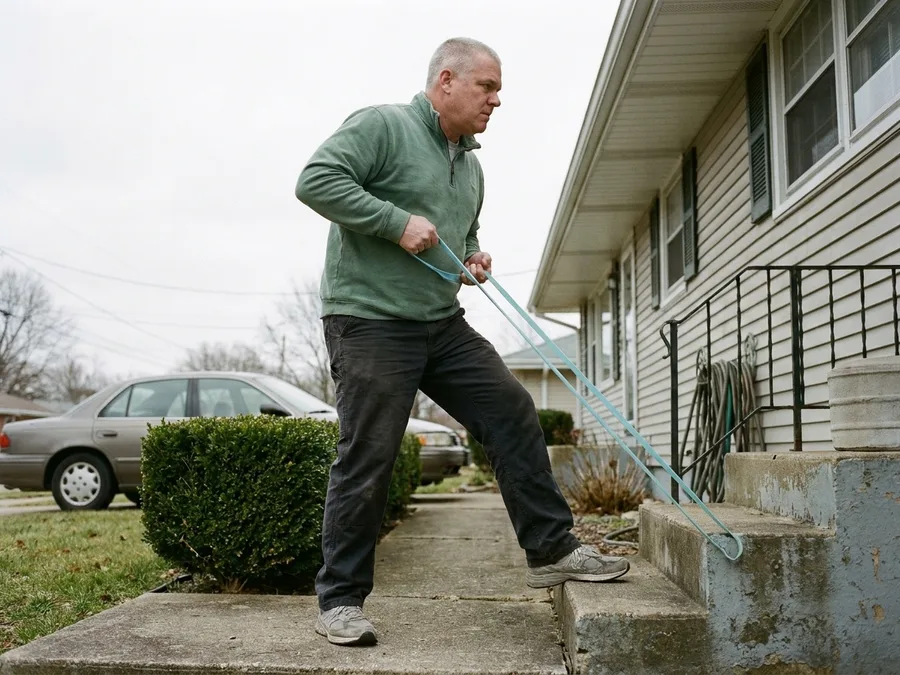
A health line on a spreadsheet is just arithmetic until a body has to use it, and mine changed the day the workday did. Thirty-eight years of hospital billing meant thirty-eight years of stairs between floors, hallways to the parking deck, and a walk at lunch I never counted as exercise because I was paid to be upright.
At 62 all of that stopped on a Friday. I told myself the 30-minute walk covered me, and it did cover something, but I never picked up a weight, a band, or a chair squat with any regularity until I was 65.
By 65 the gap showed up in ordinary places. Two bags of groceries from the car took a second trip I had not planned, and the porch steps at the ranch went from automatic to something I noticed in my knees and my breathing. My blood pressure numbers crept up at the twice-yearly visit.
Two years of strength work since then have only partly rebuilt what I let go. That is the honest math of it: the loss was quiet and slow, and the return has been slow too. Pairing the strength work with balance exercises to prevent falls is what I would add if I were starting over.
What actually made it stick was quitting the idea that retirement sets its own schedule. For 38 years a time clock told me where to be at 7:10 a.m.; with no clock, the walk slid to after lunch, then to when I got to it. So I wrote it down like a shift, the same 20 minutes of resistance work on Monday, Wednesday and Friday at 8 a.m., before the day filled itself.
One more piece of the check: at 62 I had high blood pressure and prediabetes, two generic prescriptions, and no business starting a new strength routine on my own say-so. The place to ask was the primary care visit I was already keeping twice a year, and that is where I asked.
Your body does not announce the loss. It just quietly raises the price of the groceries.
💡 Tip: Start with two mornings a week of light resistance – bands or cans – and add a third only after a month. Recovery takes longer at 62 than it did at 42.
💡 PRO TIP
Treat the Walk As the Anchor
The 30-minute daily walk is the one habit I never dropped, and it carried me through the years I skipped strength work. Keep the walk fixed and build the new routine around it, not instead of it.
5. I Let My Sleep Schedule Drift

The workday also supplied a wake time, and for 38 years I never appreciated it. A 6:15 alarm, coffee by 6:30, out the door by 7:10; the commute did the discipline for me.
With no commute, my nights stretched. I was reading or watching until 11:30, sometimes past midnight, then waking at 3 to the bathroom, then again at 5 with my mind already running. By 8 a.m. my head was foggy and my temper was short. Mornings that had been my sharpest hours for four decades had no edge at all.
The fix was smaller than I expected. One wake time, 6:45, kept seven days a week, including Sundays and the days I had nothing on the calendar. First thing out the door into morning light for 10 minutes, because light at the eye is the signal that sets the clock. Naps capped at 20 or 30 minutes, and none past 2 p.m.
That sounds like a rule. For a while it was the only structure in my day, and I needed it more than I expected to. The schedule had to be set first, before the day got filled with errands and volunteer work and everything else that could wait an hour.
One question did not belong in the retirement bin: I snored loudly enough that my spouse had started sleeping in the other room, and I was foggy at 11 in the morning. Loud snoring plus daytime fog is a doctor question, and I wrote it on the index card for my twice-yearly primary care visit rather than treating it as a quirk of age.
The drift also left fingerprints I could see. I double-booked a dentist appointment with a church meeting. I canceled the eye exam because I was too tired to drive across town. I snapped at my spouse over the Friday grandchild pickup, which had not changed and did not deserve it. That is what a broken sleep schedule looks like from the outside: a person who is fine, missing things.
💡 Tip: Cap naps at 20 minutes and before 3 p.m. A long afternoon nap was the fastest way to wreck my night.
Daily Routine — At a Glance
🚶 Walk
30 minutes, daily
🏋️ Strength
2 mornings a week, from 65 onward
🤝 Volunteer
Tuesdays, same shift
👧 Grandchild Care
Fridays, standing commitment
🩺 Primary Care
Twice a year
🦷 Dental and Eye
Once a year each
Why It Works
Fixed days beat flexible intentions – the calendar is what kept the week from emptying.
6. I Skipped The Dentist And Eye Exam

Foggy mornings and a calendar full of canceled appointments are exactly the conditions under which the annual dental cleaning and the eye exam get pushed to next year. That is how it went for me, and the push turned into bills.
I skipped a $120 cleaning one spring because I was between plans and the self-pay price felt like too much for a mouth that did not hurt. The cracked filling showed up nine months later, and the crown that replaced it ran past $1,200. I also put off an eye exam to save the $200 or so, then paid for a new pair of glasses I could not read through.
Both visits belong in the plan from day one. Dental cleanings twice a year, an annual eye exam, hearing checks as they come up: those sat inside the $560 a month I had set aside for health costs in the first five years, and they sat there whether or not Medicare had kicked in.
Hearing was the one I never saw coming. The TV volume went up a notch, then another, and my spouse finally said something plainly. A hearing check followed, and the aids that came out of it were another line inside that same $560, not a surprise from somewhere outside the budget.
That is the part I want the next reader to hear. When a bill makes you think about skipping, the bill is almost never the real number, and there is another number you can find: the self-pay price, which you ask the front office for by phone, and the payment plan, which most offices will set up if you ask before the visit rather than after. Run both against the monthly health line before you cancel. The visit you keep is cheaper than the repair.
💡 Tip: Put the dental cleaning and the eye exam in the same month as your birthday so the reminder is automatic.
The Cheap Route and the Expensive Route
Skipping the Visit
- Saved the price of a cleaning and an eye check
- Paid for a cracked filling and new glasses
- Lost a year of tracking blood pressure and prescriptions
- The skipped year cost more than the visits would have
Keeping the Appointment
- Annual dental cleaning and eye exam stay on the calendar
- Costs fit inside the $560 monthly health line
- Hearing check follows when the TV volume rises
- Self-pay price and a payment plan keep the visit affordable
7. I Treated Retirement As A Permanent Vacation
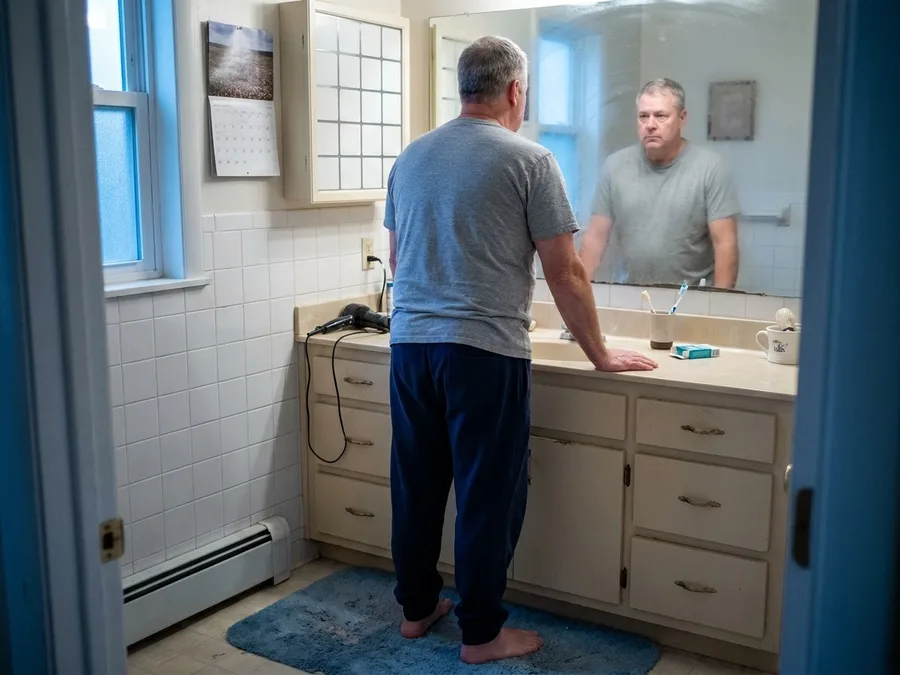
Skipping the dentist was the first small sign, and looking back it was the same mistake in a different suit: once I was home, I quietly decided that anything optional could wait. So the first year became a vacation that never ended. Three trips, a bathroom remodel I did myself, and a garage I finally organized floor to ceiling.
Then the trips stopped. And there was nothing underneath them.
Pacing never occurred to me. A permanent vacation means you fill every day, because that is what a vacation is for, and I scheduled mine like a man trying to spend a windfall before it ran out. Rest days and empty afternoons belonged in the plan, not in whatever space was left over, and I gave them none.
By month 14 it showed. I was sleeping until 9:30 on weekdays I had once been at the hospital by 6, skipping the daily 30-minute walk more weeks than not, and I felt flat in a way I could not explain to my spouse. The calendar had been full. Then it was not.
The fix was one fixed point that did not move. I kept the Tuesday volunteer shift at a food pantry near German Village like a work shift. Not flexible, not negotiable, not something I moved because the weather was nice or because a Tuesday errand came up.
one standing appointment a week that pulls the other six days into a shape.
For the reader still working, name the anchor before you give notice, not after. It can be a shift, a class, a standing walk with the same person every Monday, a set morning at the gym. What it cannot be is waiting for the calendar to fill itself.
One more thing the vacation year cost me. Rest has to be an entry on the schedule, written down next to the trips, or it is never taken and the crash comes anyway. I learned that the hard way at 63, and I have kept the Tuesday slot ever since.
💡 Tip: Plan one recurring commitment for every week of your first year – the same day and time – before you book a single trip.
🗓️ The First Year, Paced
Before Notice
Have the coverage number written down – not estimated – before you pick a last day.
Month 1
Write the wake time and walk on the wall calendar; a skipped day gets made up, not forgiven.
Month 2
The anchor goes on the calendar before anything optional does, and it loses every conflict.
Month 3
Same week, not same month: cleaning and eye exam back to back so neither gets postponed.
Month 6
Two mornings, full day between them, starting lighter than you think you need.
Month 9
Compare the $560-a-month health figure to real bills; if it is under, move the difference to cash.
Month 12
One park, four days, and drive home early if it feels like too much – that is the point of the test.
People and time are what make it worth it
The last group is the one I underestimated. Coverage and a moving body make retirement possible; people and a protected calendar make it worth getting up for.
These four mistakes are the ones that show up in the house, not on the bill.
8. I Isolated Myself Without Noticing

When the projects ran out, I was alone, and the isolation did not announce itself. I went from a hospital billing office where a dozen people said good morning every day to a house where some weeks the only voice I heard in person was my spouse's.
The first stretch of days without a real conversation, I called it decompression. By month six I had gone three days in a row without leaving the house, and it did not feel like a crisis. It felt like nothing, quietly, and that is the point.
There was no dramatic moment. Nobody slammed a door. The daily contact I had counted on for 38 years was simply gone, and I had never once counted it as anything, because it came free with the badge.
What worked was putting contact on the calendar with a day and a time, like the shift. One phone call on Wednesday mornings to the same friend from the billing office. One lunch a month with a former colleague. The Tuesday volunteer shift. The Friday grandchild care. That was the whole program, and it was enough.
Notice something about that list. The volunteer shift and the grandkids were not extra errands. They gave me something I had stopped tracking: names, faces, a reason to be somewhere at a set time. When a week had both in it, I left the house four or five days instead of one.
The warning signs I now watch for are simple and they are honest. Days without leaving the house. Plans I cancel for no good reason. A stretch where I cannot think of anyone to call except my spouse. If that picture holds for weeks, that is not a retirement quirk, and it goes to my primary care clinician, not into the garage and not into a third cup of coffee.
For the reader weighing 62: the friendships are there now, and they live partly inside the job. Write down two names you want to still be calling in five years, and put the call on the calendar before the last workday. The connection has to exist in writing, with a time attached, or the empty week will eat it.
Isolation after retirement builds slowly and out of sight. The calendar is the only place it shows up early enough to do anything about.
💡 Tip: Keep a short list of three people you can call on a Tuesday afternoon. If the list is empty, that is the signal to join something.
9. I Became The Default Caregiver
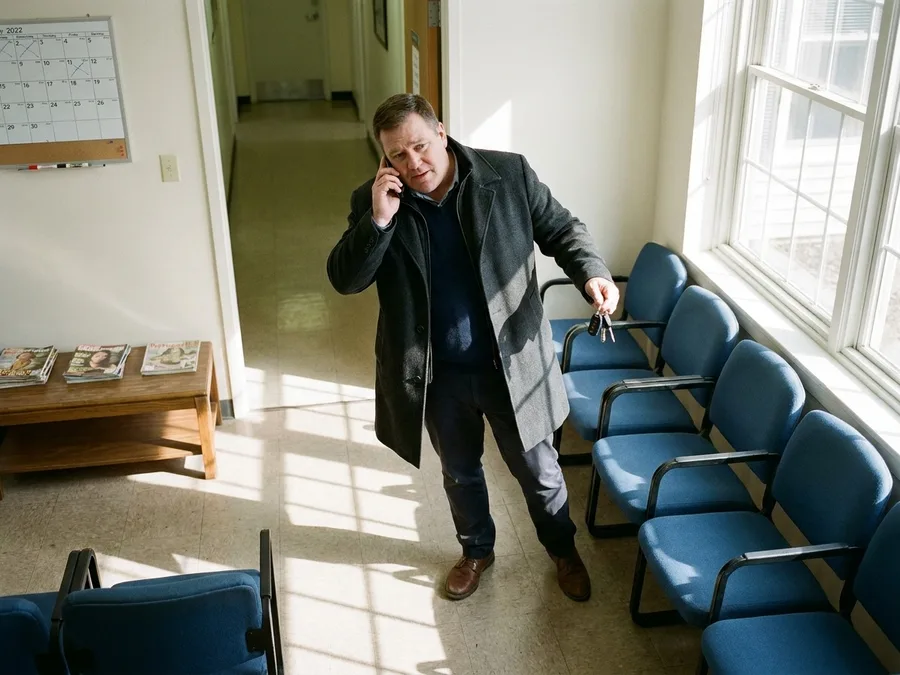
The same availability that solved my empty weeks created a different problem inside the family. Once I was home and my spouse was still at her part-time job, every errand, every school pickup, every same-day emergency became mine. Friday grandchild care was planned and I loved it. The other four days were not.
It happened one appointment at a time. A pharmacy run. A ride to a doctor's office across town. My daughter asking, at 7:40 in the morning, whether I could take the 10 o'clock slot because she had a meeting, and what was I doing anyway.
The line I had to learn is the difference between a standing commitment and an emergency. Friday grandchild care was on the calendar and it was mine. A same-day emergency was not automatically my job just because I was the one who was home. Those are two different things, and I let them blur for the better part of a year.
My own medical appointments stayed where they were, and that turned out to be the load-bearing rule. Primary care twice a year, dentist once, eye exam once. When the caregiver starts canceling his own visits to cover everyone else's, he becomes the next patient, and the family that leaned on him has two problems instead of one.
The conversation that saved the arrangement happened while my spouse still had her part-time job setting the household schedule. We sat down and divided caregiving on paper, the way we had once divided the mortgage. She took the Thursday pickups. I kept Friday and the emergencies I actually wanted. The rest went back to the family that created it.
For the reader, this is the check to run before notice, not after. Write down every family expectation that already exists, and mark which ones are standing commitments and which are favors that have quietly become defaults. Do it while you are still working, because once you are home, the convenience argument wins every time.
I found two things I did not know existed. The local Area Agency on Aging runs caregiver support and respite programs, and the support groups are free. The people in that room had the same story, and none of them had planned to be there either.
💡 Tip: Say yes to the standing Friday, no to the same-day errand until you check your own calendar. That one sentence changes the whole week.
10. I Didn't Plan For My Spouse's Health

Setting a limit on how much caregiving I would take on taught me something bigger than scheduling. My whole retirement plan rested on one quiet assumption: that my spouse and I would both stay well. Nobody gets that guarantee.
A diagnosis does not just rearrange your days. It hits coverage and hands-on care at the same moment, right when you have the least slack to absorb either. That is the version of early retirement I never priced.
My spouse was still working part-time when I gave notice at 62, and I treated that part-time plan as a safety net without ever reading it. It could change with her hours, and hours are the first thing a health problem touches.
Before you put in notice, sit down with the spouse's plan documents and yours. Call the plan and ask two things: what it covers for a non-employee spouse, and what triggers a change in eligibility. A navigator will walk you through it free.
I did keep one thing separated that I would keep separate again. A caregiving emergency fund lived inside the $45,000 cash, deliberately apart from the $380,000 in the 401(k), so a diagnosis would never force me to sell at the bottom of a bad market.
The rest of the plan I built on guesses about what a policy would pay, and that is exactly how the scary version gets drawn. Medicare.gov and the Ohio Department of Insurance were free the whole time; I just never called them.
Run the spouse question before notice, not after. It is the one variable that can move both your coverage and your calendar in the same week.
💡 Tip: Ask your spouse's HR department what happens to the part-time plan if hours drop. That one answer can change your retirement date.
11. I Waited Too Long For The Big Trip
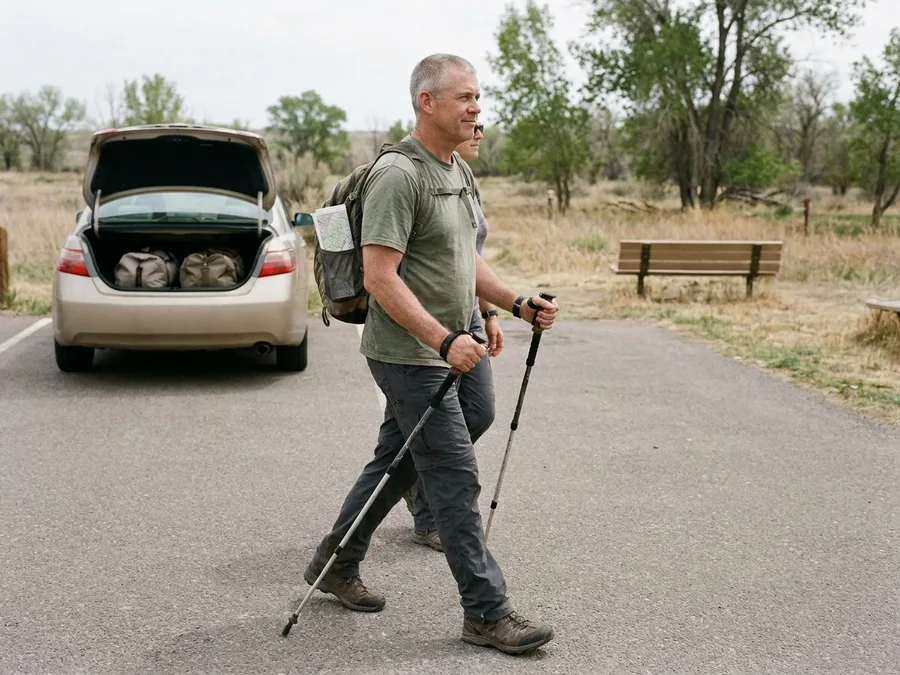
Once I had written down what a diagnosis would cost us, the well years stopped looking endless. That is the strange arithmetic of planning for illness: it turns every healthy spring into something with a countdown on it, and it is why the trip I kept pushing back should have been booked instead.
The trip was a three-week loop through the national parks, budgeted at $6,000. I had it penciled in for the spring I turned 63.
Then came the health scare, and the whole thing slid to 70 with one sentence at the kitchen table. Nothing about the parks changed. What changed was me.
At 67, the piece I worry about is my knees. They are fine on flat ground and loud on the downhill stretches, and I have spent five years imagining which switchbacks would end the day early.
a four-day test trip to one park. Same luggage, same walking pace, same motel mattress, so you learn how your body handles the third morning instead of guessing.
The pacing belonged in the booking from the start. One park a week with a rest day between drives, not five parks crammed into three weeks.
Travel insurance for a trip that size runs a few hundred dollars, and at our age it is the cheapest part of the whole budget. It turns a canceled trip into a refund rather than a loss.
The perfect health year never arrived for me. At 63 I would have bought the insurance, taken the test trip first, and set the date before another doctor's appointment could talk me out of it.
💡 Tip: Book the four-day test trip within six months of retiring. Same suitcase, same walking pace – it tells you what the big trip will actually feel like.
Frequently Asked Questions
Can I get health insurance if I retire at 62 but don't have Medicare yet?
Yes, and you have three paths to price before notice: COBRA from your employer, a spouse's plan, or a marketplace plan through Healthcare.gov. Get written quotes for all three while you still have HR to ask. An insurance navigator can walk you through the marketplace choices.
Does Medicare cover dental, vision and hearing aids?
Original Medicare generally does not cover routine dental cleanings, eye exams for glasses, or hearing aids. In my first five years, those costs stayed inside my $560 monthly health line. Check Medicare.gov or a local counselor before you choose your coverage so you know what you will pay out of pocket.
How much should I budget for health costs in early retirement?
Start with a monthly figure that includes premiums, copays, prescriptions, dental, vision and hearing aids – not just the premium. Mine averaged about $560 a month, or roughly $6,720 a year, over the first five years. Then keep a separate cash cushion for a bad medical year, because the average is not a cap.
What should I do if I already retired and skipped these checks?
Pick the single fix that matches your biggest fear. If it is coverage, call the state insurance office or a navigator this week. If it is your body, put the daily walk and one weekly anchor on the calendar. The order matters less than starting one of them now.
Should I take the big trip now or wait until my health is better?
Take a short test trip first – four days, one park, same luggage and pace. It tells you what your knees and your routine can handle. Then book the real trip with travel insurance and a rest day between drives. Waiting for a perfect health year is how my trip slipped from 63 to 70.
Run the coverage check before you give notice
Run the coverage check before you give notice.
At 67, five years in, the part that still scares me is not the $380,000 in the 401(k) or the $45,000 in cash. It is the bridge I never built and the routine that vanished with the badge.
Write your last workday and your Medicare start at 65 on one page. Price COBRA, your spouse's part-time plan and Healthcare.gov against that $560 monthly health line, then add copays and a cushion for a bad year. If you are still working, that check comes before everything. If you are already retired, pick the one fix that matches your biggest fear – coverage and cost, body and routine, or people and time – and start it this week. I am booking the $6,000 national-parks trip for 70, with a shorter test trip first and travel insurance, because these knees have a deadline.
Price Your Health Bridge This Week
Before you give notice, get written quotes for COBRA, your spouse's plan and a marketplace plan, then add your prescriptions and one dental cleaning to each. That one page is the check that decides whether 62 is affordable.