
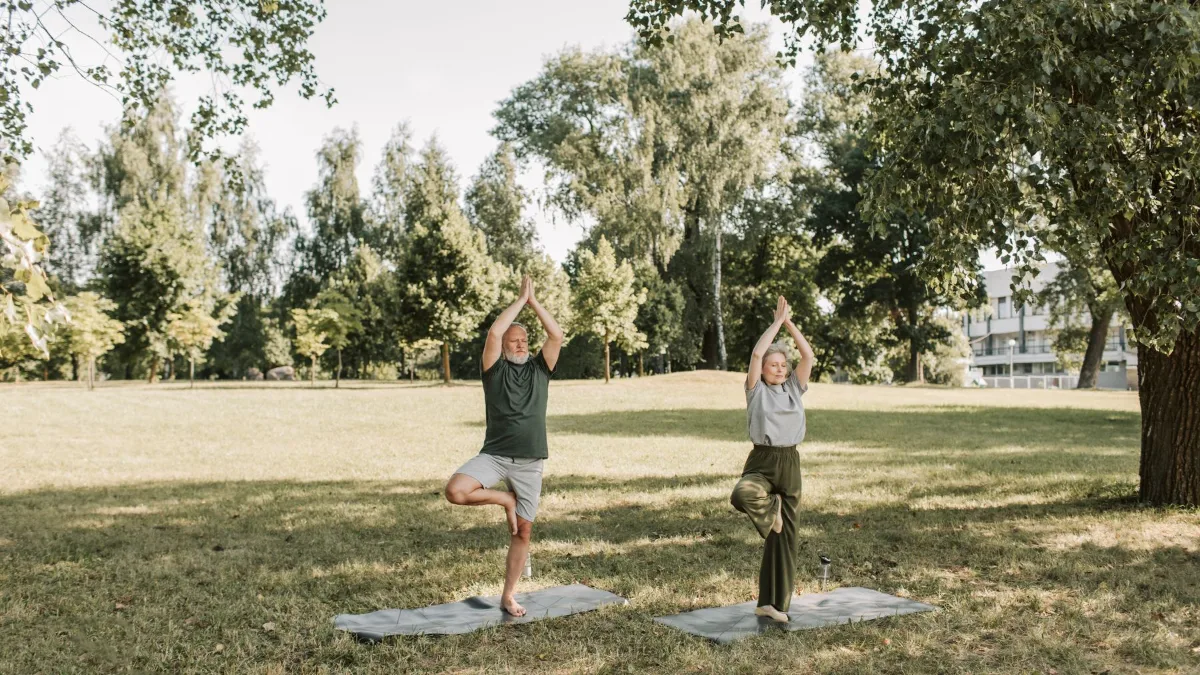
Balance is like a muscle: use it and you keep it. The good news is that it responds quickly. Many of my students notice a difference within a few weeks of practicing these six exercises.
The short version
- Practice near a sturdy counter or chair, and wear supportive shoes.
- Start holding on with both hands, then one hand, then a fingertip.
- About ten minutes, three or more days a week, is a good goal.
1. Weight shifts
Stand with feet hip-width apart. Slowly shift your weight to the right foot, hold for a few seconds, then shift to the left. Repeat 10 times.
2. Single-leg stand
Hold the counter and lift one foot an inch off the floor. Hold for up to 30 seconds, then switch. Work toward letting go for a few seconds at a time.
3. Heel-to-toe walk
Walk along the counter placing one foot directly in front of the other, heel touching toe, for 15 to 20 steps. Keep your eyes forward, not on your feet.
4. Heel and toe raises
Rise onto your toes and hold for a moment, then rock back onto your heels. Repeat 10 times. This strengthens the ankles, which do a lot of balancing work.
5. Side leg raises
Hold the counter and slowly lift one leg out to the side, keeping your back straight. Lower with control. Do 10 on each side.
6. Sit-to-stand without hands
From a sturdy chair, stand up without using your hands, then sit down slowly. If that is too hard, use your hands and work toward needing them less.
Why balance practice matters
The CDC reports that about one in four adults 65 and older falls each year. Strength and balance exercise is one of the most effective ways to lower that risk.
Stay safe
Practice with someone nearby if you are unsteady. Stop if you feel dizzy, and talk to your doctor if you have had a fall or feel unsteady often.
Sources
This article is for general information and is not medical advice. Talk to your doctor or a physical therapist about a program that fits you.