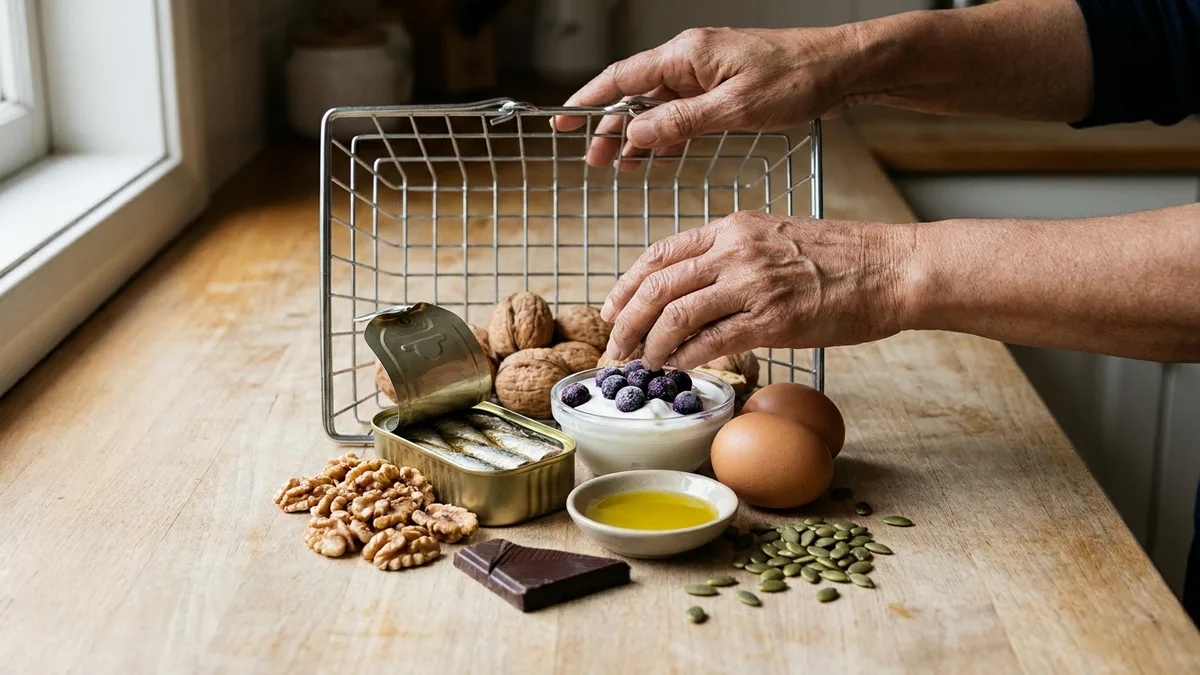
Two packages sit side by side in the same supermarket case, both sold as brain food: fresh salmon tagged $12 to $16 a pound and a $2 to $3 tin of sardines. The shopper holding both, in their fifties or sixties, or buying for a parent, has about ten seconds to decide which one goes in the cart.
eating for the brain is not a separate diet you have to research. It is ordinary grocery items, each with a set portion, a price per serving that runs from about 20 cents for lentils and oats to about $4 for salmon, and a day built from six of them landing around $6 to $9 a person. Everything except the salmon and the egg takes 0 to 3 minutes, and nothing needs special equipment.
So the plan is the cart. Fifteen foods, a portion for each, a two-minute prep, a price you can check against the shelf tag.
By the end you will know how to choose the smallest cart that covers the list, how to judge each item by cost per serving instead of sticker price, and which foods belong in the freezer, which on the counter and which in the cupboard before you start. If you are on a blood thinner, have kidney disease, a thyroid condition or a food allergy, run the list past your clinician before changing what you eat daily.
Quick Tips Before You Start
The Smallest Cart
Six items cover the list: oats, lentils, frozen berries, walnuts, olive oil, and one tin of sardines. Add eggs only if you want a hot breakfast.
Freezer, Counter, Cupboard
Freezer: fish, berries, walnuts, pumpkin seeds. Counter: beets, eggs. Cupboard: olive oil in a dark bottle, oats, lentils, canned beans, turmeric.
Salmon or Sardines?
Pick sardines for a weekday cart at $2-3 a tin. Save fresh salmon for one meal a week and buy frozen fillets at $8-9 a pound instead.
One Portion Each
3-4 oz fish, 1 oz nuts, 1/2 cup berries, 1 cup raw greens, 1/2 cup beans, 1 egg, 6 oz yogurt, 1 tbsp olive oil, 1 oz 70% dark chocolate.
Turmeric Needs Pepper
Black pepper with turmeric on eggs, lentils, or rice. Without it the turmeric is mostly color, not flavor or effect.
1. Wild salmon, the omega-3 anchor
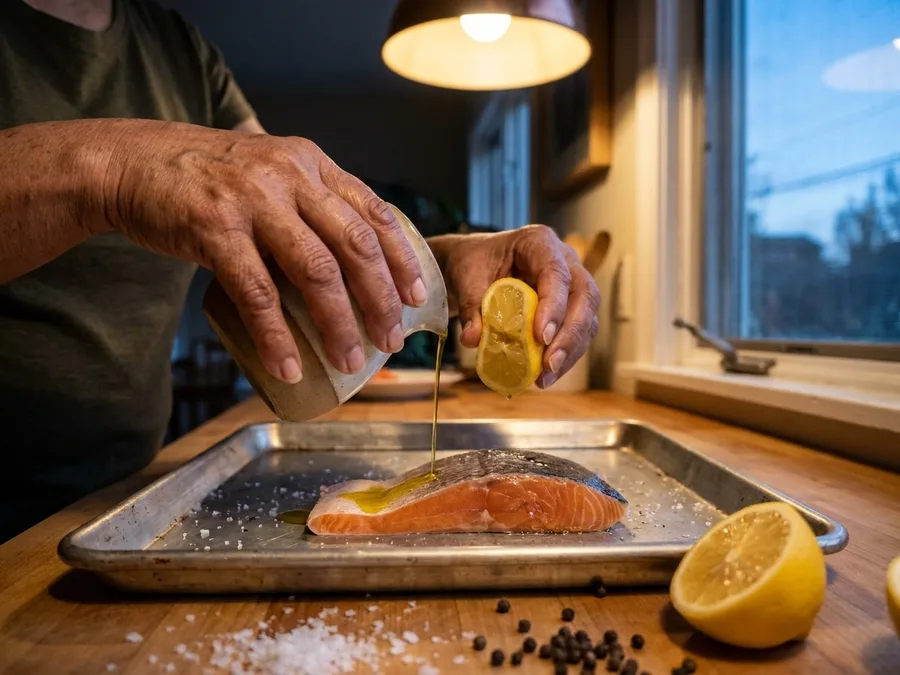
Salmon is the one item that makes the whole list feel expensive. Fresh fillets run $12 to $16 a pound at a mid-range supermarket, which is why so many carts leave the fish counter empty.
The number that matters is not the pound price but the plate price. A 3 to 4 ounce cooked portion works out to about $4, and the frozen bag at $8 to $9 a pound cuts that further without losing the fat you came for.
What you are buying is DHA, the omega-3 the brain uses directly, built into the membranes of its cells. Oily fish hands it over ready to use; plant sources like flax and walnuts carry ALA, which the body has to convert, and the conversion is slow and small at any age.
That difference is the whole argument for spending here. It is also the reason the fish counter deserves one slot in the cart rather than a weekly habit you cannot keep.
The cooking is simpler than the price suggests. Pat a fillet dry, rub it with olive oil, salt and a squeeze of lemon, and it goes into a 400F oven for roughly 12 to 15 minutes, until it flakes at the thickest point. No pan, no thermometer, no technique learned from a video.
Buy two bags of frozen fillets rather than one fresh piece. The point is a repeatable Tuesday, not a single impressive dinner, and a bag in the freezer is what makes the second and third serving happen.
It earns its place as the anchor when the budget allows: the highest price and the longest prep on this list, and the most direct form of the fat the brain actually uses.
💡 Tip: Thaw frozen fillets in the fridge overnight, not on the counter — and pat them dry before they hit the heat so they sear instead of steam.
| Food | Portion | Why it's on the list | Cost per serving | Time |
|---|---|---|---|---|
| Wild salmon | 3–4 oz cooked | Direct DHA for brain cell membranes | $4 (frozen $8–9/lb) | 15 min |
| Canned sardines | 1 tin (3–4 oz) | Same omega-3 family, no cooking | $2–3 | 0 min |
| Eggs | 1 large | Choline and B12 in the yolk | ~35 cents | 5 min |
| Plain Greek yogurt | 6 oz | 15–17 g protein plus B12 and calcium | $1.20–1.60 | 2 min |
| Frozen wild blueberries | 1/2 cup | Anthocyanins in the skin | ~50 cents | 30 sec |
| Walnuts | 1 oz (14 halves) | Plant omega-3 (ALA) | ~50 cents | 0 min |
| Pumpkin seeds | 1 oz handful | Magnesium and zinc | ~40 cents | 0 min |
| Leafy greens | 1 cup raw | Folate and lutein | ~60 cents | 1 min |
| Extra-virgin olive oil | 1 tbsp | Polyphenols and monounsaturated fat | ~60 cents | 0 min |
| Lentils | 1/2 cup cooked | Folate, iron, slow carbohydrate | ~20 cents | 20 min |
| Canned black beans | 1/2 cup | Fiber and folate, no cooking | ~$1 | 0 min |
| Oats | 1/2 cup dry | Beta-glucan soluble fiber | ~20 cents | 2 min |
| Dark chocolate | 1 oz (70%+) | Flavanols | ~50 cents | 0 min |
| Turmeric + black pepper | 1/4 tsp + pinch | Curcumin with piperine for absorption | pennies | 0 min |
| Beets | 1/2 cup cooked | Dietary nitrates for blood flow | $2–3 bunch | 90 sec–1 hr |
2. Canned sardines, the two-dollar tin
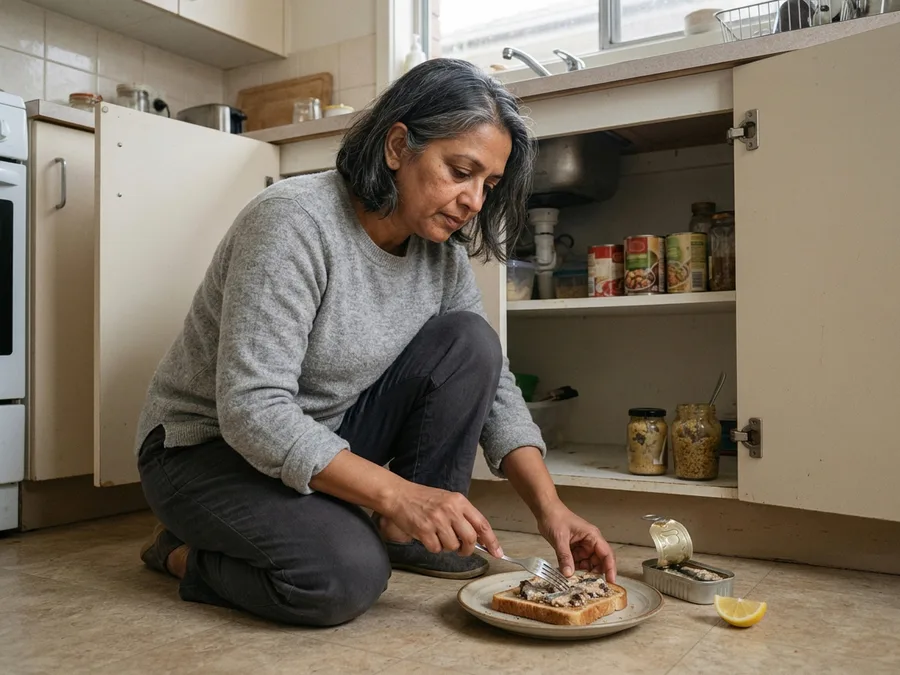
The fish fat that matters does not require the fish-counter price. A 3 to 4 ounce tin of sardines costs $2 to $3 and carries the same omega-3 family as a salmon fillet, with no oven and no pan involved.
It brings more than fat. The small soft bones are edible, and they carry calcium, so omega-3s, vitamin D, B12 and calcium all land in one forkful.
For a reader watching bone density and brain health in the same decade, that overlap is the quiet advantage. One item, four nutrients, no cooking.
Open a tin at lunch, drain it, and mash it onto toast with a little mustard and lemon, or fork it through warm pasta with olive oil and call it dinner. Either version takes about three minutes and dirties one bowl.
The shelf life is the real reason it stays. A tin sits in the cupboard for a year or more, so the night nothing was planned and takeout was the fallback, a two-dollar tin becomes the meal instead.
Keep three tins on the shelf even when frozen salmon is already in the freezer. This is the fish entry that costs the least and asks the least, and at zero prep it earns a permanent cupboard slot.
3. Eggs, choline in five minutes
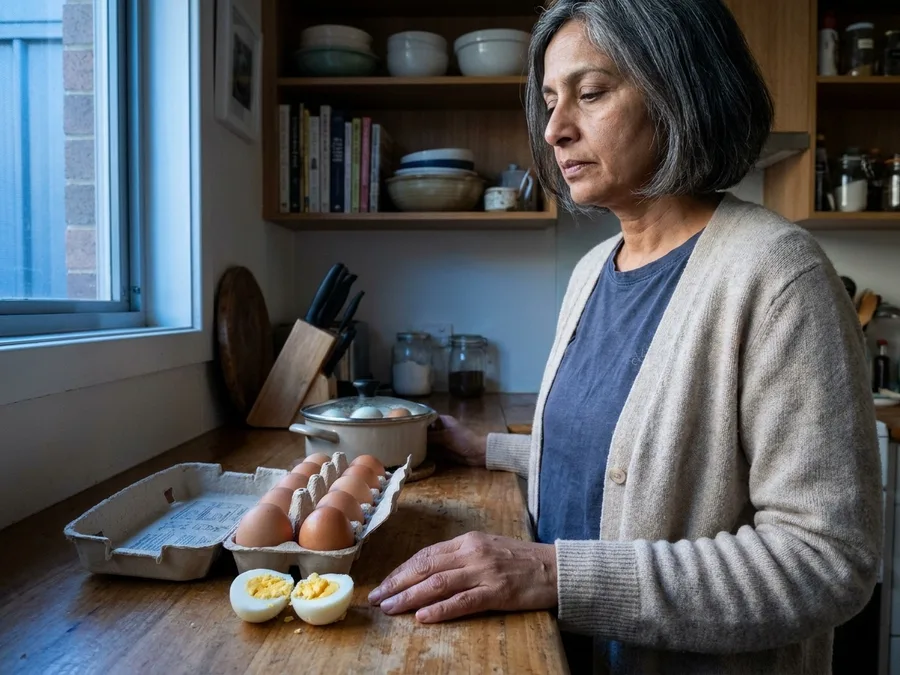
Eggs are still on the list at this age, and the part people cut first is the part worth keeping. A dozen runs $3 to $5, so a single large egg lands around 35 cents, and two of them make a breakfast for under a dollar.
Choline and B12 sit in the yolk. The body uses choline to build acetylcholine, a signal the brain relies on for memory and muscle control, and pouring out the yellow and cooking only the whites throws those nutrients away with it.
Here is the efficient version. Boil six eggs on a Sunday for six minutes, cool them, and leave them in the shell in the refrigerator; that one pot covers the week's mornings at no cost in time on a weekday.
The cholesterol question is the one people carry into the aisle with them. That is a conversation with your own doctor, who knows your numbers and your history, and it is not settled by defaulting to egg-white omelets.
At roughly 35 cents an egg and five minutes to heat, it is the cheapest cooked breakfast here, with the useful nutrients concentrated in the part most often discarded.
💡 Tip: Boil a full dozen on Sunday, keep them in the shell in the fridge, and you have breakfast for five days at 35 cents a go.
⚠️ COMMON MISTAKE
Don't buy flavored yogurt by habit
The flavored cups carry the sugar that turns a protein breakfast into a dessert. Buy plain 6 oz cups and add your own berries and cinnamon — you control the sweetness and the price, and the protein stays where you need it.
4. Plain Greek yogurt, protein before noon
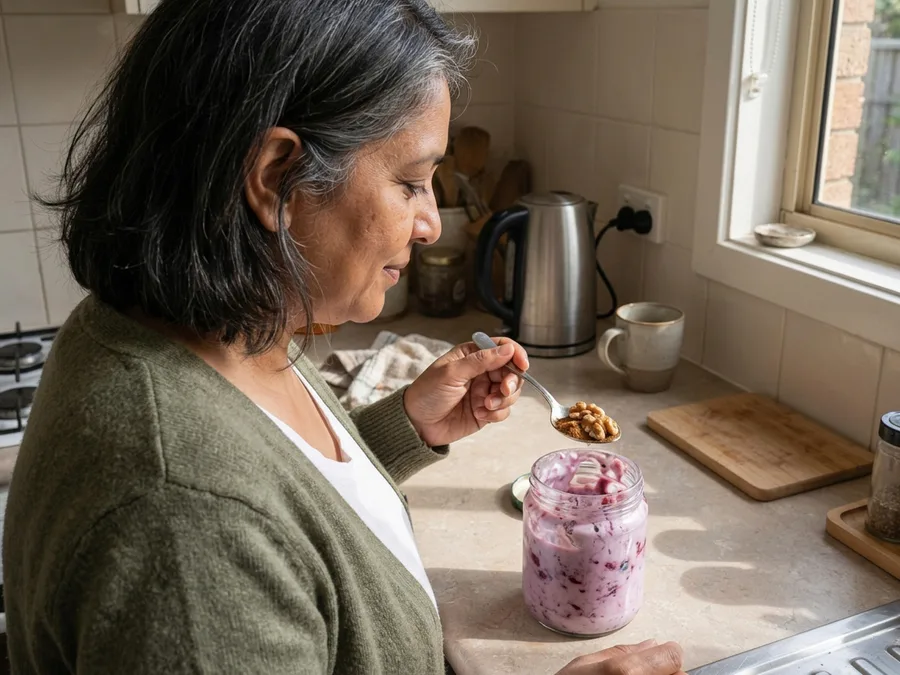
Eggs answer breakfast with heat and speed; the next question is what to eat on the mornings you are not standing at the stove. A 6 oz cup of plain Greek yogurt costs $1.20 to $1.60 and brings 15 to 17 grams of protein along with B12, calcium and live cultures.
Protein in the morning, not at dinner, is the part that matters after 50.
Muscle protein synthesis responds less briskly as we age, so the day's protein has to be spread out and front-loaded rather than saved for one big evening meal. Front-load it and the morning holds; skip it and most people are back at the cupboard by 10:30, hunting crackers. That mid-morning raid is not a willpower problem, it is a breakfast that was mostly carbohydrate.
Plain is the buy.
Flavored cups carry the sugar, sometimes 12 to 15 grams of it, and you pay for the addition. Stand in the aisle and turn two cups over: the plain one should list milk and cultures, nothing else. The rule is not the leanest label, it is the plain cup you will actually eat without needing anything stirred in.
Half a cup of frozen berries stirred in the night before does the work while you sleep. By morning the berries have thawed into the yogurt and dyed it purple; add cinnamon and a few walnuts on top and you have a two-minute breakfast with no cooking and no pan to wash. Do it in a glass with a lid, take it to the table, eat it while the kettle boils.
Ease, not effort, is what earns it a cart place: ready-to-eat protein, no cooking, and the only real decision plain versus sweetened.
5. Frozen wild blueberries, anthocyanins year-round
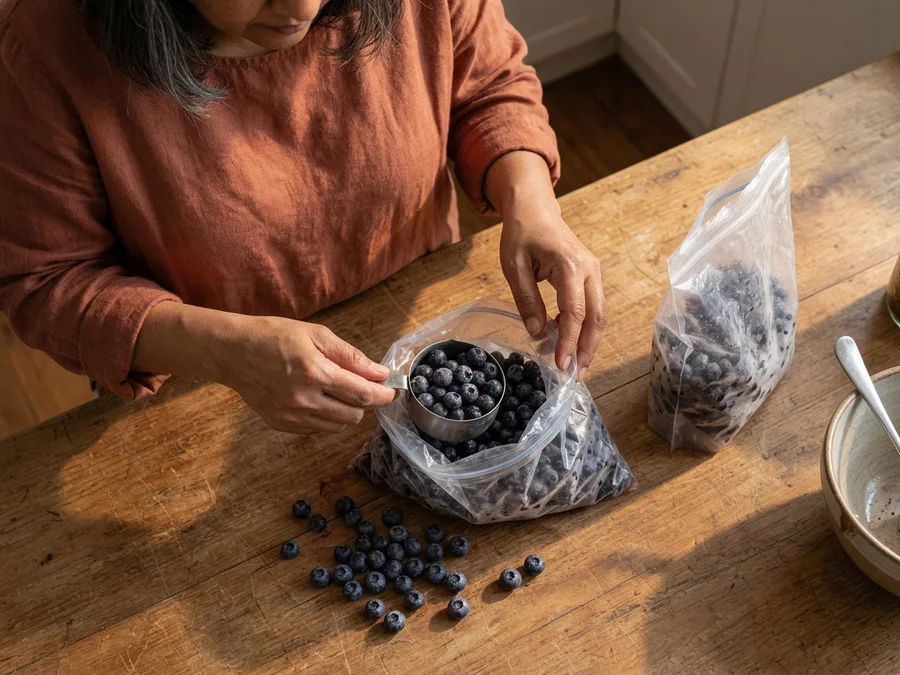
Yogurt and oats both want a topping, and the topping is where the fresh-berry plan falls apart in January. A 12 oz bag of frozen wild blueberries costs $4 to $6 and gives roughly 50 cents a half-cup serving – in February, when a small clamshell of fresh berries can run $5 or more and half of it goes soft in the drawer before Friday.
The blue pigment is the point.
Anthocyanins, the compounds that make the berry blue, sit in the skin. Wild blueberries are smaller than cultivated ones, so a cup of them carries more skins and more of that pigment for the same volume. That is the whole argument for the wild bag over the big frozen berries, and the difference is visible the moment you pour them out.
Thirty seconds from freezer to bowl. No washing, no hulling, no picking out the moldy ones; a half cup goes straight into yogurt, over oats, or into a glass of water in the evening. Nothing to trim means nothing thrown away, which is where fresh berries quietly cost more than the sticker price suggests.
In February the freezer bag is still there and the clamshell is not.
Fifty cents and half a minute buys a supply that does not depend on the season, does not spoil by Thursday, and keeps the yogurt and the oats from being plain bowls of beige. That is what puts it in the cart.
The cart in numbers
What a day of these foods actually costs
6. Walnuts, the nut with the plant omega-3
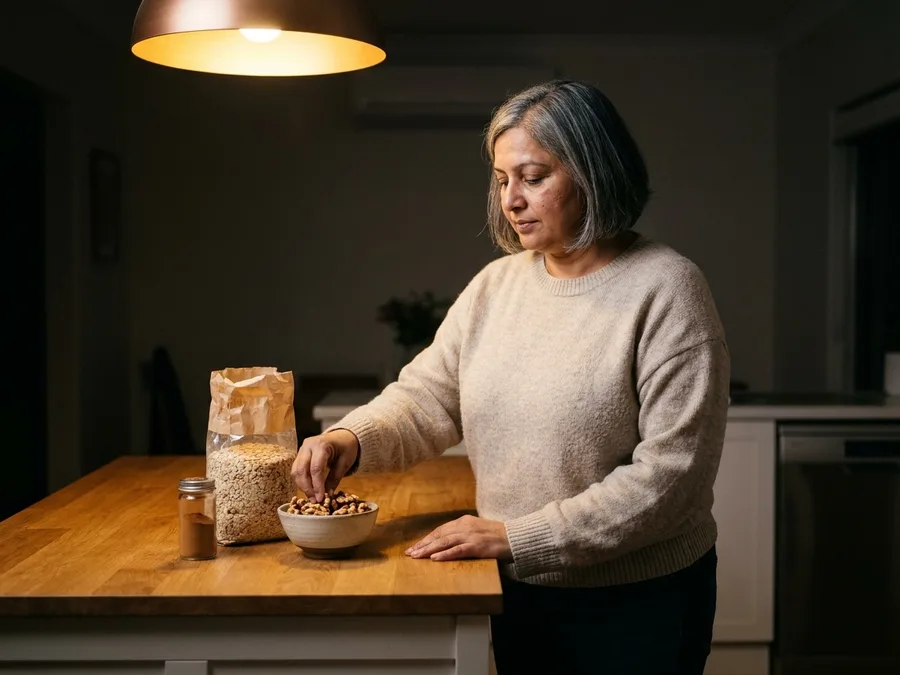
A handful of walnuts is not competing with the blueberries for the same job. The berries bring the pigment; the walnuts bring the fat that slows the bowl down, so the oats or yogurt holds past ten in the morning instead of fading by half past nine.
The portion is 1 oz, and 1 oz of walnut halves is about fourteen of them, which fits in a cupped palm with room to spare. At $8-10 a pound, that handful lands near 50 cents.
Here is what makes this nut different from the almonds and cashews in the same bin. Walnuts carry a real amount of ALA, the plant form of omega-3, and no other nut sold in ordinary amounts comes close to that concentration.
That matters because ALA is its own nutrient. The body converts it to the longer omega-3s inefficiently, so it is not a stand-in for fish, but it is a fat the rest of the nut aisle simply does not deliver.
Use is the easy part: scatter them into the oats, drop them over the yogurt, or set two or three beside a square of dark chocolate at 4pm when the afternoon opens up. No chopping, no toasting, no pan.
One catch, and it is the one most people miss. Walnuts turn rancid on a warm shelf, and rancid oil tastes bitter and flat.
So the bag does not live above the stove or in a jar by the window. It goes in the freezer, where the halves keep for months, and a small handful comes out straight into the bowl while still cold.
That is the whole case for the cart: 50 cents, no prep, and a fat the other nuts do not offer in the same amount. The calories are real, so the fourteen halves are the serving rather than the bag.
7. Pumpkin seeds, magnesium in a handful
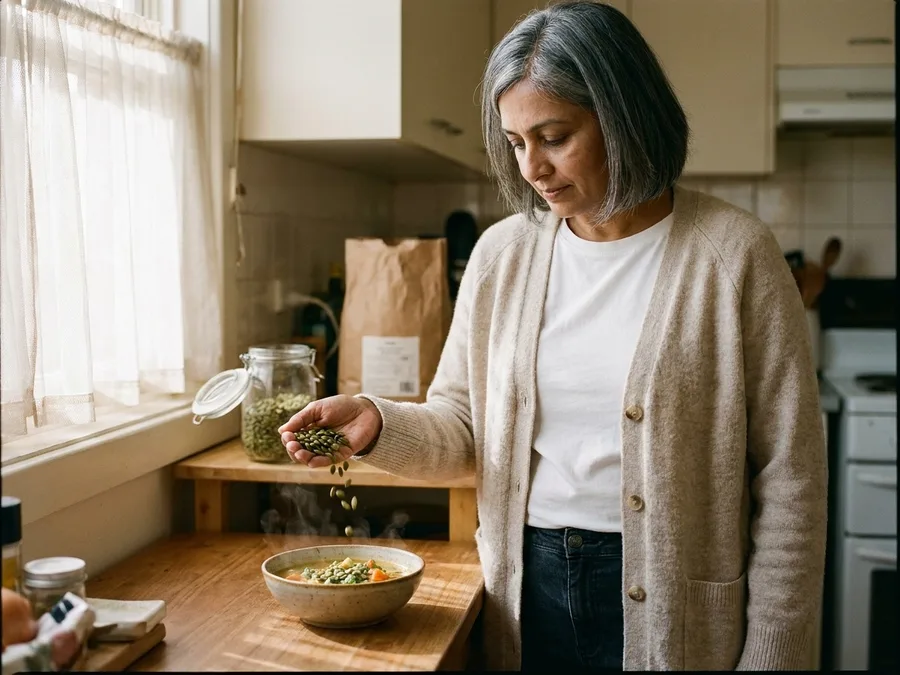
A handful of pumpkin seeds costs about 40 cents and requires exactly nothing: no knife, no pan, no bowl. That is the whole case for it.
At $6-8 a pound, one ounce — a small handful, roughly what fits in a cupped palm — runs about 40 cents. In that ounce you get magnesium and zinc alongside protein and fiber, all in the same bite. Four nutrients, one motion.
Scatter it over a salad, across a bowl of soup, or on top of yogurt already sitting in front of you. Nothing gets chopped, nothing gets cooked, and no extra dish enters the sink.
Buy raw and unsalted. The roasted salted version is fine, but salting is cheap and yours to control, and the raw bag is usually the better price per ounce.
Storage is the one thing worth getting right. The bulk bag goes in the freezer, where the oils stay stable, and a small jar stays at eye level in the cupboard so the handful actually happens. Seeds at the back of a shelf are seeds you stop eating.
This is the entry with no recipe and no plan attached — the easiest add to a meal you were already going to eat. Forty cents and a closed fist.
💡 PRO TIP
Keep the pumpkin seeds where you can see them
A jar at eye level in the cupboard gets used; a bulk bag at the back of a shelf does not. Decant a week's worth into a small jar and refill it from the freezer bag on Sundays.
8. A cup of leafy greens, folate and lutein
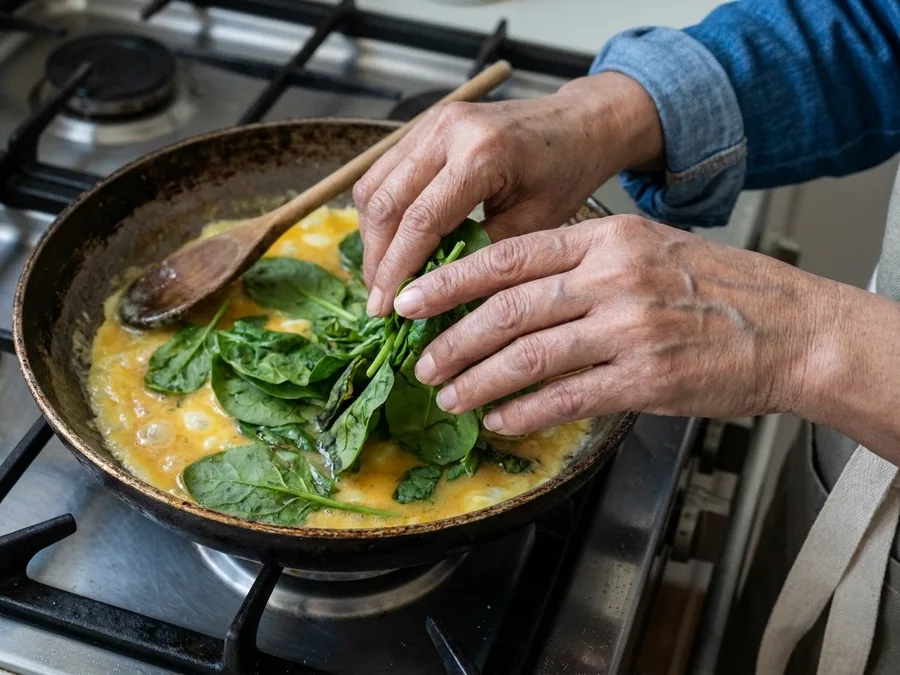
Nobody needs a salad. A bag of spinach or kale earns its place because five cups of greens cost less than a salad kit, and none of it has to be eaten cold, raw, or out of a bowl.
A cup of raw leaves is the portion. A 5 oz bag at $3 to $4 holds roughly five cups, which puts a single cup at about 60 cents and covers five days from one purchase.
Spinach and kale carry folate, lutein and vitamin K, and they are the folate workhorse of this whole list. Seeds scattered over a plate stay a garnish; greens are what make the same plate dinner.
The method takes about a minute. Throw a fistful into the pan with eggs, stir it into soup, or drop it into pasta water in the last sixty seconds, and it collapses to a fraction of its size before the table is set.
Olive oil and lemon go over the top, and that is the whole recipe. No chopping board, no dressing to mix, nothing that has to be made ahead. That minute is the difference between buying greens and actually eating them.
One caution, stated plainly: spinach and kale are high in vitamin K, which matters if you take a blood thinner such as warfarin. Ask your clinician how to keep your intake steady rather than cutting greens out. Consistent amounts are usually easier to manage than none.
At 60 cents a cup for something that wilts in a minute, greens pass the cart test on both price and effort. The bag does not need a salad to justify itself.
Leafy Greens — At a Glance
⚠️ Skip If
On warfarin or kidney-restricted diet — get a green light first
📅 Steady Dose
Same amount most days beats a big bag once a week
🫒 Pairs With
Olive oil — fat carries lutein into the bloodstream
🧊 Best Buy
Frozen, no sauce — same leaves, no race against wilting
🩺 Watch For
Vitamin K is the only real interaction — not the greens themselves
Why it works
Lutein concentrates in the retina and brain; a little fat at the same meal raises how much you absorb.
9. Extra-virgin olive oil, a tablespoon raw
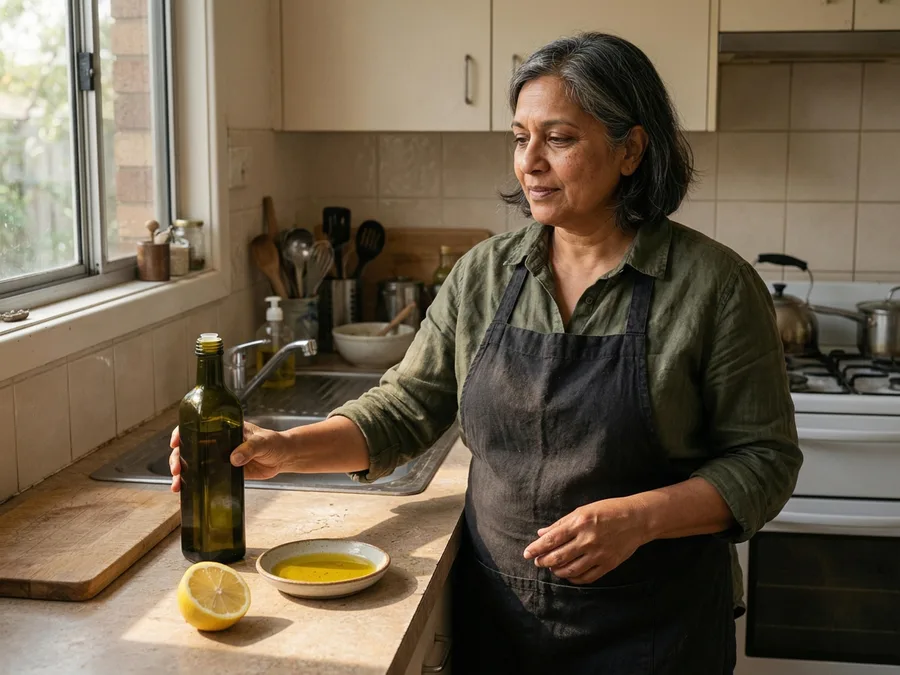
Greens, beets and fish all improve with a splash of something, and the something worth keeping on the counter is extra-virgin olive oil.
One tablespoon costs about 60 cents, working from a $10 to $14 bottle of 500 ml. That bottle lasts weeks at a tablespoon a day, and it is the same counter spot where butter and bottled dressing used to sit.
Extra-virgin means unrefined. The polyphenols and monounsaturated fat that make it worth the money over a plain 'light' oil are the parts refining takes out, which is why the label matters more than the brand.
Use it raw, over greens, roasted beets, fish and bread. For cooking, keep the pan at medium rather than waiting for a shimmer and a wisp of smoke, since heat past that point undoes what you paid for.
Buy it in a dark bottle and store it away from the stove. Olive oil goes flat within about a year of opening, and a bottle left beside the burners gets there faster. If yours tastes dull rather than peppery, it has turned.
At 60 cents a tablespoon and no prep at all, this is the one item on the list that upgrades dishes already in the cart without adding a step. It passes the cart test because it does not ask you to cook anything new, only to pour.
Two oils, two jobs
Extra-virgin, raw
- Refining removes the polyphenols, so 'light' oil is not a healthier version of this
- The bottle should say extra-virgin on the front, not just olive oil
- Frozen fish and canned sardines take the drizzle as readily as fresh
- One tablespoon is the full serving here
Plain oil, high heat
- Refined, so the polyphenols and most of the flavor are gone
- Costs less, which is why it belongs in the pan and not on the plate
- Wait for a shimmer, not smoke, and never let it go past that
- Keep it for searing and roasting; the dark bottle goes on the table
10. Lentils, steady carbohydrate with folate
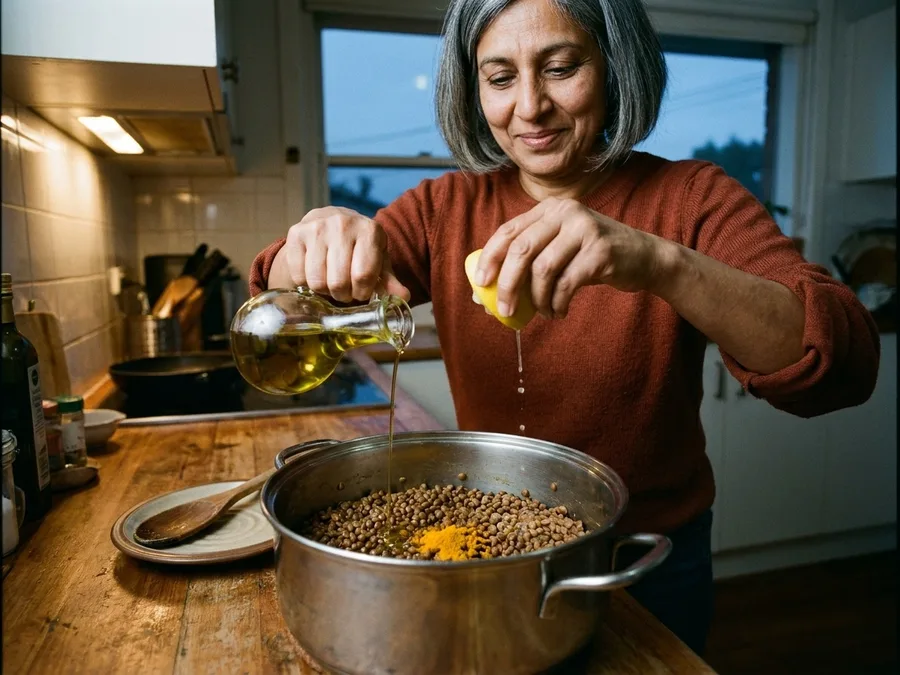
A half cup of cooked lentils costs about 20 cents, and that number comes from a bag of dry lentils at $1.50 to $2 a pound. The bag sits on the bottom shelf for a year, so the cheapness is real rather than a coupon.
Folate, iron and fiber arrive in the same bite as the carbohydrate. What separates lentils from a roll or a plate of white rice is not the nutrient list; it is how slowly the carbohydrate lands, which is the difference between a workable afternoon and one spent looking for the cookie tin.
Twenty minutes of simmering is the whole method. Dress the pot with olive oil and lemon, add turmeric, and the oil already on the counter finishes the job a second time.
Cook once, eat for three days. That ratio is what puts lentils in the cart rather than on a to-do list.
One detail worth knowing: plant iron is absorbed better with something acidic or with peppers and tomato alongside. A squeeze of lemon over the bowl is not only for taste.
The lentils earn their cart place as the cheapest entry in the whole list. Twenty cents and one pot make this the base for the days when cooking is not going to happen twice.
💡 Tip: Cook a full pound on Sunday, cool it, and keep it in the fridge — it holds for three days and reheats in a pan with olive oil and lemon.
11. Canned black beans, fiber without cooking
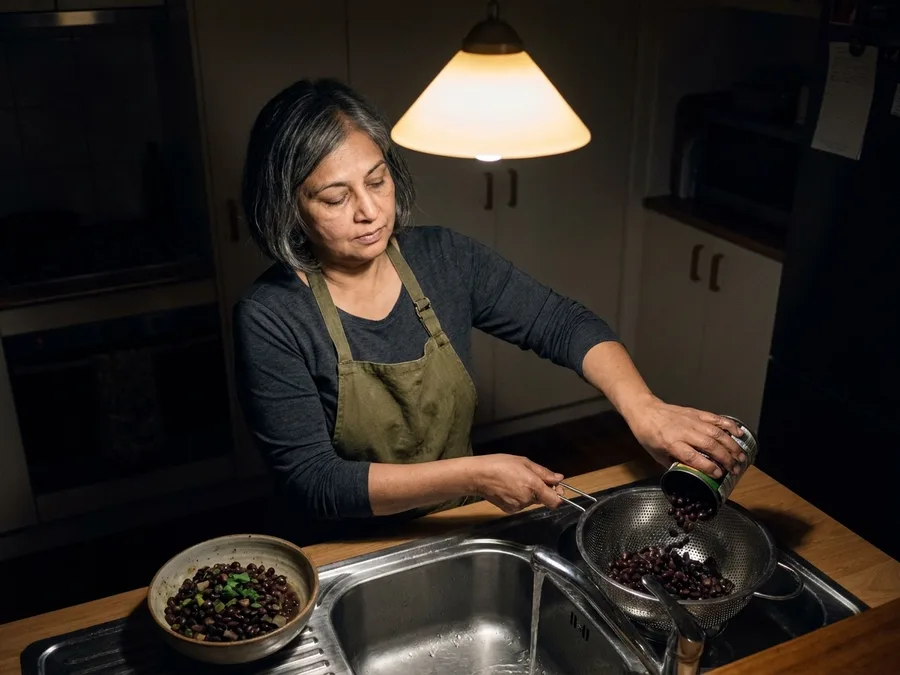
Lentils need a pot and twenty minutes. Black beans need a can opener.
The dry bag asks you to plan ahead; a can sits on the shelf for a year or more and asks nothing until the evening you are too tired to stand at the stove. That is the gap this entry fills on the roster, and it is a real one for anyone whose cooking energy runs out by Thursday.
Half a cup is the portion, and it costs about a dollar from a can priced $1 to $1.50. There is no soaking overnight, no timer, no pot to watch.
Dump the beans in a colander and run cold water over them for thirty seconds. That rinse carries off a good share of the sodium the canning liquid brought along, and it is the only step between the shelf and your bowl.
What you get for the dollar is fiber and folate, and the fiber is the part worth understanding. Gut bacteria ferment it, and that fermentation is what the fiber is doing in your body rather than just passing through. For a reader in their fifties or sixties, that matters because the gut population shifts with age and responds to what you feed it.
Picture a Tuesday when work ran long and the thought of chopping anything is too much. Open the can, rinse, tip half into a bowl, and finish it with olive oil, a shake of cumin, a squeeze of lime and whatever greens are going soft in the drawer. The greens wilt against the warm beans and nothing else gets dirty.
Keep three cans in the cupboard, stacked where you can see them, not buried behind the flour. At roughly a dollar and zero minutes of cooking, this is the legume that rescues the week when the plan falls apart, and that is why it earns its place on the cart alongside the dried lentils rather than instead of them.
12. Oats, beta-glucan for a slower morning
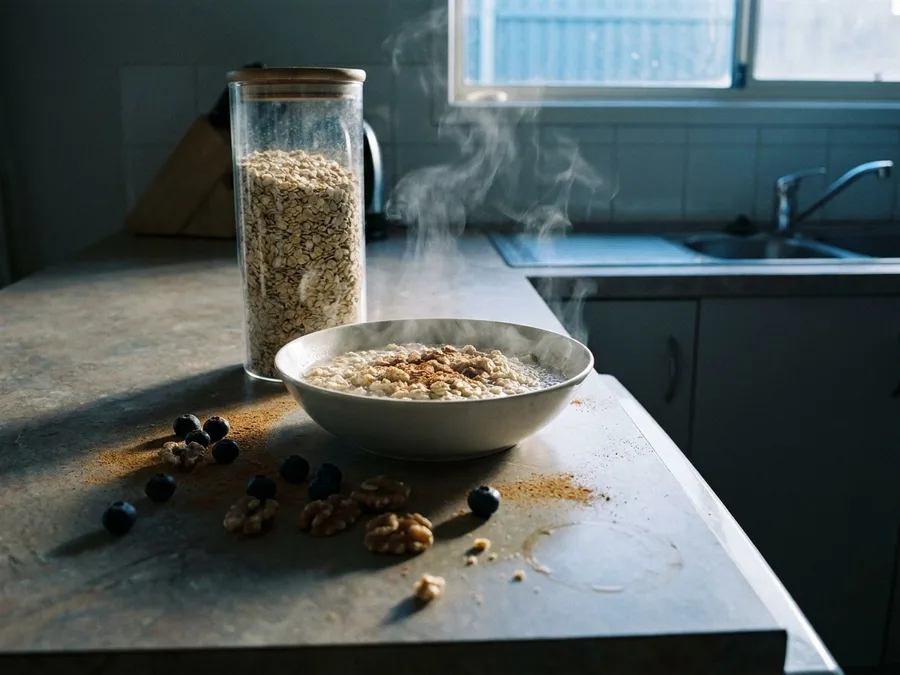
A half cup of dry oats costs about 20 cents, drawn from a $3 to $5 canister that lasts weeks. There is no cheaper breakfast on the list.
The reason oats hold a morning is beta-glucan, the soluble fiber that thickens the bowl as it cooks and slows the whole thing down on its way through. Magnesium and B vitamins ride along in the same half cup.
Two minutes in the microwave with water and a pinch of salt is the method. Berries, walnuts and cinnamon go on top, and both of those toppings are already in the cart for other reasons.
Buy plain rolled or steel-cut oats, never the flavored sachets. The sugar in the sachet is the entire difference, and it costs more per serving than the plain canister does.
The bowl holds until lunch, which is the point of any breakfast after 50, and 20 cents is what that steadiness costs.
A week of prep, not a week of cooking
13. Dark chocolate, 70 percent and up

A square of dark chocolate can stay in the cart. The catch is which bar and how much of it.
The buy is 1 oz, one or two squares, from a bar that says 70 percent cacao or higher. At $3 to $5 for a 3.5 oz bar, that works out to about 50 cents a serving, which puts it in the same price band as the walnuts and the berries.
The reason to bother is flavanols, the plant compounds behind most of the research on cocoa and blood flow. They are also the reason to read the fine print: a bar labeled alkalized or Dutch process has had most of them stripped out in processing, so a higher cacao percentage on an alkalized bar buys you very little.
Turn the wrapper over in the aisle and look for those two words before the percentage.
Timing matters less than portion. After lunch, or at the 4pm point when the day dips, two squares beside a few walnuts is a finish, not a fuel stop.
Keep the bar in the freezer and break off two squares at a time; a cold bar snaps cleanly and takes longer to eat, which is most of the trick. A treat with a bonus, not a dose.
The calories are real, and 70 percent chocolate is bitter enough that a portion actually satisfies at two squares rather than five. That bitterness is what earns the entry its cart place at 50 cents. It stays on the list only if two squares are enough for you, and for most people who like the dark stuff, they are.
14. Turmeric and black pepper, used together
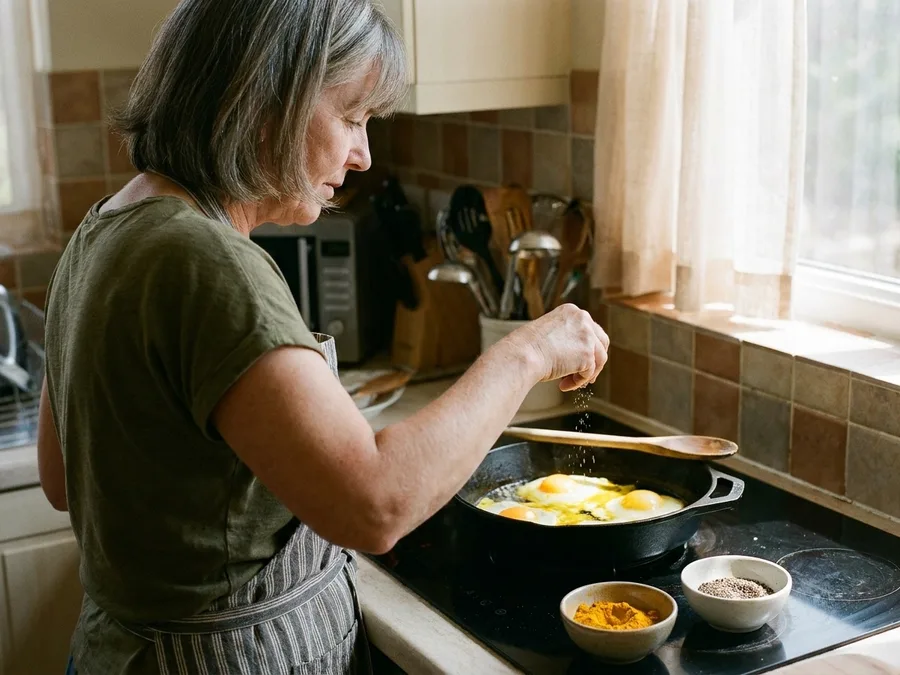
The spice jar at the back of the cabinet is usually a fad or a decoration, depending on whether anyone checked what is inside. Turmeric is neither, as long as you use it with black pepper and by the quarter teaspoon, not by the capsule.
The active compound is curcumin, and the reason it gets attention is that piperine, the compound in black pepper, helps the body absorb it. Used together is the point. Turmeric alone in a dish, with no pepper anywhere on the plate, is mostly color.
The dose is 1/4 teaspoon of turmeric plus a pinch of black pepper. That is pennies per use, from a $4 to $6 jar that lasts months. It tastes earthy and slightly bitter, which is why the flavor defaults matter: it goes into eggs, lentils, rice or warm milk, where the fat and the heat carry it, and the yellow color tells you it is there before you taste it.
That is how one jar upgrades the eggs and lentils already in the cart, and it is the whole reason the item earns a spot: pennies, no prep, and it makes the plain foods on the list taste like something you want to eat on a Tuesday.
High-dose curcumin capsules are a separate question. They are not the same as cooking amounts, and if you take a blood thinner or any prescription, that is a conversation for your doctor or pharmacist, not for the spice aisle.
15. Beets, nitrates for blood flow
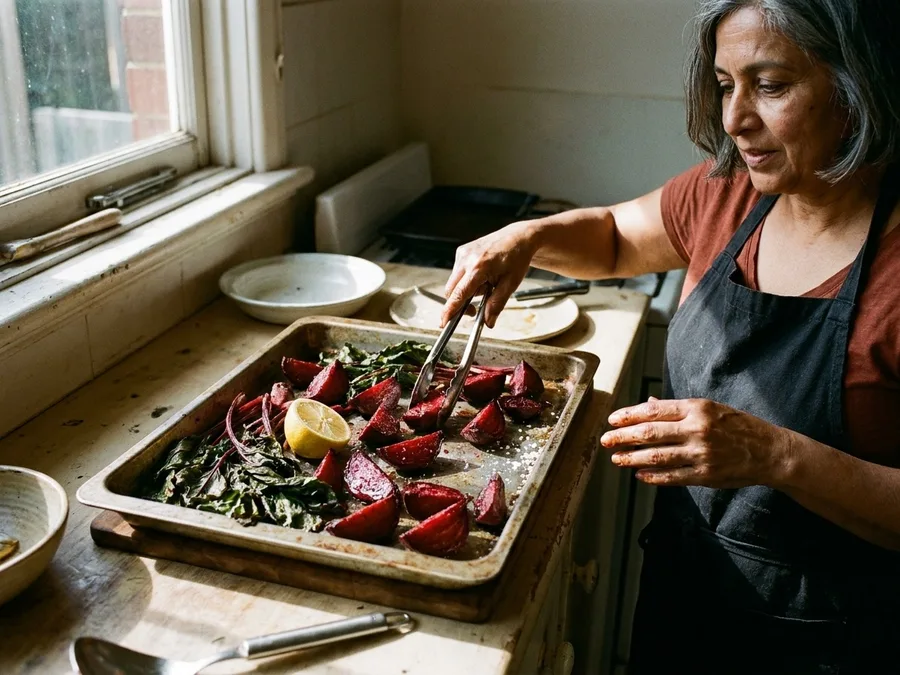
Most vegetables on a brain-food list do the same work: fiber, folate, a little vitamin K. Beets do a different job, which is why they close out the list and not because they repeat what the greens and lentils already give you.
Beets carry dietary nitrates, which the body converts to nitric oxide, a molecule that widens blood vessels. That is why beets keep coming up in blood-flow conversations and in the sports pages, where athletes drink beet juice before a race. For a reader in their fifties or sixties, blood flow is the thing worth paying attention to.
The buy is a bunch for $2 to $3, and here is the catch most people leave at the store: the greens attached to those beets are the same bargain as spinach, and they cook the same way. Tops and roots both go in the pan. Half a cup of cooked beets is a serving.
The prep is a Sunday tray roast, cut into wedges, olive oil, salt, lemon at the end, about 40 minutes. Or the vacuum-packed cooked beets at $3 to $4, sliced for a salad in 90 seconds. Fresh beets take longer than anything else on the list; the cooked pack is the version that survives a Wednesday.
At $2 to $3 and one tray or 90 seconds, beets close the cart with the one vegetable that does a different job: nitrates for nitric oxide, greens for the pan, and nothing in the bin.
Frequently Asked Questions
Do I have to eat all fifteen foods every day?
No. The list is a direction, not a test. Most people build a day from six of these foods and rotate the rest across the week. The goal is a cart that contains them, not a scorecard that tracks them.
Is frozen fish as good as fresh?
For this purpose, yes — and it is cheaper. Frozen salmon at $8–9 a pound versus $12–16 fresh gives you the same omega-3s. Buy the frozen bag so the fish is there on a Wednesday night, which is when it actually gets eaten.
I'm on a blood thinner. Are the greens and turmeric safe?
That is a question for your own clinician, not a blog. Leafy greens carry vitamin K, and high-dose curcumin supplements can interact with blood thinners. Bring this list to your next appointment and ask before you change what you eat daily.
What if I have kidney disease or a thyroid condition?
Run the list past your clinician before making any of these a daily habit. Beans, lentils and leafy greens are the entries most likely to need adjusting for a restricted diet, and the portions may need to change.
How long before I notice anything?
Do not expect a switch to flip. The research links long-term eating patterns to cognitive outcomes, not a single meal to a single afternoon. Give it a month of repeatable shopping before you judge whether the habit is sticking.
Build the smallest cart that covers the list
The smallest cart that covers the list is two foods from each of five groups this week: fish, eggs or dairy, berries or nuts and seeds, vegetables, and pantry legumes or grains. Add the three moves that make the rest automatic, frozen fish and frozen berries in the freezer, olive oil on the counter, cans of beans and sardines in the cupboard, and the planning is done.
Back at that case, the $12 to $16 a pound question has an answer: a $2 to $3 tin, a $1 can of beans, a 20-cent bowl of oats or lentils, a $4 to $6 bag of frozen berries. The cart gets built from ordinary shelves, not the supplement aisle.
A daily list is a direction, not a test, and no intake target here is a rule; the official frame is the Dietary Guidelines for Americans and the MIND diet. If you are on a blood thinner, have kidney disease, a thyroid condition, a food allergy or another restricted diet, take the list to your clinician before changing anything. This is a shopping tool, not a prescription. Put the tin and the oats in the cart and start there.
Start with two from each group
Ten items cover the list. Pick them this week, then let the freezer and the cupboard carry the rest.