
Why does everyone treat me differently now that I'm retired? You clocked it at the pharmacy counter, at the family dinner, in texts from the old work friend that got shorter. This settles whose script is running in each exchange, and what current fact hands the pen back to you.
Start with a 66-year-old in Columbus who retired 14 months ago from an $84,000-a-year facilities manager job. The weekly work lunch of that final year has come around twice in six months. That drop is not proof the friends evaporated. It is simply the first visible sign that the office clock, not the friendship, was setting the date all along.
The retired title and the open weekday get you filed as a former something, or as a fragile person. You are neither. A current answer, a named limit, or one standing date keeps you even. Your knees are not the story here, and neither is your old desk.
By the end you will have the shifts worth correcting, the exact sentence for each, one recurring weekday appointment on the calendar, and a two-sentence answer to what do you do, rehearsed before the last day.
None of this is about proving you are still useful. It is that people read a full week as health and standing, and a blank one as decline, and only you can hand them the week.
Quick Tips Before You Start
Book the date early
Put the recurring lunch or shift on the calendar before your last week of work, not after.
Lead with now
Answer 'what do you do' with a current Tuesday, not the old title.
Name a number
Two favors a week is easier for people to respect than 'I'm pretty busy'.
Bring specifics to the doctor
Sleep hours, gym days, volunteer days. Concrete facts beat the word 'fine'.
Decide the discount rule once
Take the senior rate where staff know your name, skip it where you're anonymous.
The People Who Knew Your Title
This is where the shift is easiest to spot, because everyone in the room remembers exactly what you were. The facilities manager who ran a building of 300 people is now the man at the barbecue nobody asks about the boiler.
The correction is easiest here too. You already have the shared history; you just have to supply the current calendar that the job used to supply for you.
1. Work friends fade unless you book the lunch

The final year of work had a weekly lunch built into it. Same day, same deli near the yard, same two or three people. In the first six months after the last day, that lunch happened twice.
That is not what a friendship dying looks like. The colleague worth the drive still shows up about every other month, and the conversation picks up exactly where the parking lot left it. What disappeared was the thing nobody thinks of as part of the friendship: the office rhythm that picked the day and put everyone in the same building at noon.
The rhythm quits before the affection does. When you are the only person who has to create the date, the date does not create itself.
The fix has to be made while the old calendar still exists. Before the last week, sit down with the one colleague you would actually drive to see and put a standing lunch on the calendar, every other month, a specific date already entered. Not a vague promise to get together. A date on both phones before your badge stops working.
This is not the same situation for everyone. If you retired alongside a close team that already meets off-site, or you joined a club in your first month, you have a recurring weekday social slot and the lunch rescue can wait. The rescue is for the reader whose whole social week was supplied by the building.
The standing date does one quiet job. It moves the friendship onto a current calendar instead of a former payroll, so the next lunch is between two people with plans, not a retiree hoping to be remembered.
💡 Tip: Book the first two lunches, not just the first one. A single lunch is an event; a second date on the books makes it a habit.
📆 The first month after your last day
Week minus one: book the lunch
Send the every-other-month lunch invite and put both dates on the calendar before the badge stops working.
Day one: write the answer
Draft two sentences about the Tuesday shift and the 5K, and say them out loud until they sound normal.
Week one: set the cap
Tell the working friends you can take two favors a week and that mornings belong to the gym.
Week two: divide the house
Sit down with your partner and name who uses the kitchen table and which errands belong to whom.
Week three: pick your regular
Choose the coffee shop or gym where you show up at the same time each week, so staff learn your name.
Week four: prep the physical
Write down your sleep, gym days and volunteer days so the annual physical starts with facts, not a mood screen.
2. New people label you retired; offer a current project

A standing lunch keeps one old friendship from turning into an annual reunion, but the people you meet from here on have no old lunch to remember. They will file you in the first minute, and the file is usually wrong.
The question comes before anything else. At a party, in the gym locker room, at the neighbor's cookout, it is 'What did you do?' or 'So are you retired now?' – and it arrives before anyone asks where you live or what you're reading or how you know the host.
That is a sorting question, not a rude one. The asker is reaching for the fastest way to place you, and employment has always been the shortcut, so the whole exchange gets built on a category that no longer describes a Tuesday.
The answer that costs you the least is a present-tense one with two fixed points in it. Something like: 'I handle intake at the food bank on Tuesdays, and I'm at the gym most mornings working toward a 5K.' Two specifics, both true, both current.
Notice what that sentence leaves out. The old facilities manager title does not appear in its first line and does not need to appear at all – which matters, because leading with it invites the follow-up about what you used to earn and who has your old job now.
The present-tense answer moves the conversation somewhere it can go. The listener asks about the 5K, or how the food bank shift works, and you are suddenly talking about something you are doing rather than something you stopped doing fourteen months ago.
The retired label is a script in the stranger's hand. A current project takes the pen back without an argument about whether retirement is wonderful or lonely, and without you having to defend the choice at all.
Rehearse the two sentences out loud once before the next party, because the question will not wait for you to compose an answer. The version that comes out under pressure is the one you practiced, not the one you meant to say.
💡 PRO TIP
Rehearse the sentence before you need it
Write your current-project answer on an index card and say it out loud five times. The first three times it sounds like an excuse; by the fifth it sounds like who you are. Strangers mirror the confidence in your voice, not the content of your resume.
3. Your advice loses weight when the paycheck stops

Getting a stranger to hear about your Tuesday shift is one thing. Getting a room to act on your judgment when the paycheck is gone is a harder test, and it shows up first around a folding table.
At the volunteer board meeting, the maintenance bid comes in too high. You know it is too high because you spent years reading bids like that one and you can see what the contractor is padding. You say so. The board thanks you and turns to the working accountant, who says roughly the same thing, and the motion passes on his version.
Nothing was personal about it. The microphone you used to hold was the job, and the job is gone. Being missed is nostalgia for the title. Being consulted is something else, and it does not arrive with the retirement clock.
What works is embarrassingly unglamorous. Volunteer to take the minutes or to run the site visit, and the next time the bid comes up you are not speaking from memory, you are speaking from the task. I walked the boiler room on Thursday, and the south wall is wet behind the insulation, is a sentence nobody can wave past, because it carries the work itself.
The current task replaces the old title as the reason you are heard. It takes a couple of months of doing the boring jobs the group needs, and it does not feel like authority while it is happening.
There is a real exception here, and it is worth naming. If you still hold the checkbook, or you have a technical skill nobody else in the room has, the authority never left, because it was attached to the current role, not the retired one. Everyone else has to earn the microphone back, and the way is the unglamorous work.
💡 Tip: Speak second, not first, in the first three meetings. Then your contribution lands as evidence rather than opinion.
4. The all-day question is a test; bring a schedule

The grown children who stop asking for your opinion on a career move are the same people, six months later, asking what fills your days.
That question rarely comes with a smirk. Listen to the pause before it and you will hear someone checking on you, working out whether a weekday with no meetings in it has structure or has quietly gone to drift.
It arrives at the worst moments: over a plate at a family table, at a neighbor's driveway as he rinses a cooler, on a Tuesday phone call from a cousin who retired ten years ago and never quite filled the hours himself.
So answer with three fixed points. Gym at 8, errands at 10, food bank on Tuesdays. Say the clock times out loud, because a schedule with hours attached sounds like a life and a schedule without them sounds like a hobby.
The alternative costs more than it seems. A shrug and a nothing much leaves the listener holding silence, and people fill silence with worry, which is how a health question gets planted in a family's mind before anything is wrong.
The vague answer manufactures the fragile label it is afraid of.
For the relative who asks every single visit, keep a shorter version in your pocket and hand the question back. Gym, errands, and the food bank on Tuesdays, and then ask what their week looks like.
That ends the topic in about four seconds and puts them on the spot the way they put you.
The point is not to prove you are busy. The point is that a current week, spoken plainly, tells people more about your health and your standing than any old job title ever could.
Two ways to answer the same question
Same person, same week, different script
Based on the same weekday schedule described in this article.
Family And Friends
Now the shift moves inward, to the people who see you every week and have started to read your free time as available time, and your age as a health status.
This is harder to correct than the work friends, because the care is genuine. Nobody in your family thinks they are demoting you. They think they are helping.
5. Adult children check on you; set the terms

One evening your daughter stops calling for your take on her boss, or her budget, or which car to buy, and starts calling to ask whether you ate.
The question is meant as care, and the hands that made the call are reaching toward you. What it lands like is a demotion: adviser one year, patient the next, and it stings more than a stranger's question ever could.
The call arrives on a weeknight, around seven, an hour when you used to be coming home and having nothing to say but complaints.
Hand them one visible competence they can see. Whatever it is, keep it in your name: the car being serviced on schedule, the tax documents filed in April, the roof cleaned and the gutters clear, kept because the task marks you as someone still managing his own life.
When the help comes without being asked, name what you want instead of waiting for it to be delivered, and make the ask a plain one. Call and ask if I need the pickup. That single sentence keeps help from turning into a takeover.
One real exception belongs here. A household where a genuine health change has already moved the line: there the flip from adviser to patient is a fact responding, not a script running, and fighting it costs more than accepting it.
Do the work where it matters and accept the equal footing you can name. Equal footing comes from the duties still in your hands, not from proving you can do everything.
Your family will read what you show them. Show them something current.
⚠️ COMMON MISTAKE
Do not defend everything at once
Retirees who answer the 'are you okay?' call with a full proof of independence sound defensive, and defensiveness reads as fragility. Hold one or two duties out loud and let the rest go. Being specific about the car and the taxes is more convincing than a list of ten reasons you are fine.
6. Working friends treat your free time as their errand slot

The working friend reads the calendar and sees space where a meeting would be. So the 3 p.m. school pickup goes to you, and a four-hour delivery window lands on your afternoon.
Both ask the same favor, and neither is unreasonable in isolation. Together they form a pattern, because the working friend's day is packed and yours looks roomy from the outside.
Say the number out loud. Two favors a week. The cap is specific enough to be respected, flexible enough to keep the friendship intact, and it does what a shrug never does.
Watch what goes first when the week fills up. The 8 a.m. gym slot. That is the invisible casualty of being the only one home during the day, and it takes three or four missed weeks before the knees and the sleep let you know.
Here is the sentence that keeps the friendship and the gym. I can do Tuesday pickup, but I keep mornings for the gym, ask me by Sunday.
Say the word yes, then the word no, then the deadline. Three parts, spoken without apology.
Free time and available time are not the same thing. The cap puts the current schedule ahead of the default errand slot, and it keeps the friendship from turning into a service arrangement.
Do the work where it matters and accept the equal footing you can name. Equal footing comes from duties still in your hands, not from proving you can do everything.
💡 Tip: Put the gym slot on the shared family calendar so the working friends can see it. Invisible commitments get overwritten.
7. The first retiree you meet appoints himself your guide

The free weekday is barely defended before someone tries to fill it for you.
A man about your age, retired maybe eight months, hears you are newly out and starts issuing orders: file for Social Security the day you turn 66 and 8 months, list the house by spring, put your name on a pickleball roster by Monday. He does not know your pension, your savings, or the grandchild who lives 40 minutes away. The instruction is about his own transition, not yours.
Why the volume: he is still making sense of his own first year, and every rule he hands you is one he needed to hear himself say.
Take one piece that fits and leave the rest on his porch. Maybe it is the name of a local tax-aide who does returns for free in February, or the time a gym class meets on Tuesdays. The move south can stay with him.
His timeline is not portable. You draw $2,150 a month, hold roughly $380,000, own the house outright, and one grandchild is 40 minutes down the road. A plan built for a different set of numbers and a different map does not transfer.
A friend whose advice ends with a phone number is handing you a lead, not a lecture, and that number is worth keeping.
One current local fact beats the whole sermon: the tax-aide's first name outweighs every rule about how a retired man should spend a Tuesday.
Take the lead or take the sermon
Worth taking
- A named local contact with a phone number
- A specific class time you can show up to
- A cost figure that matches your own budget
- Anything that keeps your Tuesday shift intact
Leave with the guide
- Relocation advice that ignores your grandchildren
- Timelines based on his savings, not yours
- Hobby mandates with a deadline attached
- 'You'll regret not doing it my way' pressure
8. Your partner's weekday routine already runs without you
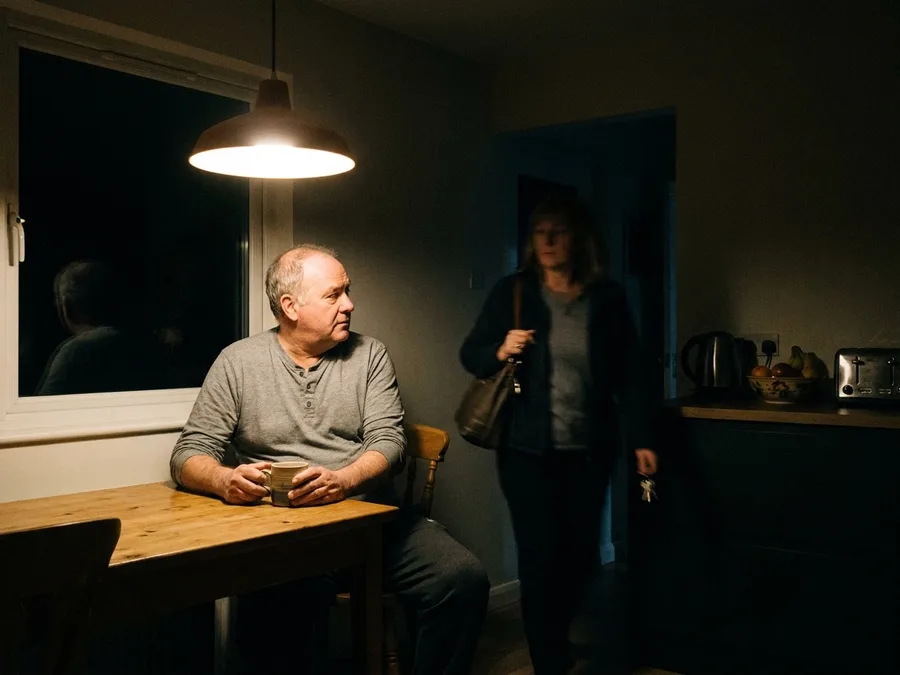
The kitchen table at 7:40 on a Tuesday has a routine, and it took shape while you were still on the road to a job.
Your partner's workweek did not shrink when yours did. Three days a week, out the door at 7:30, the same mug in the same spot, the same ten quiet minutes before the car starts. That rhythm formed over years of you being gone by 8, and it does not widen just because you are now in the next room.
The eight o'clock cup of coffee that used to belong to one person now has two people circling it, and neither knows whose turn it is.
Put two hours of separate time on the calendar, one block for the partner's morning routine and one for your own gym, errand, or Tuesday shift. Togetherness then becomes a choice you both make rather than the default of two bodies in one house.
A single conversation settles most of it: who gets the table at eight, who handles the pharmacy run, what quiet hours are for. Naming these out loud is what stops you feeling like a guest in your own kitchen.
The same shift has a different shape when you live alone, where the weekday has no built-in structure and the negotiation is with the empty afternoon rather than a working partner.
Equal footing at home comes from a named schedule and tasks divided on purpose, not from simply being there more often.
Strangers, Services And Doctors
Last stretch, and the hardest to correct, because nobody in it ever knew your title. The pharmacist, the clerk, the waiter and the doctor are all reading a visual cue and running a script you did not write.
That is also why the corrections are short. You are not defending a history here. You are just answering from the present.
9. Doctors screen your mood before they hear your plans

The household negotiation stays private. The same retirement label meets a public script the moment the annual physical starts.
The nurse asks the mood question about ninety seconds in, before anyone has asked what you do with your week. Retirement is read as a risk factor on the form, and the doctor is working from that reading until you give them something better to work with.
Give them specifics instead of the word fine. The concrete answer sounds like this: sleep seven hours, gym at 8 most mornings, the Tuesday volunteer shift at the food bank, one blood-pressure prescription, and a house with no mortgage on it. That is a baseline the doctor can measure against next year. Fine tells them nothing, and retired tells them less.
Keep the rest of the exam on the table. The mood screen is a standard question and it should be asked, but it does not replace the blood-pressure check, the bloodwork or the conversation about the knee that has been complaining since spring. Ask for what you came for.
There is a line between being screened and being written off, and you can hear the difference. Screening is one question on a form. Being written off is when the mood question becomes the whole visit and your current plans never make it into the record, so the next doctor who reads it knows only that a retired person came in feeling low.
The doctor's file is a script too, and you can edit it. Current facts keep the retirement label from crowding out the health facts, and that is the difference between a routine screen and a label that follows you from appointment to appointment.
💡 Tip: Ask one direct question at the end: 'Anything in my numbers that has changed since last year?' It puts the clinical facts back in charge of the visit.
The Annual Physical — At a Glance
⏱️ Visit length
One annual physical
🩺 Keep on the table
Blood-pressure check, full exam
💊 Prescriptions
One blood-pressure script
📝 Bring
Sleep, gym days, volunteer days
🗣️ Ask before leaving
What changed in my numbers?
Why it works
A doctor who hears your current week has less reason to treat retirement as the whole story.
10. Clerks slow their speech and call you 'young lady'

The pharmacy counter is where the clinical label turns into speech. A doctor opens with a mood question; the tech behind the register answers it with volume and a pet name, and nobody in the exchange ever asked how you actually are.
It starts small. The instructions come back a little slower than you need, then a little louder, then with a 'there we go, young lady' attached. Your hearing was fine before you walked in.
The cue is what did it, not your chart. Gray hair and a cane get read faster than a birthday, and the clerk is working from what shows at the counter, not from the 8 a.m. gym slot you kept this morning. Plenty of people who train three days a week get the slow voice at 58.
it shows up before you feel old. Most readers meet 'hon' for the first time in their late fifties, years before anything about their body has changed.
One calm line redirects it without a fight: 'I can hear you fine; let's do the form.' Say it evenly, keep your hand out for the pen, and the exchange stays on the paperwork where it belongs.
The cost of letting it stand every time is cumulative. Get rehearsed into the fragile part at enough counters and clinics, and the label starts arriving before you do, ahead of every request you make.
A quiet correction hands the script back to the transaction. You are a customer with a form in your hand, not a patient with a visual cue. Nobody at the register needs to agree with you for that to work.
11. Senior discounts label you before they save you money
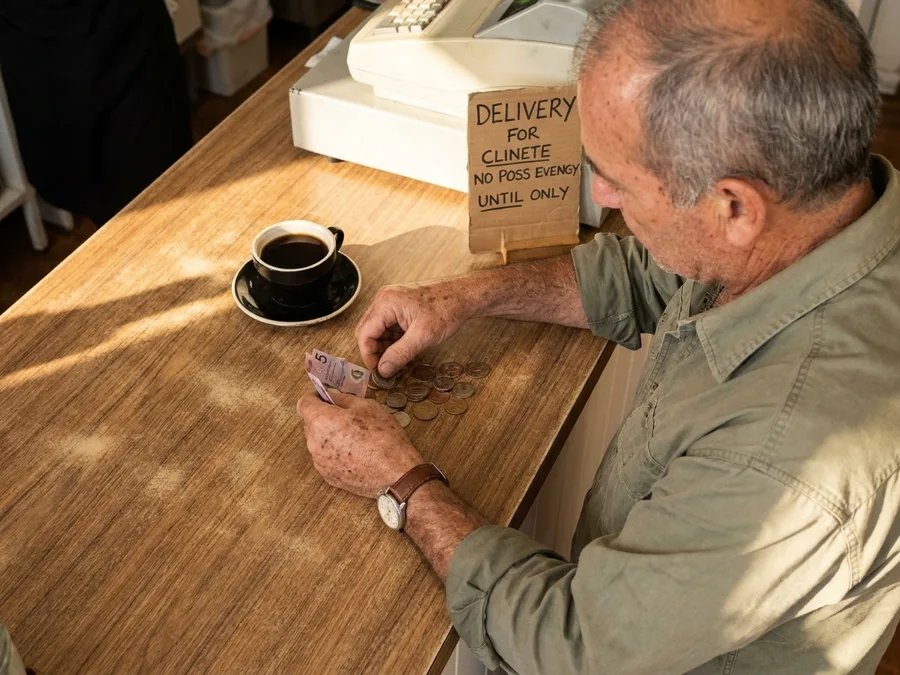
Then the same label comes back with a discount stapled to it, and the coffee line turns into a small negotiation about how old you are willing to be filed.
Do the math first. Ten percent off a $3 coffee is 30 cents. Real money, not enough of it to settle anything, which means the decision is never really about the change.
Watch the order of events. The senior rate usually gets offered before the price is rung, so the clerk names your age category before you have ordered. The transaction opens on senior status whether or not you take it.
That gives you a rule you can apply in three seconds. Take the discount where you are a regular and the staff already know your name; skip it where you would rather be just another customer in line.
The bigger tickets carry the same choice. A $45 monthly gym membership and a $60 haircut both come with a senior rate, and the two feel nothing alike. At the gym you are a face they see four mornings a week; in a new salon the senior price arrives uninvited, before anyone has learned anything about you.
So the discount is a file card with a price on it. The rule keeps you the one deciding when the age label becomes part of the exchange, instead of letting the register decide for you.
12. Service people get kinder and stop flirting with you

Softer than a discount and harder to name is the kindness. The waiter who used to tease you now calls you 'hon,' and the change lands as warmer and less equal at the same time, because banter treats you as a peer and 'hon' files you as old.
It happens on the sidewalk too. The neighbor who asked about your weekend starts asking about your health instead. The question is care, and it also lifts you out of the ordinary traffic of plans and gossip that neighbors trade.
This is not only about attractiveness, and it is not vanity to miss it. What went missing is being seen in public as a peer, the person who might get a joke or a little flirtation, not only the person who needs a hand with the bag.
There is a way back into view, and it is unglamorous. Become a regular somewhere the names get used, the gym at 8 or the same coffee shop three mornings a week. Repetition does the work no speech can.
By the fourth or fifth visit the barista has your order started and the waiter is back to ribbing you about the game. Familiarity restores the present-tense relationship that all that kindness accidentally removed.
💡 Tip: Learn and use the staff's names first. It flips the exchange, and they will use yours back within two visits.
Frequently Asked Questions
Why did my work friends disappear so fast after I retired?
Usually the office rhythm was doing the scheduling, not the friendship. When the weekly lunch stops being automatic, nobody picks it up because everyone assumes you are busy. Book an every-other-month lunch with one colleague before your last week of work and the friendship keeps a current date.
Why does everyone I meet ask what I used to do?
It is a sorting question, and it arrives before they know anything about your week. Answer in the present tense with something actually happening, like a Tuesday volunteer shift and a 5K you are training for. The conversation moves to a current subject and the old title stays out of the first sentence.
How do I answer when people ask what I do all day?
Give three fixed points: gym at 8, errands at 10, food bank on Tuesdays. It takes about six seconds and ends the interrogation without defending retirement. Saying 'nothing much' hands the silence to the asker, who fills it with worry about your health.
Why do my adult children treat me like a patient?
They are trying to care for you and the retirement has given them a new worry to focus on. Keep one or two tasks in your own hands on purpose, like the car or the taxes, and ask them to check before helping rather than after. Named current duties work better than a speech about independence.
Should I take the senior discount?
Set a rule so you stop weighing it every time: take it where you are a regular and the staff know your name, skip it where you want to be just another customer. Ten percent off a $3 coffee is 30 cents, so the decision is really about whether you want the age label in the transaction.
Why does my doctor ask about my mood now?
Depression and isolation do rise in the first years after work stops, so the question is standard and worth answering honestly. Give specifics: sleep hours, gym days, volunteer days. Then ask for the blood-pressure check and the rest of the exam on the same visit.
The sentence and the Tuesday you need before the last day
None of these shifts is a verdict on your worth or your health. Each one is a script other people run by default, and you can answer it with a current fact, a named limit, or a standing date. That is the whole verdict, stated plainly.
Go back to the lunch that came around twice in six months. The first fix was never a speech. It was a date already sitting on the calendar before the last week of work, so nobody had to remember to invent one.
So before the final day, rehearse two things. The answer: I run the Tuesday intake shift at the food bank, and I am at the gym at 8 most mornings. I am training for a 5K. And the every-other-month weekday lunch with the former colleague, booked ahead. Do that, and the shorter texts stop reading as a demotion and start reading as a change in someone else's schedule, with your Tuesday still on it.
Do the two-minute version tonight
Write the two-sentence answer and text one recurring appointment to your calendar. Rehearse the sentence out loud once, and you will hear the difference the next time someone asks.