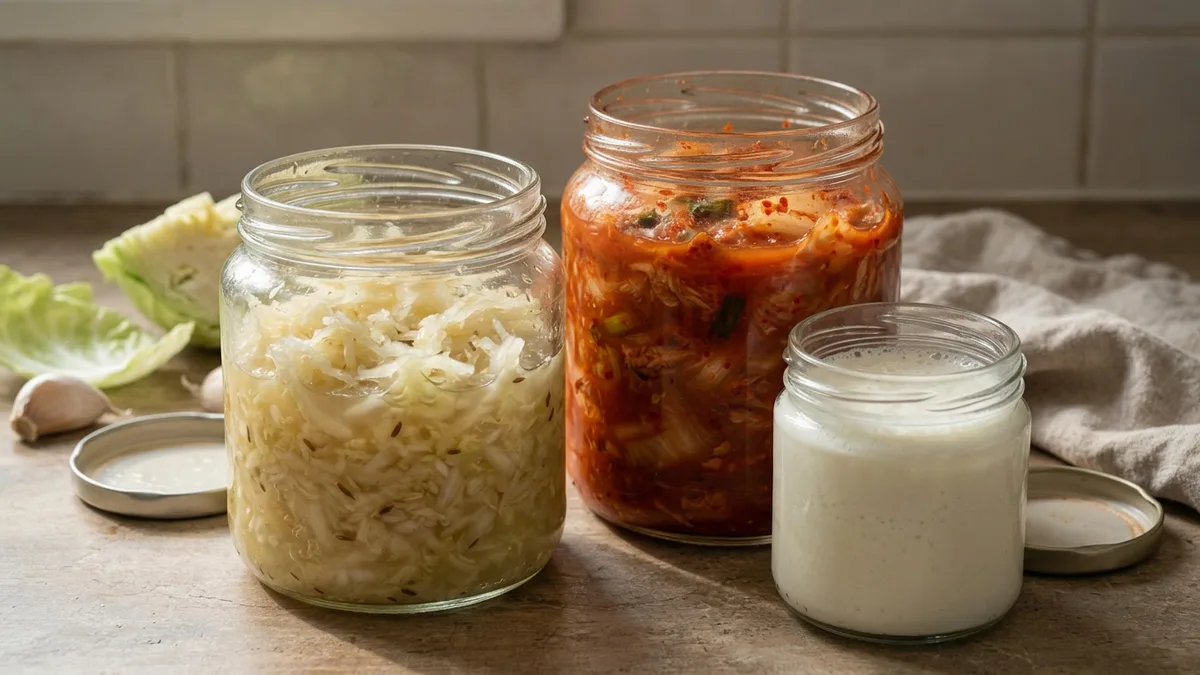
The label says 'probiotic.' The price says $9. The back of the bottle says nothing you can pronounce. You are standing in the refrigerated aisle, reading tiny print, and nobody has told you the one thing that matters: whether the culture is even alive.
Most fermented foods are not a quick fix. The first change you will notice is not in your gut but in your shopping: you will start checking the refrigerator case and the ingredients line, and you will stop buying the shelf-stable version. This list gives you 14 foods that pass a simple shelf test, with the serving, the price, and the caveat that decides whether it belongs in your routine.
The total basket costs about $66 at a mid-size supermarket — and that is 14 different items, not 14 jars of the same thing you will never finish. You can start with two.
Quick Tips Before You Start
Read the refrigerator case
If it is not refrigerated and the label does not say 'live and active cultures' or 'raw', assume the culture is dead.
Measure the serving
Two tablespoons of kraut is a serving. A bowl is a sodium bomb. Use a spoon, not a pour.
Check sodium per serving
A single tablespoon of miso can hit 800 mg. Compare that to your daily limit before you buy the tub.
Sugar hides in drinks
Plain yogurt has none. Flavored kefir and kombucha can have 12 g. Aim under 5 g per serving.
Keep it cold
Live cultures die above 40°F. Store your ferments in the main fridge, not the door.
1. Refrigerated Sauerkraut, Not Shelf-Stable
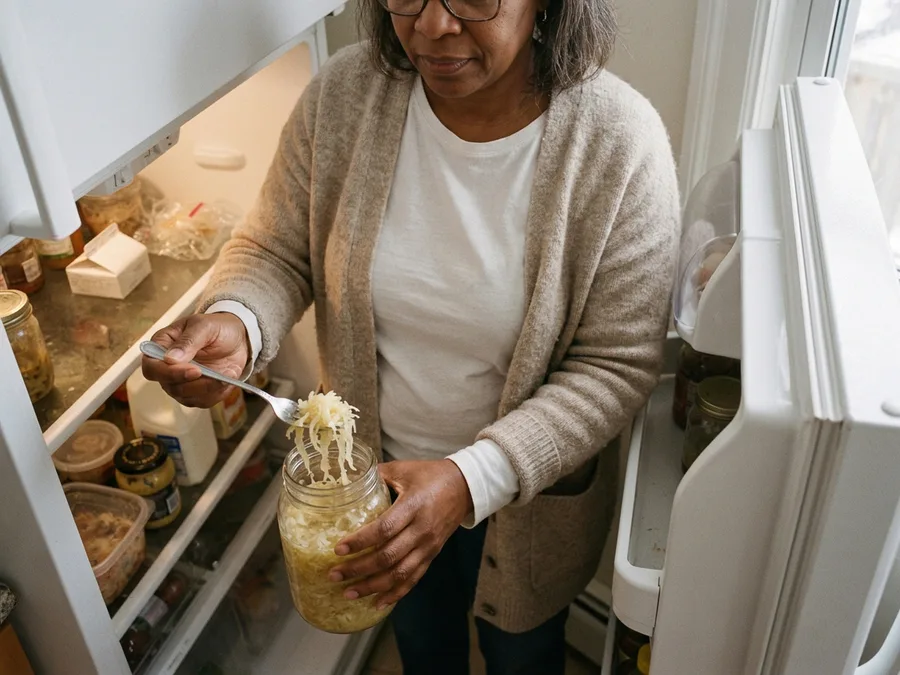
Two jars sit in the same supermarket aisle and only one of them can still carry live cultures. The refrigerated sauerkraut, the one you reach into the cold case for, may still hold active bacteria. The shelf-stable jar on the dry-goods end has been heat-treated, which is what keeps it stable on a pantry shelf and what leaves nothing alive inside it.
So the test is a label and a location working together.
Look for the words raw or unpasteurized, then confirm the jar is sitting in refrigeration rather than on an ambient shelf. A jar that says raw but lives next to the canned beans is a contradiction worth walking away from. The cold case plus the word is the whole check.
The serving is small: 2 tablespoons, not a bowl.
At $6 for a 24-ounce jar, that is a low cost per use and a staple that survives weeks in the fridge door without going off, which matters if you are testing one ferment at a time and don't want to waste a purchase while you decide whether you like it.
Watch the salt line before you commit. Two tablespoons often list 300 to 500 mg of sodium, more than you might expect from a vegetable. If your doctor has told you to keep sodium low, rinse the portion in a strainer for a few seconds; you lose some tang and crunch, but the culture stays and the number drops.
That combination, a raw or unpasteurized label plus a cold shelf, is the first decision. It suits anyone who wants a cheap, long-lasting ferment that does not demand a project.
💡 Tip: Sauerkraut does not need to be fancy. A store-brand refrigerated bag at $4-6 works as well as the artisanal jar at $12 if the label says raw and it lives in the cold case.
| Food | Typical serving | Price guide | Label cue |
|---|---|---|---|
| Refrigerated sauerkraut | 2-4 tbsp | $6 / 24 oz | 'Raw' or 'unpasteurized', refrigerated |
| Plain Greek yogurt | 5-6 oz | $1.25 / cup or $5 / 32 oz tub | 'Live and active cultures' |
| Kefir | 4-6 oz | $4.50 / 32 oz | 'Live cultures', no added sugar |
| Kimchi | 2-4 tbsp | $8 / 16 oz | Refrigerated jar, not shelf-stable can |
| Miso paste | 1 tbsp | $5 / 12 oz | Paste, not powder packet |
| Tempeh | 3 oz | $3.50 / 8 oz | Firm white block, no pink or slime |
| Kombucha | 8 oz | $3.50 / 16 oz | Under 5 g sugar per serving |
| Fermented pickles | 1 spear | $5 / 24 oz | 'Fermented' or 'brined', salt and water first |
| Natto | 1 pack (1.7 oz) | $3 / 3-pack | Refrigerated, check date |
| Sourdough bread | 1 slice | $6 / loaf | 'Wild yeast' or 'sourdough starter' |
| Aged cheddar | 1 oz | $5 / 8 oz | 'Aged' and 'live cultures' |
| Naturally brewed soy sauce | 1 tsp | $4 / 10 oz | 'Naturally brewed', not hydrolyzed |
| Water kefir | 4 oz | $4 / 16 oz | Live cultures, low added sugar |
| Beet kvass | 2 oz | $7 / 32 oz | Refrigerated, unpasteurized |
2. Plain Greek Yogurt with Live Cultures
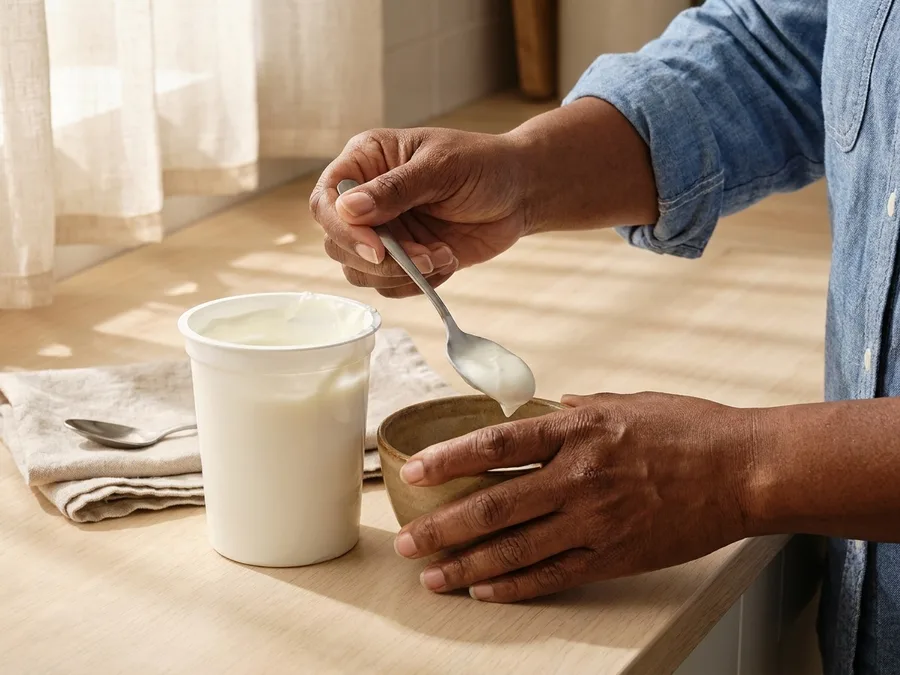
A dairy ferment earns its place by the same standard a vegetable one does: the label has to prove there is a live culture inside. Plain Greek yogurt is not automatically probiotic. Plenty of tubs are cultured for thickness and flavor and then pasteurized, which leaves the protein and the texture but not the bacteria.
Turn the tub over and find the phrase live and active cultures.
If it is printed on the packaging, the yogurt qualifies; if it is missing, treat the tub as a high-protein breakfast and nothing more. The word plain matters just as much as the culture line. Flavored cups can carry 10 or more grams of added sugar, which turns a modest serving into a dessert with a health label. Readers keeping sugar intake in check may want to cut back on sugary foods beyond the yogurt case.
The portion is 5 to 6 ounces, a normal single serving.
At about $1.25 per cup or $5 for a 32-ounce tub, plain is also the cheaper way to buy it; you portion it yourself and control what goes in. This suits readers who tolerate dairy and want a breakfast food they already know how to eat, no new texture to learn.
Read two lines on the tub, the culture phrase and the sugar grams, and the decision makes itself.
The first two foods: cost and amount at a glance
Sauerkraut and yogurt set the baseline for the whole list
3. Kefir, Drinkable and Dairy-Based
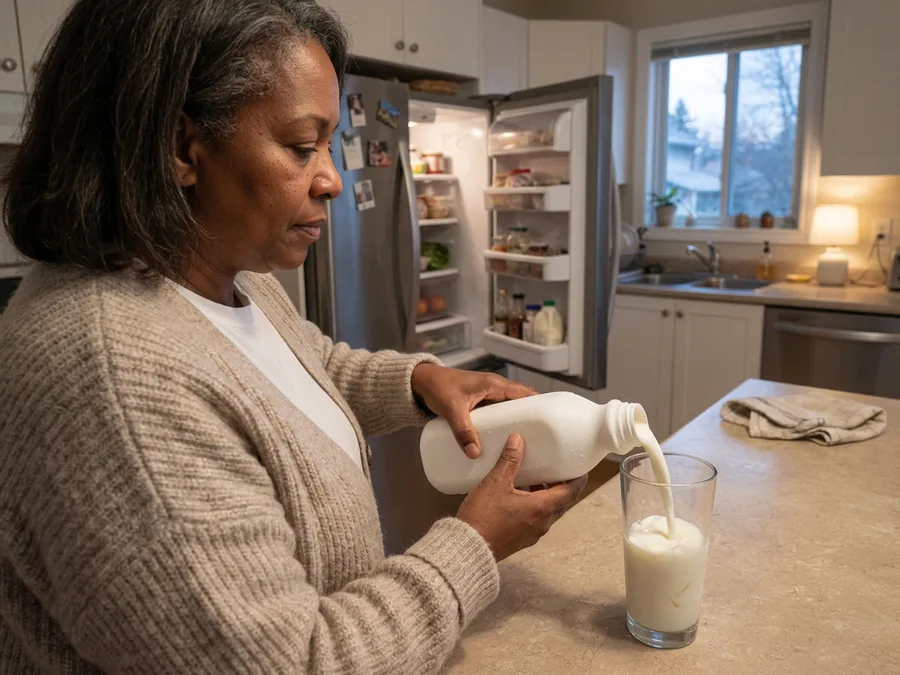
Some people will never remember to spoon yogurt at 7 a.m., and that is fine. Kefir is the same dairy ferment poured instead of scooped: a tart, drinkable milk with more liquid volume than yogurt and a flavor that leans closer to buttermilk than to cream. If you will drink but not spoon, this is the form that fits your morning.
The serving is 4 to 6 ounces, and the price is about $4.50 for a 32-ounce bottle.
Two label lines decide whether it belongs in your cart: live cultures and no added sugar. Plain kefir has none; the flavored bottles often do, so compare the added-sugar line and treat those as a different product. Refrigerate it and don't shake hard, because the carbonation builds as it sits.
If dairy or tartness is new to you, start with 2 ounces, not the full serving. Kefir is more acidic than most yogurt, and a small pour over a few days tells you whether your gut and your taste accept it before you commit to a whole bottle.
That is the beauty of the drinkable form: no bowl, no spoon, no smoothie project. A 4-ounce pour in a glass, straight from the fridge, is the whole routine.
💡 Tip: Plain kefir is tart. If you need sweetness, stir in a teaspoon of honey rather than buying the flavored bottle — you control the sugar.
4. Kimchi from the Refrigerated Aisle

A drinkable dairy ferment is one route into the refrigerator case; the cabbage jar a shelf over is the other. Kimchi is fermented cabbage with heat, and it earns its place for a different reason than kraut does: crunch and flavor, not just tang.
It is not spicy sauerkraut with a new label.
The ferment that matters starts with Napa cabbage salted, seasoned with chili and garlic, and packed to sit. That pack is what gives kimchi its snap and its fire, and both vary wildly from brand to brand, so the label is where the decision gets made.
Check the refrigerator case first. A jar sitting cold is the one that can still carry a live culture; the shelf-stable can is heat-processed and will not, no matter how the front of the label reads.
The serving is small: 2 to 4 tablespoons, roughly $8 for a 16 oz jar, which stretches across weeks of meals if you treat it like a condiment rather than a side dish. Sodium and heat run high and low by brand, so put two jars side by side and compare the numbers before you commit to the spicier one.
The refrigerated placement and that label comparison are what decide it. This one suits readers who want flavor on the plate and already know they like spice; if heat is a problem at the table, the same case holds milder options.
⚠️ COMMON MISTAKE
The shelf-stable trap
Most people buy the jar that is easiest to reach — the one on the shelf, not in the cold case. Pasteurized sauerkraut, kimchi, and pickles have no live cultures left. If it is not refrigerated and the label does not say 'raw' or 'live and active cultures', you are buying flavored salt.
5. Miso Paste, Not Instant Soup Packets

A jar of kimchi is a condiment, and so is the next ferment in the case, though it comes as a paste instead of a vegetable. Miso is fermented soybean paste, a spoonful stirred into broth or whisked into a marinade, and the live cultures live in the tub, not in the instant soup packet.
That distinction decides the purchase before sodium even enters the conversation.
Powdered miso soup mixes are convenient and usually pasteurized, which means the cultures are gone by the time the envelope reaches your shelf. The tub in the refrigerated section, $5 for 12 oz, is the form that can still hold them; keep it cold after opening.
One tablespoon is the working measure, and white miso is milder than red, so start there if the flavor is new to you. That same tablespoon carries 600 to 800 mg of sodium, which is why it belongs in the recipe as salt, not alongside it, and why a lighter hand on the salt shaker follows naturally.
The paste over the packet and the sodium math are what decide it. This one suits cooks who want a savory base they can measure, not a soup they rehydrate.
💡 Tip: Whisk miso into a little hot water first, then add it to the pot. It dissolves evenly and you avoid clumps.
6. Tempeh, a Firm Fermented Soybean Slice

A spoonful of miso flavors a bowl; the next soybean ferment in the case is the bowl's center, a firm cake you slice and sear. Tempeh is fermented soybean pressed into a block, dense and protein-rich, and it takes a marinade better than almost anything else in the refrigerator aisle.
At 3 oz a serving and $3.50 for an 8 oz block, it covers two meals, and it behaves like a main rather than a seasoning.
The culture cue is visible in a way most of this list is not: the block should be firm and knit together with white mold, no pink streaks and no slick or slimy patches. That is the difference between a live ferment and one that has turned.
Steam it 10 minutes before you sear it. Tempeh straight from the wrapper is dense and can taste bitter at the edges; the steam softens it, opens the texture, and lets the marinade actually go in before the pan browns the outside.
The visible mold and the firm block are what decide it. This one suits readers who want a meatless main on the plate, not another condiment on the shelf.
Tempeh — At a Glance
🧂 Sodium
Varies by brand — compare labels
🚫 Skip if
Any pink streak or slick patch
⏱️ Taste fix
Long marinade if edges taste bitter
🧊 Storage
Refrigerated; use within a few days of opening
🔬 Cultures
Check manufacturer info for strain
Watch for
Steam whole, then slice and marinate at least 30 minutes — short marinades leave the center bland.
7. Kombucha, Read the Sugar Line

A solid slice of tempeh is one kind of ferment; kombucha is the opposite end of the shelf, a fizzy fermented tea that lives in a capped bottle and asks a very different label question. The culture is optional in that bottle. The sugar is not.
Kombucha starts as sweet tea that a culture ferments, and by the time it reaches the case it can carry live cultures or not, depending on how the bottler handled it. What it almost always carries is some residual sugar, and the label tells you how much of that is added.
Check the line before the flavor name sells you. Some bottles land under 5 g of sugar per serving; others pass 12 g, which puts a single 8 oz pour close to the sugar in a soft drink.
The bottle runs about $3.50 for 16 oz, and the stated serving is 8 oz, so one bottle is two sittings. That math matters if you are replacing an afternoon soda and not looking to add a second sweet drink to the day.
Keep it cold and treat the cap gently. Kombucha is carbonated by design, and shaking a chilled bottle hard buys you a slow, sticky cleanup and a flatter pour.
The sugar line and the serving size decide this one. Suits readers who want something fizzy in the soda slot; if you already drink sweet drinks all day, this is a swap, not an addition.
How to use a new ferment for the first time
This check works on every item in this list. It is also why half the products in the aisle fail it.
8. Brined Fermented Pickles, Not Vinegar Pickles
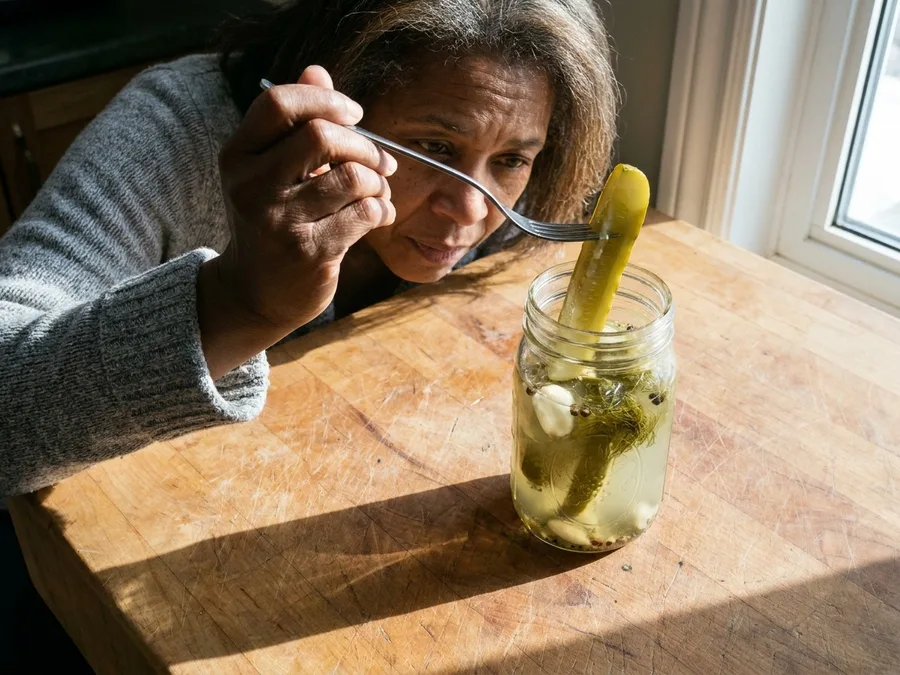
A sweet fizz and a salty crunch are the two ends of the same fermented case, and the pickle is where labels get slippery. Any cucumber in a jar can call itself a pickle. Only the brined one earns the place on this list.
Real fermented pickles sit in salt and water and let time and bacteria do the work, which is why they live in the refrigerated case. Vinegar pickles skip that step by soaking the cucumber in acid, and they can sit on a warm shelf for a year without changing.
Read the ingredients, not the picture of the cucumber on the front. You want salt and water near the top, plus the words 'fermented' or 'brined' somewhere on the label, and vinegar should not be the first thing listed.
One spear is the serving, and the jar runs about $5 for 24 oz, which stretches a long way if you eat one at a time. That single spear often lists 300-500 mg of sodium, so it counts toward the day's salt, not on top of it.
For the burger and sandwich eaters who want crunch, this is the easiest fermented vegetable to work into a routine. The brine cue and the refrigerated case decide it.
💡 Tip: The brine is not trash. A splash of it in a salad dressing or a marinade adds the same salty sourness without adding another pickle.
Fermented pickle vs. vinegar pickle
Fermented (live)
- Refrigerated case, find near the deli or produce
- Brine may look cloudy or bubbly – that is the culture working
- Ingredient list is short: cucumbers, water, salt, maybe dill
- Check sodium: often 300-500 mg per spear
- Skip if the brine is slimy or smells off, not just sour
Vinegar (not live)
- Center aisle, shelf-stable, no refrigeration needed
- Ingredient list starts with vinegar, then water, salt, sugar
- Brine stays clear and never clouds
- Often has added sugar or yellow dye for color
- No cultures listed, so no live bacteria to feed your gut
9. Natto, Sticky Fermented Soybeans

Pickles deliver a familiar snap; natto is the opposite texture test, and it is the one food on this list most people will either love or refuse within a single bite. It is worth knowing exactly what you are buying before you spend the $3.
Natto is whole soybeans fermented until they turn sticky and develop a strong, savory, faintly ammonia-tinged flavor. The texture is the point and the obstacle at once: it is stringy, gluey, and it clings to the chopsticks.
One small pack is about 1.7 oz, and a three-pack runs around $3. Stir it hard for thirty seconds or so until the strings go white and glossy, then eat it over hot rice or tucked into a roll, where the starch and the nori blunt the edge.
The label decides the purchase: check the date, because this is a short-lived refrigerated food, and keep it cold at home. A pack that has gone slimy in a different way, or smells sharply of ammonia, is past its moment.
This one suits adventurous eaters, and it rewards them with a food that is real fermented soybean in its plainest form. If you already know you hate sticky textures, skip it without guilt; no food on this list is mandatory.
10. Sourdough Bread with a Long Ferment

Some fermented foods ask you to acquire a taste. Sourdough asks you to notice a crust.
The tang and the chew come from wild yeast and bacteria working the dough over a long rise, and the ingredient line has to back that up: look for 'sourdough starter' or 'wild yeast,' not just flour, water, yeast and a dusting of sour flavoring. A loaf that lists commercial yeast alone has been fermented for speed, not character.
It is still bread, though, and that matters more than the label romance.
At $6 a loaf at a mid-size supermarket, one slice is the stated serving. Not half the loaf because it is 'fermented.' A slice alongside eggs or soup earns its place in a post-50 routine the same way any bread does: as part of a meal, not as a supplement with a health claim attached to it.
Here is where the shelf test gets slippery. Long-ferment and slow-rise are not standardized terms, so a label can say them without telling you how many hours the dough actually sat. Ask the bakery counter how long the loaf fermented; a staff member who bakes it weekly usually knows within a few hours.
Digestion is the other open question, and it is individual. Some readers swear sourdough sits easier than sandwich bread; others notice nothing. Neither experience is a guarantee, and the label cannot tell you which one you are.
The starter cue and the single-slice portion decide this one. If the ingredient line names a culture and the price fits a weekly loaf, it belongs in the basket.
💡 PRO TIP
The portion rule that saves the whole list
Every item on this list has a stated serving for a reason. Two tablespoons of kraut, one slice of bread, one ounce of cheese — these are condiment and snack portions, not meal portions. Measure the first week. After that, your eye knows what a serving looks like.
11. Aged Cheddar and Other Aged Cheeses

Where bread brings flour to the fermented table, aged cheddar brings dairy, fat and salt in the same bite.
Aged cheese is genuinely fermented, and the cultures are part of why it tastes the way it does. The label cue is two words: 'aged' and 'live cultures,' ideally both. A block that just says 'sharp' is telling you about flavor, not fermentation.
The caveat here is not flour. It is saturated fat and sodium, and both are why the portion is the whole argument.
One ounce is the serving, and at $5 for an 8 oz block that ounce costs under a dollar. Cut it thin, let it come to room temperature for ten minutes so the flavor carries, and pair it with fruit or a few crackers. Sodium runs about 180 to 250 mg per ounce, which is real but manageable at that size.
The trap is the cheese board mindset: a handful of cubes while dinner cooks, then another handful, and the salt adds up fast. At 1 oz, aged cheddar is a savory snack with live cultures attached. It is not a calcium pill, and it should not replace the dairy ferment you actually eat by the serving.
The aged and live-culture cue plus the 1 oz portion decide it. Readers who want a savory bite, not a supplement, will find it fits.
12. Fermented Soy Sauce, Naturally Brewed

One condiment in this list is concentrated enough that the label does more work than the serving.
Naturally brewed soy sauce is fermented. The other kind, made by breaking down protein with acid and heat, is not, and the ingredient line gives it away: 'hydrolyzed vegetable protein' means skip it. Look instead for 'naturally brewed' or 'fermented' on the front label.
The reason the cue matters is umami. Slow brewing builds the savory depth that lets a teaspoon do the work of a pour.
One teaspoon is the serving, and at $4 for a 10 oz bottle that bottle lasts months in the fridge. Sodium runs about 300 mg per teaspoon, so the move is to use it instead of salt, not in addition to it. Measure it into a spoon first; free-pouring from the bottle is where the sodium math falls apart.
This is the one item in the basket that sits on a pantry shelf rather than in the refrigerator case, so the shelf test shifts from cold to the brewing line.
The brewing cue and the measured spoon decide it. Cooks who want umami without guesswork will find the teaspoon does the job.
💡 Tip: Pour a little into a small dish before you cook instead of pouring from the bottle over the pan. You will use less.
13. Water Kefir, a Dairy-Free Fizz

Milk kefir is off the table if dairy is, and that leaves a gap in the drinkable column. Water kefir fills it: grains fermented in sugar water, poured out as a light, tart fizz. Four ounces is the serving, and a 16-ounce bottle runs about $4.
It is not a milk substitute or a protein source.
It is a fizzy drink with a culture in it, which puts it in a different category than soda even though both come in the same bottle shape.
The two label lines that decide it are the same two that decide every drinkable ferment on this list. Look for live cultures stated on the bottle, then read the sugar line and aim under 5 grams per serving.
Water kefir varies more than kombucha does. Some brands are nearly dry and sharp, others pour sweet and barely tart. Start with 4 ounces rather than the full bottle, especially if you have not had a fermented drink in years.
Bubbles and tartness both climb with age, so a bottle near its date stamp will taste different from a fresh one.
Refrigerate it, open it over the sink the first time, and treat it as a replacement for a sweet drink rather than an addition to one. For a dairy-avoider who wants something drinkable in the rotation, this is the entry that does the job.
14. Beet Kvass, a Salty Fermented Beet Drink

A fizzy drink can be dairy-free and still be sweet. Beet kvass is the other end: a ruby-red ferment that tastes salty and earthy, closer to a brine than a beverage. Two ounces is the pour, and a 32-ounce bottle costs about $7.
That price per bottle makes more sense once you see the serving. At 2 ounces a day, one bottle lasts more than two weeks.
The cue is on the label and in the case. Refrigerated, unpasteurized bottles are the ones carrying live culture; anything shelf-stable on the same shelf is not. Check both before the bottle goes in the cart.
Then taste it before committing. Many stores sell single-serve or small bottles, and the flavor is decisive: earthy, salty, faintly sour, with a beet sweetness underneath that some people love and others find like drinking soil.
If you already like beets, roasted or pickled, you will probably like this. If you have never liked beets, no amount of culture makes the taste change.
This is the ferment that asks the honest fridge-space question. If the bottle has been open three weeks and you are still on the first two ounces, it is taking up a shelf that a ferment you actually drink could use. Buy small, pour 2 ounces, and let your own reaction decide.
💡 Tip: Try beet kvass cold, over ice, with a squeeze of lemon. It softens the earthiness and makes it a better aperitif than a health shot.
Frequently Asked Questions
How long before I notice a difference from fermented foods?
Most people notice nothing for the first week and a half, and the changes are subtle when they come: less bloating, more regular digestion, or simply a new food in the rotation. This is not a fast fix. Give it three to four weeks of consistent small servings before you decide whether it is working for you.
Do I need to take a probiotic supplement too?
No. The foods on this list are food first. A supplement is a separate decision, and one worth bringing to your doctor — especially if you take medication or have a compromised immune system. Fermented foods and supplements are not interchangeable, and more is not better.
Can I make my own sauerkraut or kefir at home?
Yes, and it is cheaper per serving than buying it. The catch is hygiene and salt ratios: a 2% salt brine by weight is the standard for vegetable ferments, and you need to keep the cabbage submerged. If you are new to it, buy a jar first to learn what the finished product should taste and smell like.
What if I hate the texture of one food on this list?
Skip it. There is no prize for forcing down natto or beet kvass. The list is a shortlist, not a prescription — pick the two or three that fit your taste and routine, and leave the rest on the shelf.
Should I ask my doctor before starting?
Ask if you are immunocompromised, pregnant, or managing a condition that requires a low-sodium or low-sugar diet. Live cultures are generally safe for healthy adults, but the sodium and sugar in some of these foods are the real reason to check with your clinician first.
Start with one dairy ferment and one vegetable ferment
The verdict is plain: a 14-item, roughly $66 basket is a label-and-portion decision, not a proven gut fix. Every food here earns its place on the same four points, the culture cue, the serving, the price and the one caveat, and none of them promises an outcome.
You came in for a shopping list, and the list only earns its keep as a two-food start. Pick one dairy ferment and one vegetable ferment, say plain Greek yogurt at 5 to 6 ounces and refrigerated sauerkraut at 2 tablespoons, hold those servings for five days, then add a third item if the first two sat well.
Ask your clinician before starting if you are immunocompromised, managing a digestive condition, on a sodium-restricted diet, or unsure how a ferment interacts with your medication. For the headline's rewire promise, your clinician or the manufacturer's culture information is the honest source, not a number invented for a page.
If texture decides it, skip the natto for sticky and strong and the beet kvass for earthy and salty, no guilt attached.
Then go back to that refrigerated aisle and read a label the way you now can. The first change was never going to be in your gut by day three. It is a fridge that holds one live ferment, eaten at the stated serving, until the second one earns its shelf.
Build your two-food starter cart
Pick one dairy ferment and one vegetable ferment from the list. That is $11 and five days. Add a third item only after the first two have earned their spot in your fridge.